

On smartphones, this page is best viewed in horizontal mode.
Kamigamo-jinja Shrine has a deep connection to horses, and they appeared in the founding legend of the shrine. According to the legend, when the God of Kamo descended to Mt. Koyama, he let a horse on which he rode run while putting a bell on the horse. People say, accordingly, that Kamigamo-jinja Shrine is the birthplace of horse-riding.
One of the famous Shinto rituals concerned with the horse is Kamo-Kurabeuma (Kamo horse race) performed on May 5 every year. In Kamo-Kurabeuma, 10 horses are divided into two groups, a left group and a right group. One horse of each group races with a horse of the other group, and the race is performed 5 times. If the number of winnings of the left group is more than that of the right group, bumper crops can be expected and the country would flourish in that year.
The other ritual is “Kasagake” (shooting arrows toward targets from horseback) Shingi, introduced in this post. Kasagake is a Japanese ancient technique of equestrian archery, which appeared in Nihon Shoki (the second oldest work of Japanese history, completed in 720), and is dedicated on the third Sunday of October every year. What the origin of Kasagake was isn’t clear, but it was performed frequently in the Heian Period (794 – 1185) and its heyday was the Kamakura Period (1185 – 1333). Now, let’s check Kasagake Shinji out!
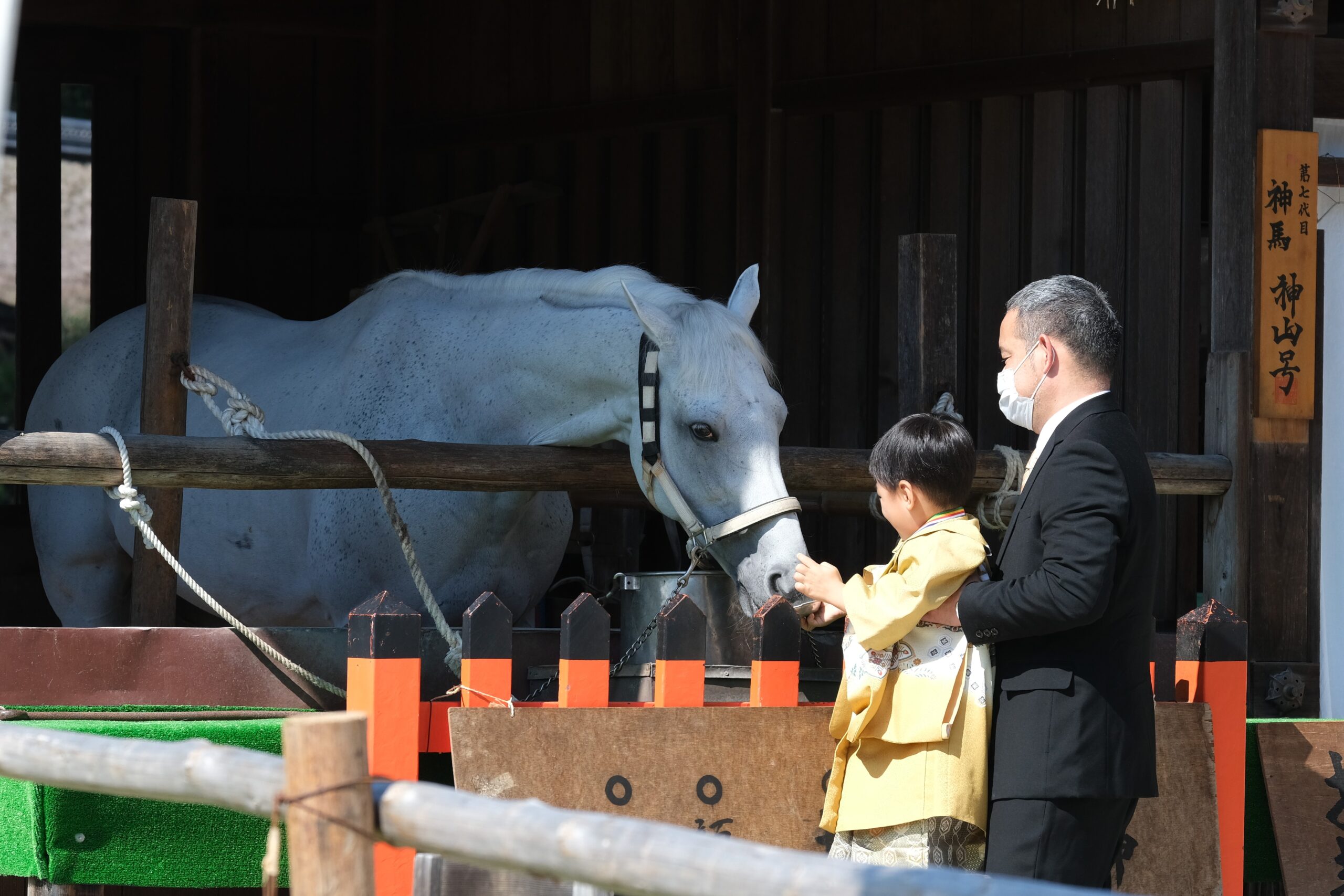
(Sacred Horse Stable))
In Kamigamo-jinja Shrine, there is a sacred horse stable in front of Ni-no-torii Gate. The white shin-me (white sacred horse) stays in the stable on grand festival days, Sundays and holidays. The shin-me is worshiped as a sacred existence, and he meets worshippers and joins Shinto rituals. His name is the seventh Koyama.
(Before Ritual)
The Shin-me and horses participating in Shinto rituals usually stay in horse stables of Kyoto Sangyo University. On a day of a Shinto ritual, horses are brought to Kamigamo-jinja Shrine since the early morning in order to accustom horses to a place where the ritual is performed. On the day I went, a place where horses were waiting was an area between Ichi-no-Torii Gate and Ni-no-Trii Gate on the east side of the approach, where trees and plants were overgrown and a small stream flowed. The horses looked very relaxed.

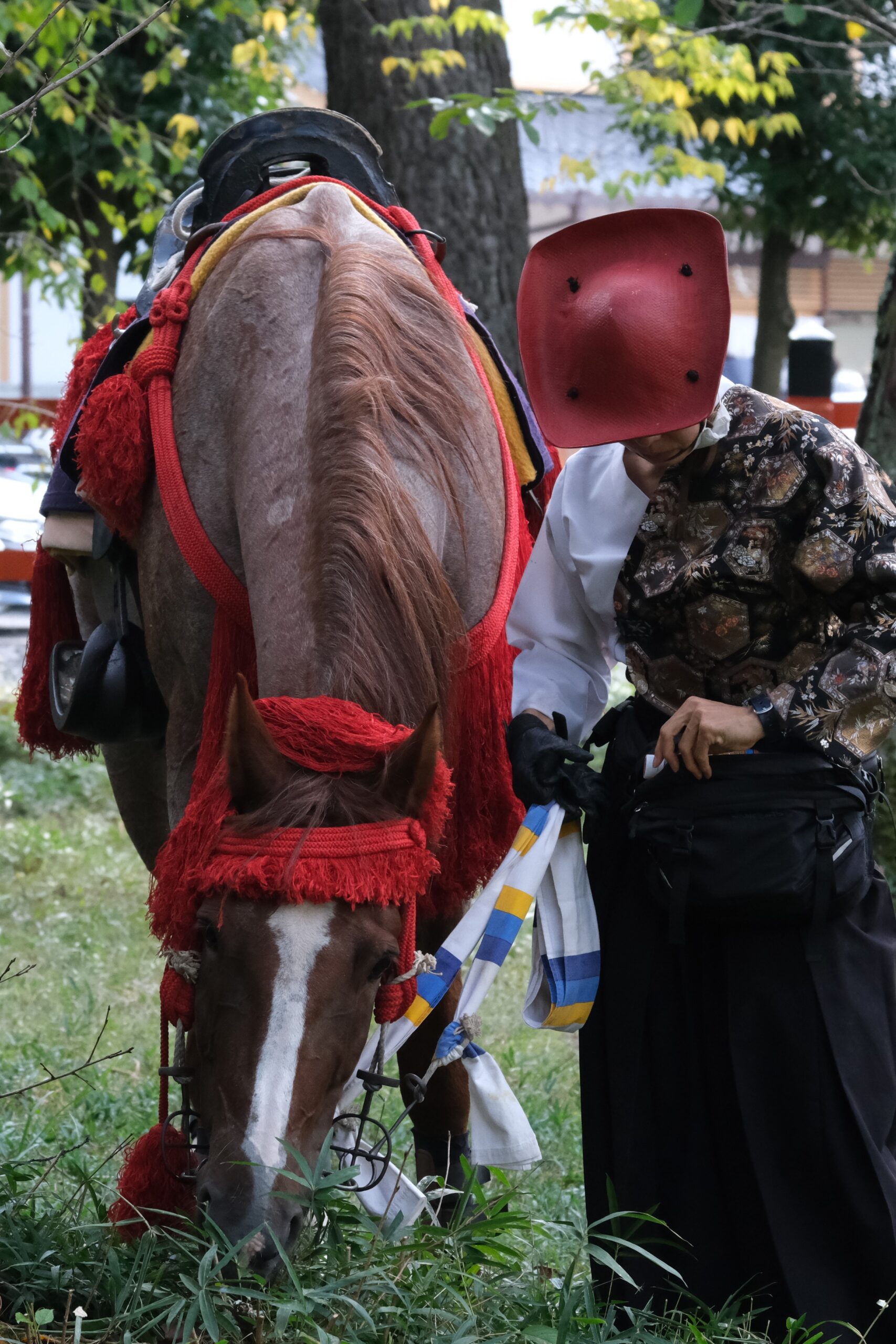
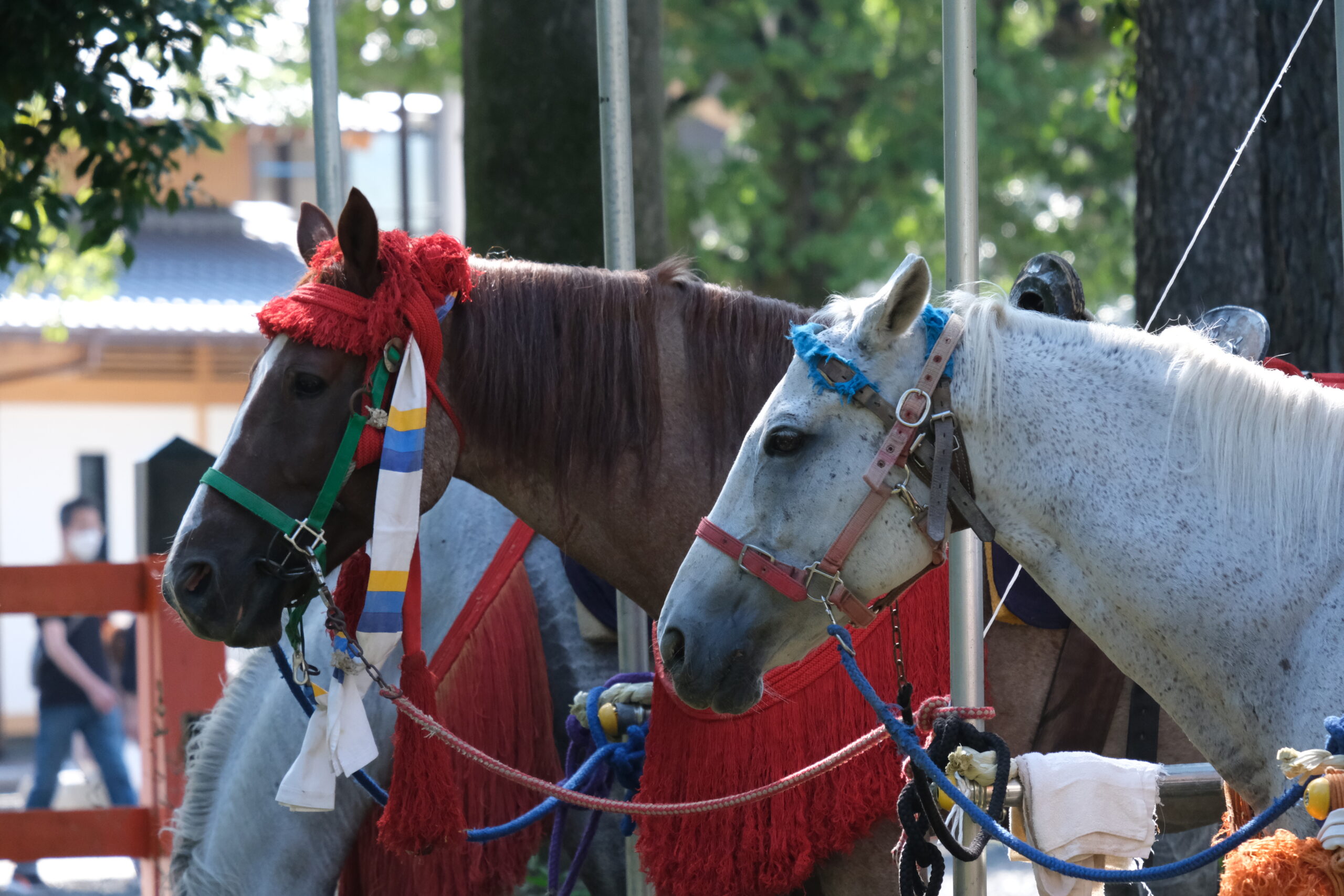

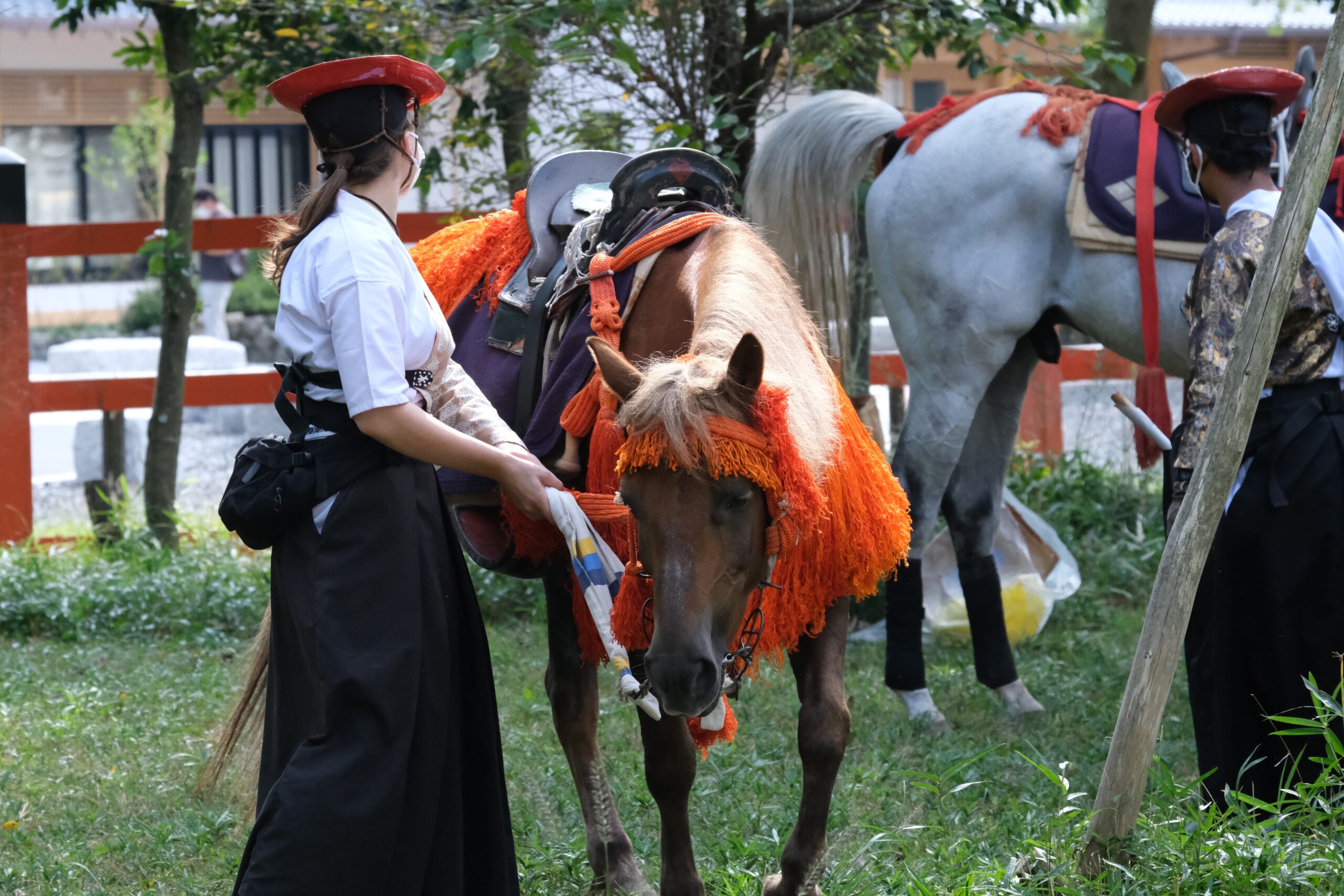
(Ritual before Kasagake)
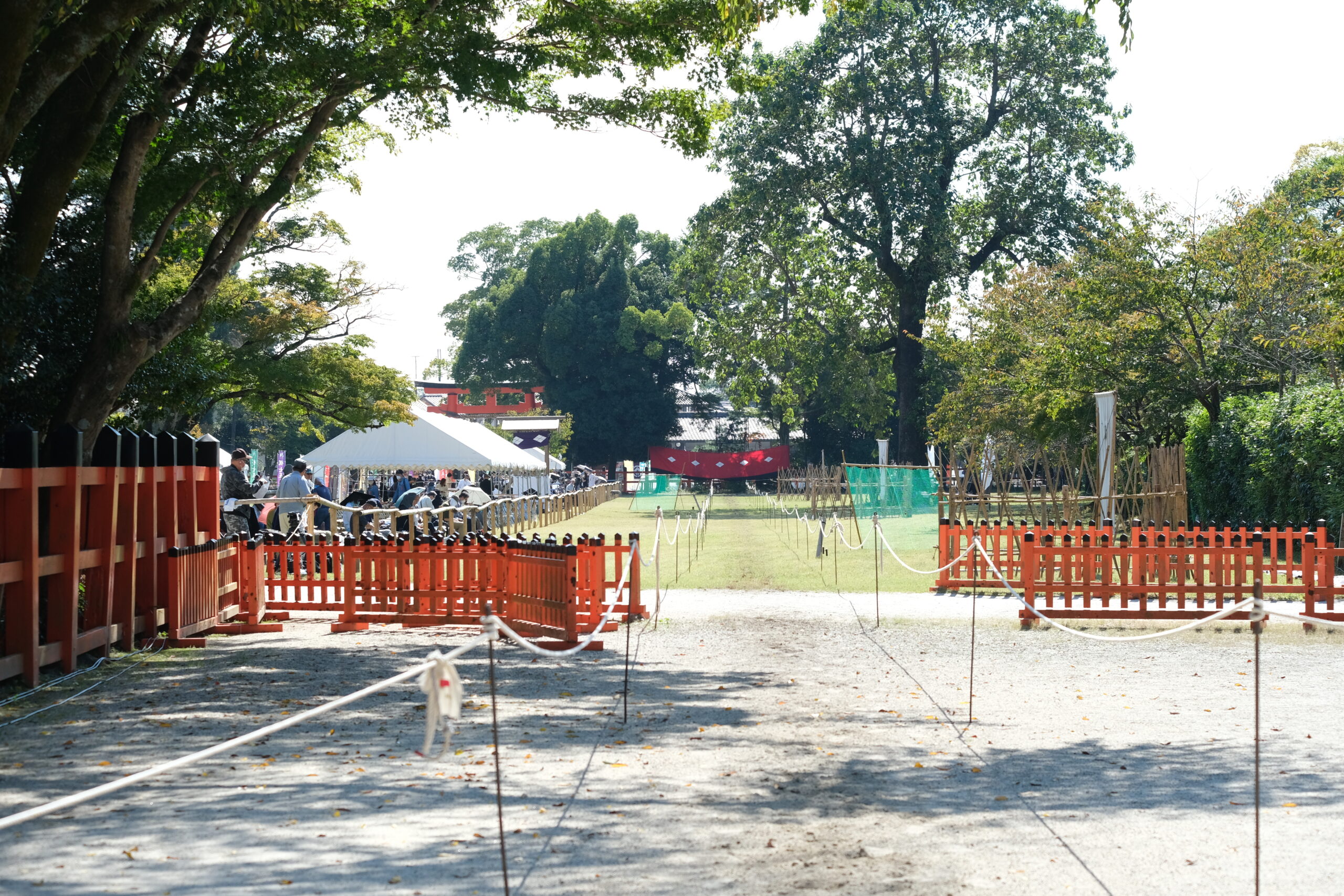
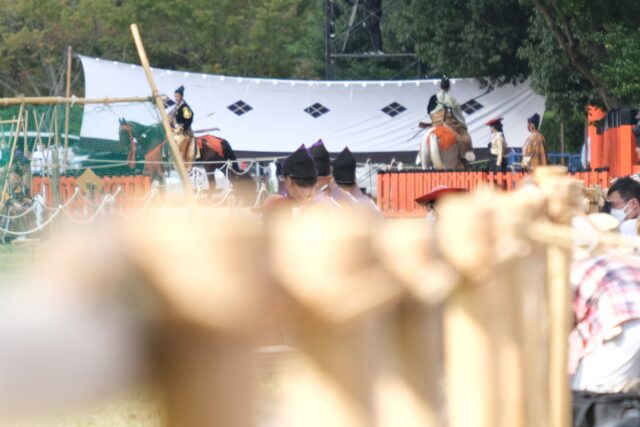
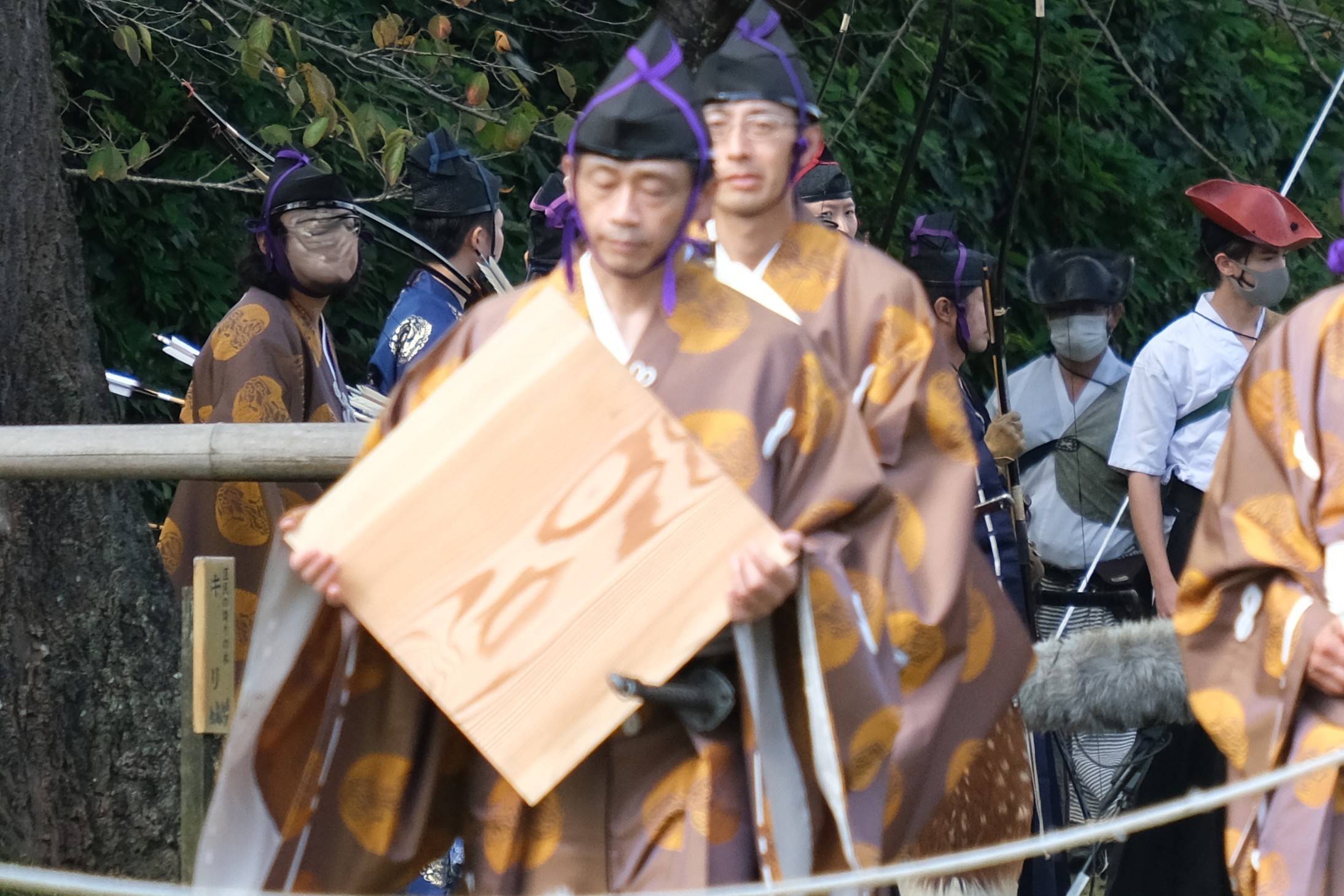
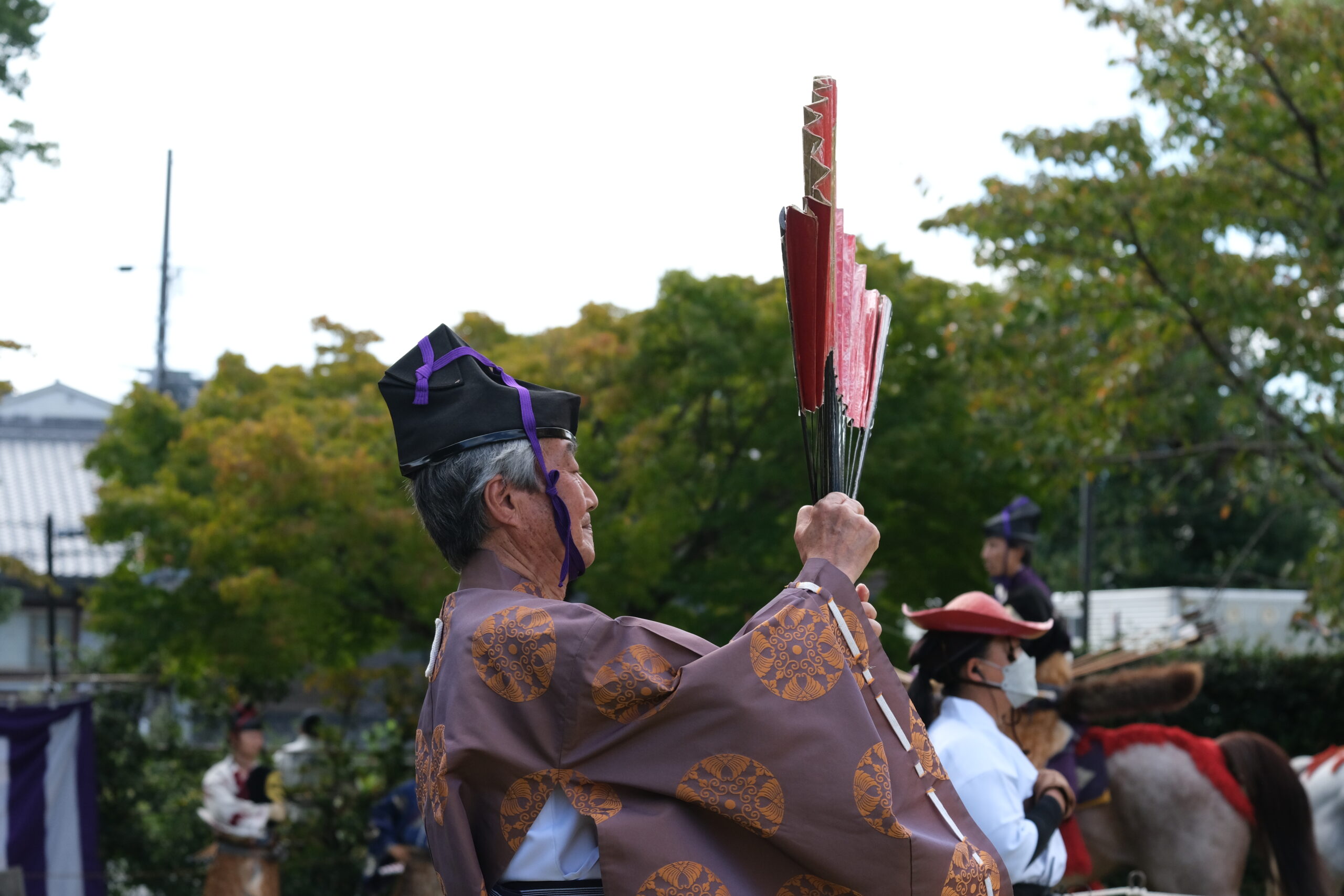
On the day, some Shinto rituals including a purification ceremony, dedication of a whistling arrow, and recitation of a Shinto prayer were performed. After finishing the rituals in the main hall, the participants moved to a race course in the precincts (on the west side of the approach between Ichi-no-Torii Gate and Ni-no-Torii Gate). The race course is linear and has a length of about 180 meters, in which a place close to Ichi-no-Torii Gate on the south side of the race course is called “Baba-moto” and a place close to Ni-no-Trii Gate on the north side of the race course is called “Baba-sue”.
The following photo is of Baba-moto taken from Baba-sue in the riding ground.
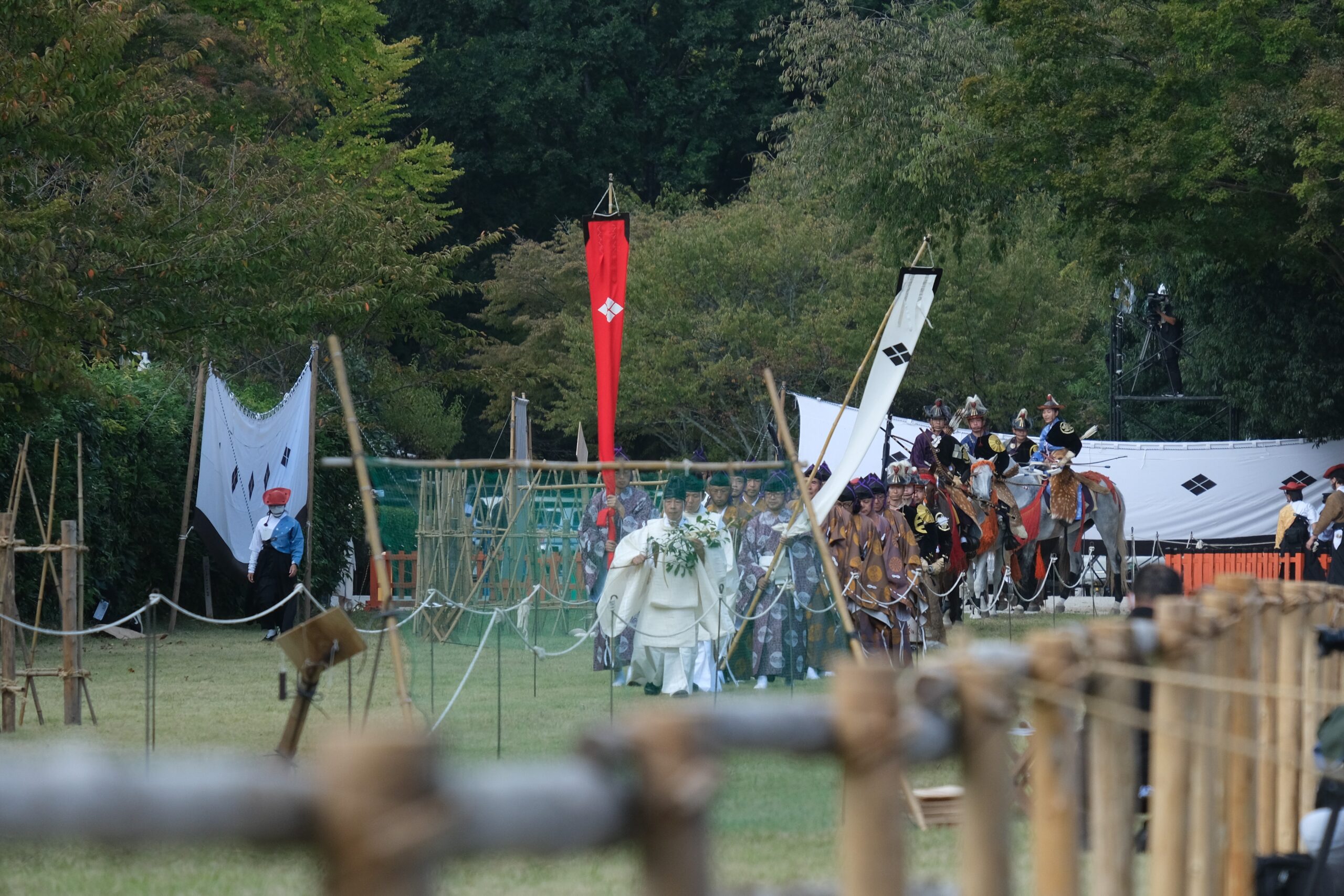
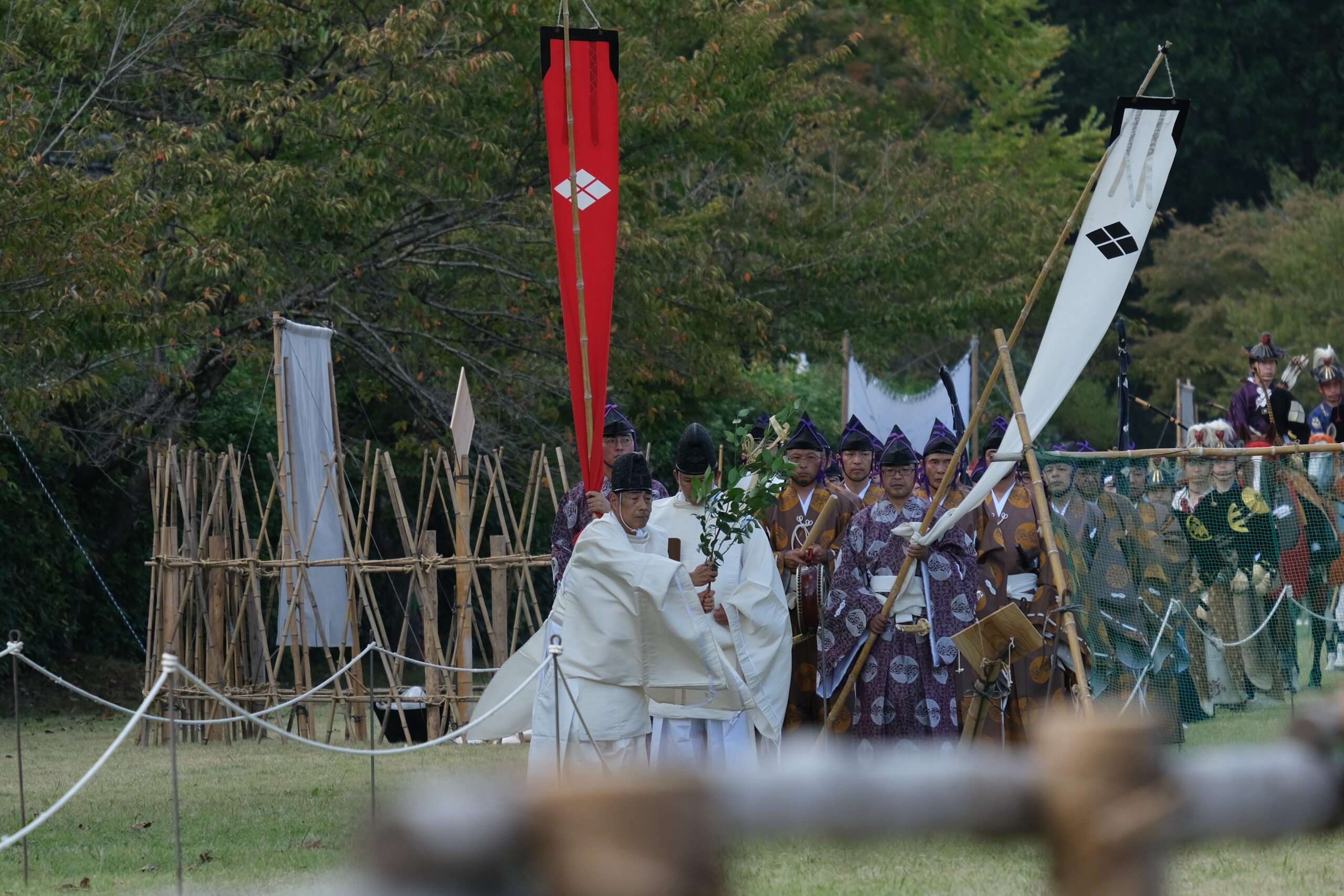
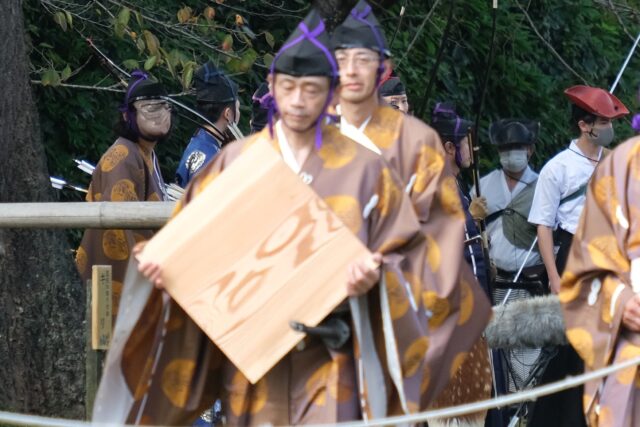
In the race course, “TenchoChikyu-no-gi” (ceremony of coeval of heaven and earth) including a prayer of peace reigns in the land was performed before Kasagake.
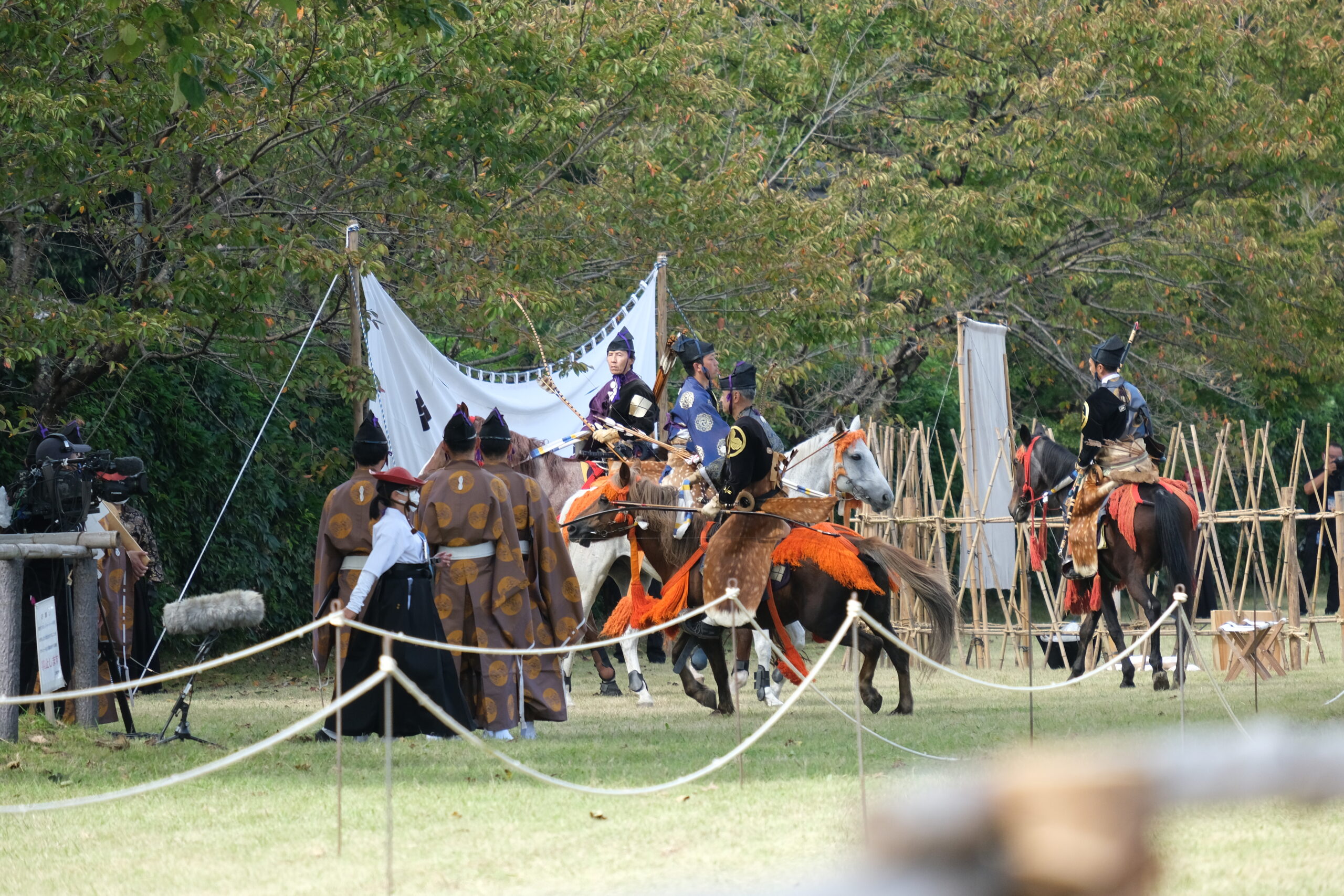
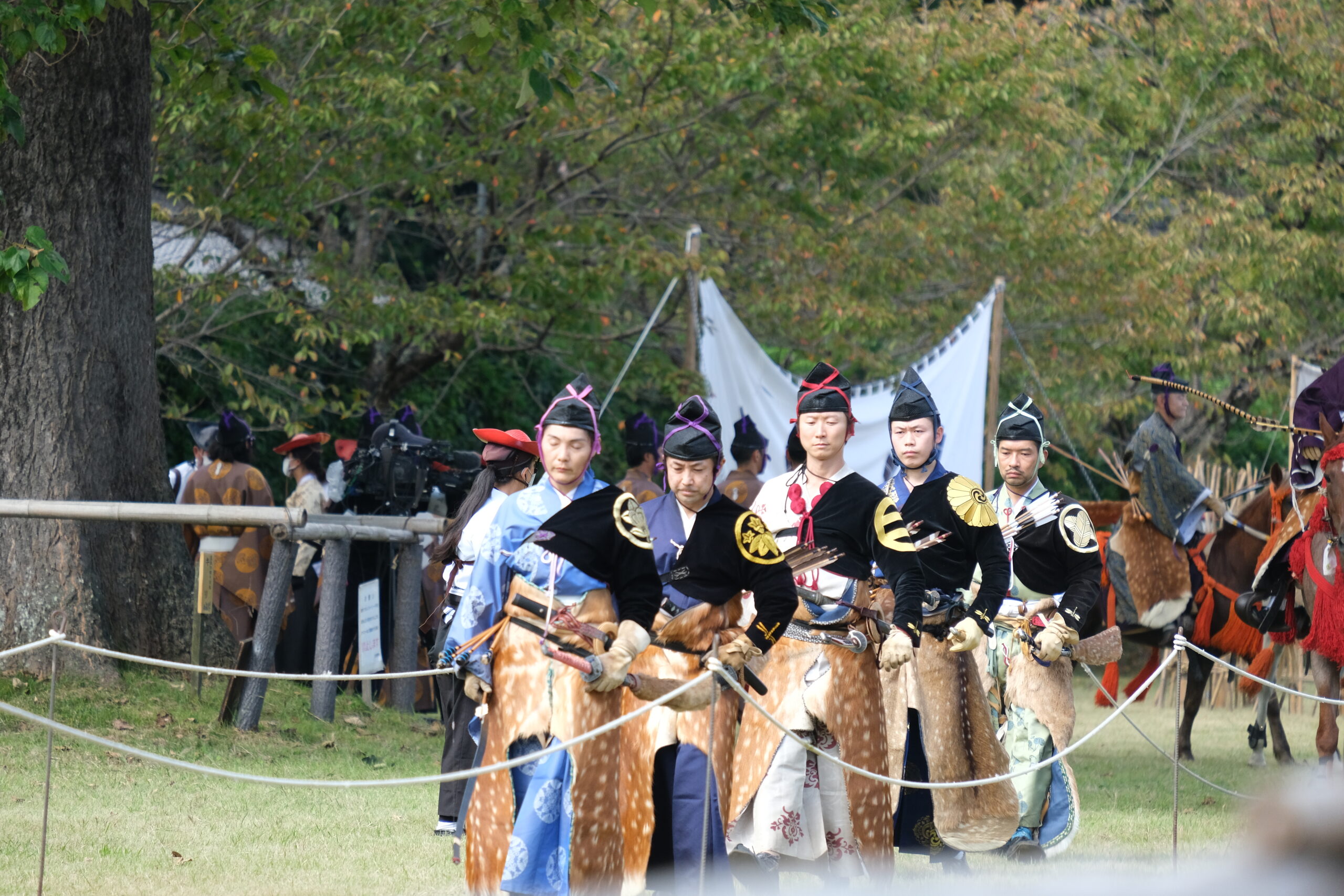
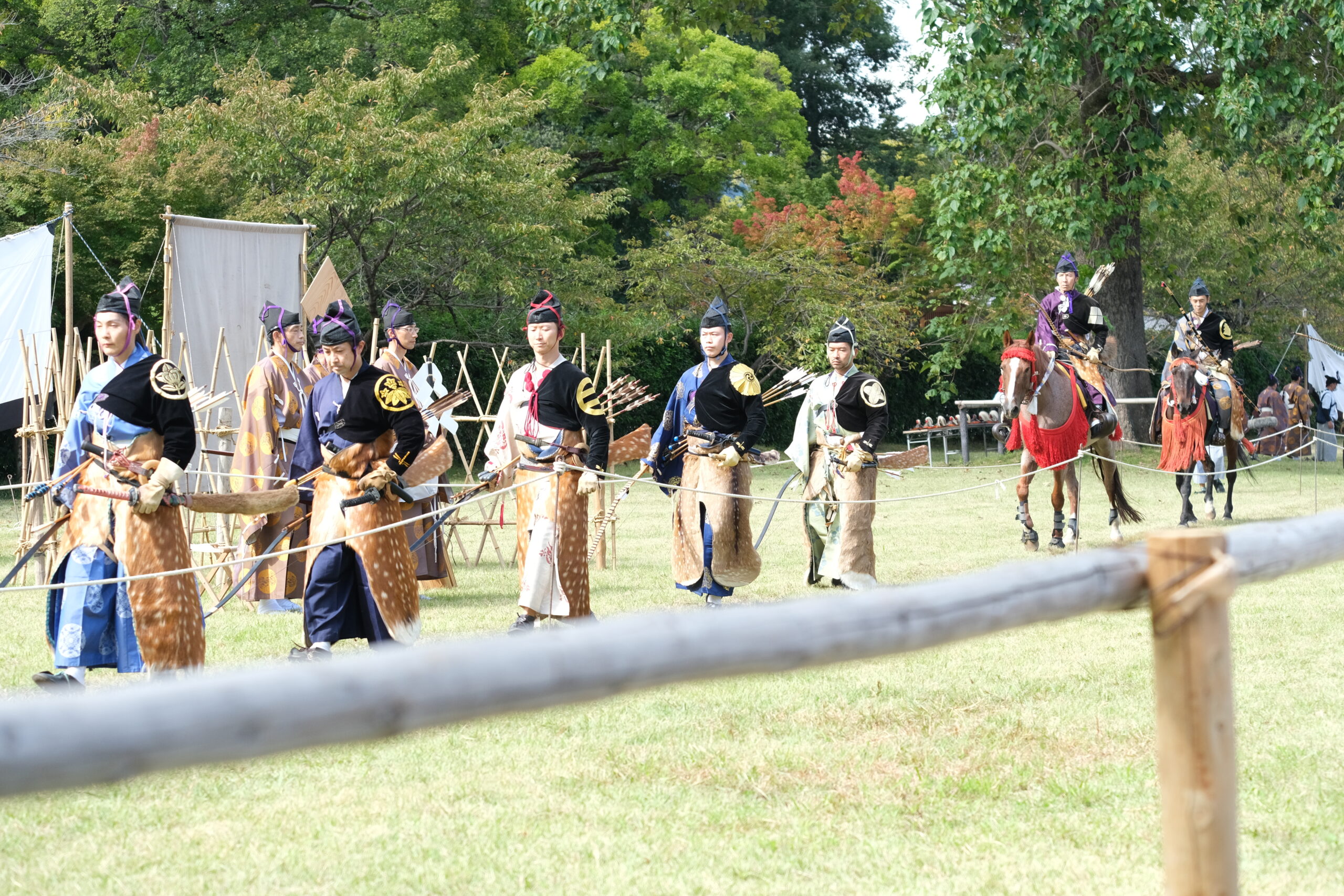
(Kasagake)
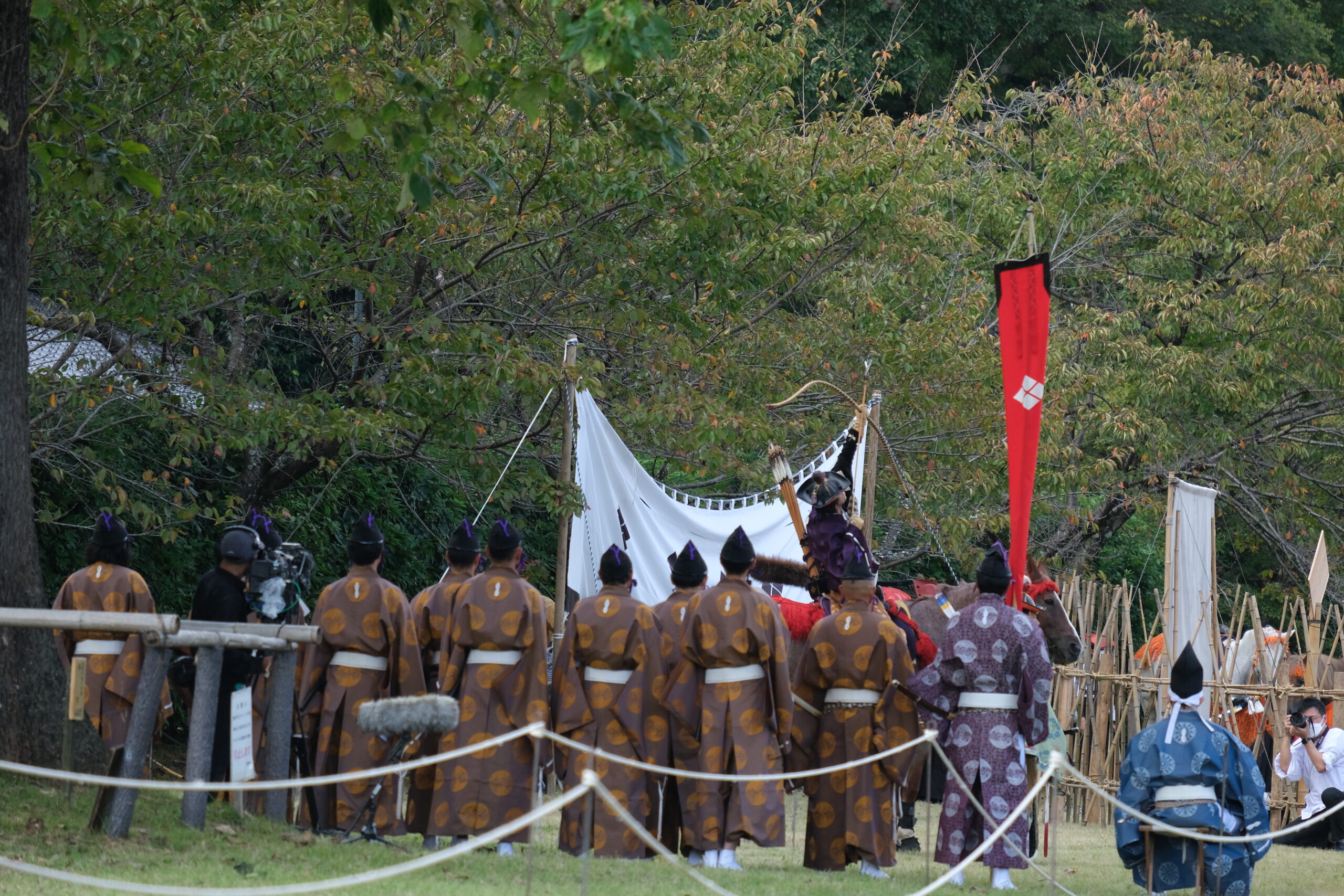
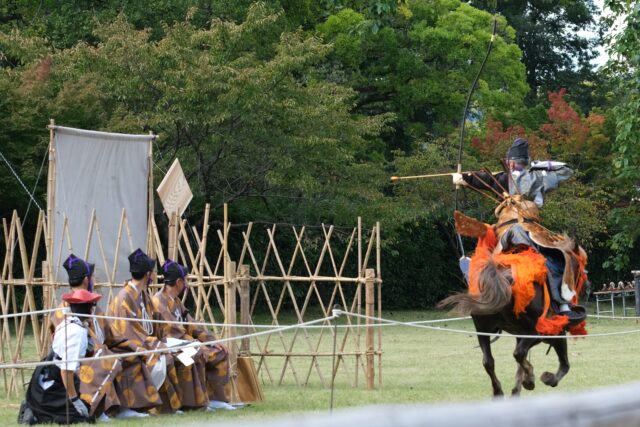
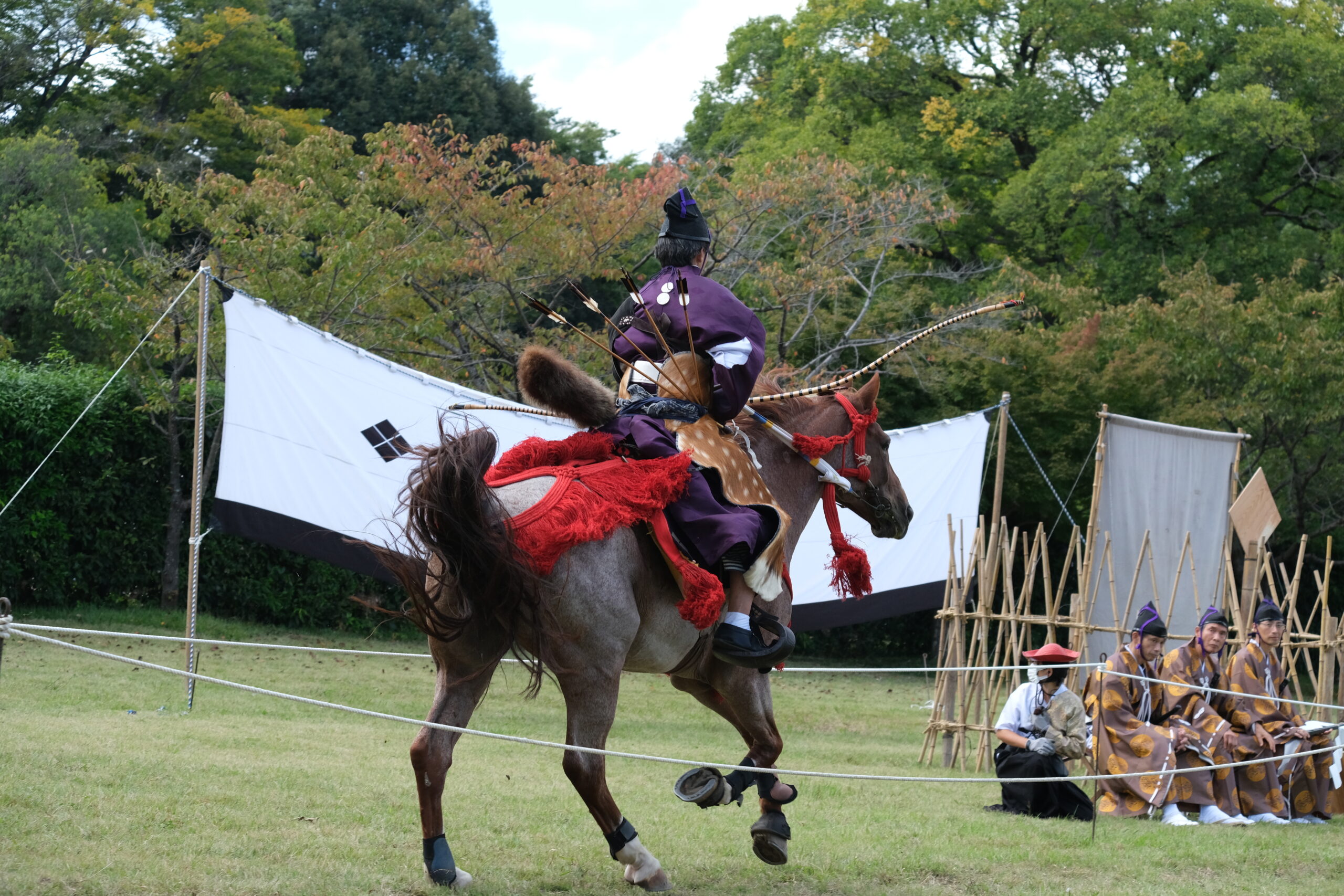
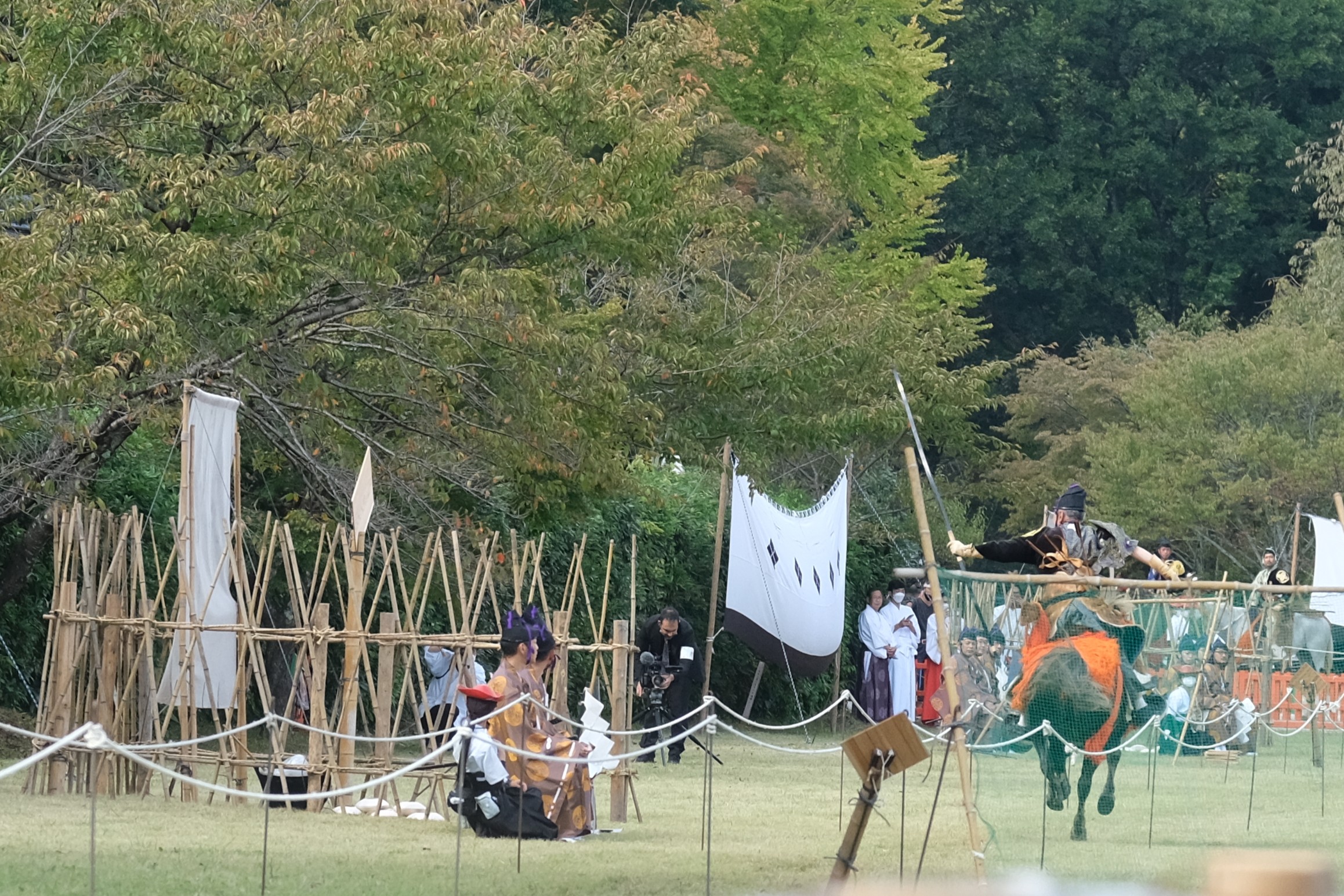
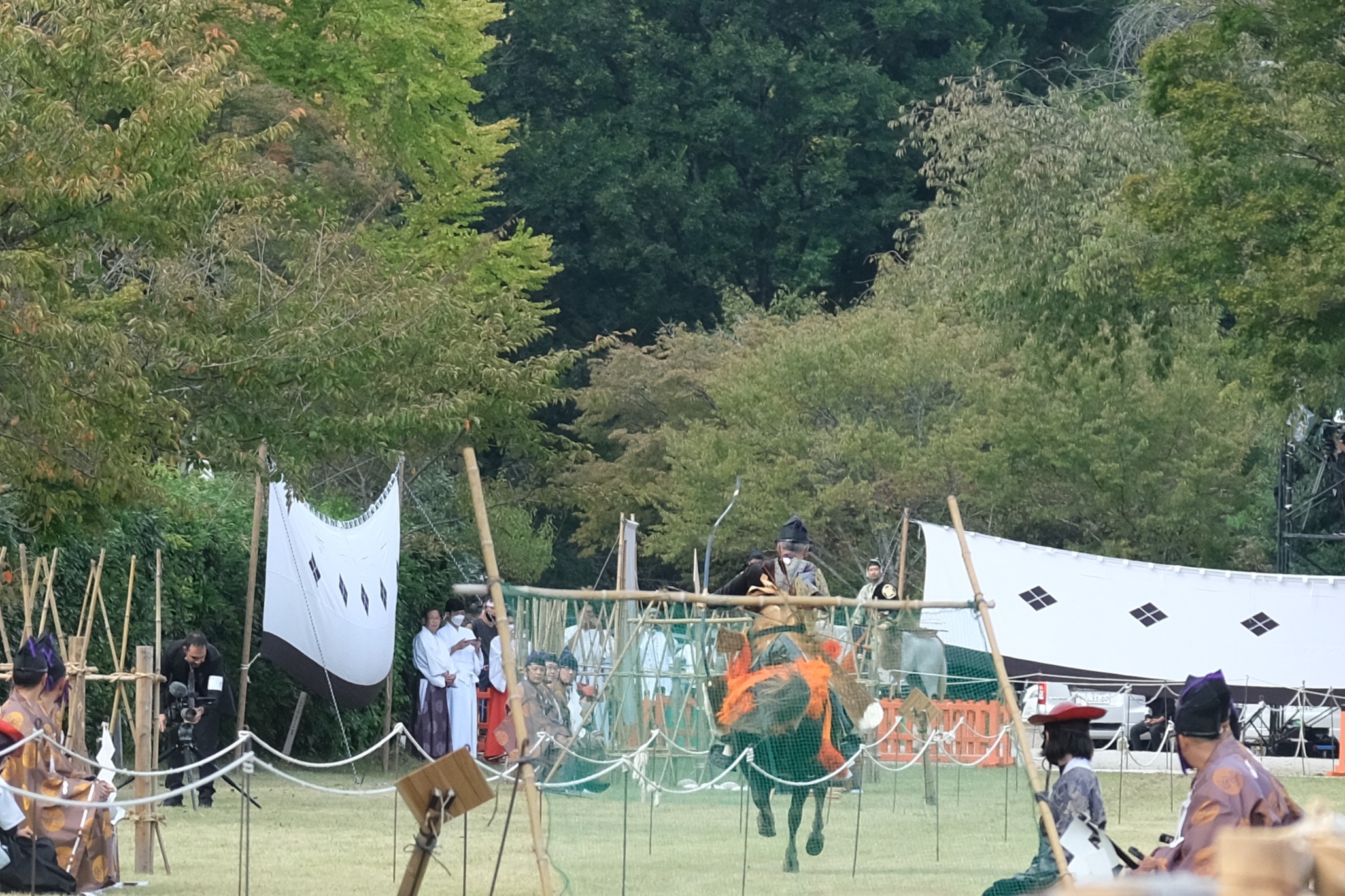
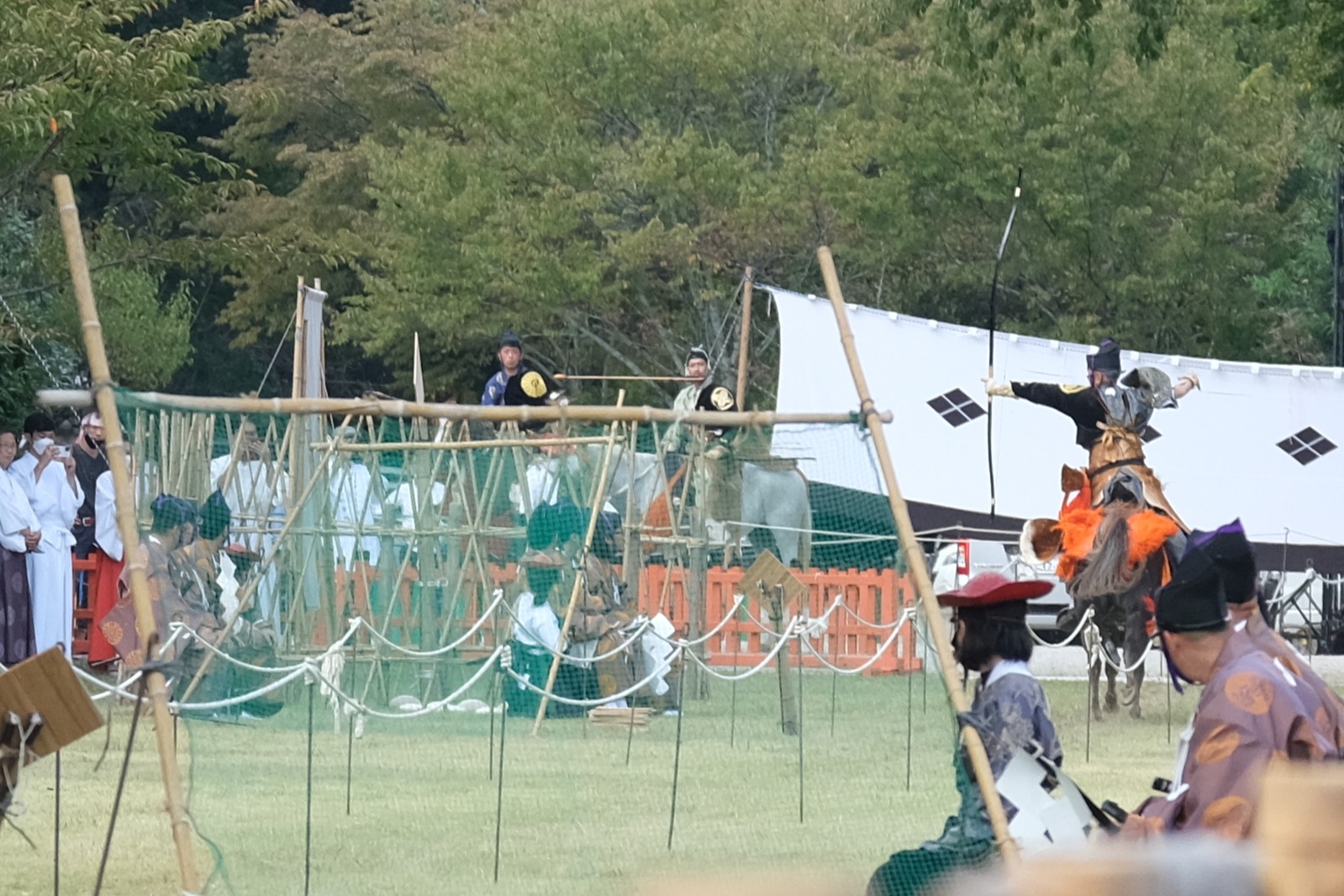
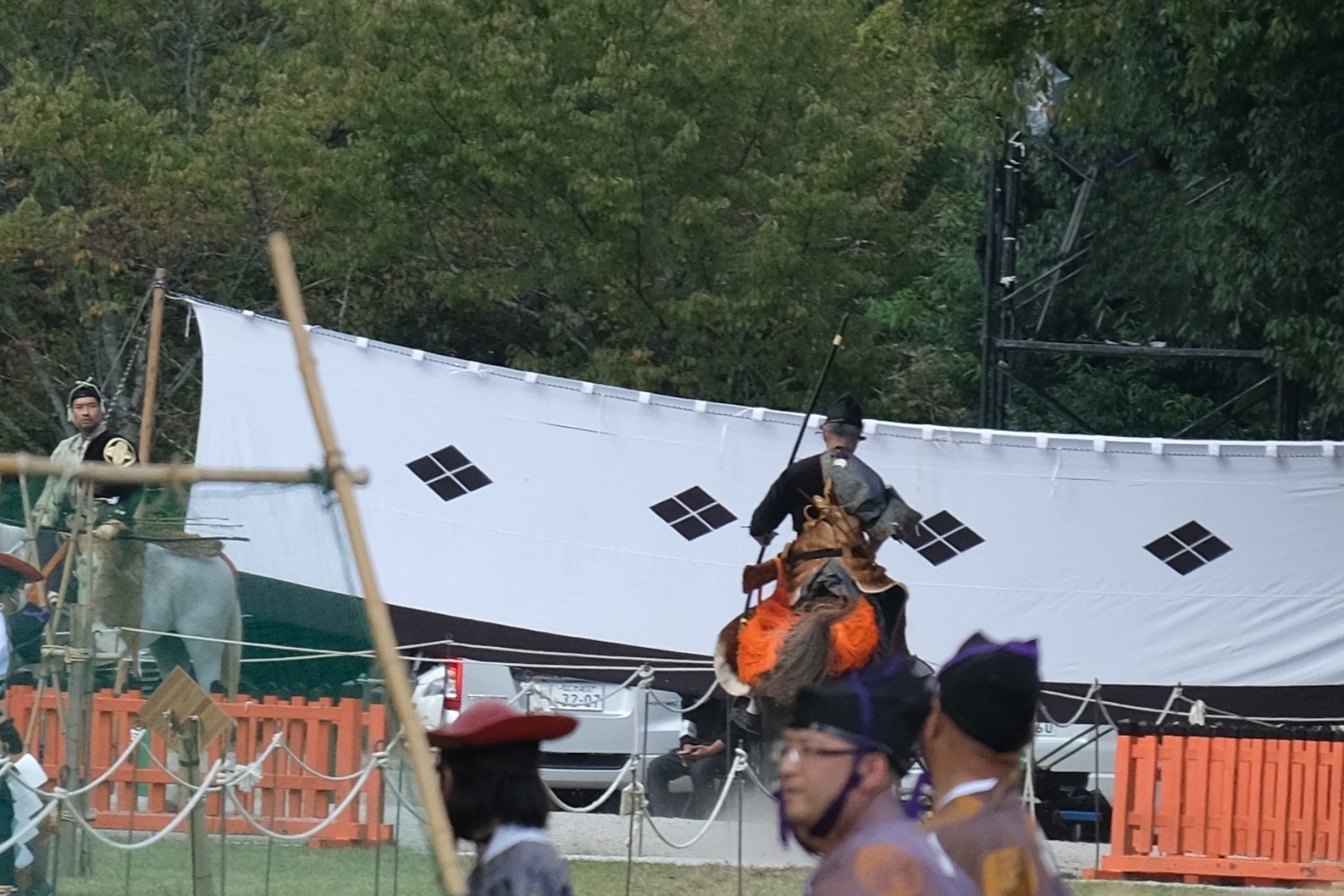
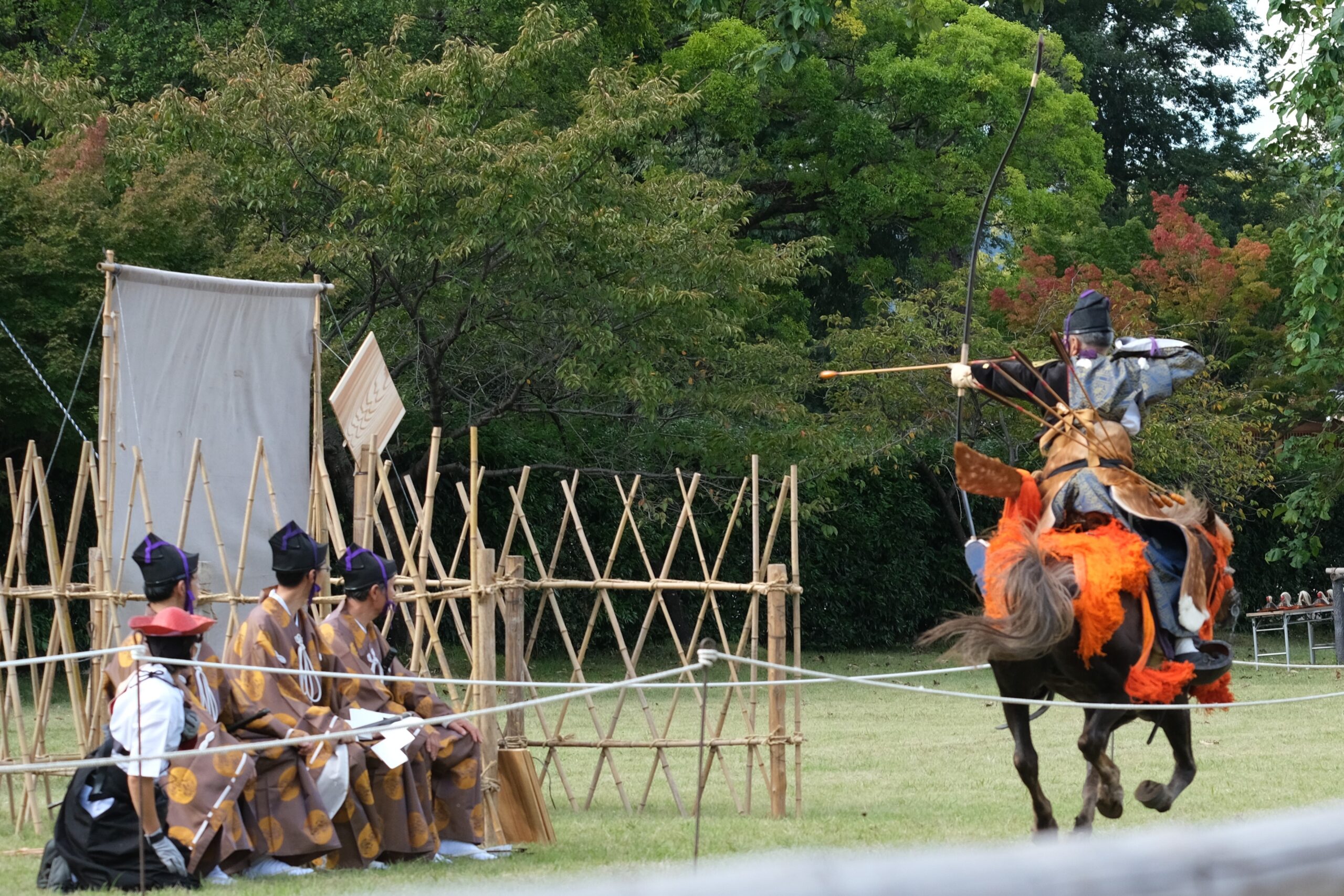
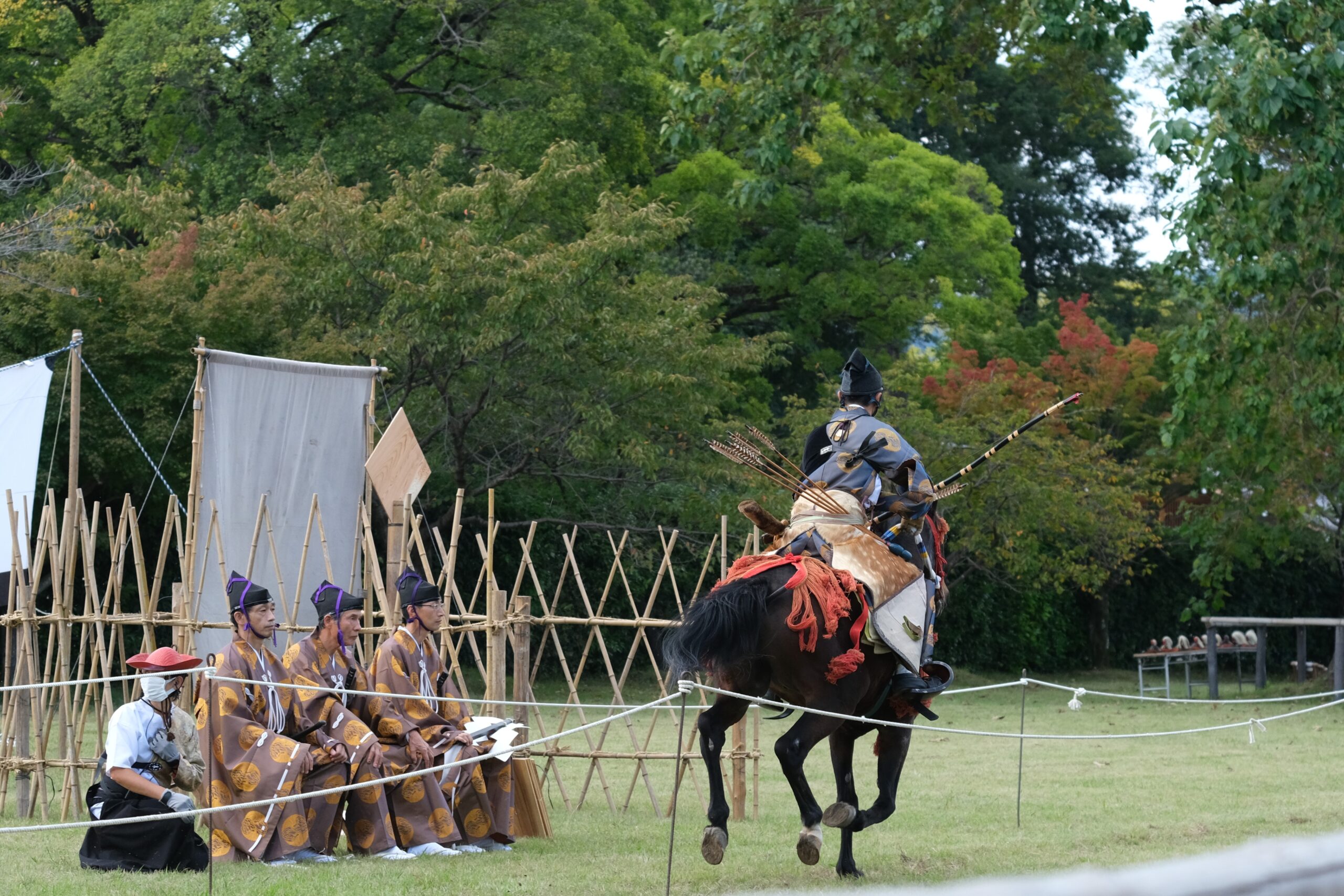
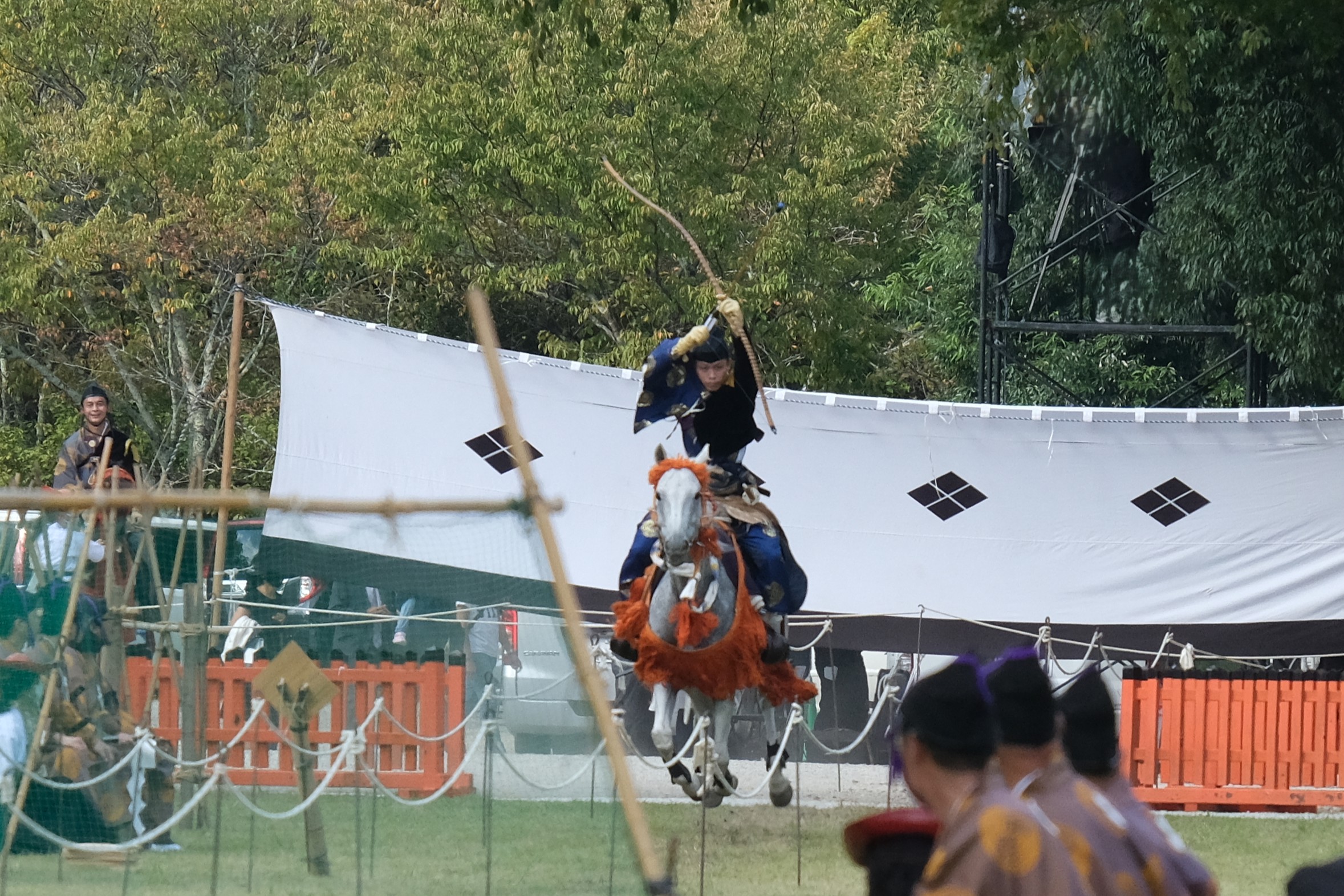
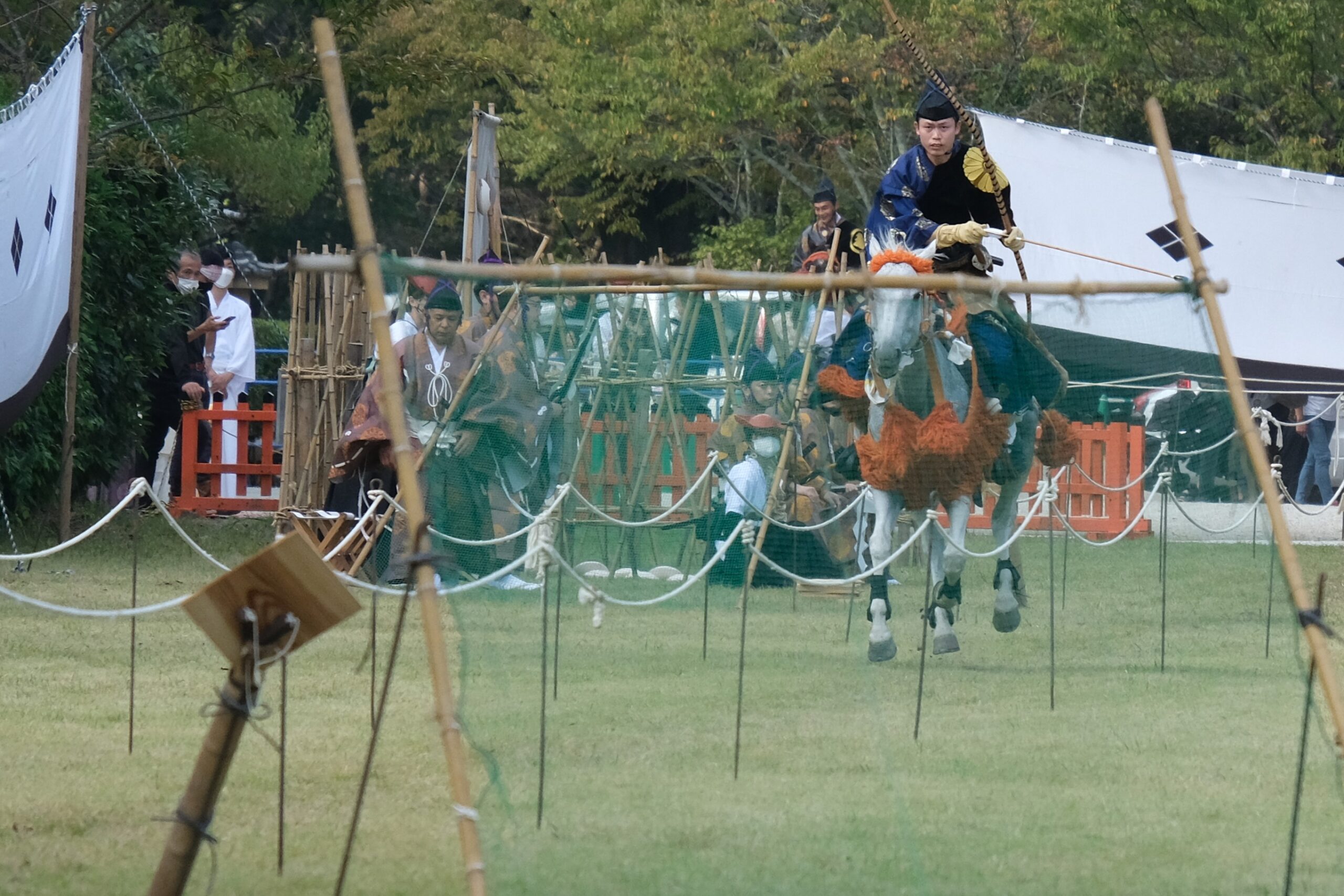
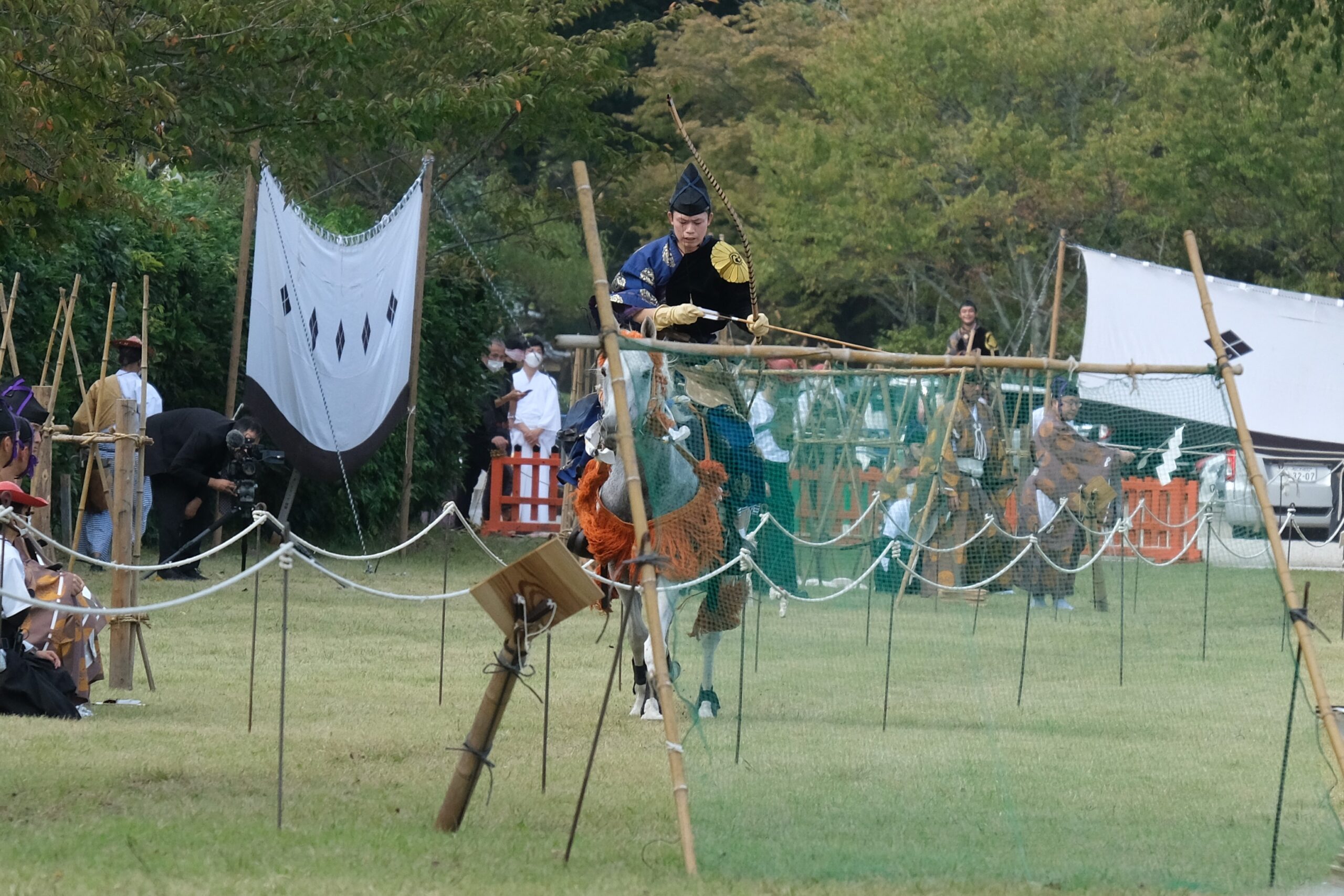
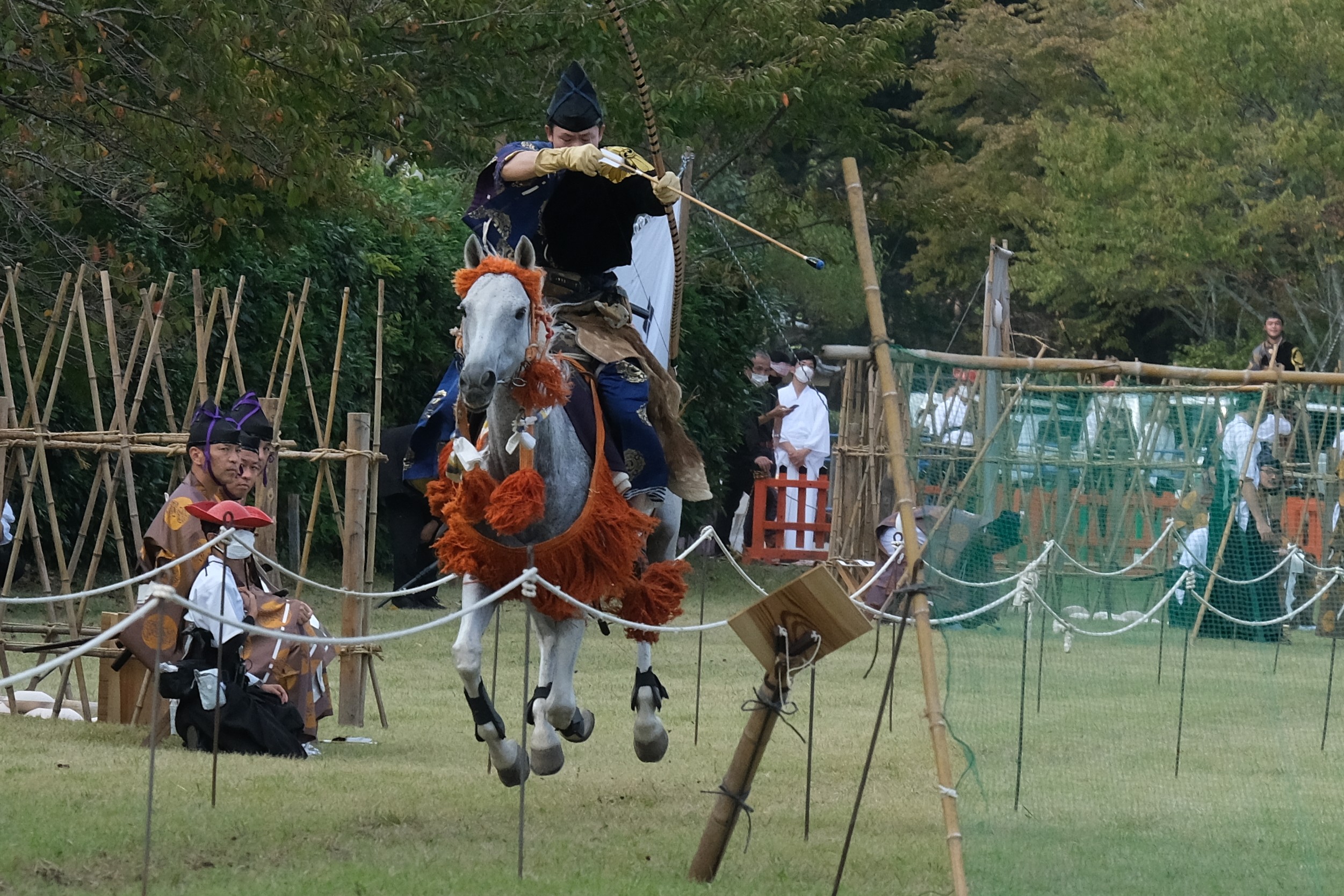
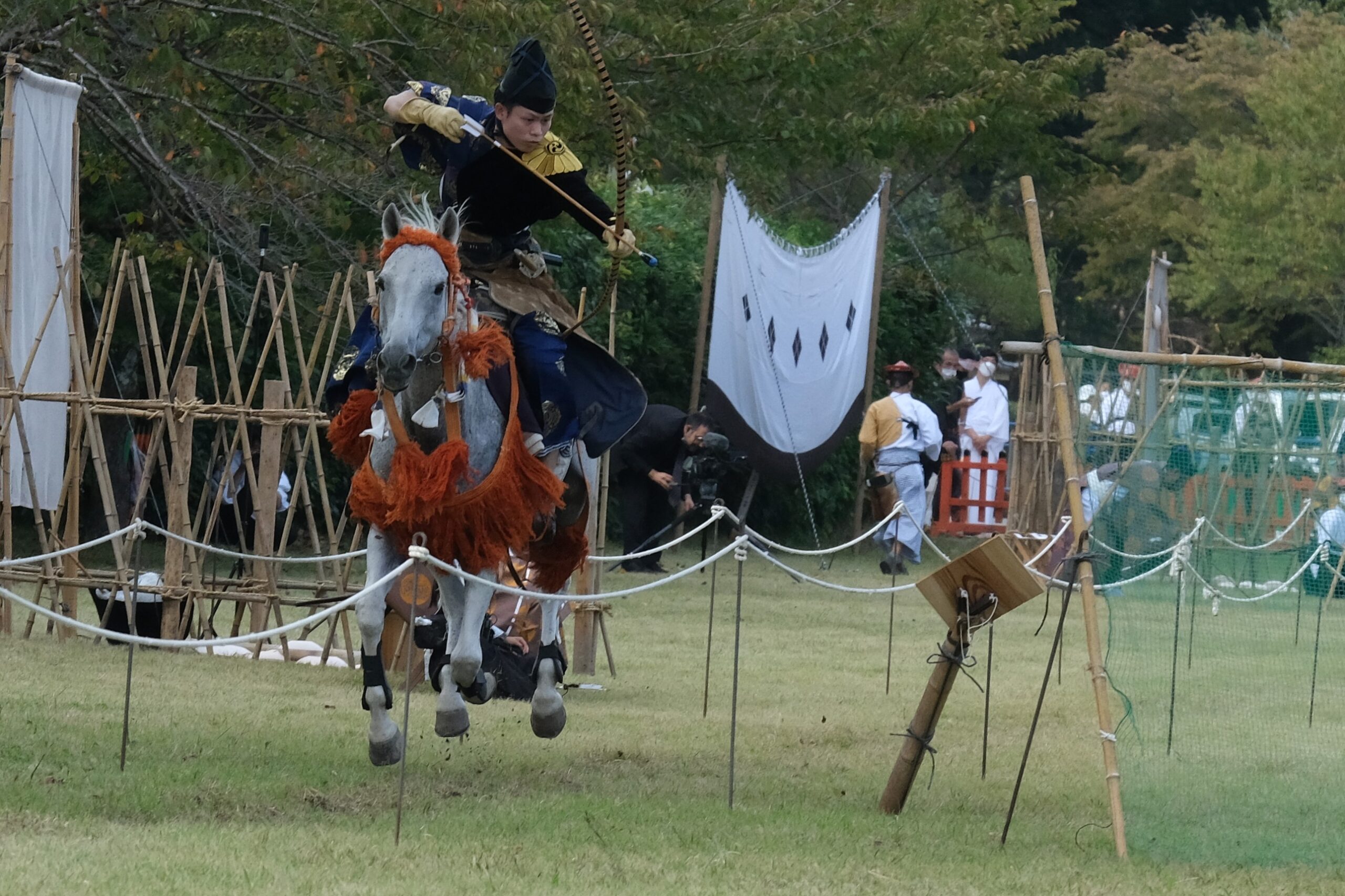
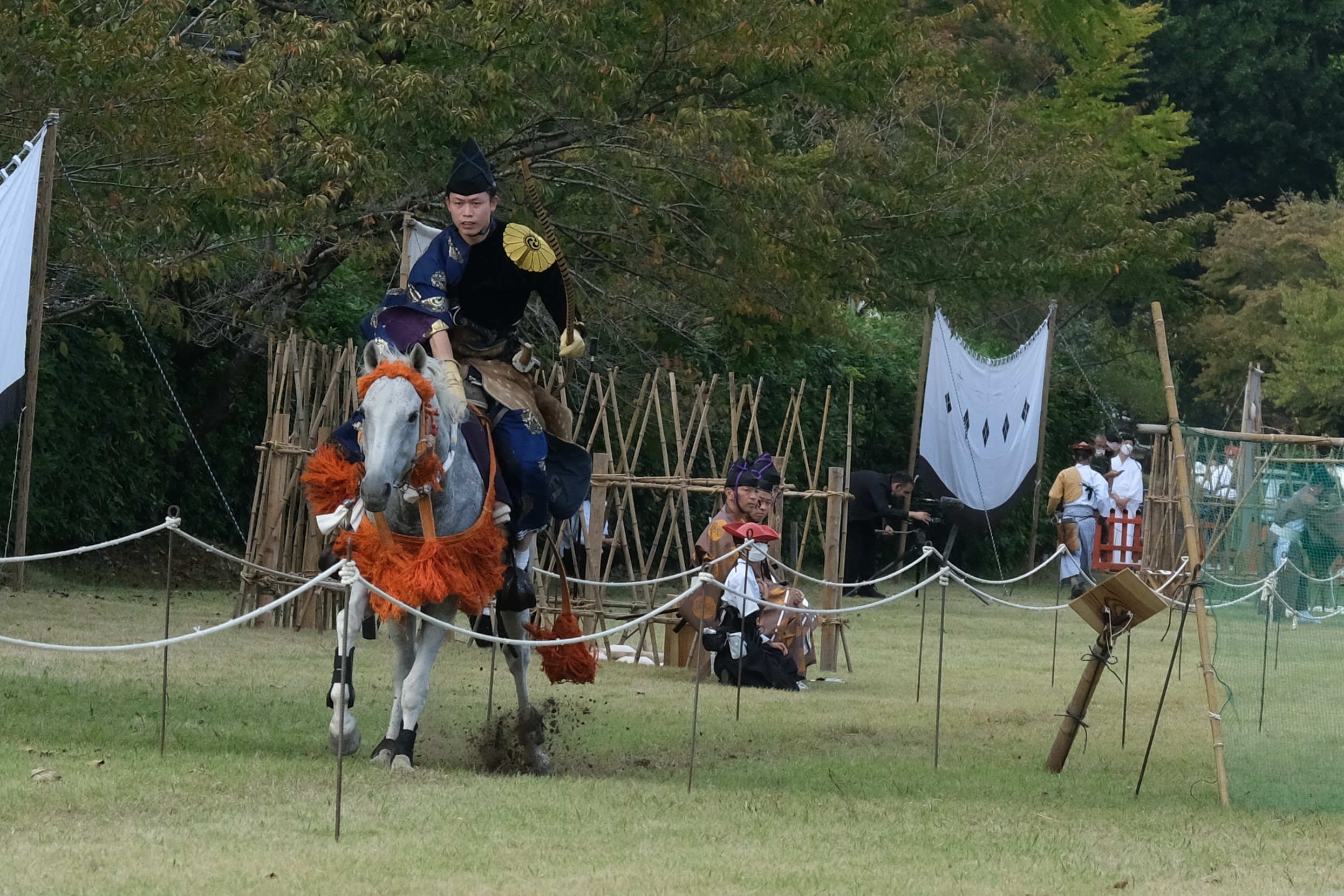
In Kasagake, first “Shisso” (running) is performed so that the horses are accustomed to the race course. After that, two kinds of Kasagake performances (“To-Kasagake” and “Ko-Kasagake”) are carried out. Five targets are used in Kasagake, and three targets (the first, the second, and the third targets) are placed in To-Kasagake and two targets (the fourth and the fifth targets) are placed in Ko-Kasagake. The horses run from Baba-moto to Baba-sue in To-Kasagake, they run backward in Ko-Kasagake, and the two performances are carried out alternatively. The target used in To-Kasagake has a size of 40 centimeters square, and is set about 5 meters away from the course. An archer shoots an arrow horizontally from horseback. The target used in Ko-Kasagake has a size of about tens centimeters square, and is set close to the ground.
-
Target Used in To-Kasagake
Baba-moto
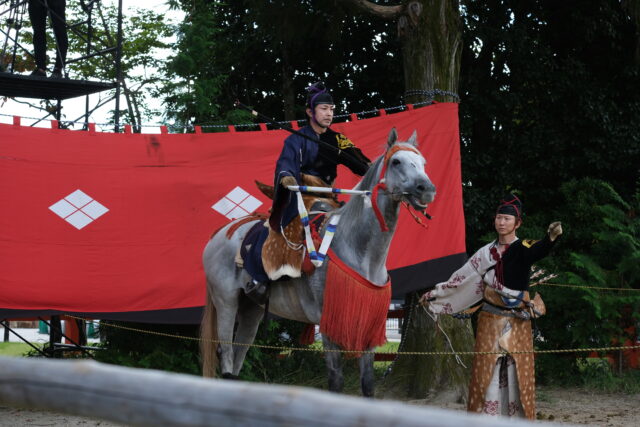
Shisso
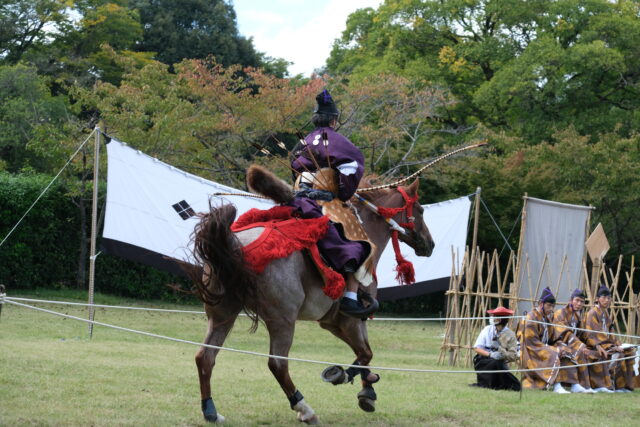
To-kasagake 1. Start
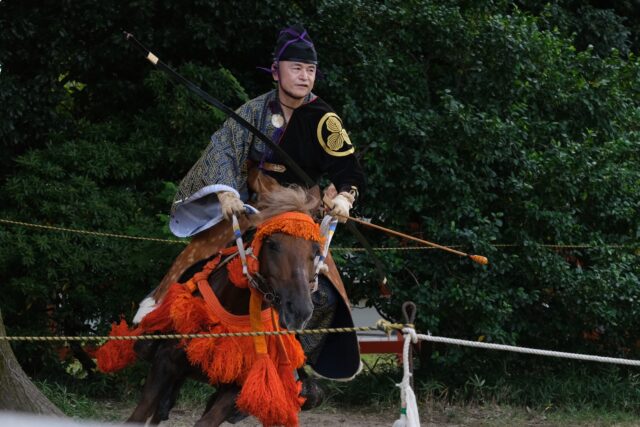
2. Rather High Speed

3. First Target
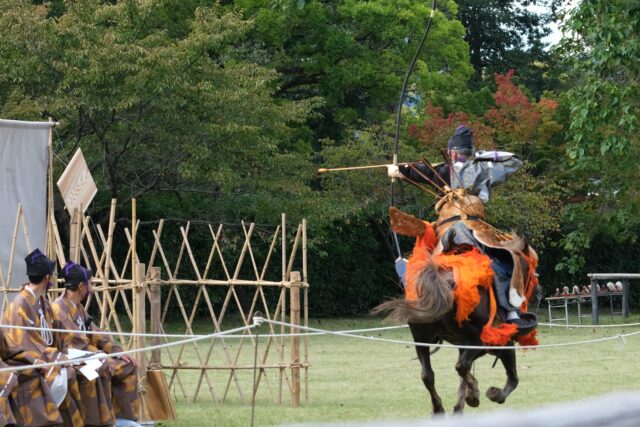
4. Second Target
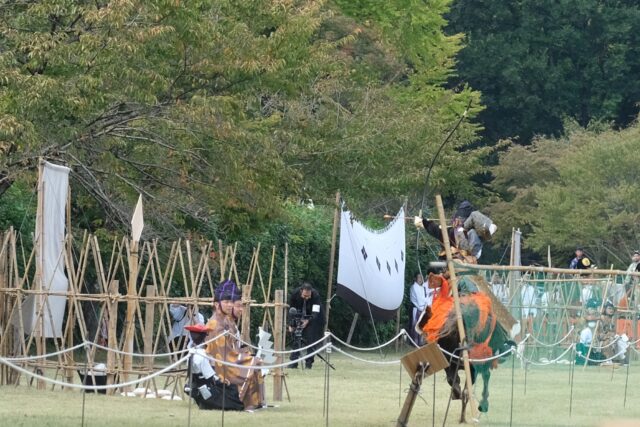
5. Did the arrow hit the target?
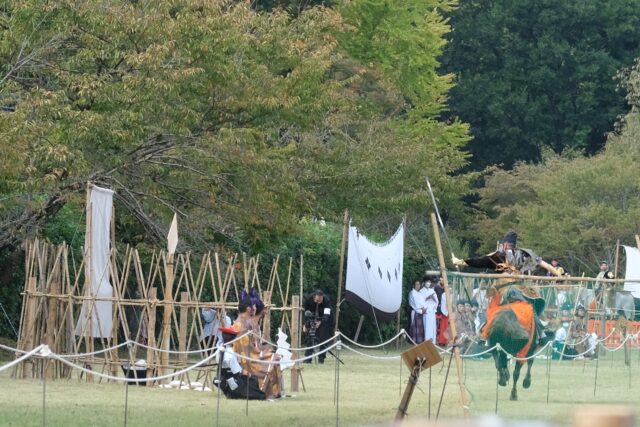
6. Further Preparation
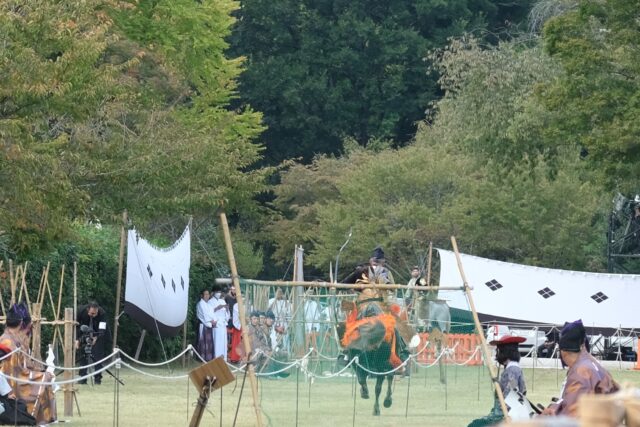
7. Third Target
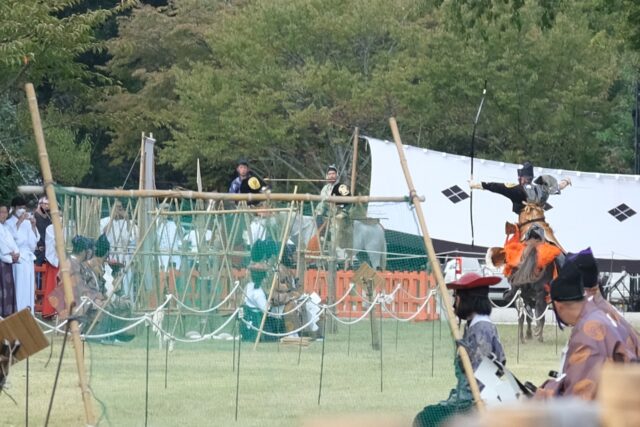
8. Goal
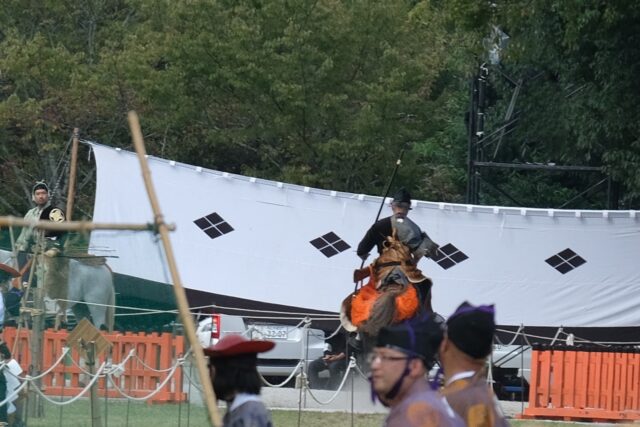
The archer shots an arrow horizontally from the horseback.
-
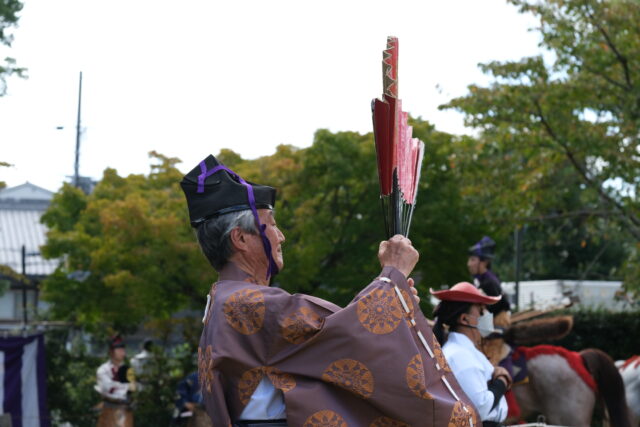
Sign Announcing Beggining of Kasagake
Baba-sue
Shisso
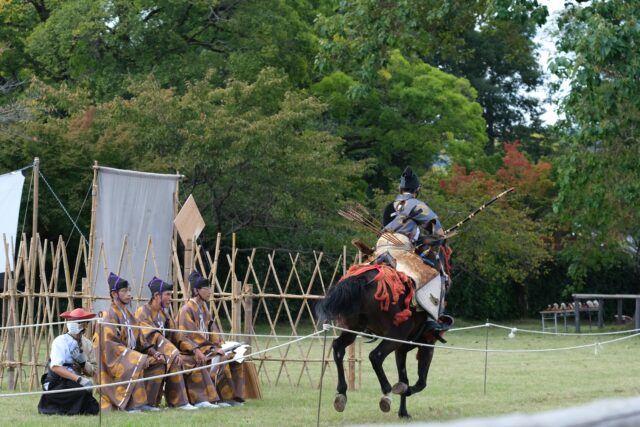
Ko-Kasagake 1. Start
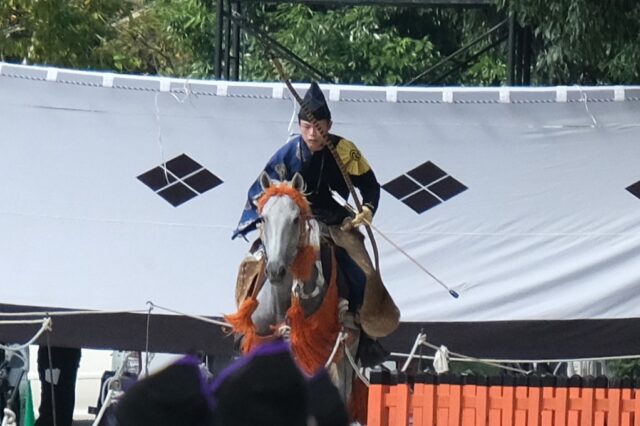
2. He was comming here.
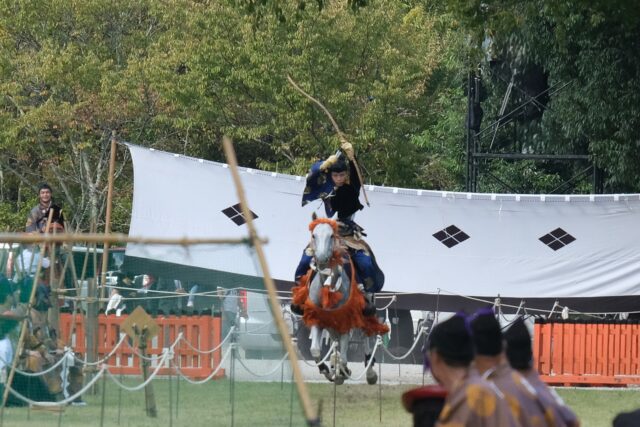
3. He put an arrow on a bow.
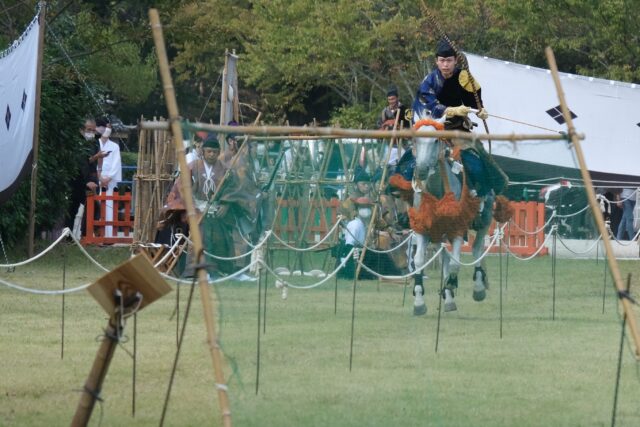
4. He got set to shoot.
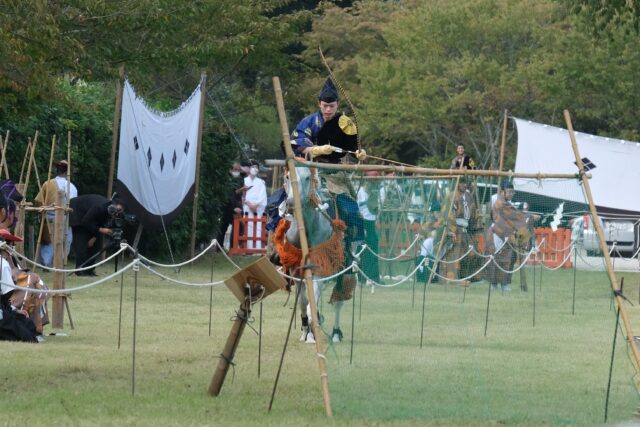
5. He took aim.
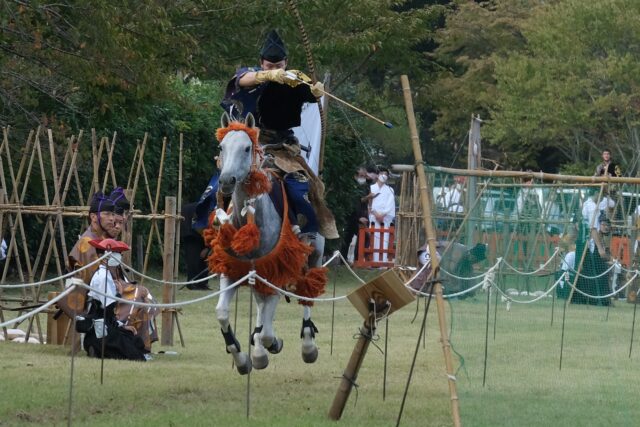
6. Go!
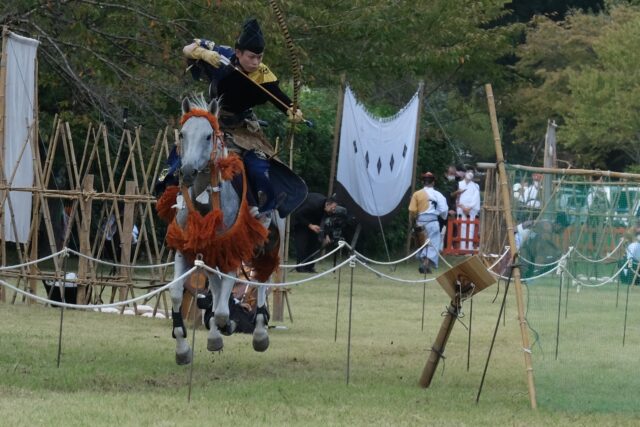
7. Did the arrow hit the target?
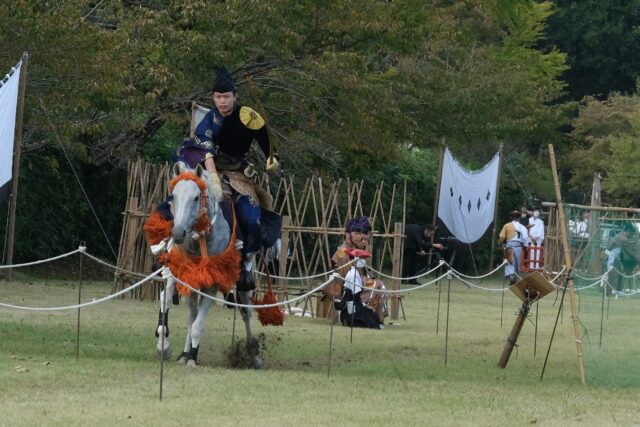
Full Impact

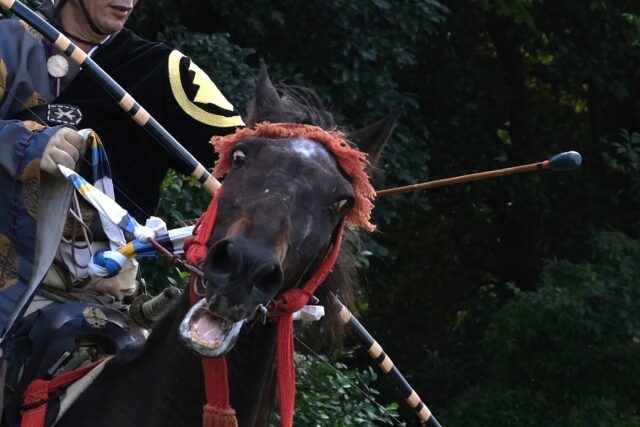
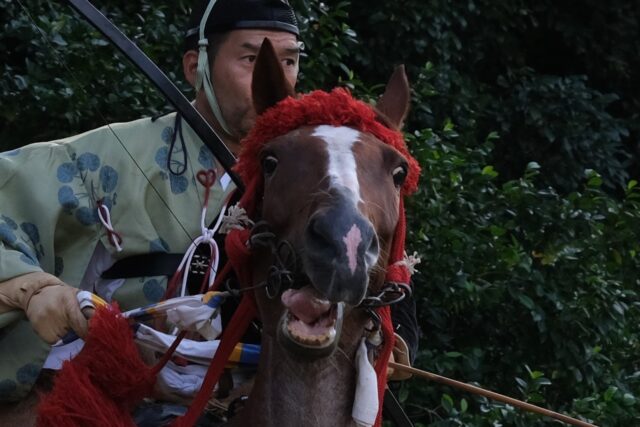
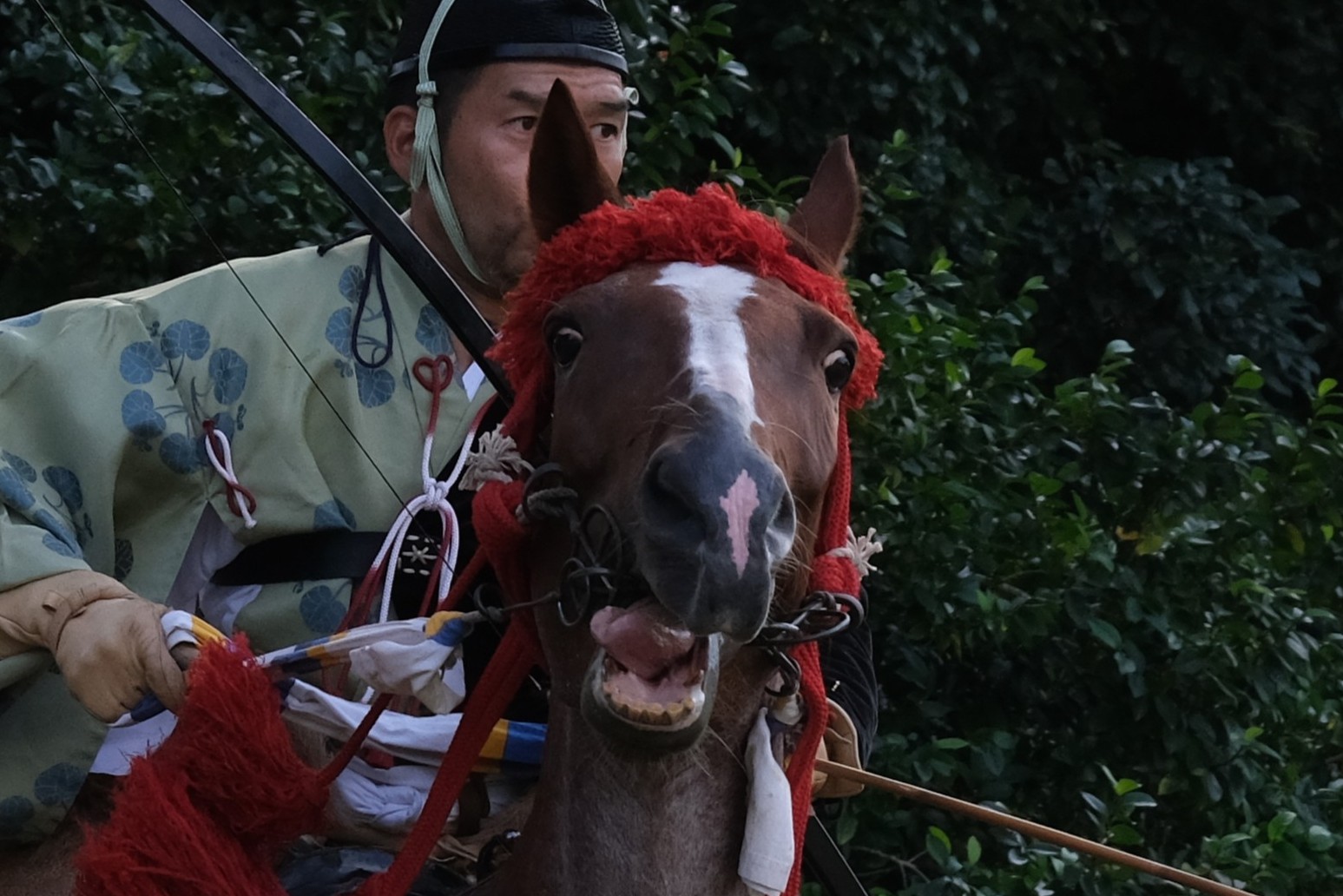
They (the archer and horse) were both very serious faces.
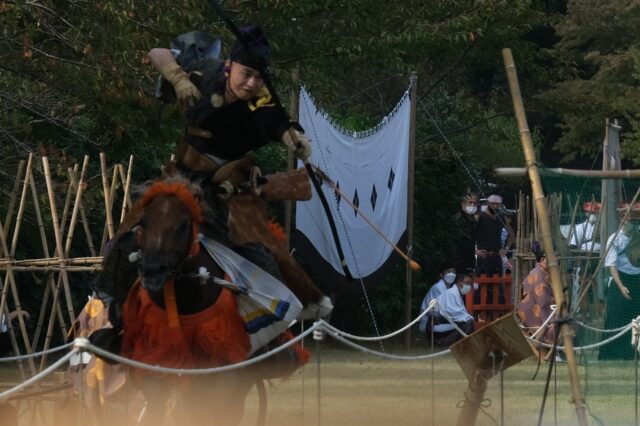
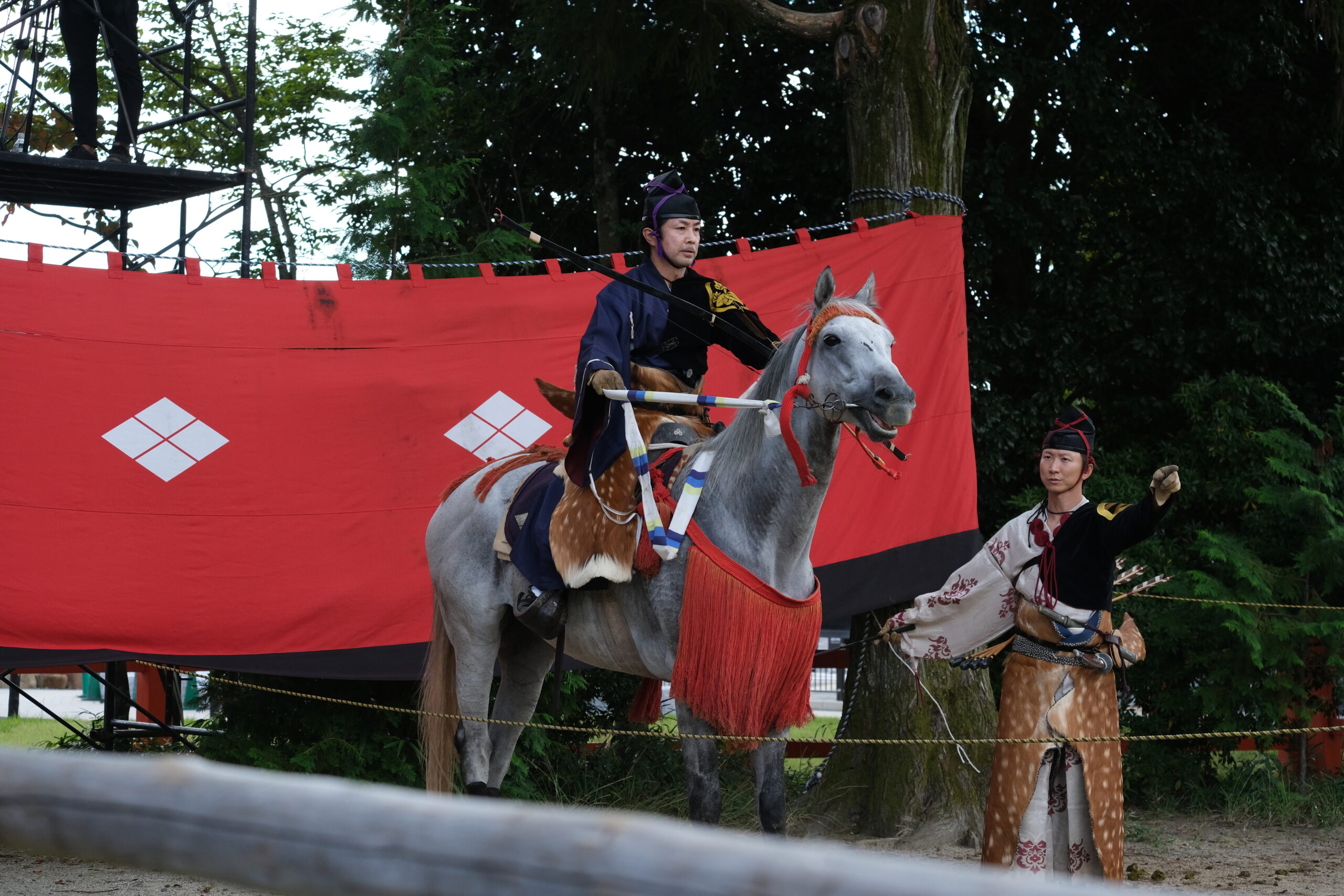
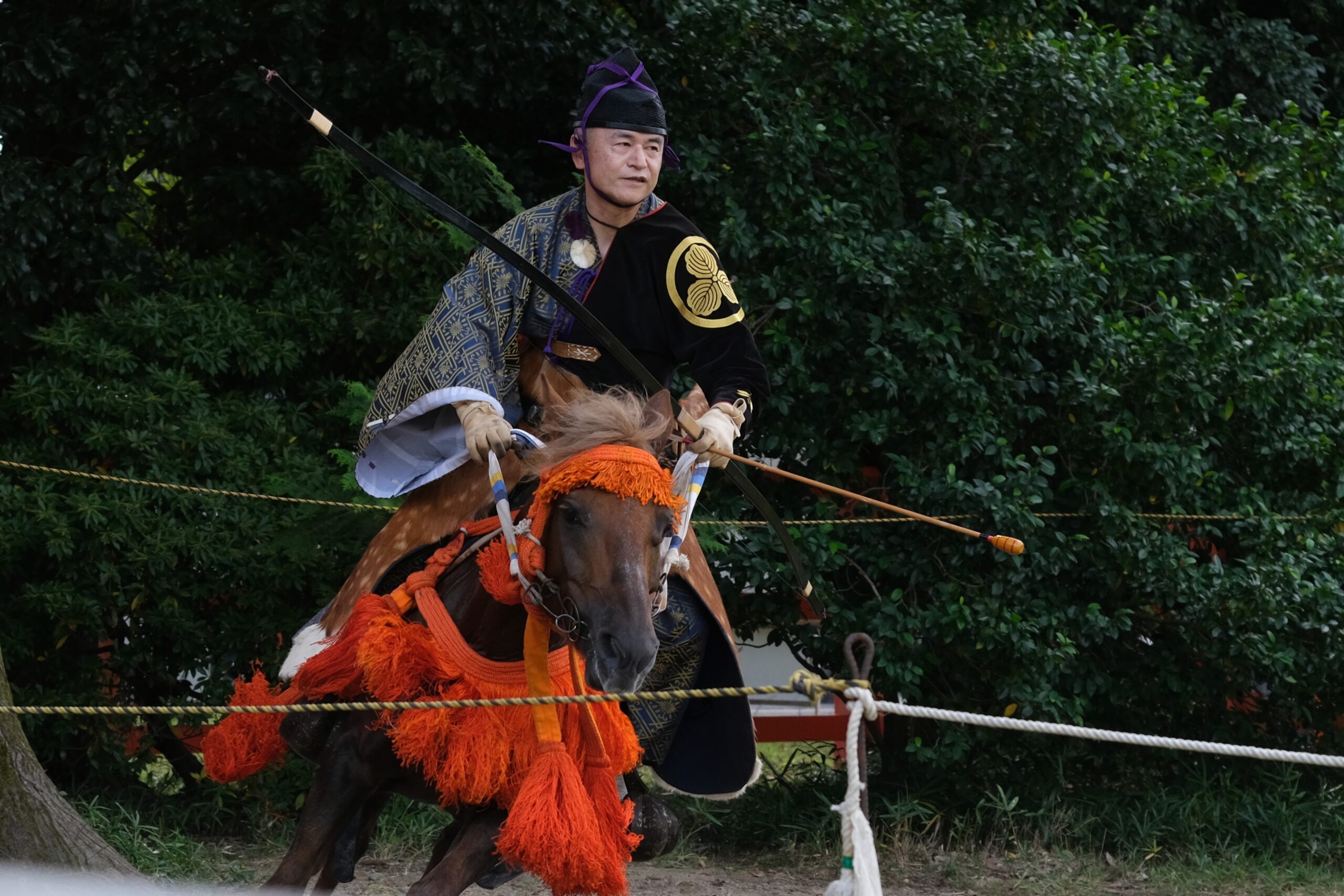
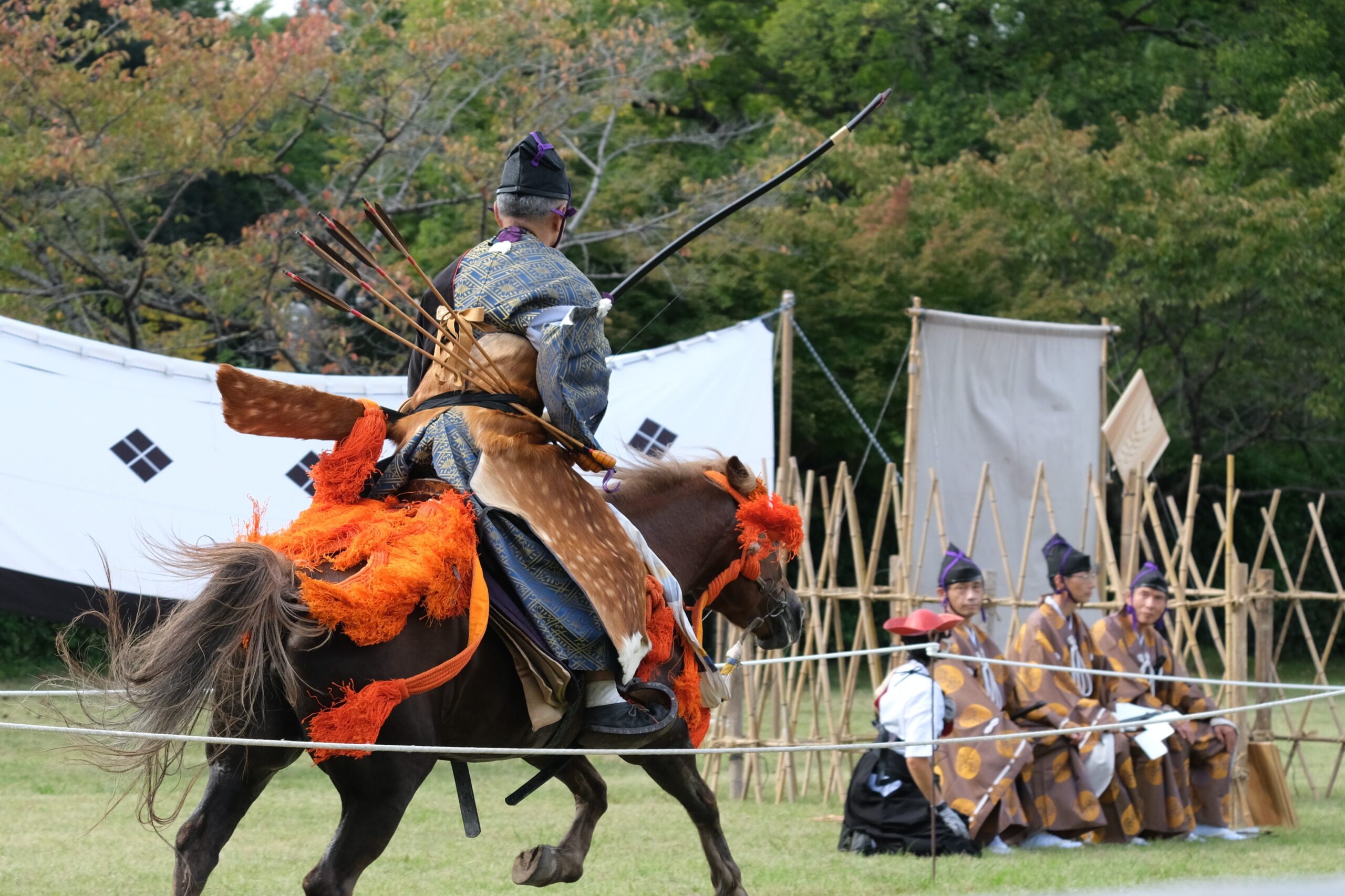
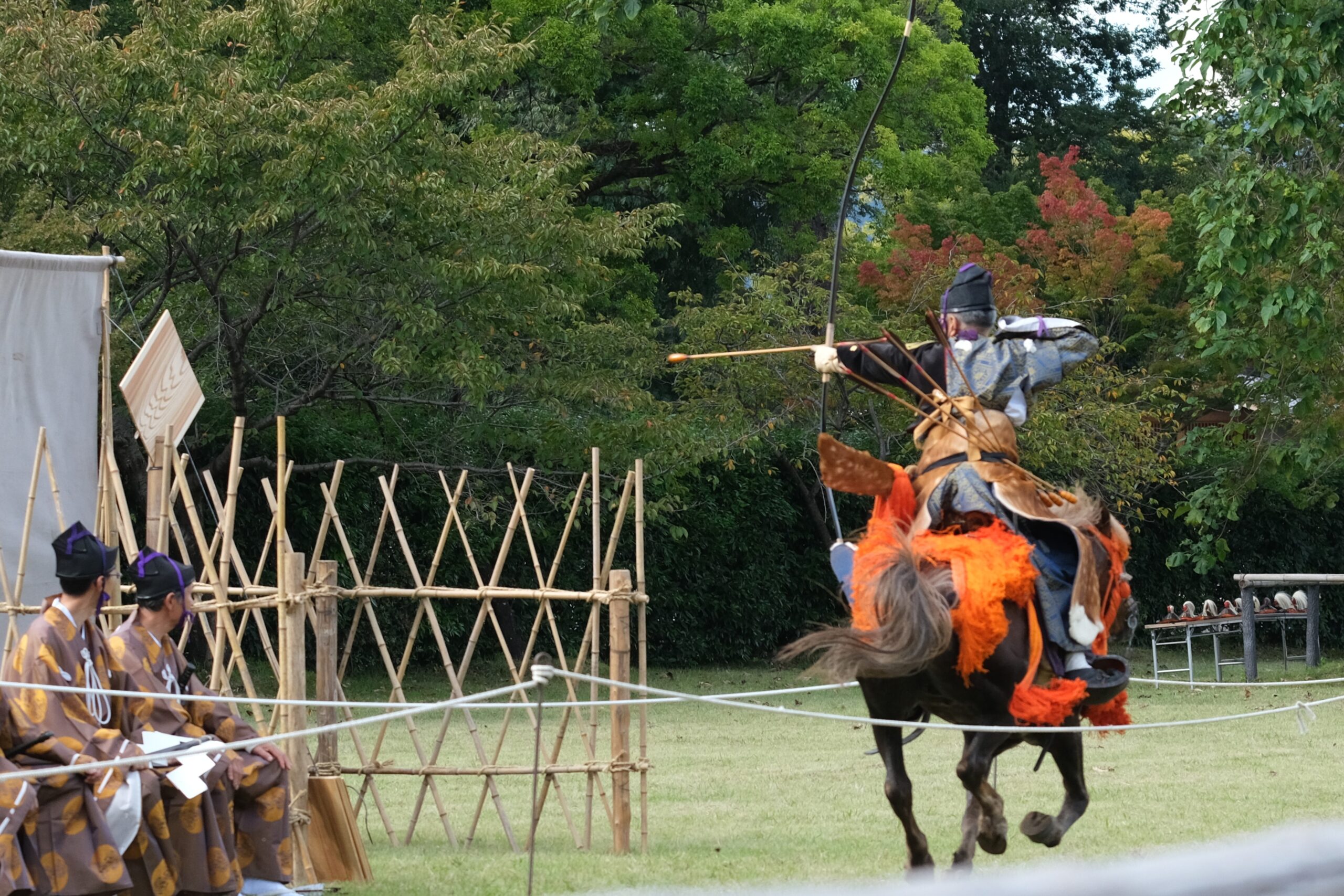
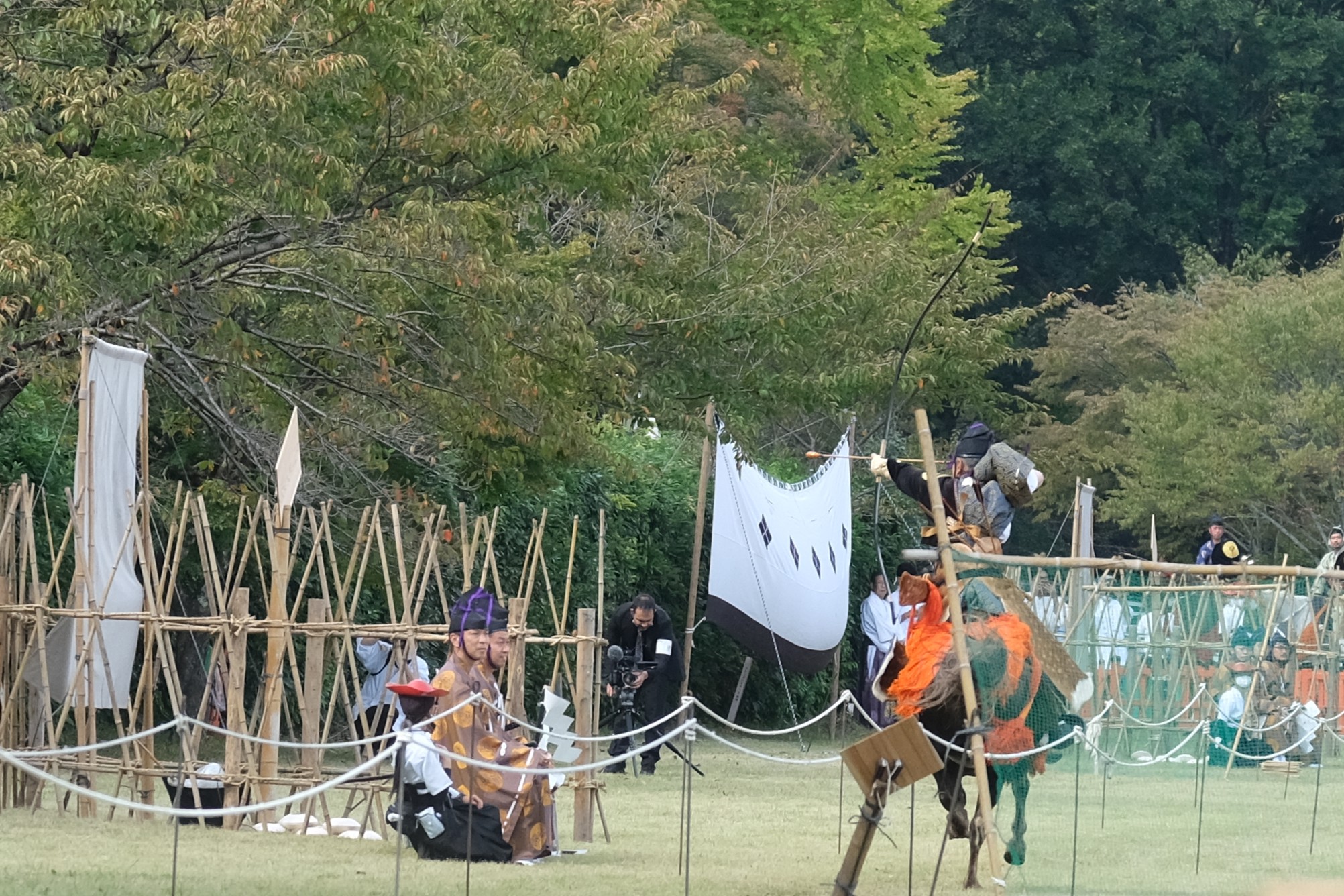

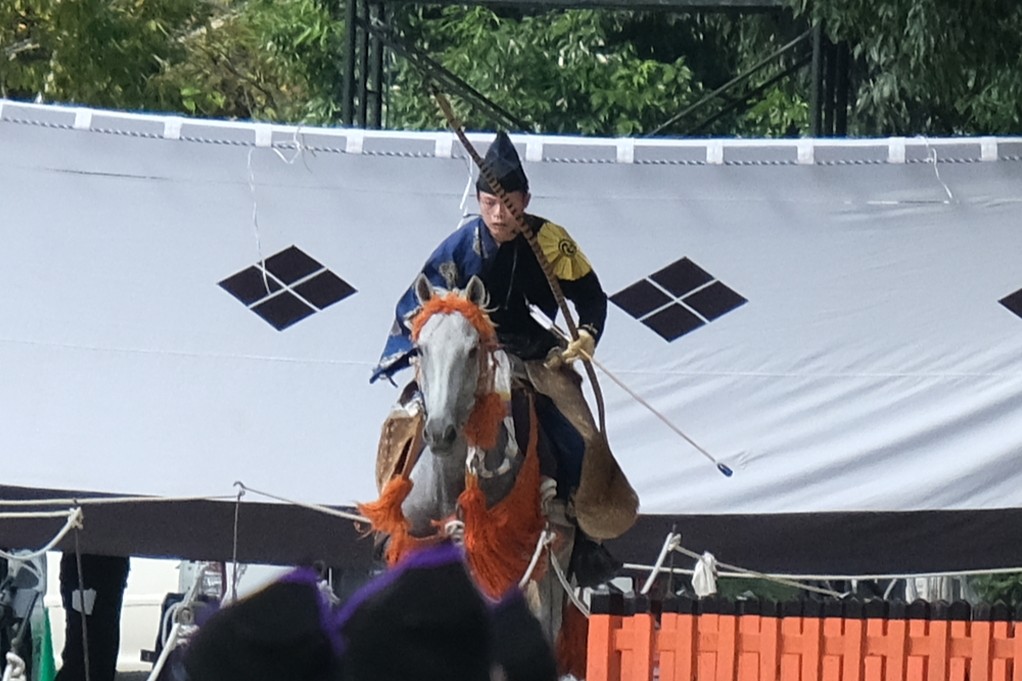

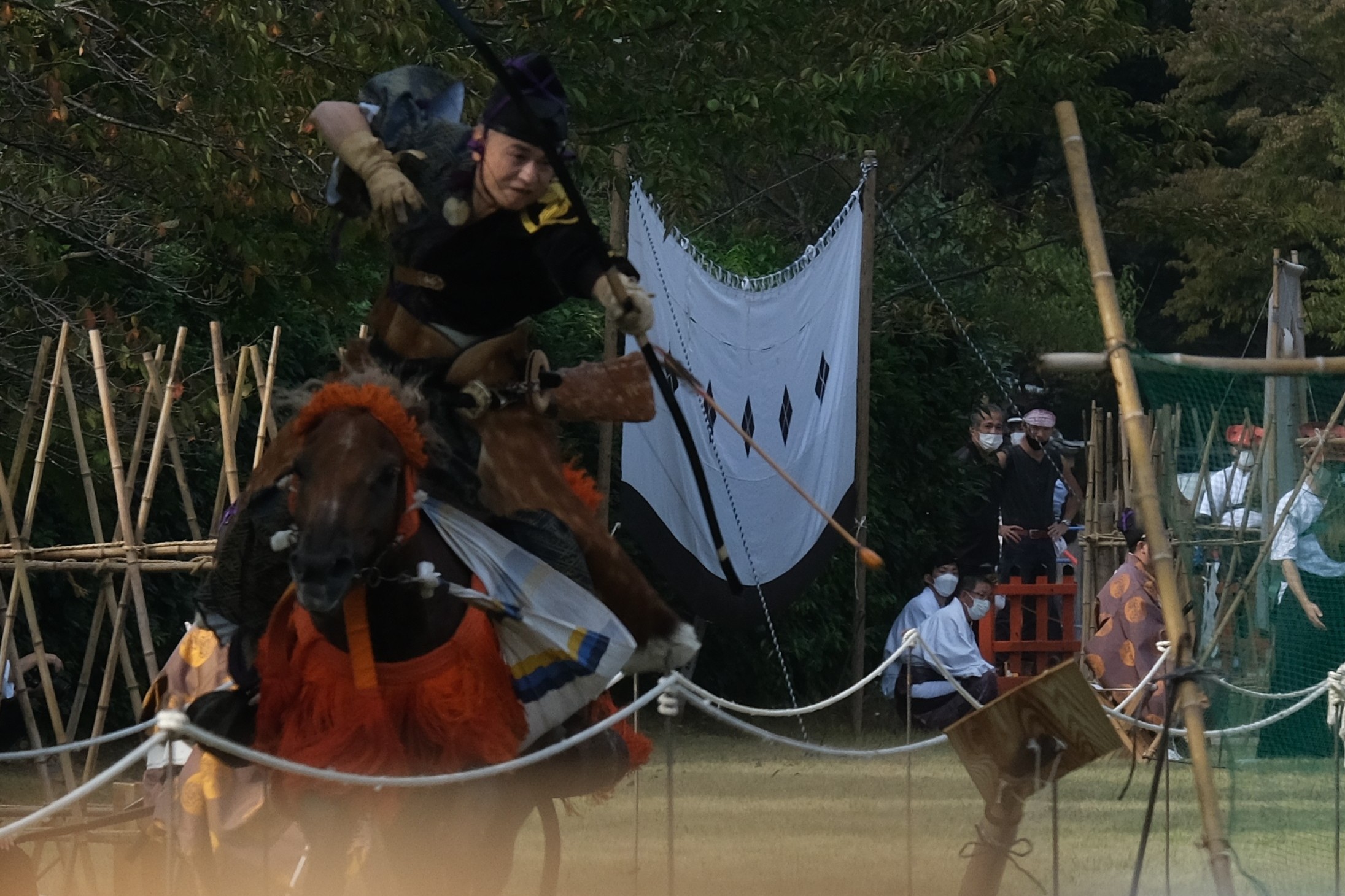
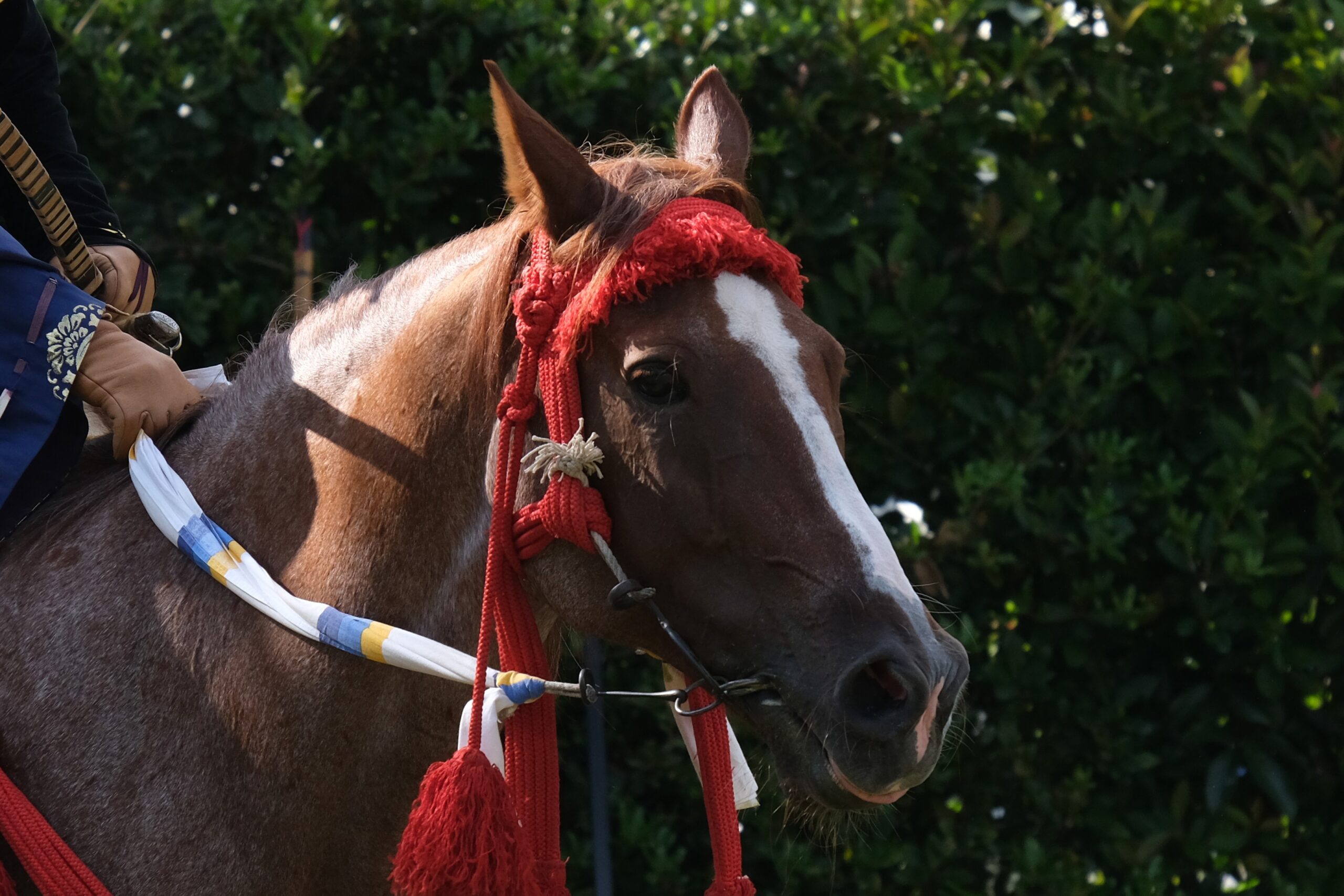
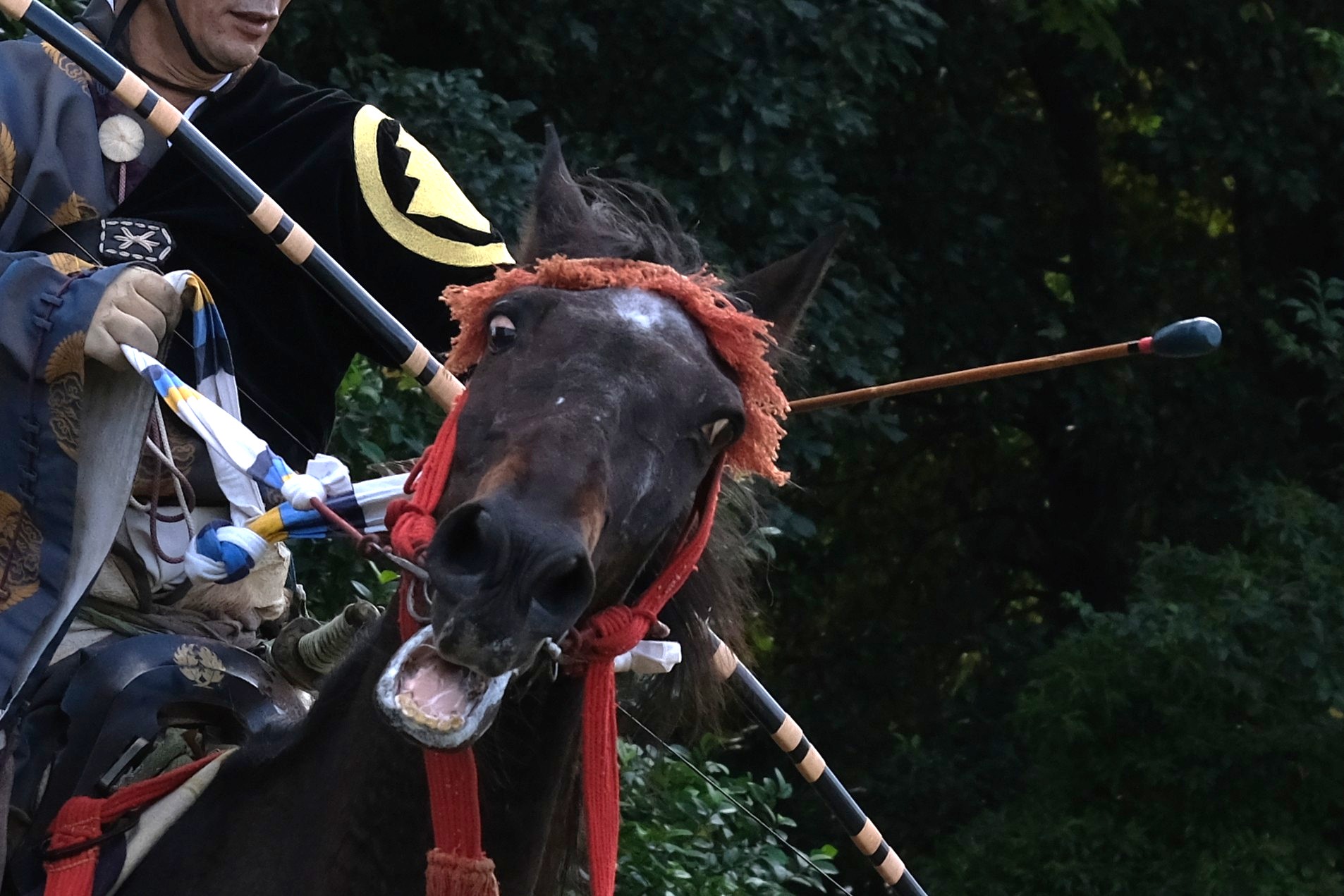
Horses are usually gentle and calm, but they may bare their teeth when they get excited. This is the same as in other animals and we, humans.
-
Normal

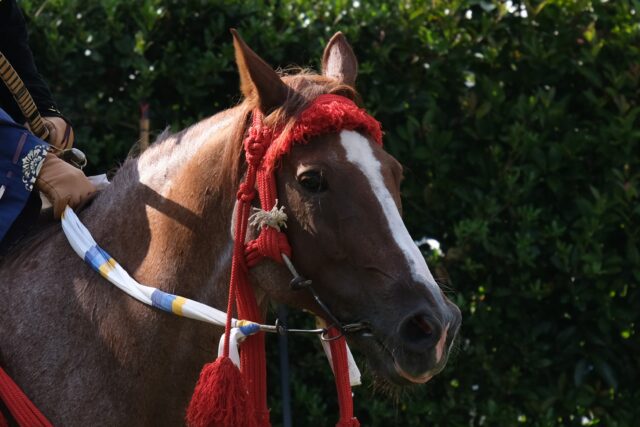
-
State of Excitement

Leave a Reply