

Hojuji Temple
Hojuji Temple is a temple of the Tendai sect, built in 989. The principal image of this temple is Fudo Myoo, Acala.
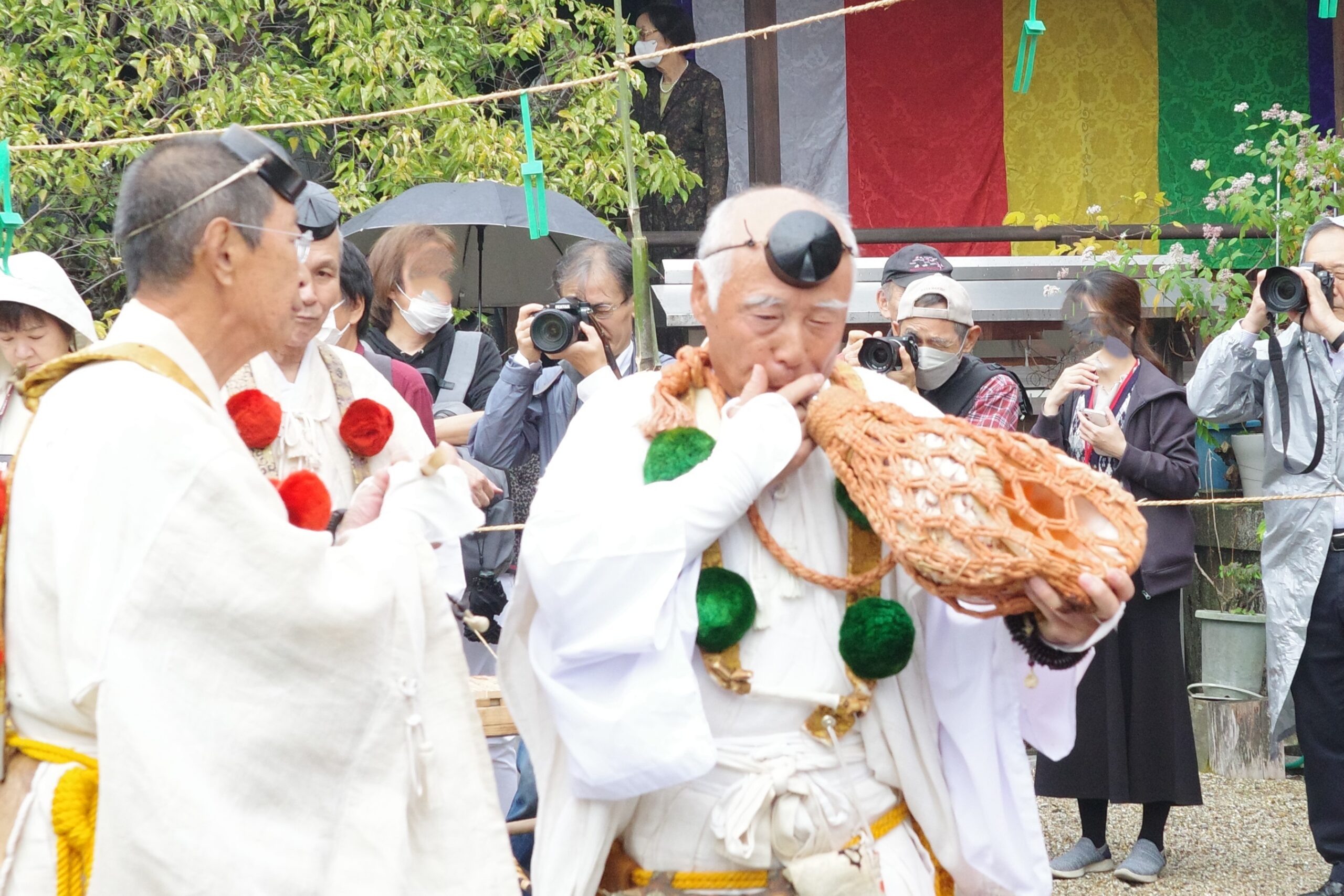
As one of the Buddhist ceremonies performed in the temple, Migawari Fudoson Taisai (Big Festival) is held on November 15 every year, in which some interesting ceremonies including Oni Horaku are held.
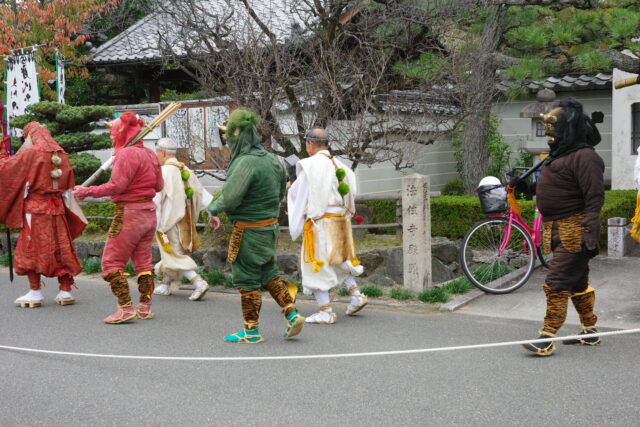
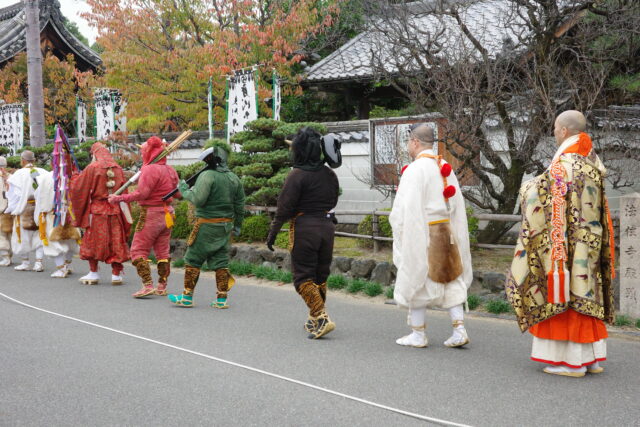
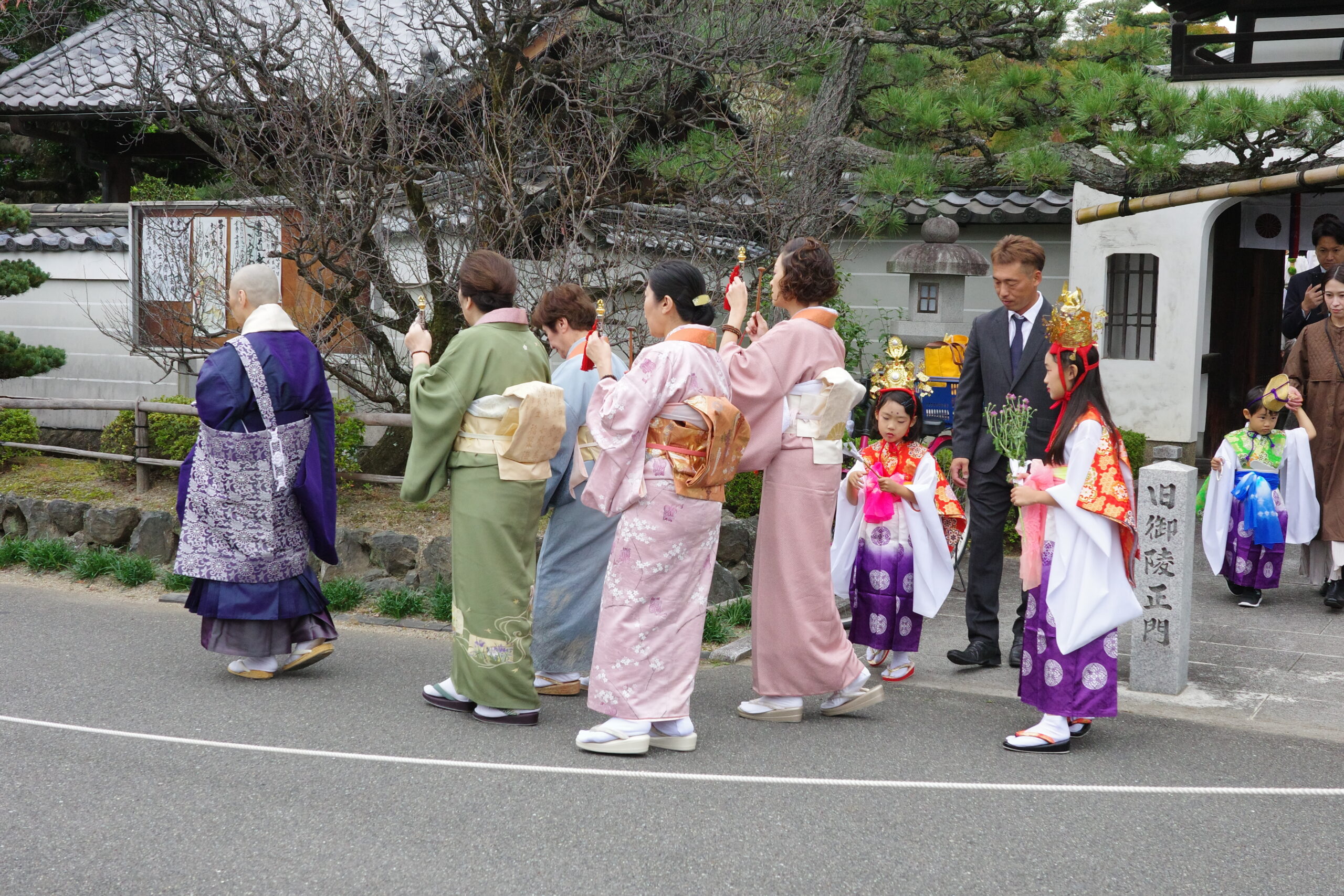
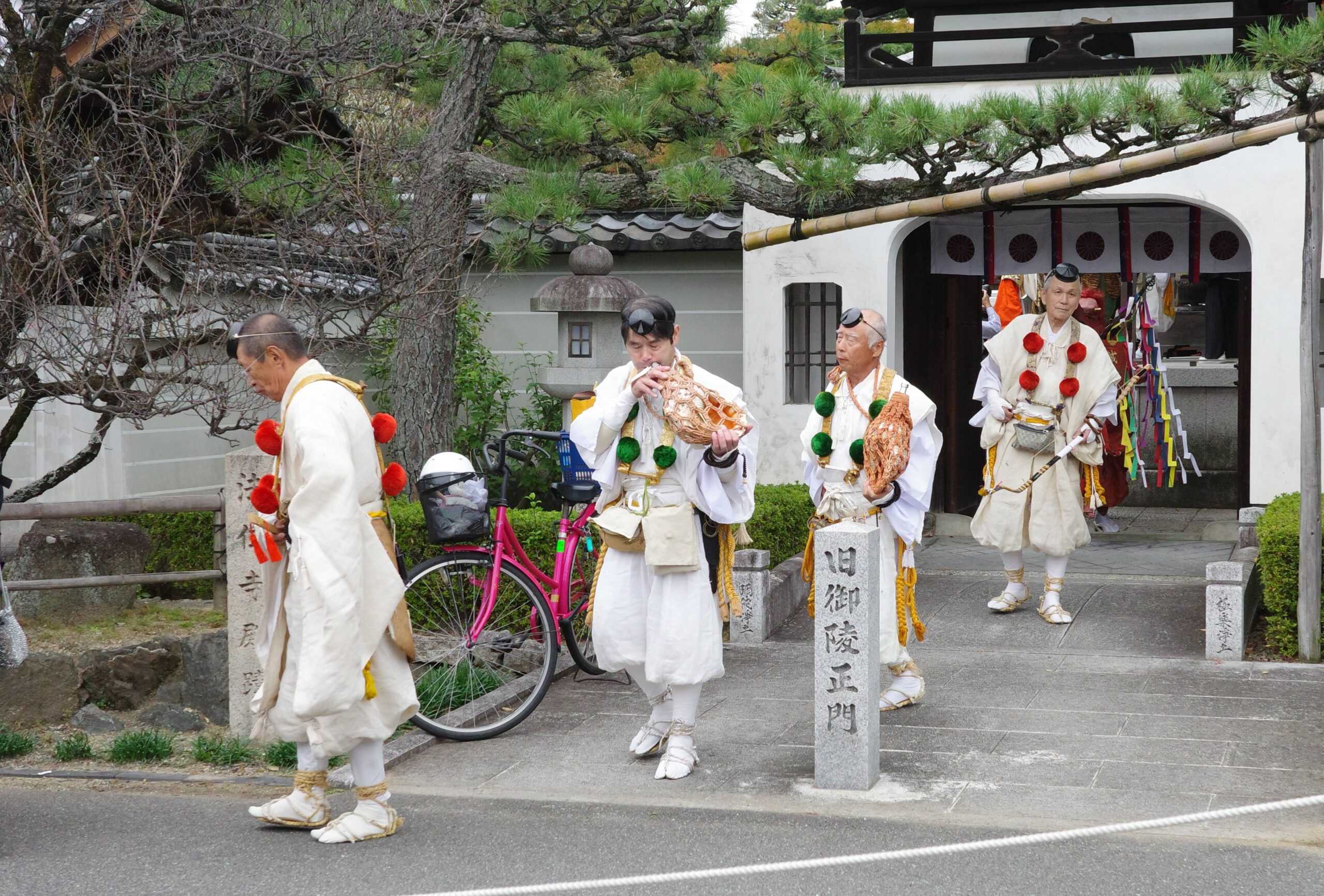
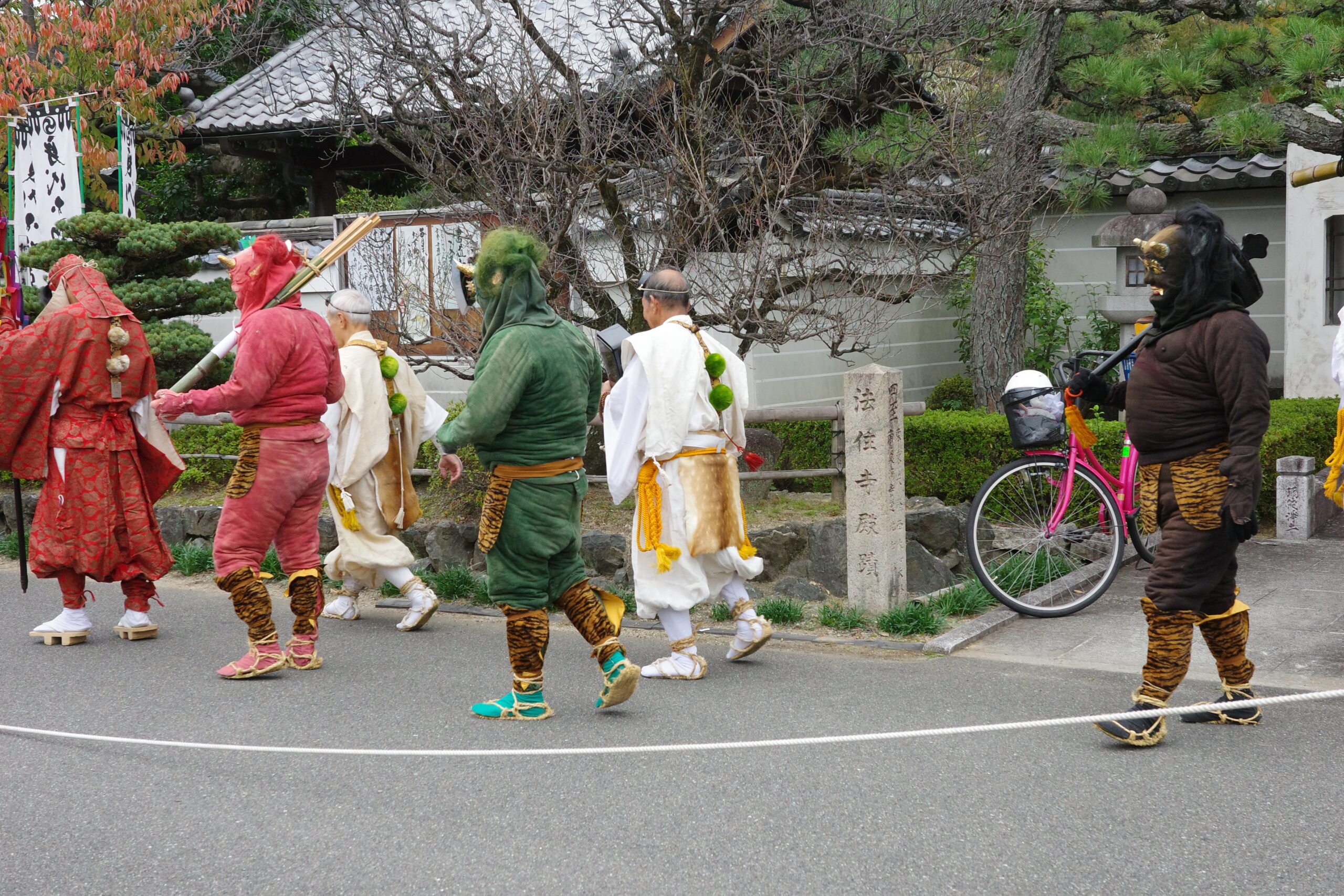
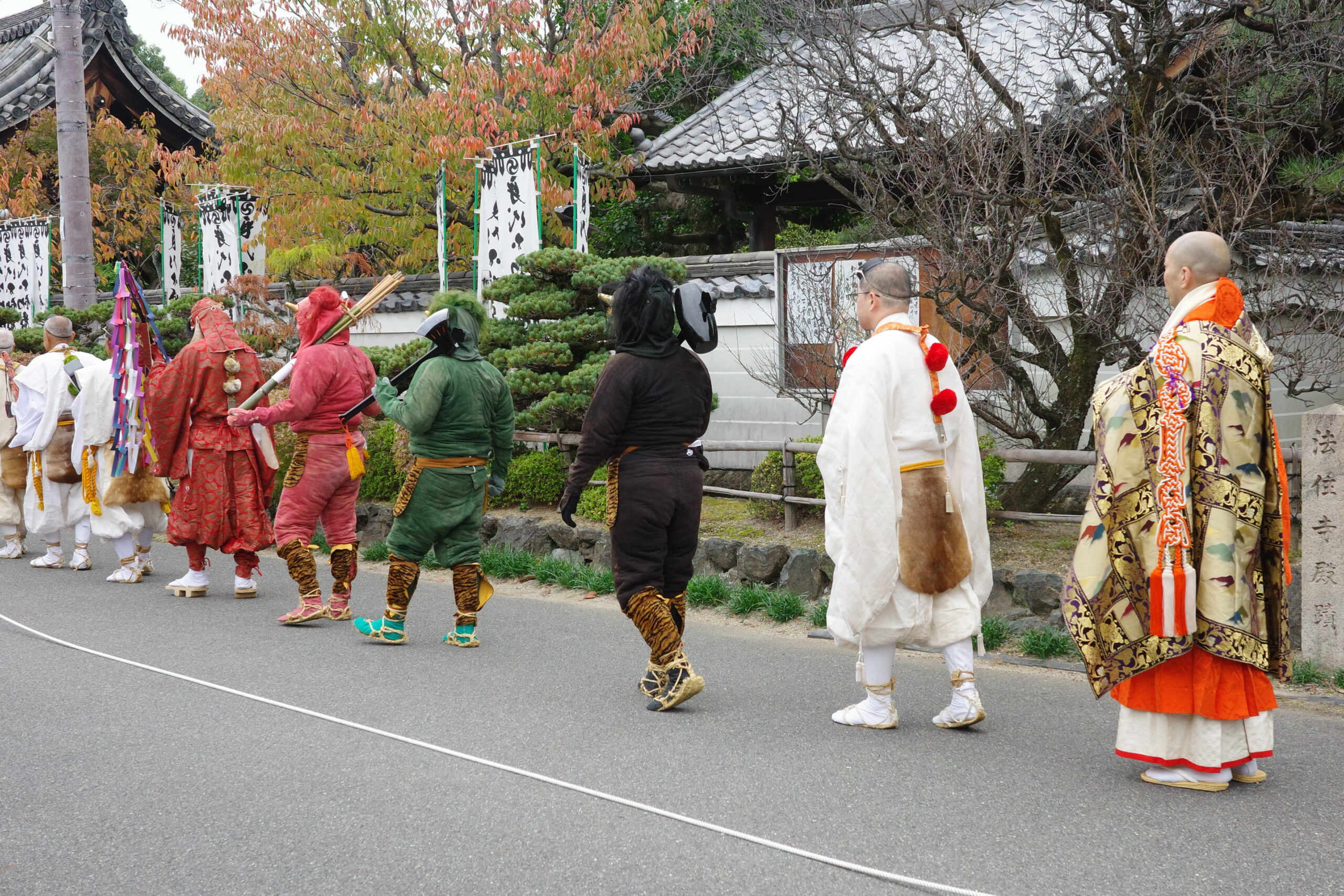
I reached the temple around one o’clock pm just after the Japanese pilgrim’s Buddhist hymn performance was finished. The precincts were jammed with Yamabushi monks, chigo (one to six or seven-year old kids in a festival procession) and their parents, and oni (Japanese demon) and they were preparing to visit the tomb of Emperor Goshirakawa. Soon, they formed a procession including chigo, Yamabushi monks, Tengu, and oni, and went toward the tomb of Emperor Goshirakawa located 200 meters away from the precincts. I followed the procession.
-
They went to the tumb.
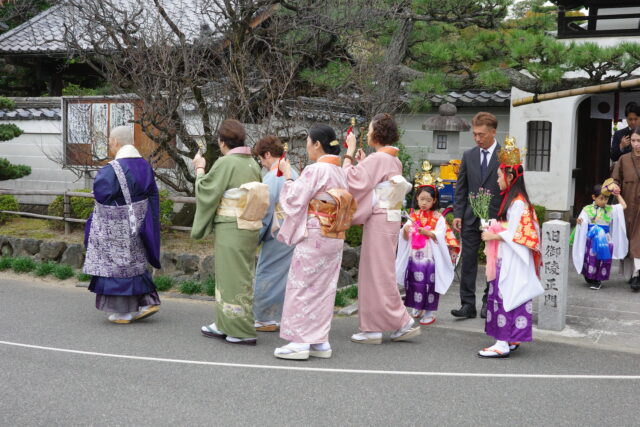
Yamabushi monks after chigo
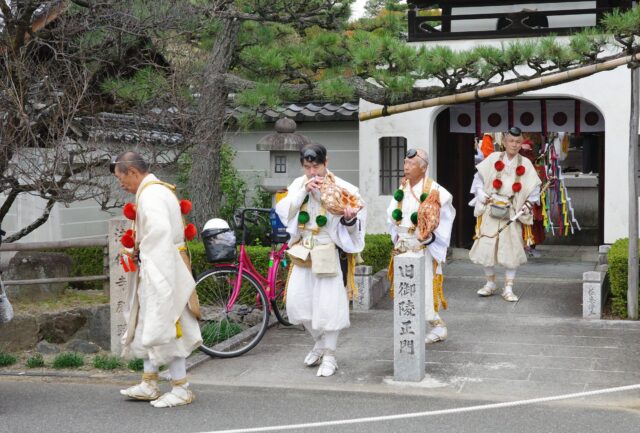
-
Tengu and Oni after Yamabushi monks
The last was the Chief Priest.
The tomb of Emperor Goshirakawa is under the control of the Imperial Household Agency, and only specific persons can enter it. General persons cannot observe the Buddhist service performed there.
The tomb of Emperor Goshirakawa
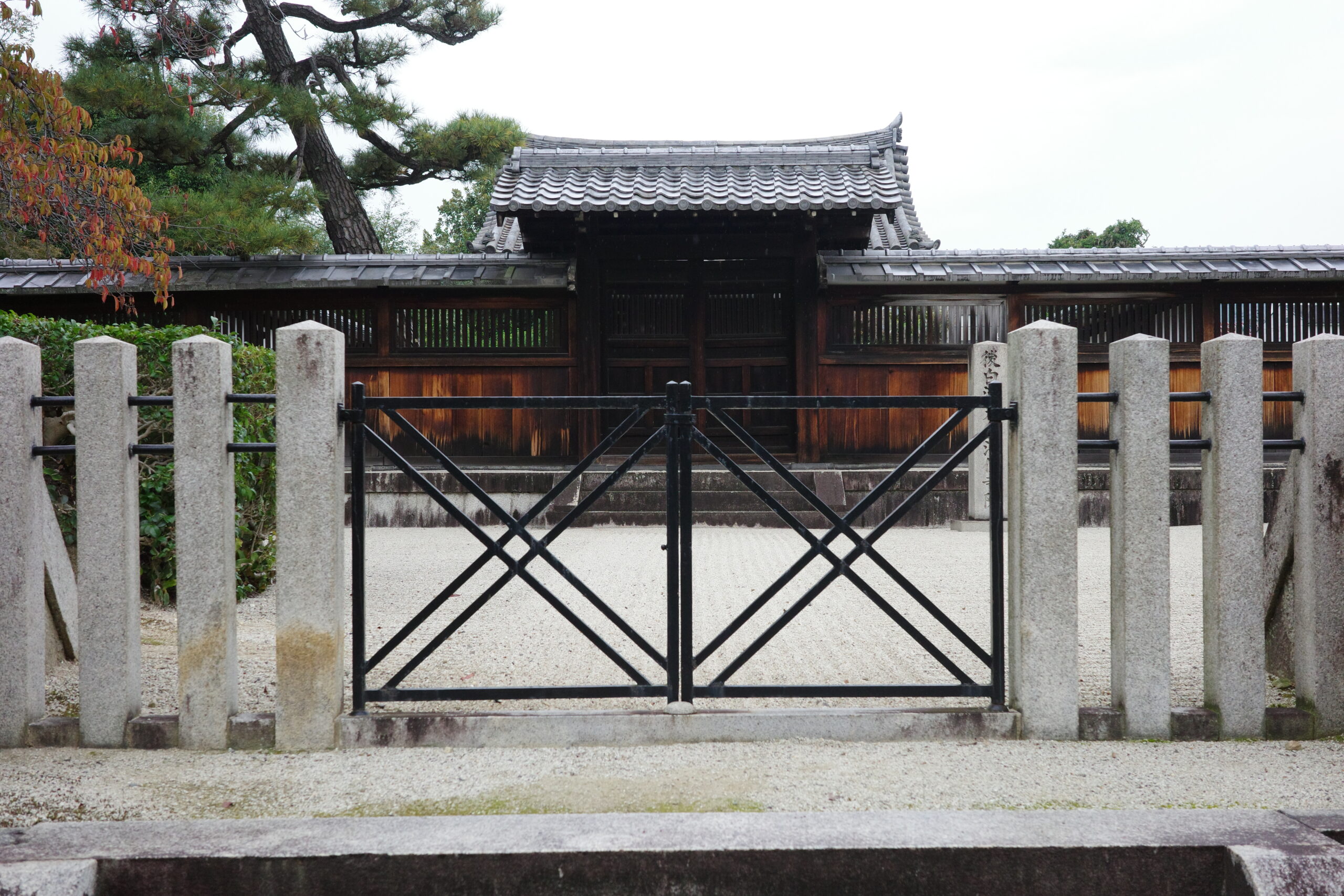
The Buddhist service was performed in the tomb, but only monks can be enter there.
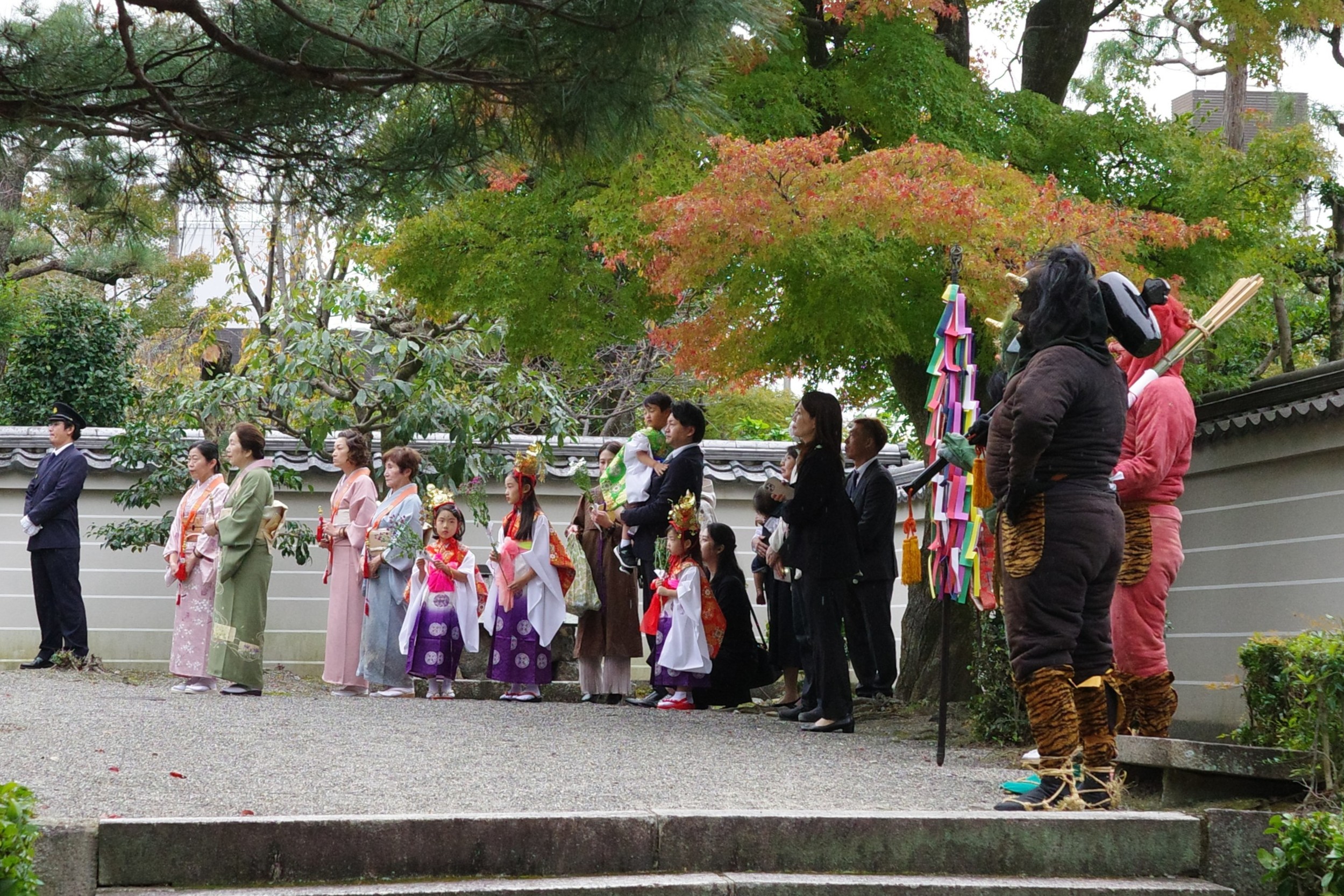
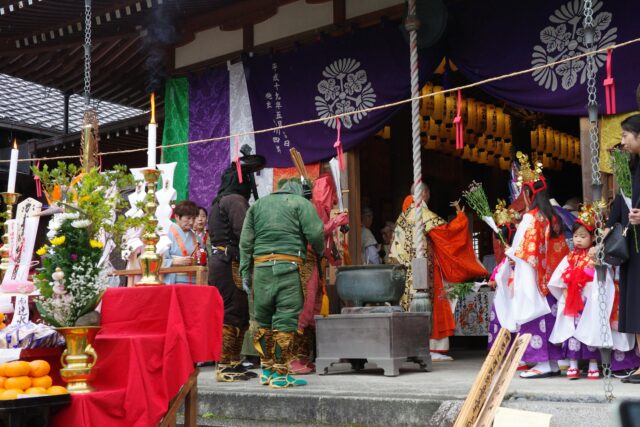
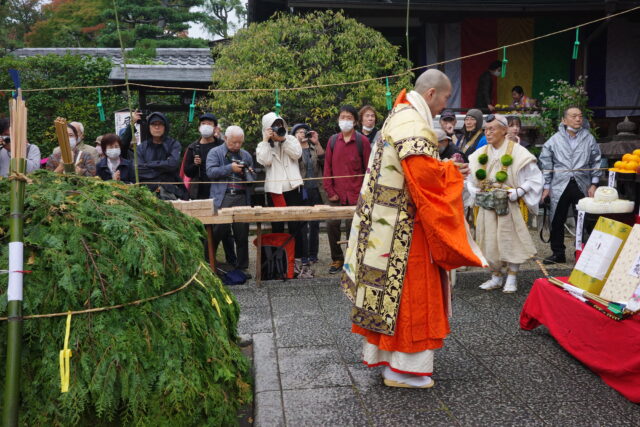
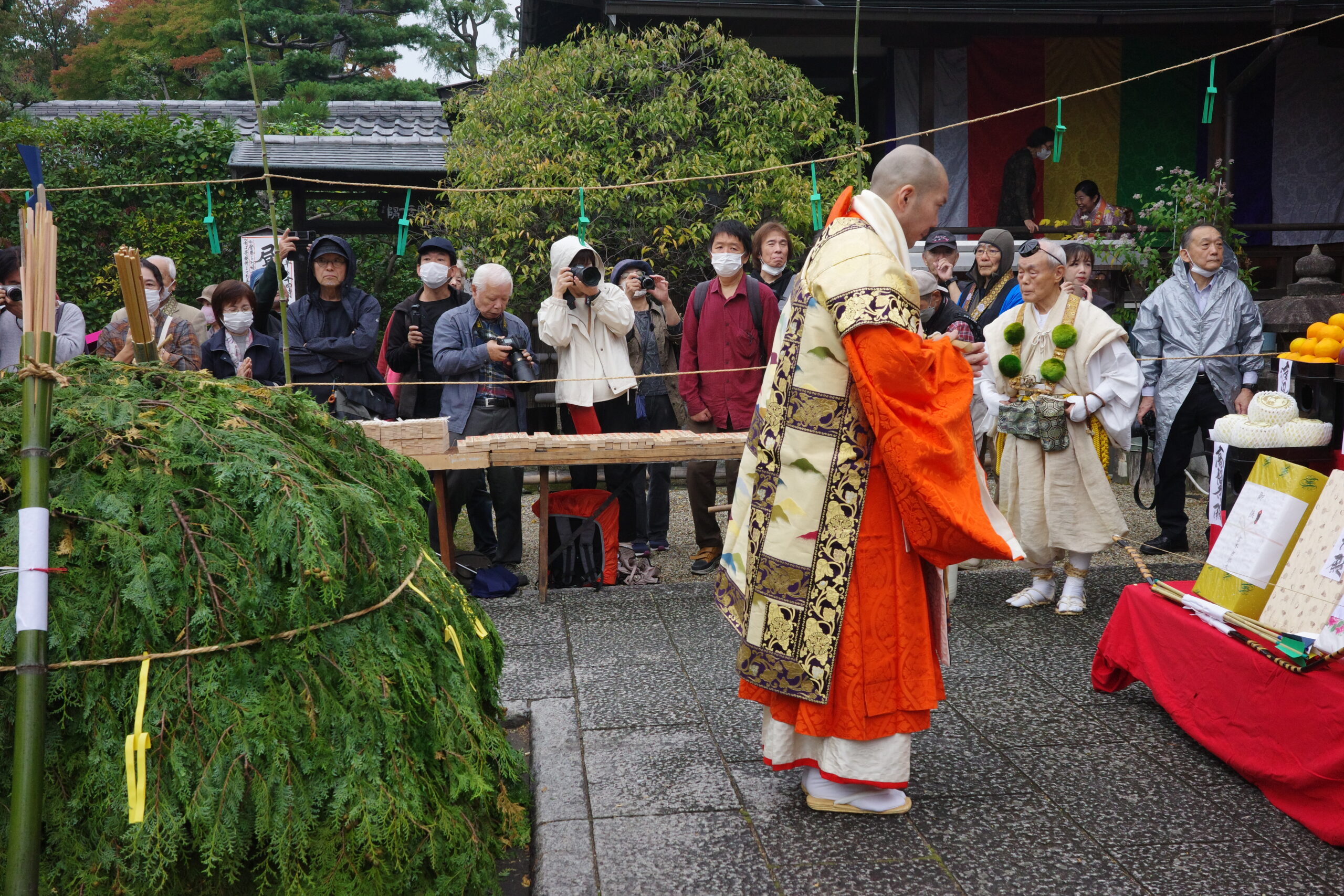
The procession returned the temple, and monks chanted sutras in the main temple. In the precincts, other monks and people were preparing the next ceremonies.
-
The monks chanted sutras in the main temple.
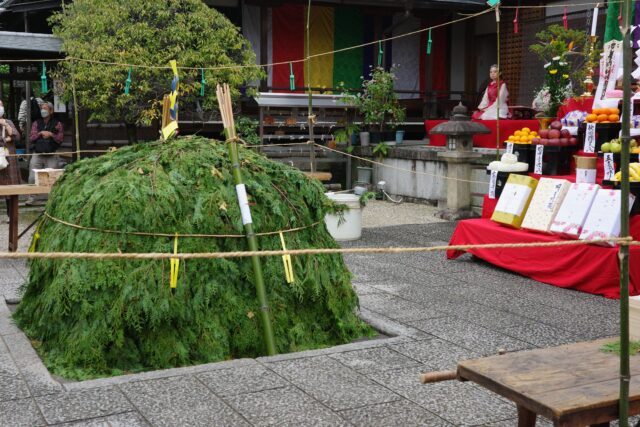
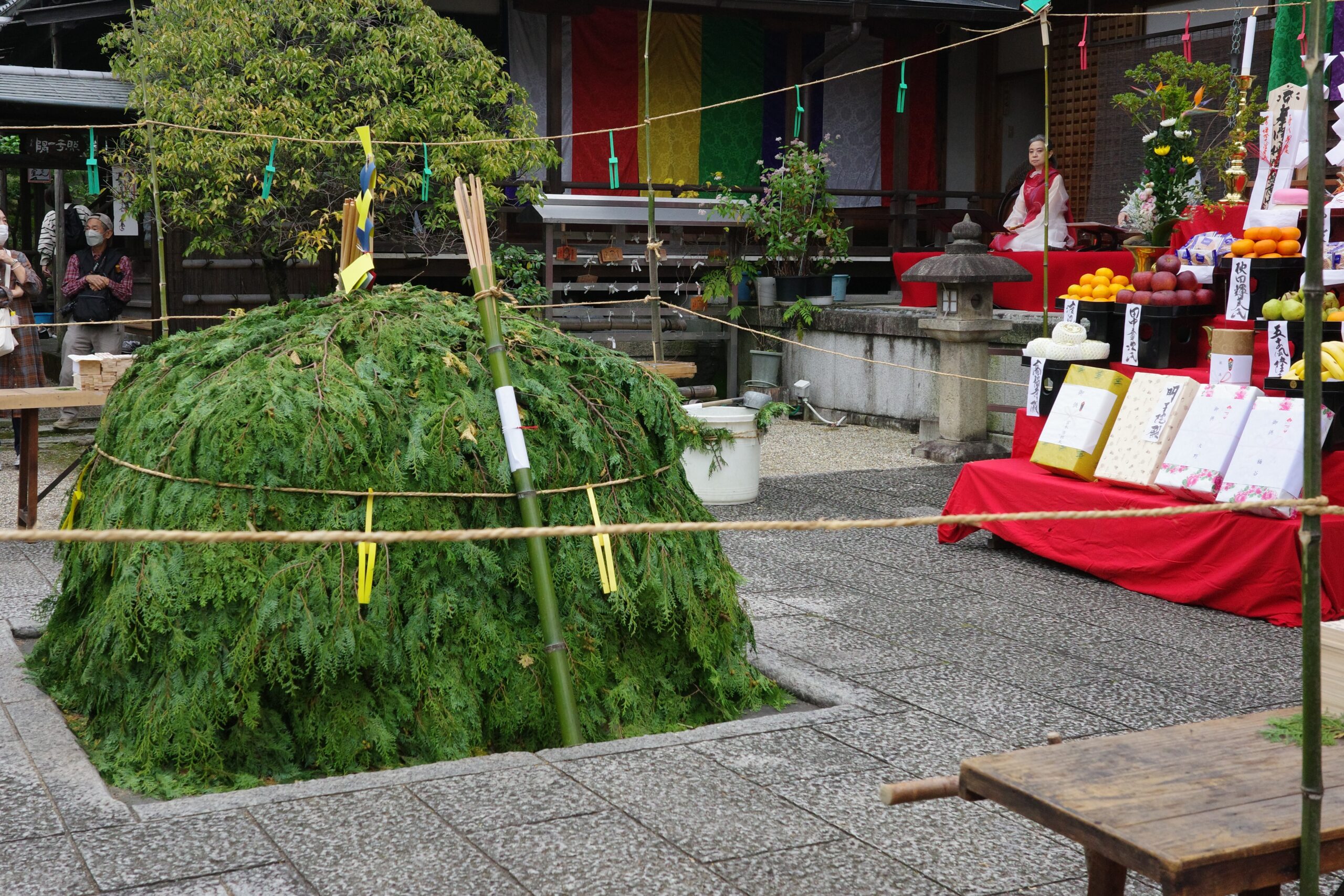
Gomadan and Buddhist altar in the precincts.
-
The monks were prepearing the next ceremony.
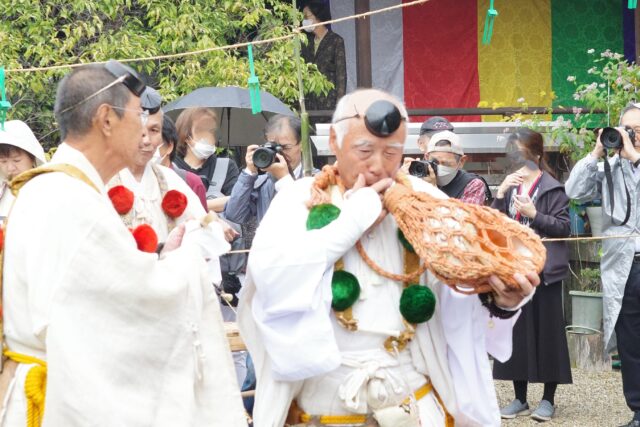
The Chief monk chanted sutras in the precincts.
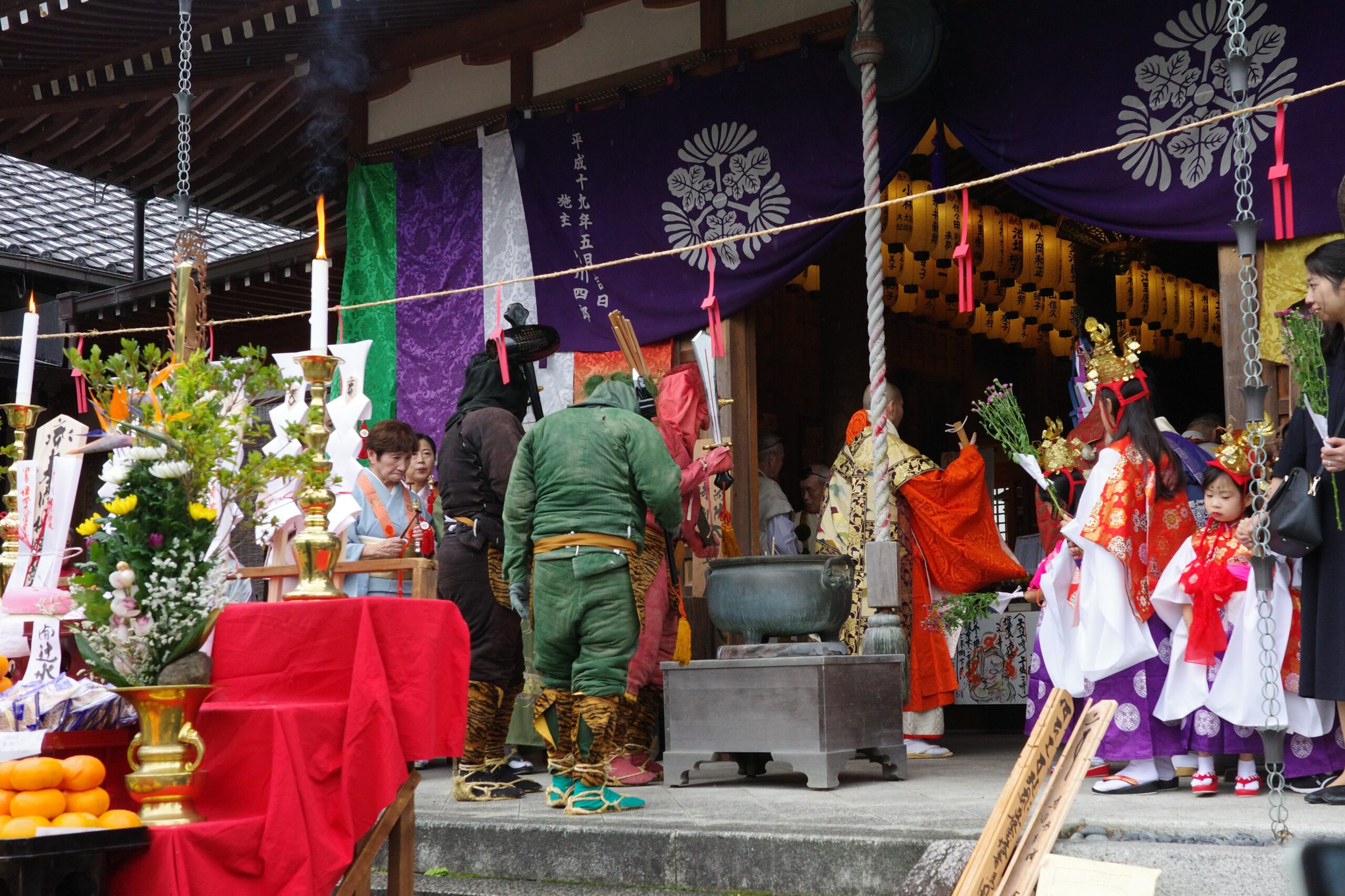
Oni Horaku (Oni Entertainment for Buddha)
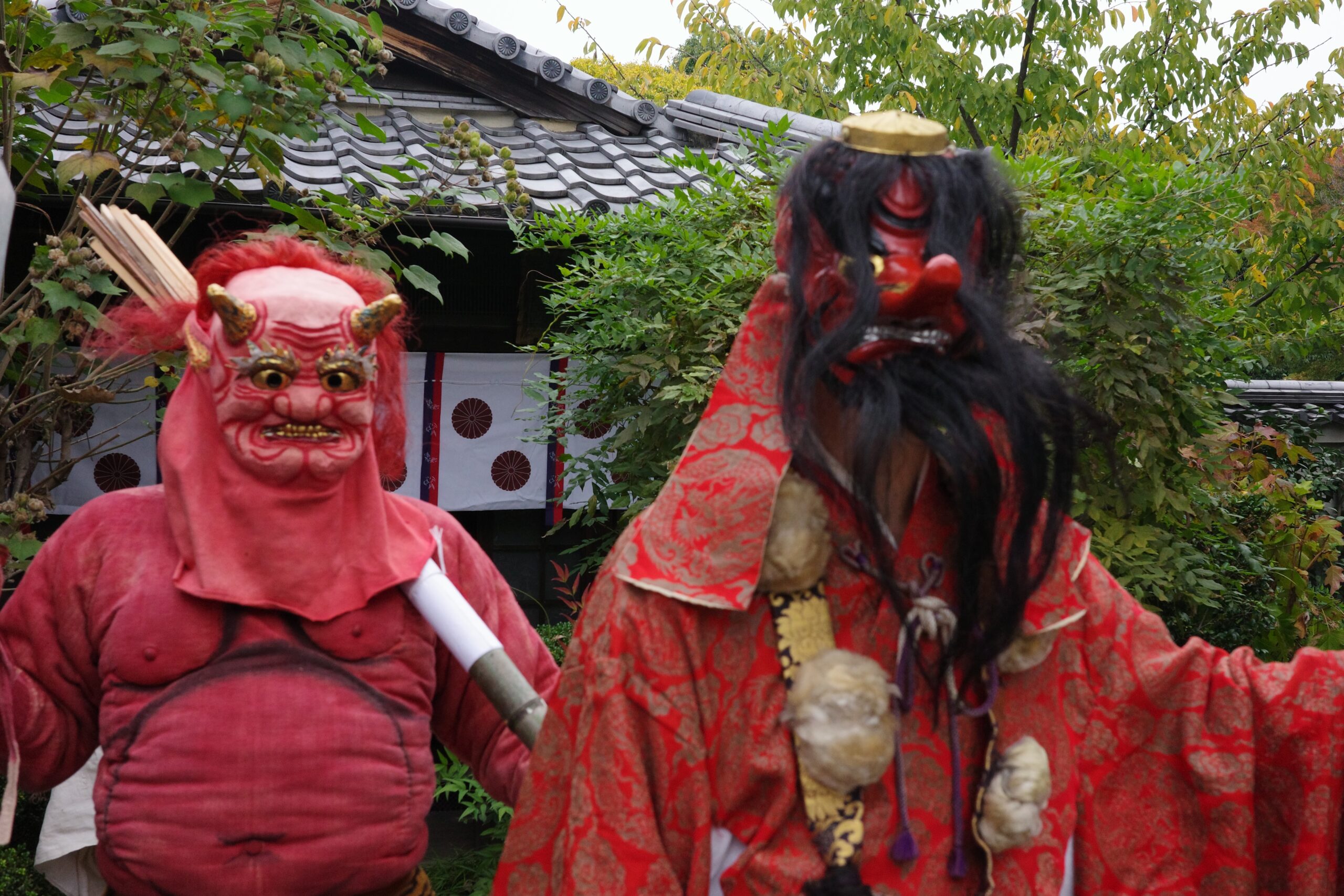
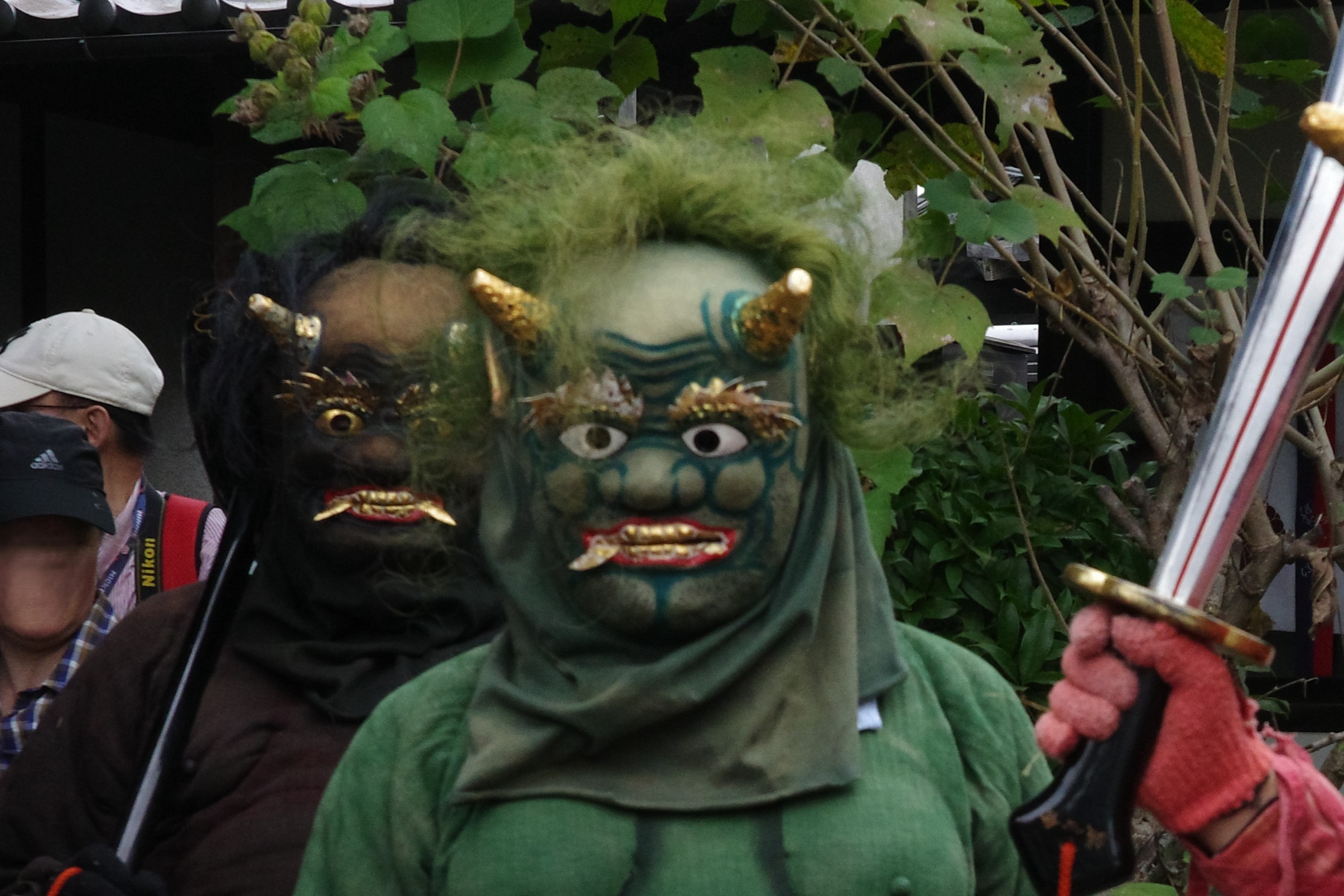
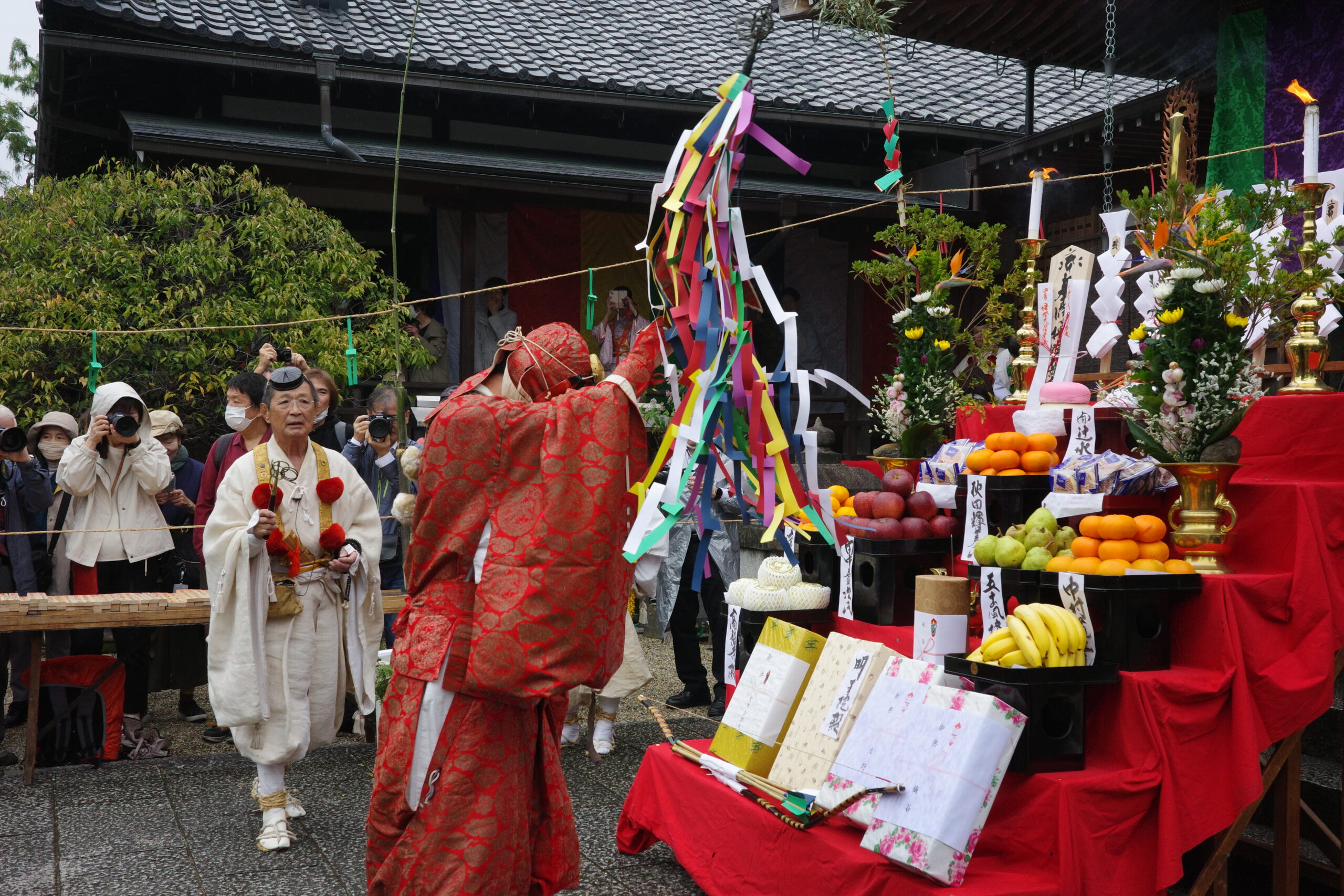
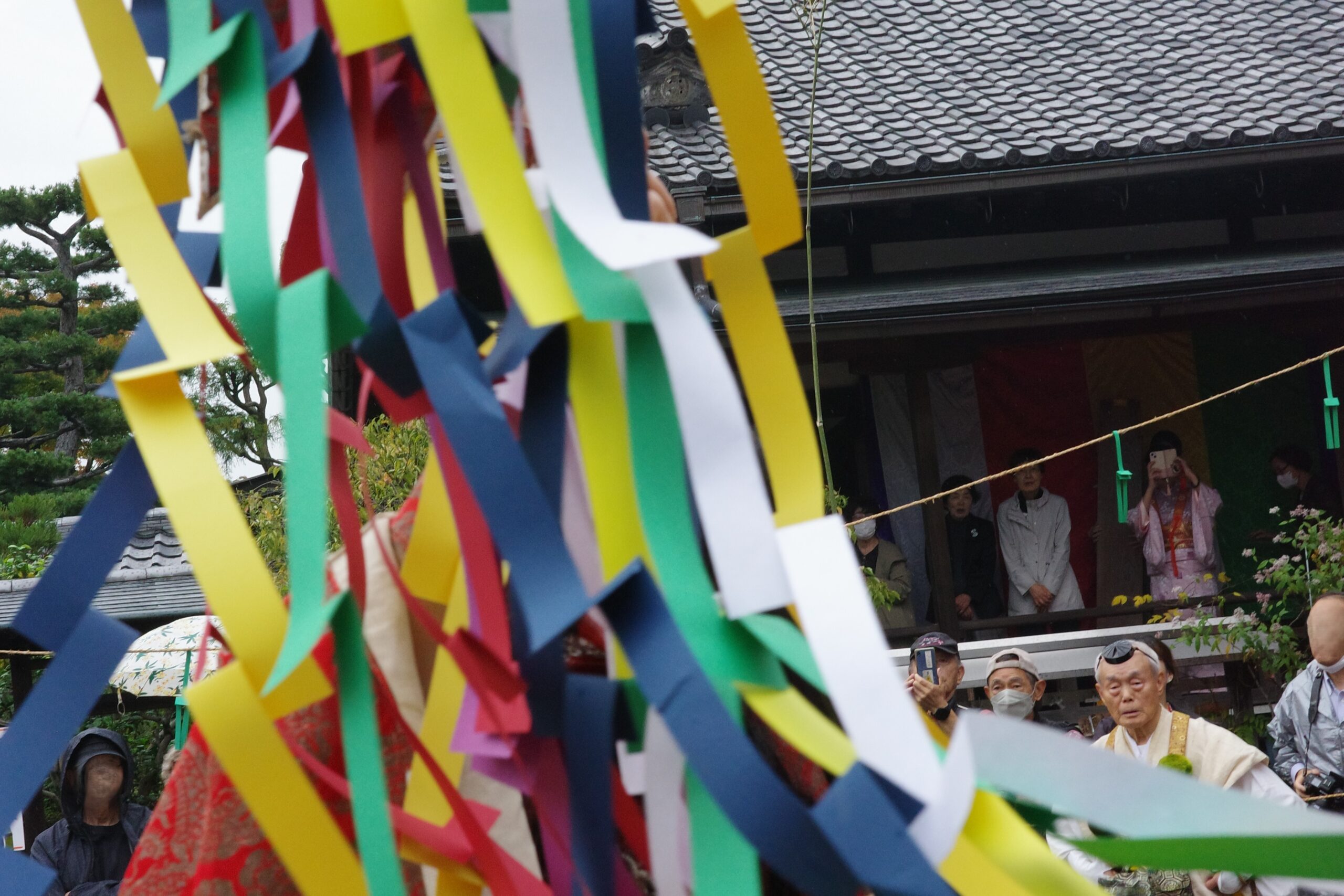
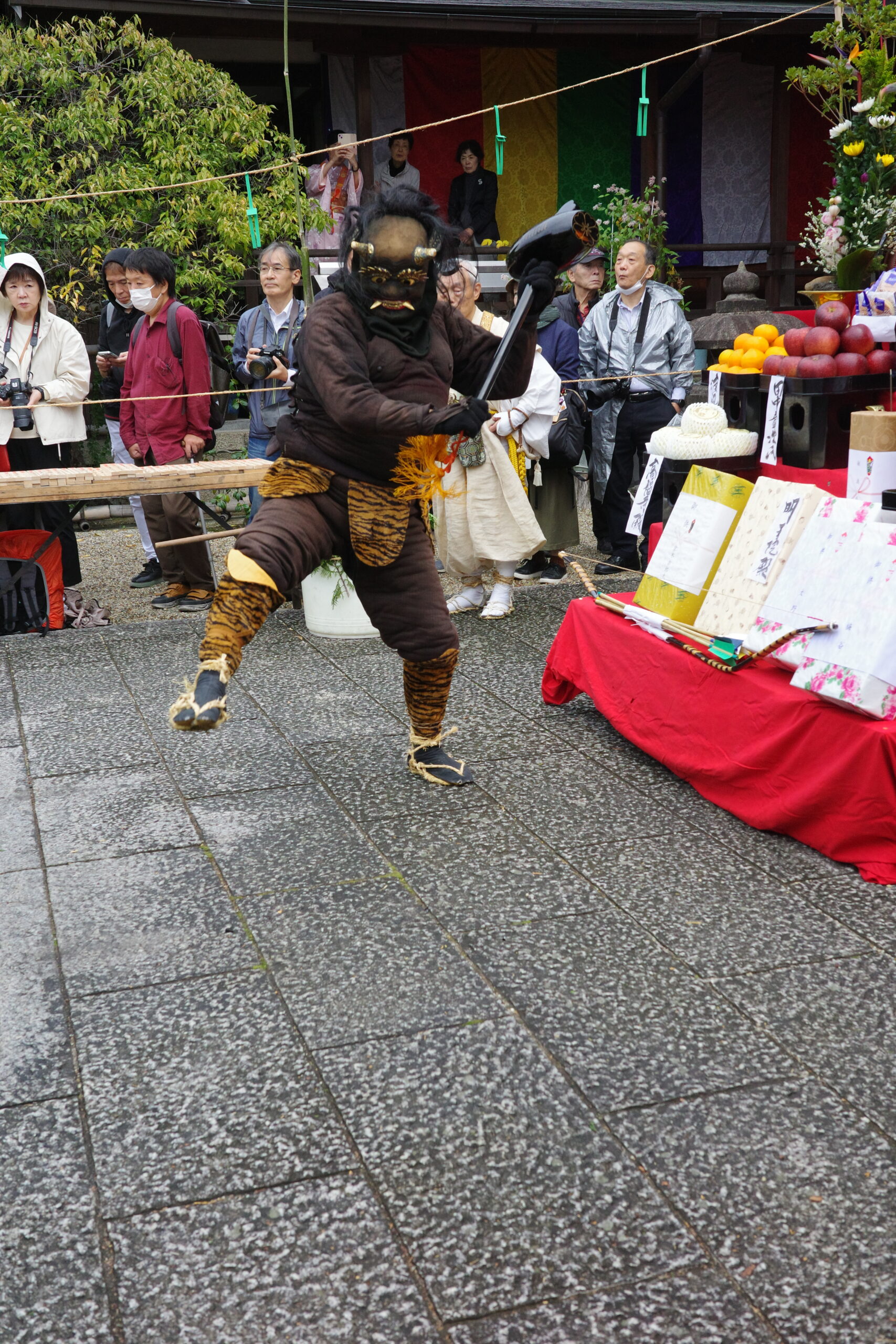
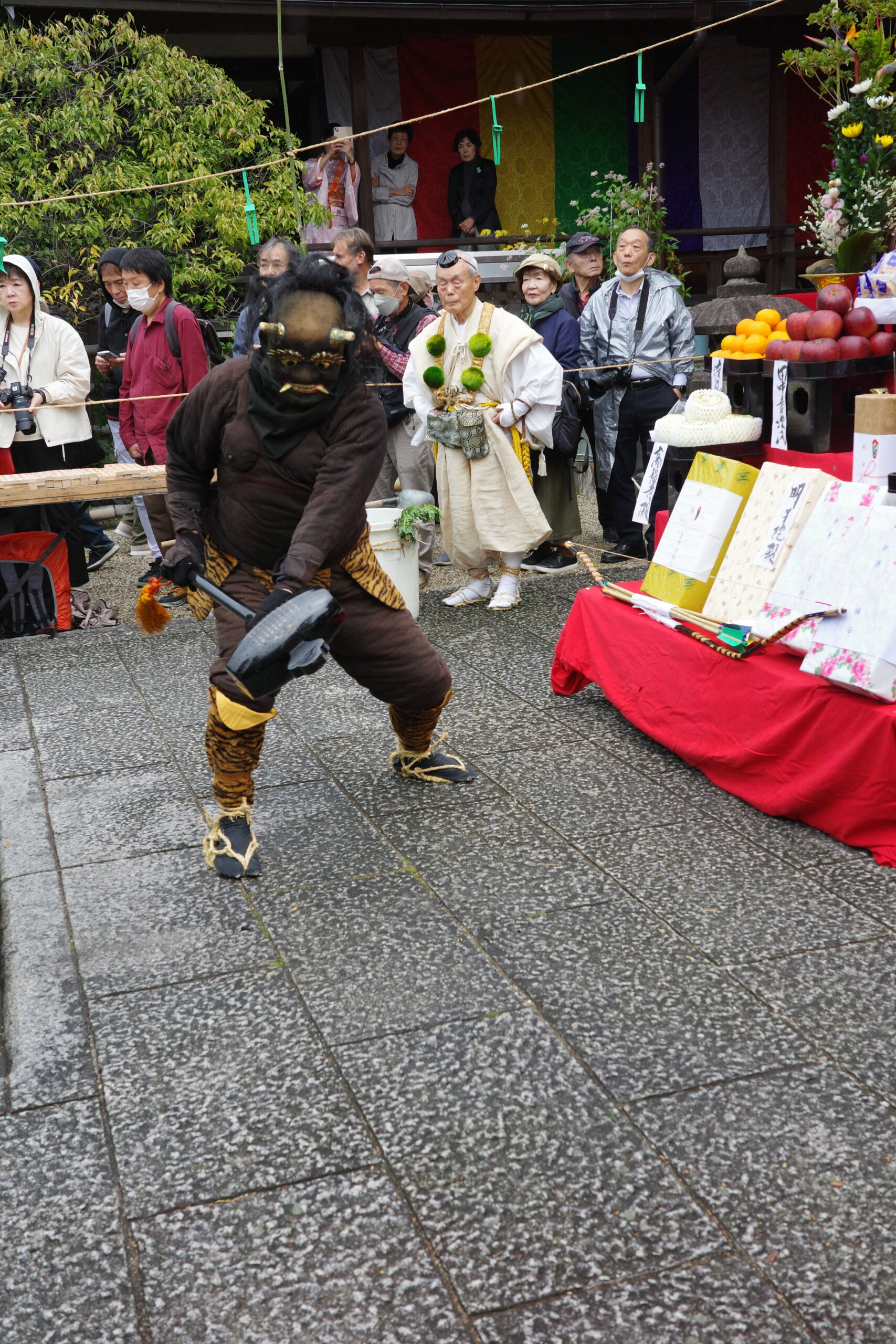
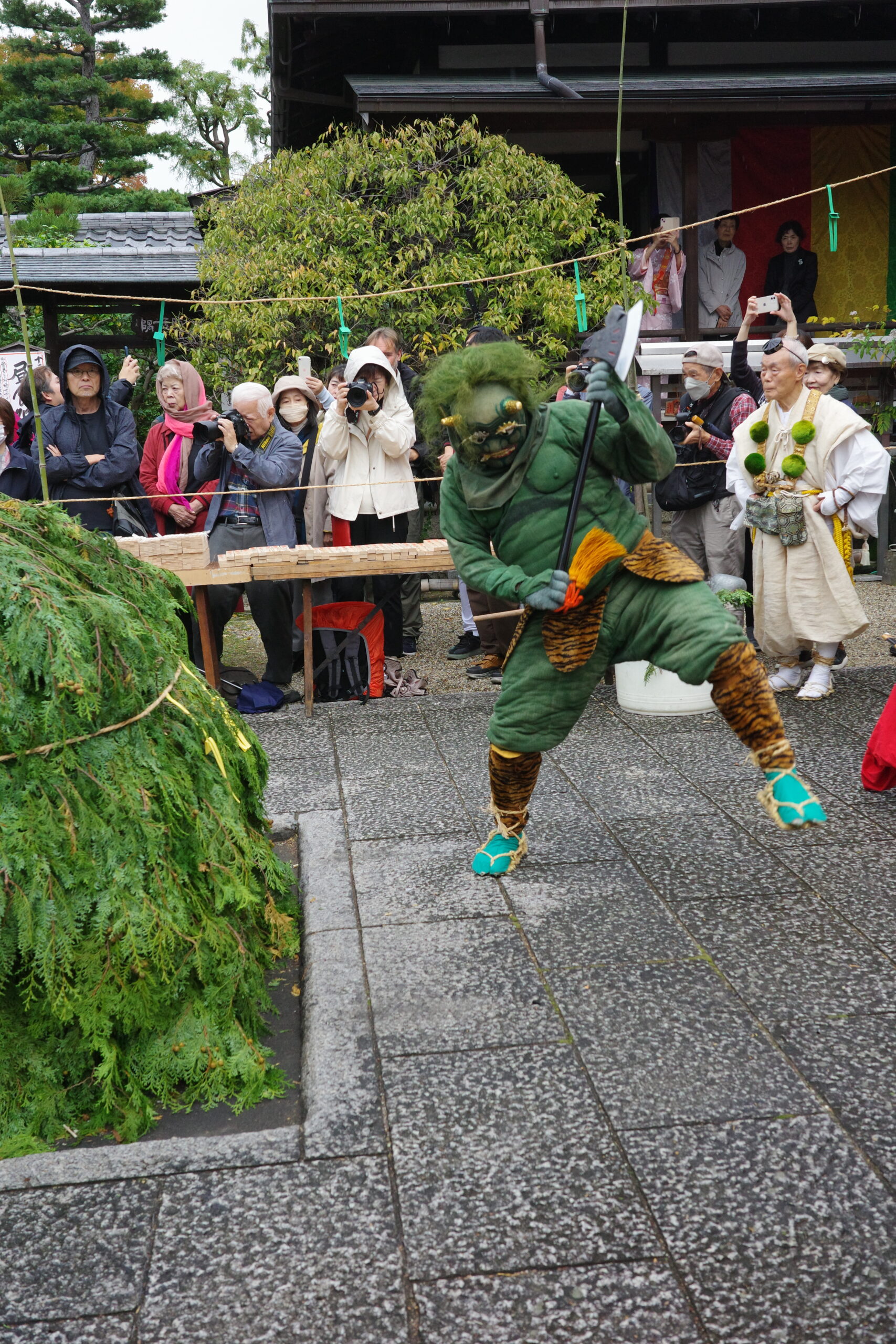
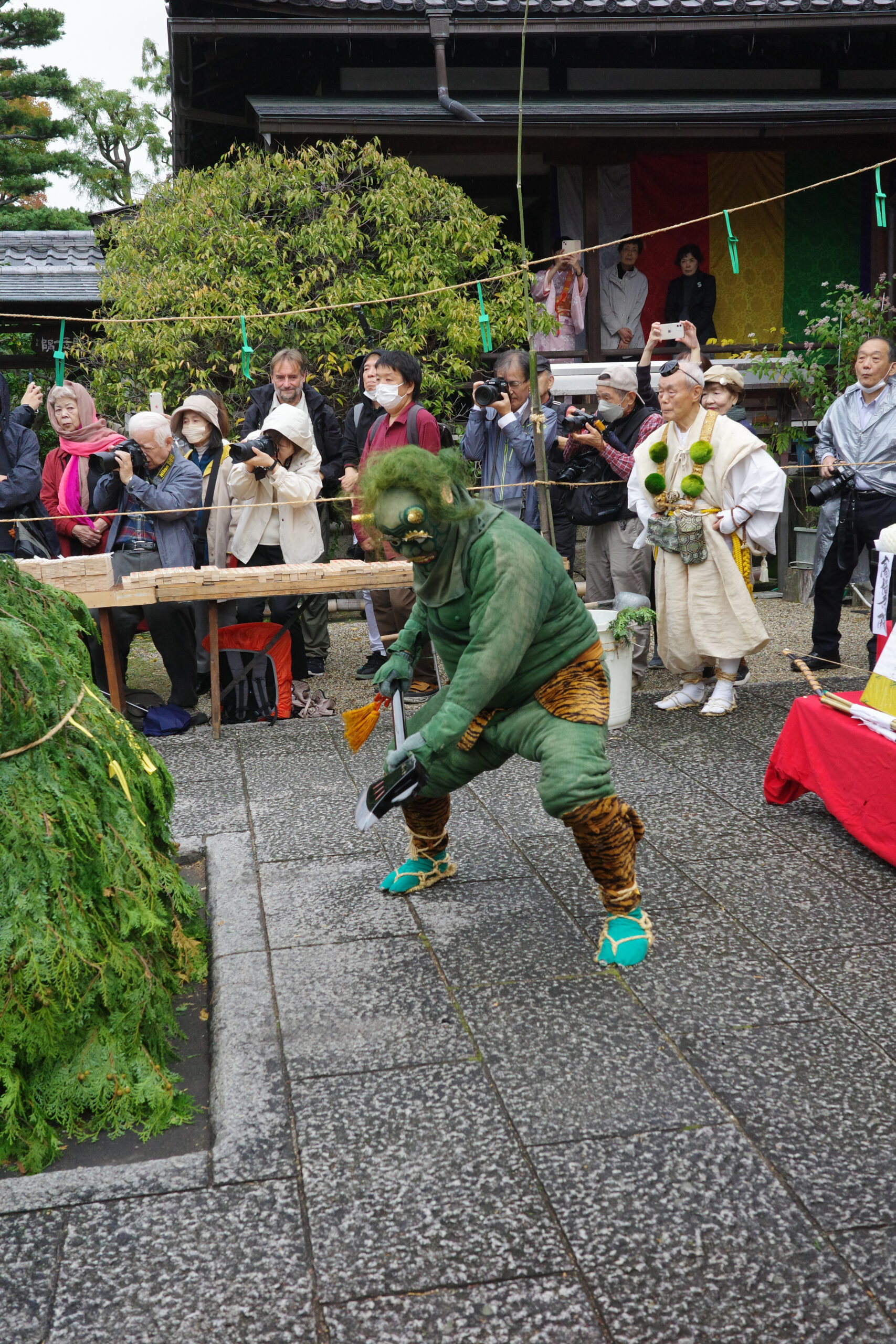
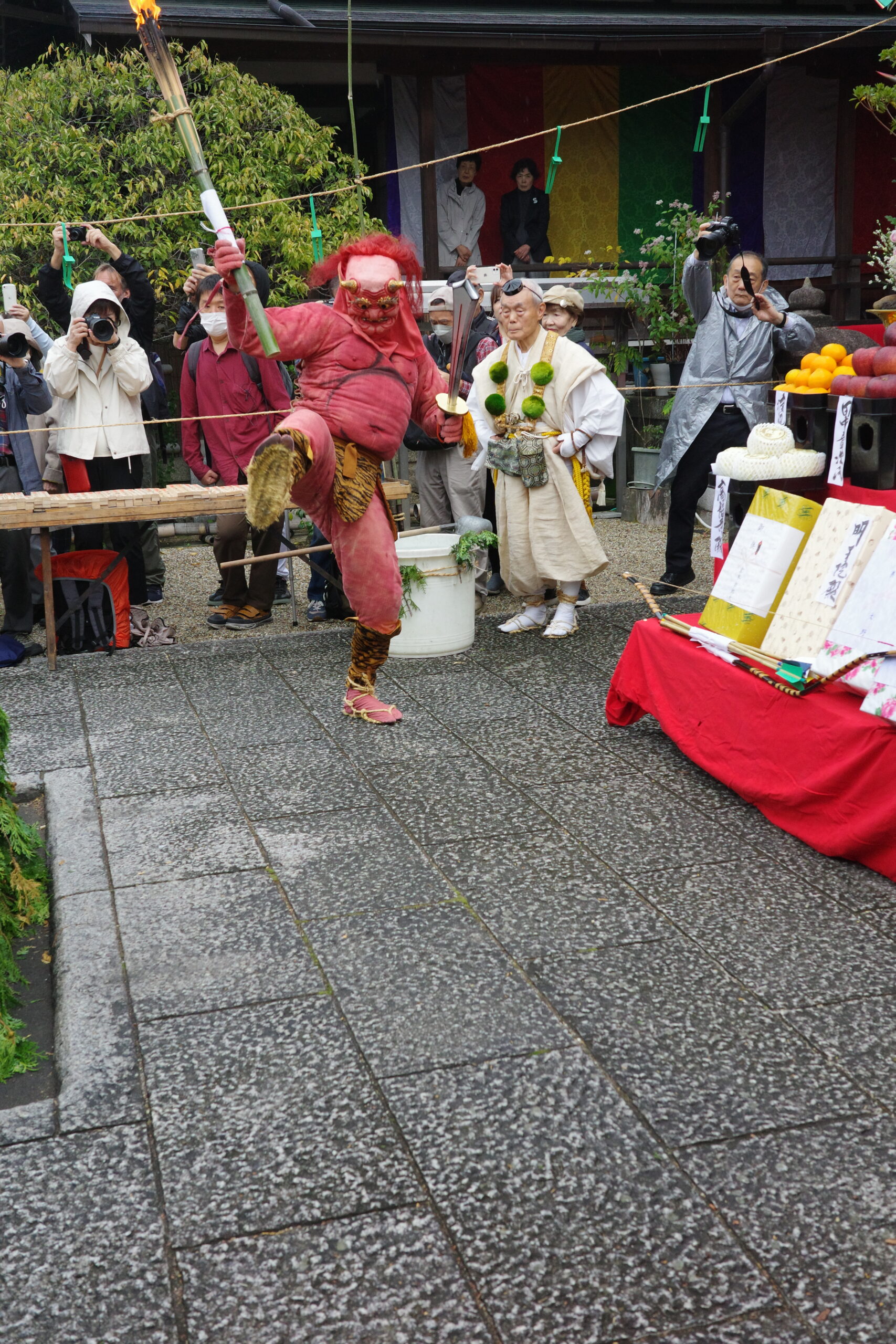
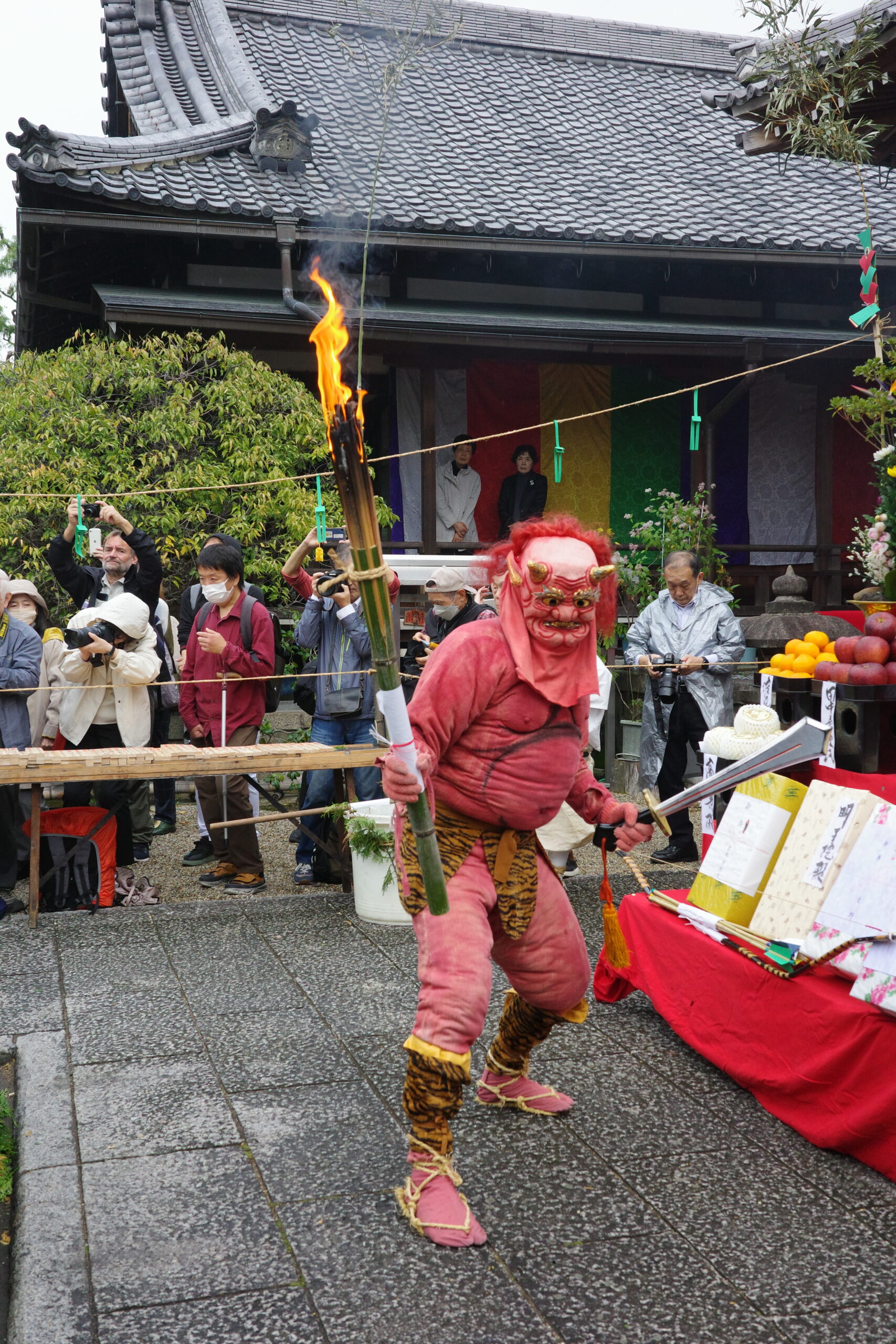
In the ceremonies held in the temple, the Goma Kuyo ceremony and the Q & A session by Yamabushi monks were performed in almost the same manner as in those held in Ryuanji Temple. In addition, Oni Horaku was performed, and I saw it for the first time. First, tengu (a long-nosed goblin) having a cane took the head and subsequently red, blue and black oni followed, and they paraded around the gomadan (a fire altar) while dancing. It is a charm against evil influence. The red oni means greed, the blue oni means hatred, and the black oni means delusion, which are three kleshas that poison the heart of man in Buddhism.
Tengu (right) and Akaoni (left)
Aooni (right) and Kurooni (left)
-
Oni Horaku finally started.
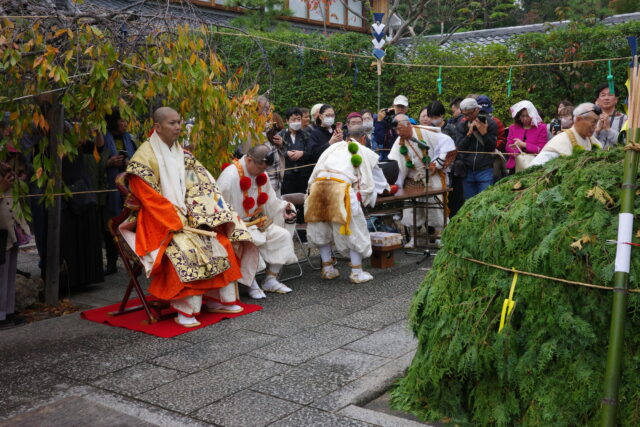
First, Tengu appeared.
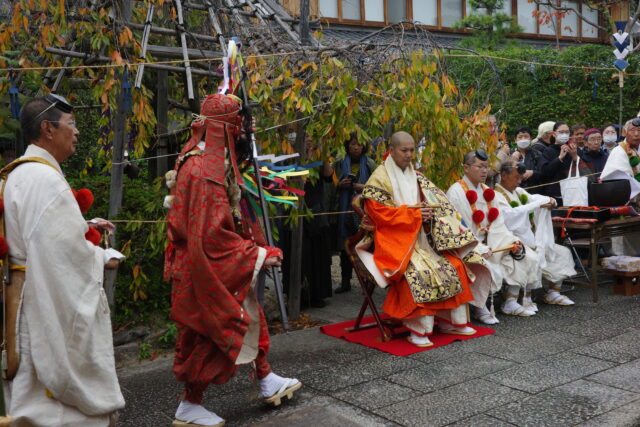
He purified the place.
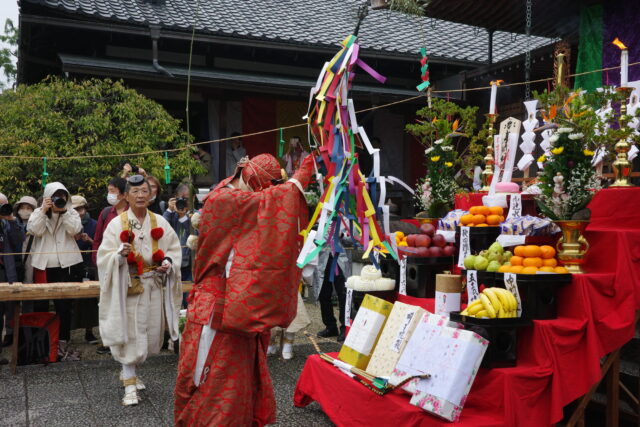
He also purified me.
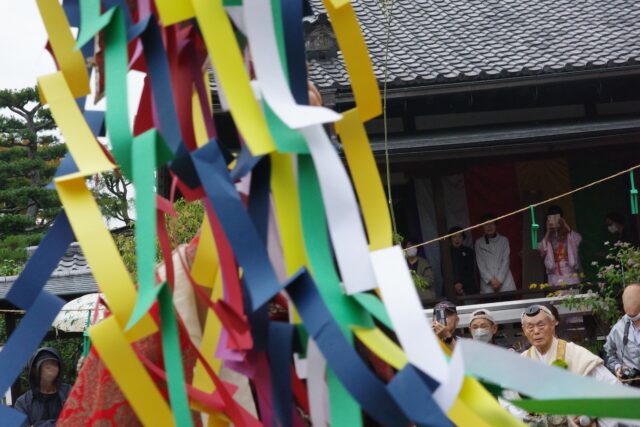
Next, Aooni appeared.
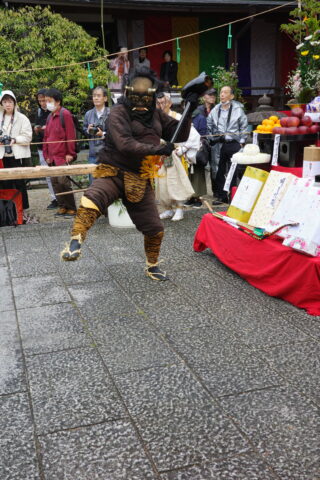
He brought a big wooden hummer.
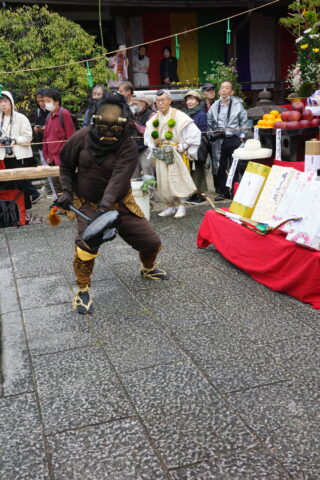
-
Then, Aooni appeared.
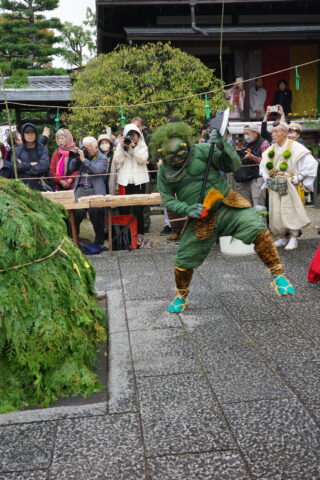
He brought a hatchet.
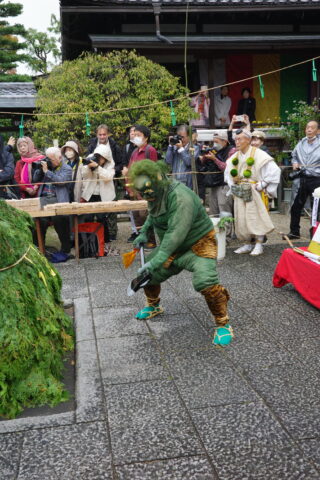
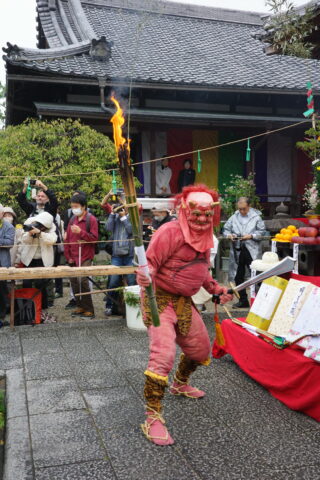
Finally Akaoni appeared.
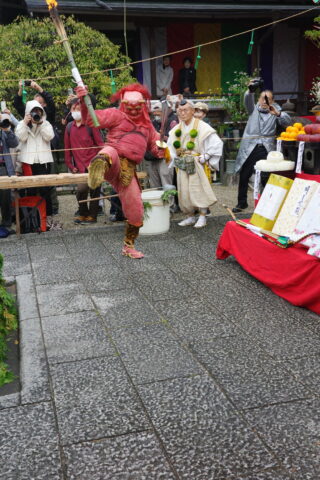
He brought a torch and a sword.
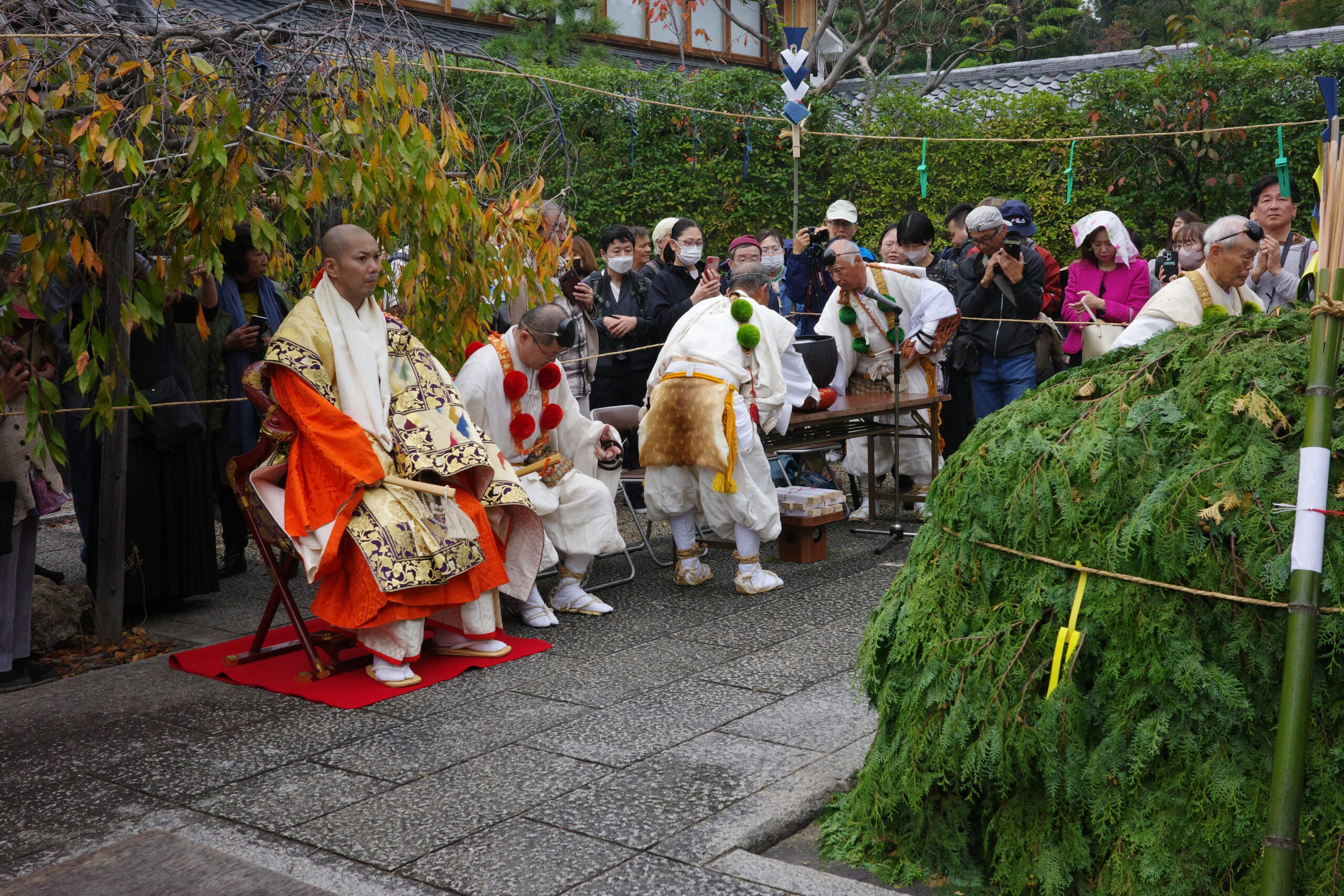
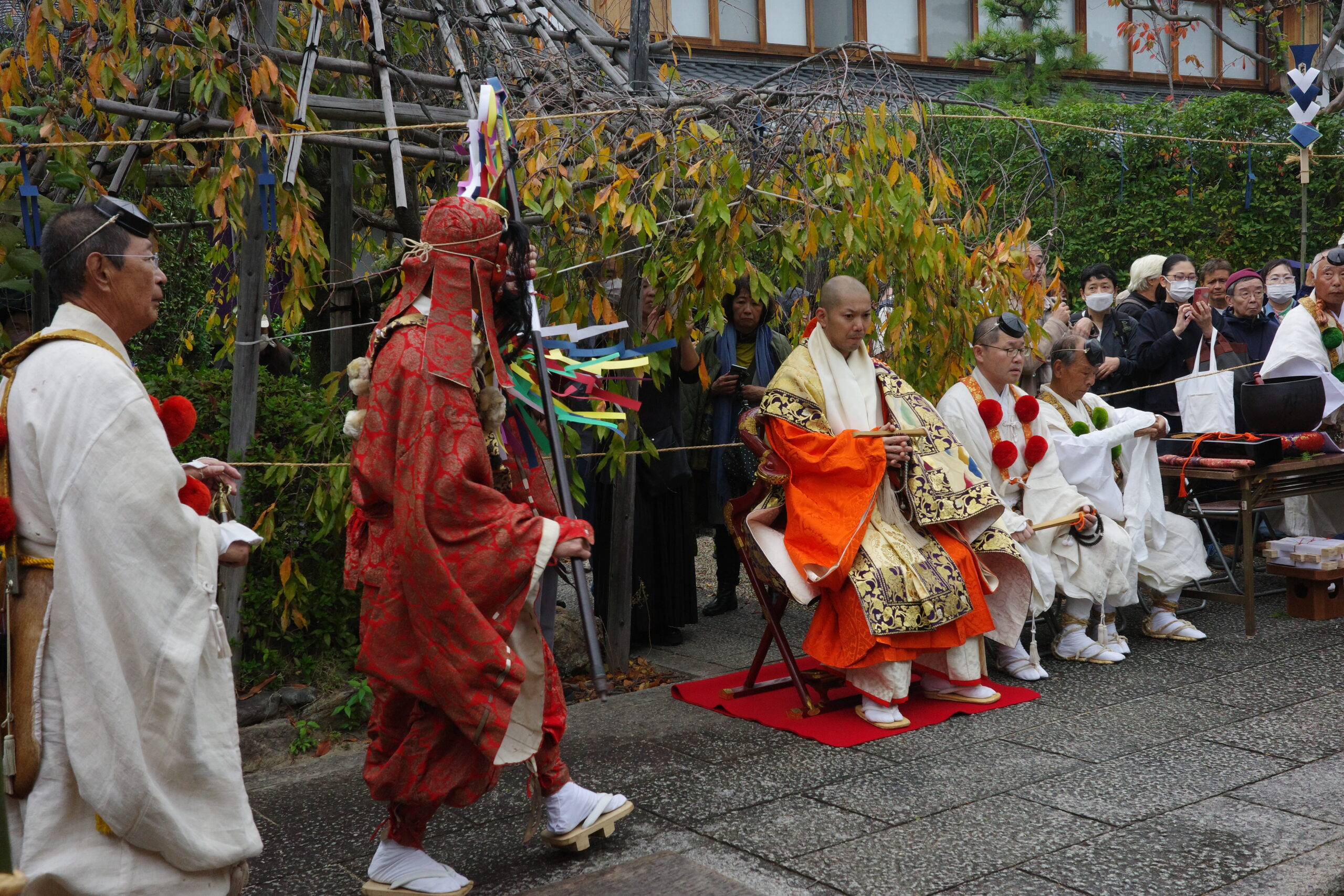
Saito Daigomakuyo
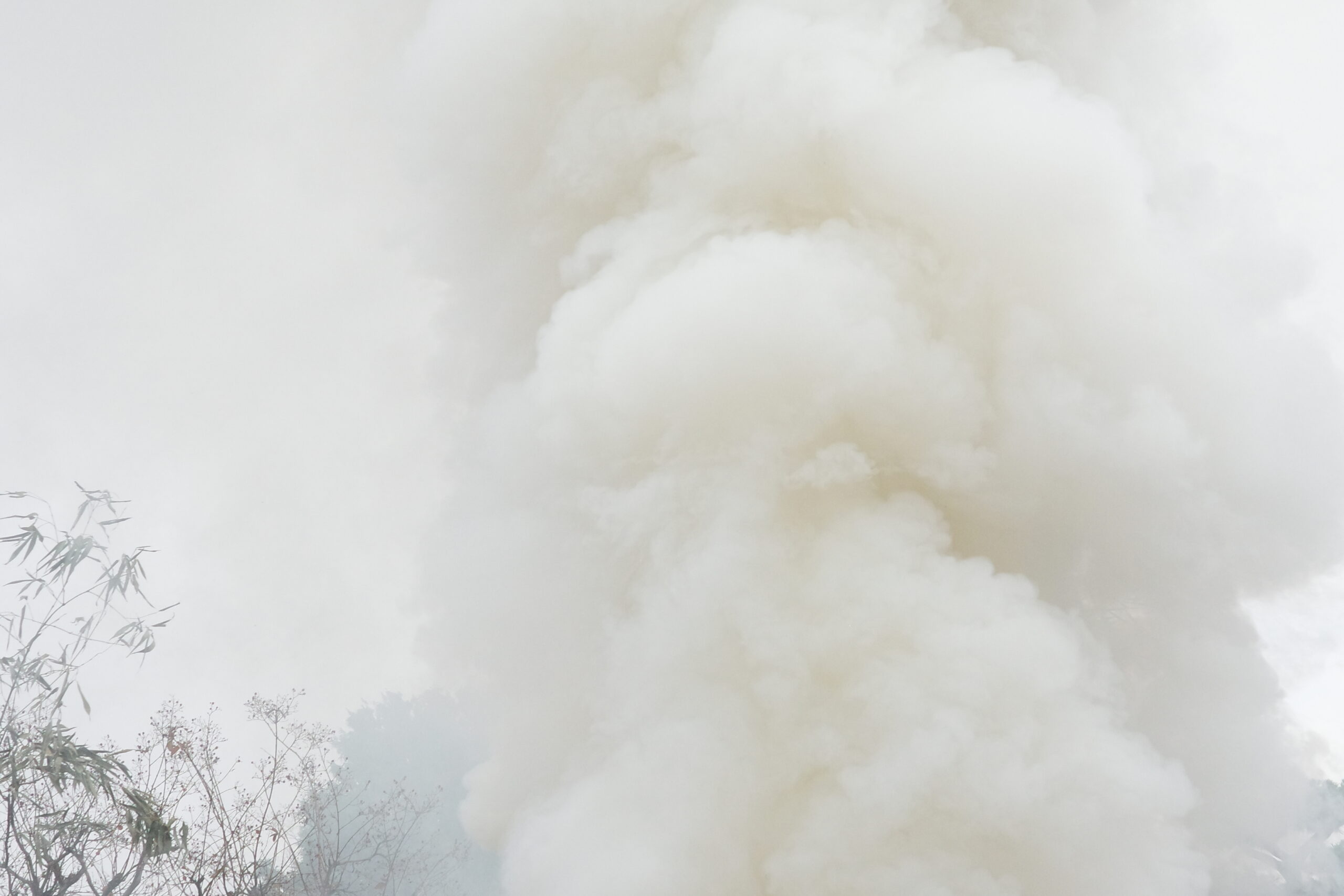
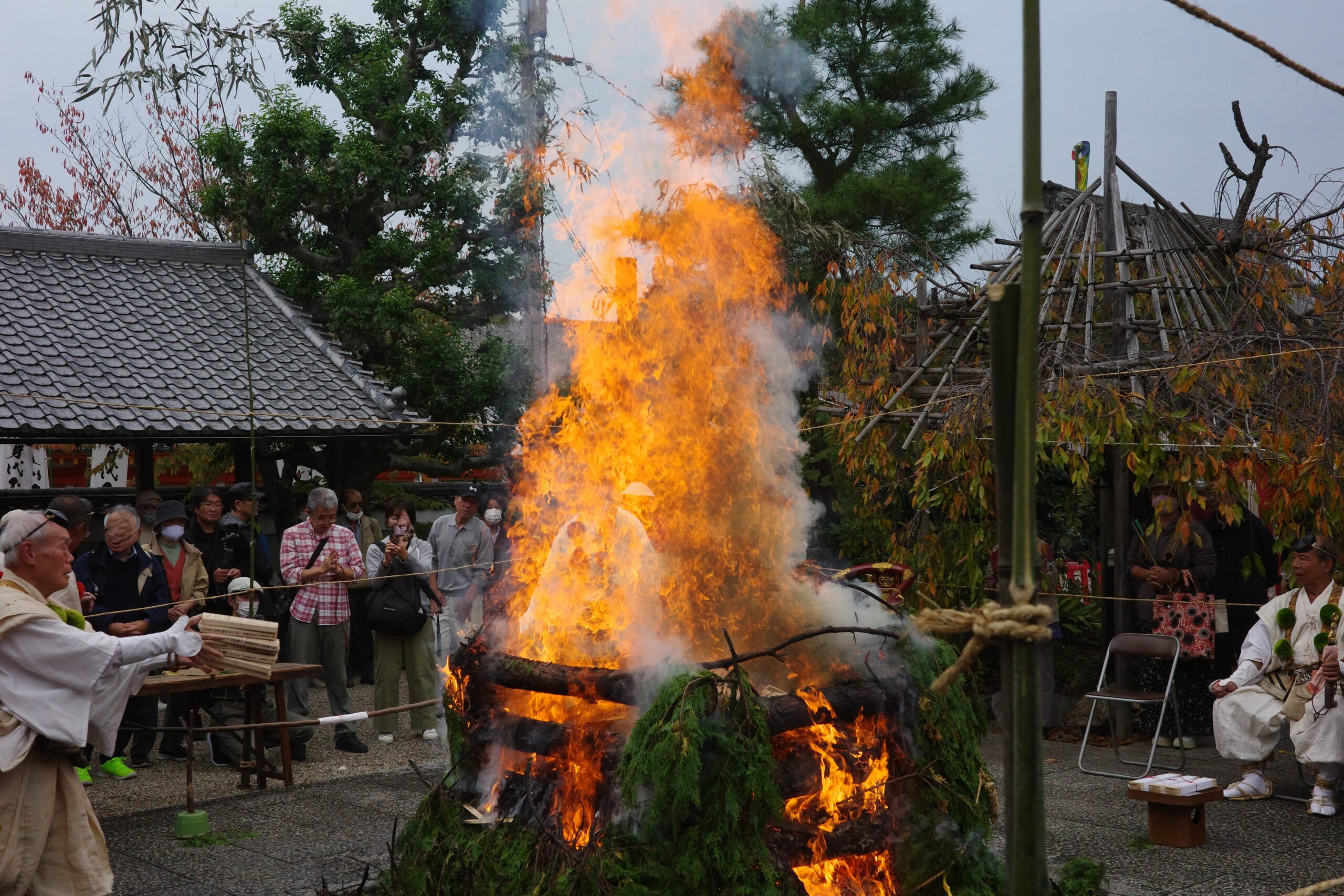
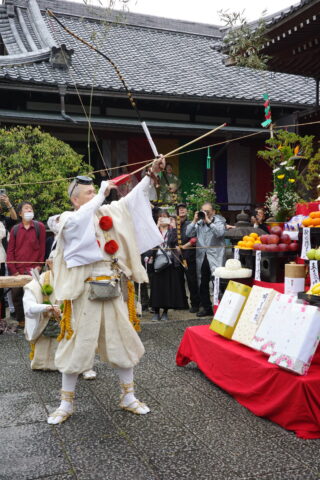
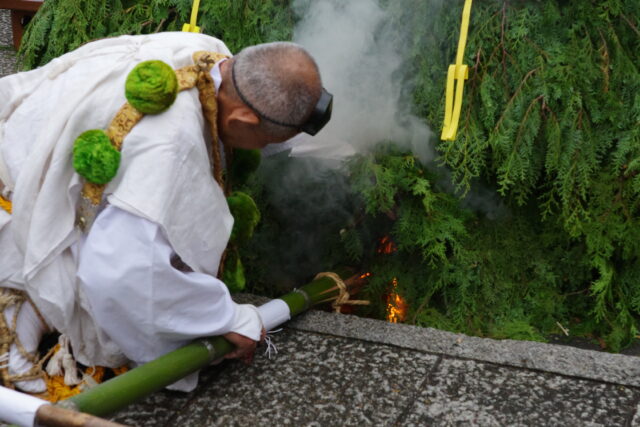
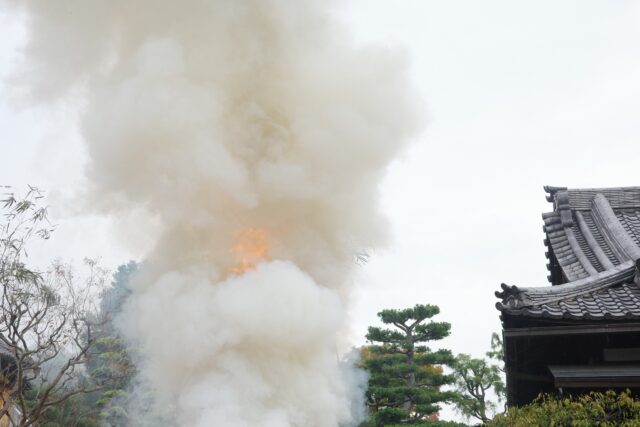
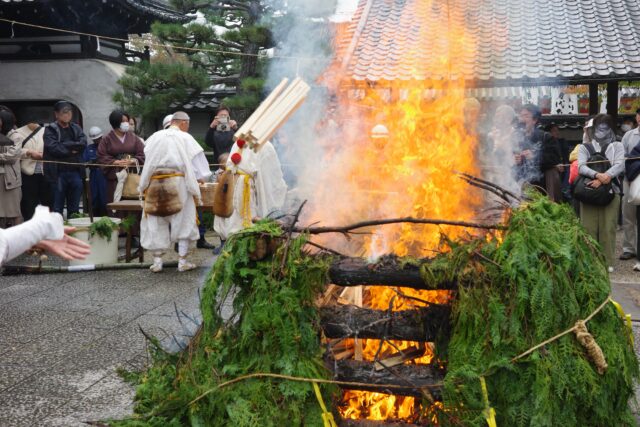
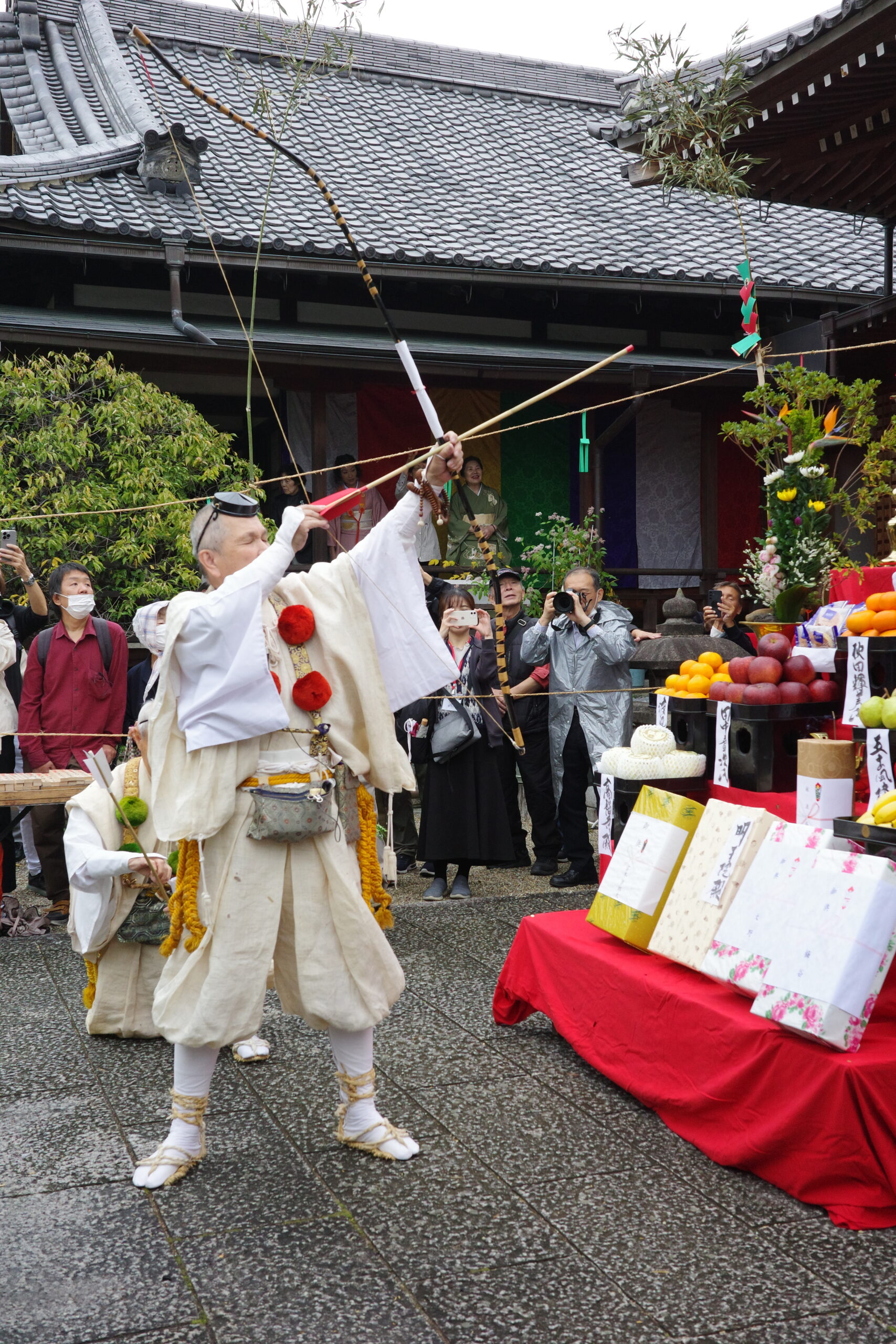
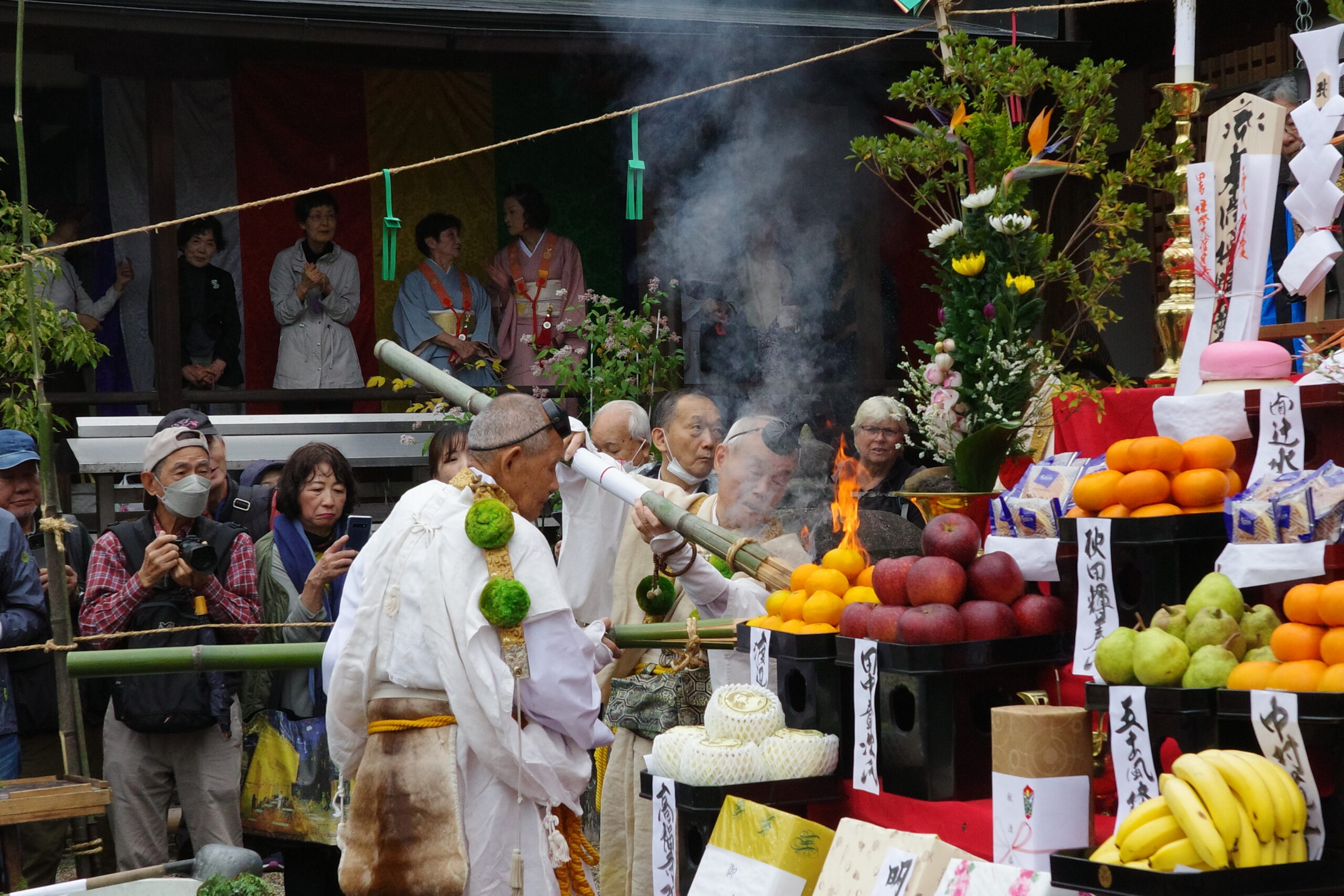
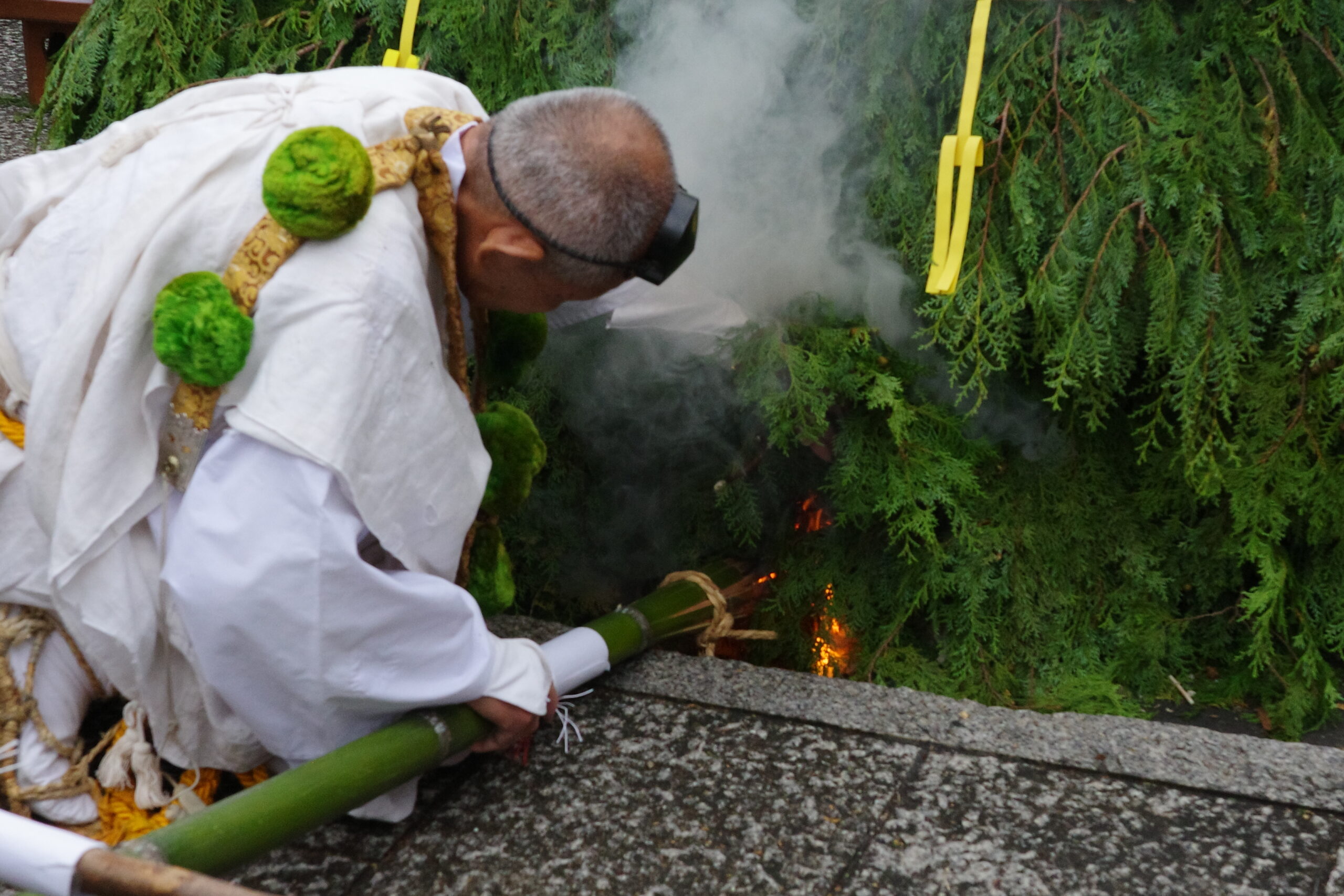
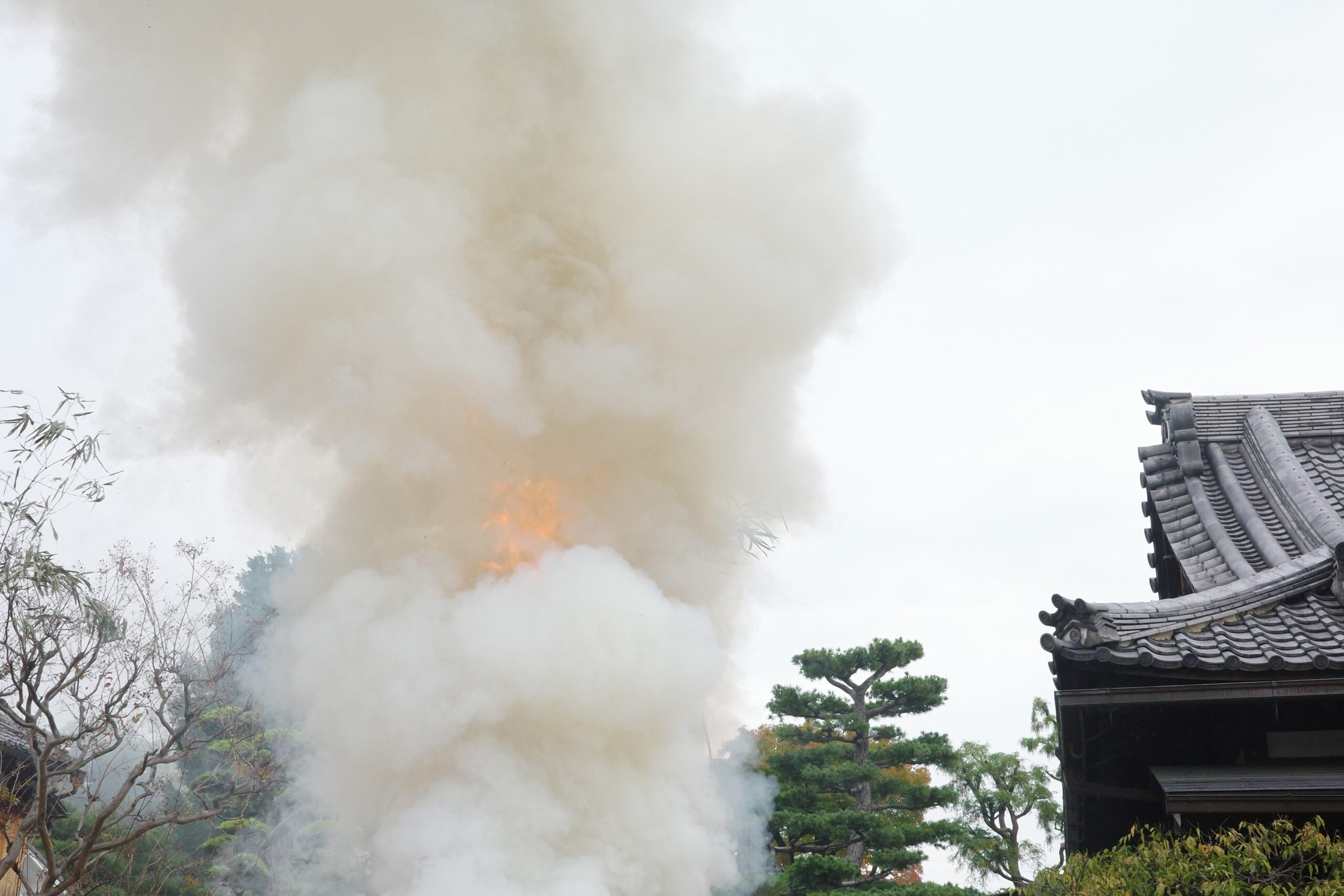
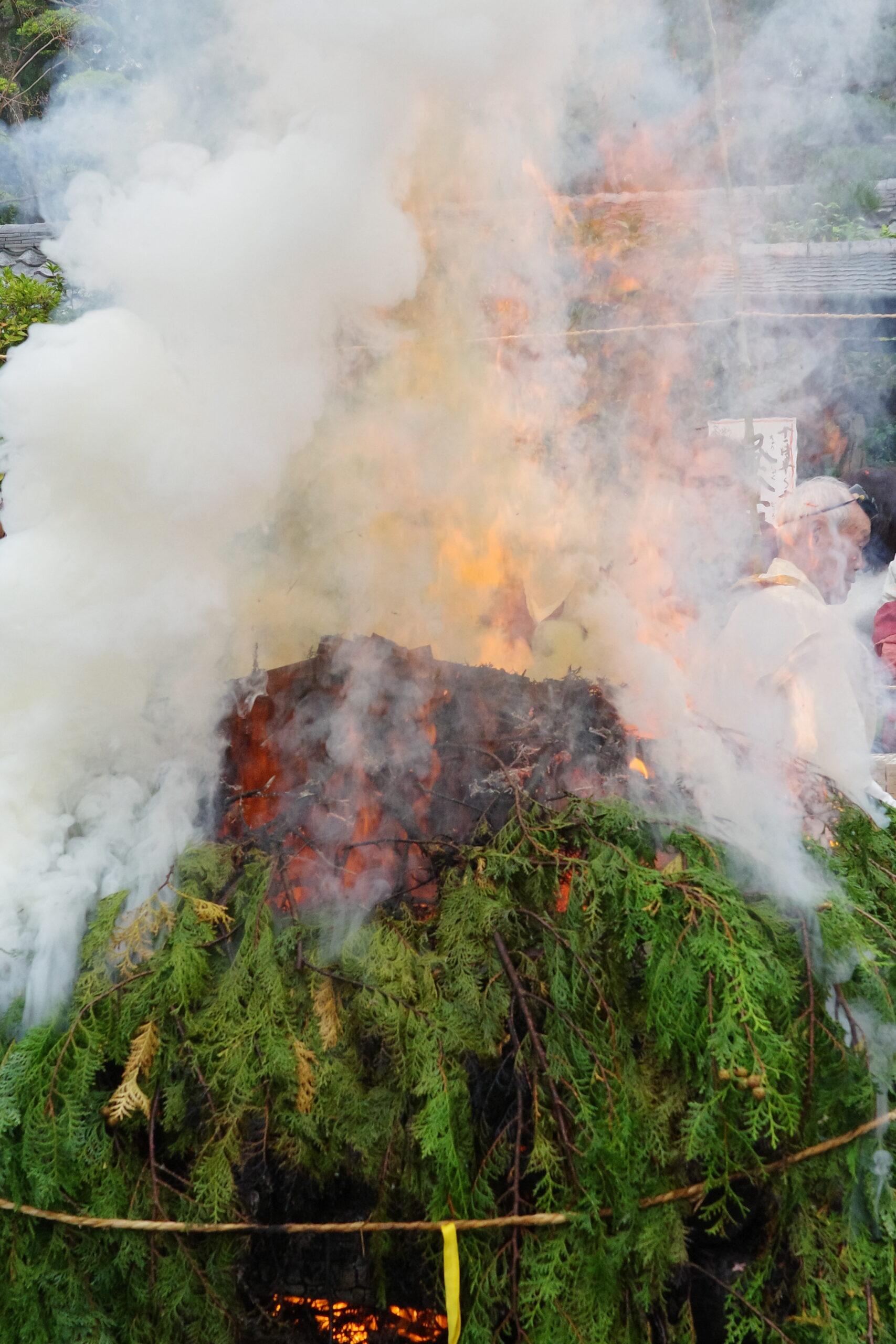
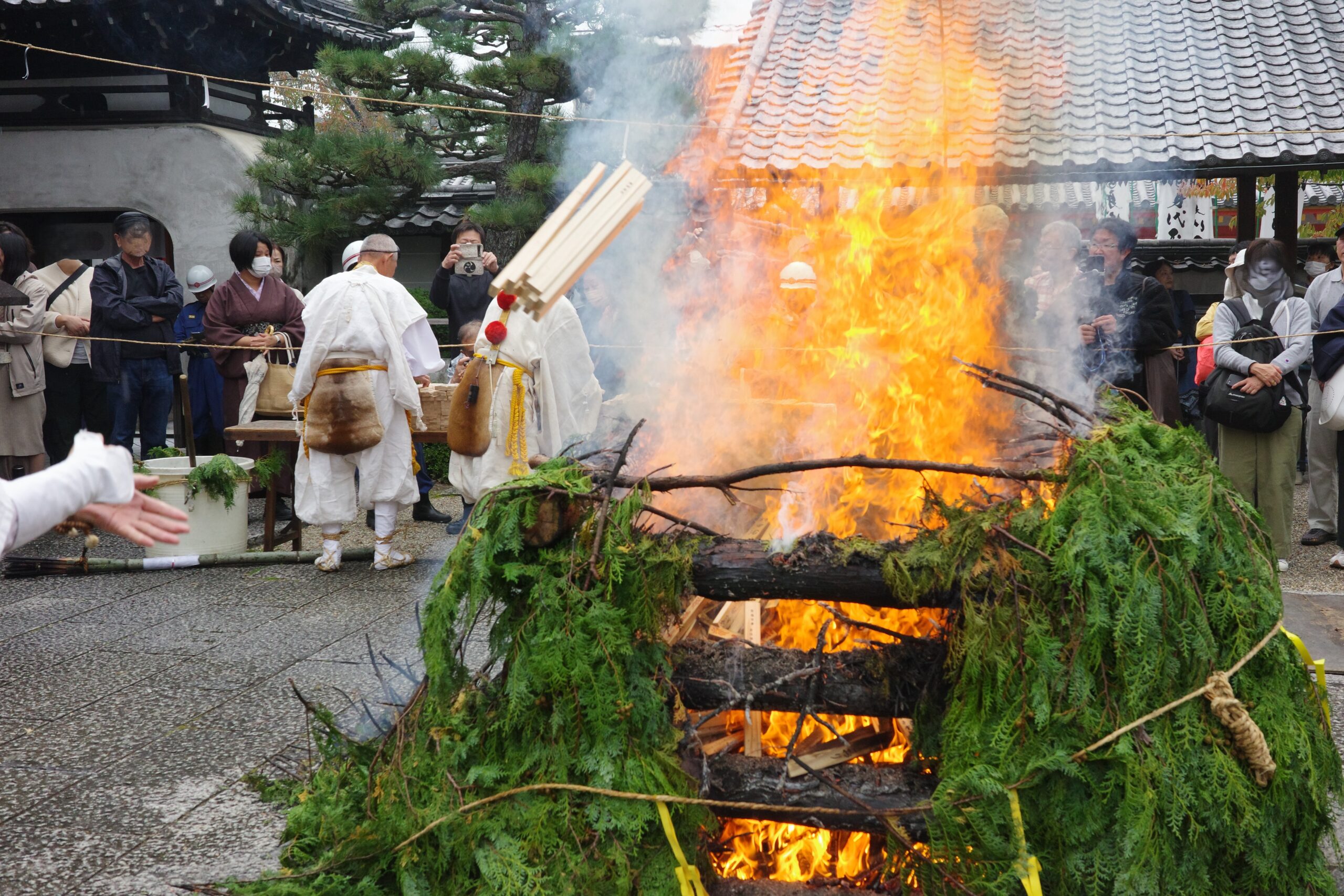
After the oni were driven out, Daigomaku ceremony was performed. The ceremony was performed in the same manner as in Ryuanji Temple. First, white smoke climbed into the sky, and then flames appeared when gomagi chips were thrown into the gomadan and the wood chips popped in the fire. Hojuji Temple is located downtown and has small precincts. Further, the gomadan and the alter were set in the small precincts, and thus an open area didn’t have enough room. As a lot of people crowded in the small space, I felt as if smoke and flames were approaching immediately. There were many firemen in silver fireman uniforms and they took thorough safety measures.
First, only smoke went up.
Flames rose at the end of the ceremony.
-
It’s a purification ceremony.
The torch was lighted.
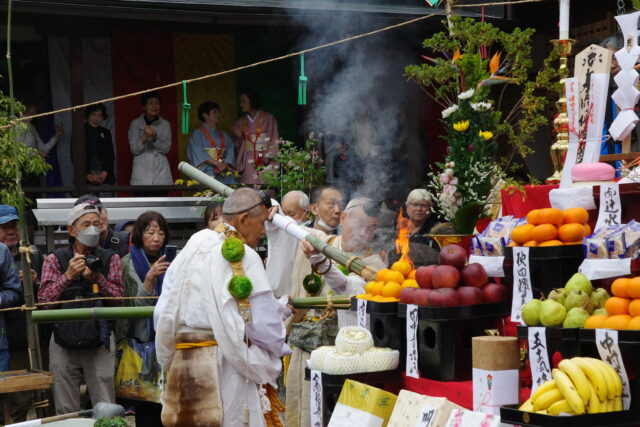
Then, the gomadan was lighted.
-
Smoke rose.
Flames were mixed with the smoke.
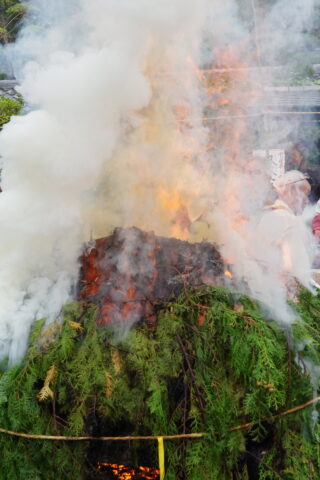
The fire started to make a sound.
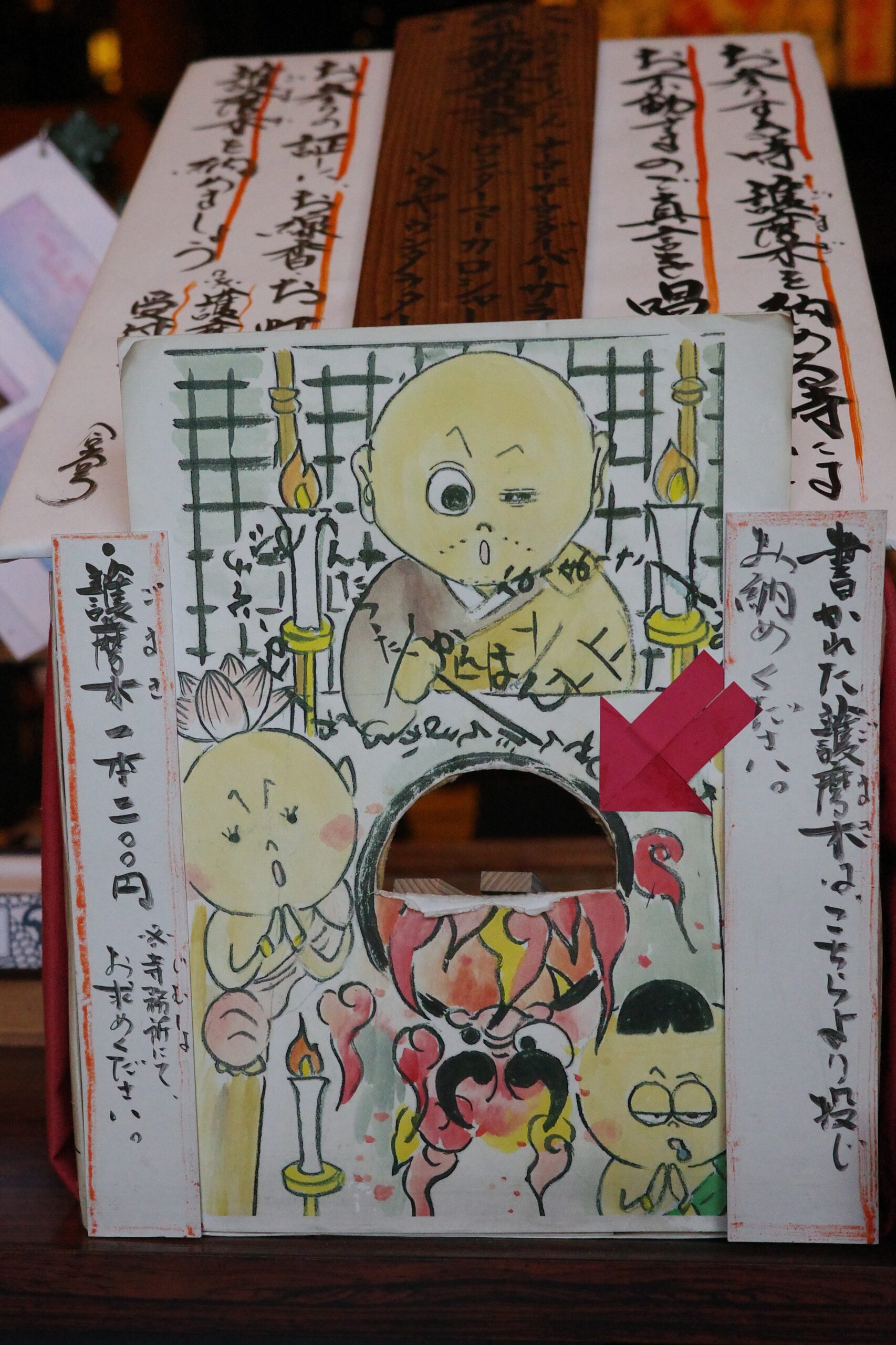
The chief priest of Hojuji Temple is good at drawing illustrations, and there were cute signboards in the precincts.
Leave a Reply