

On smartphones, this page is best viewed in horizontal mode.
Aoi Matsuri is a festival of Kamigamo-jinja Shrine and Shimogamo-jinja Shrine, which is one of the three greatest festivals in Kyoto, in addition to Gion Matsuri and Jidai Matsuri. The beginning of Aoi Matsuri has been said: About 1,500 years ago, poor crop was caused in succession, and starvation and epidemics were spread. An oracle said that the tragedy was caused by curses of the God of Kamo. So, the emperor at that time sent an imperial messenger to amigamo-jinja and Shimogamo-jinja Shrines and held a matsuri for placating the anger of the God of Kamo.
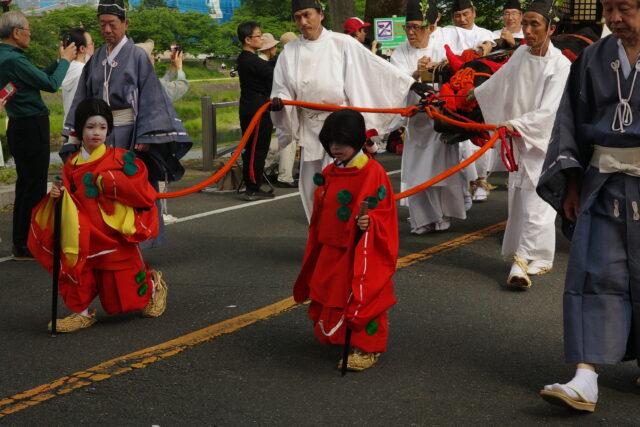
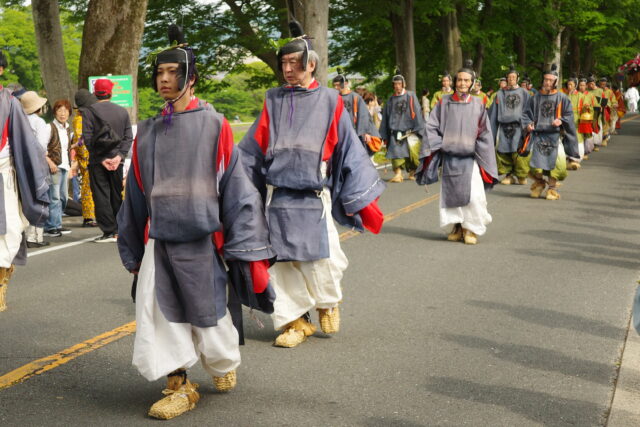
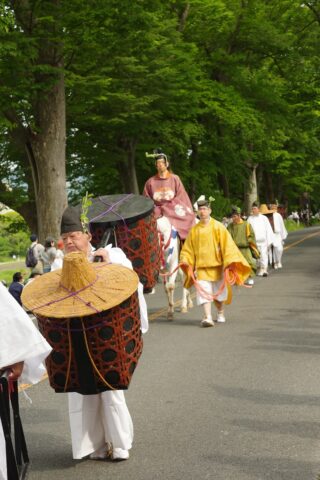
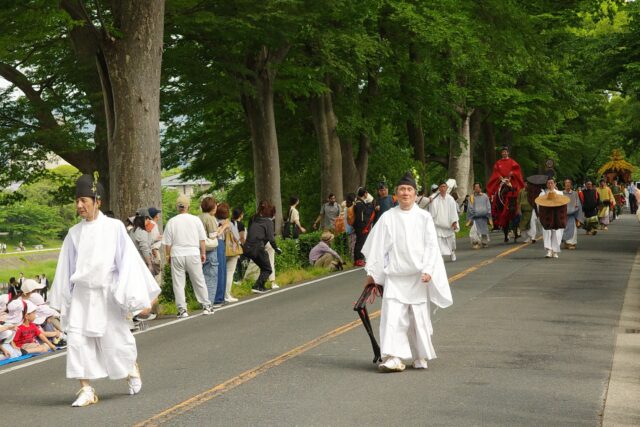
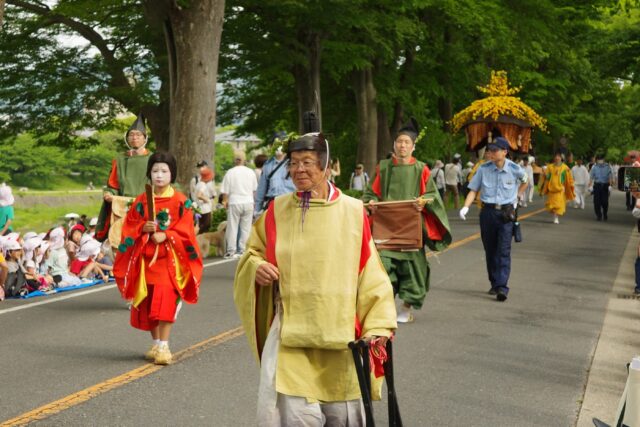
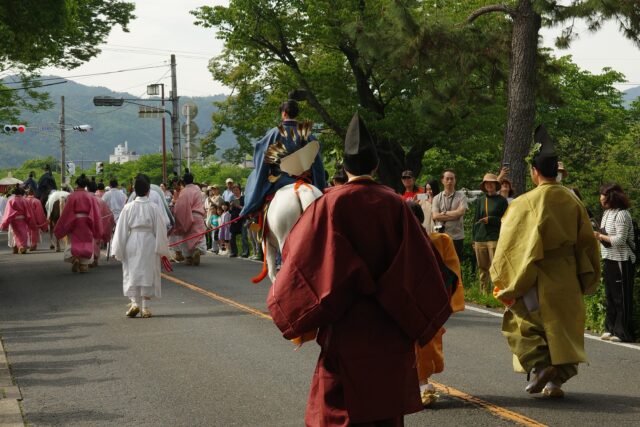
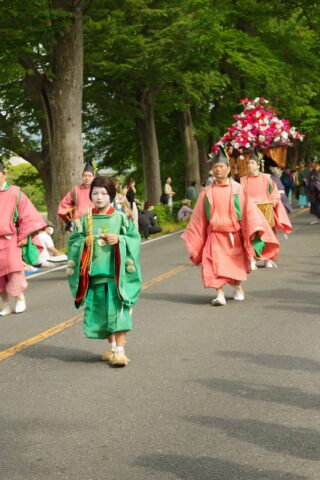
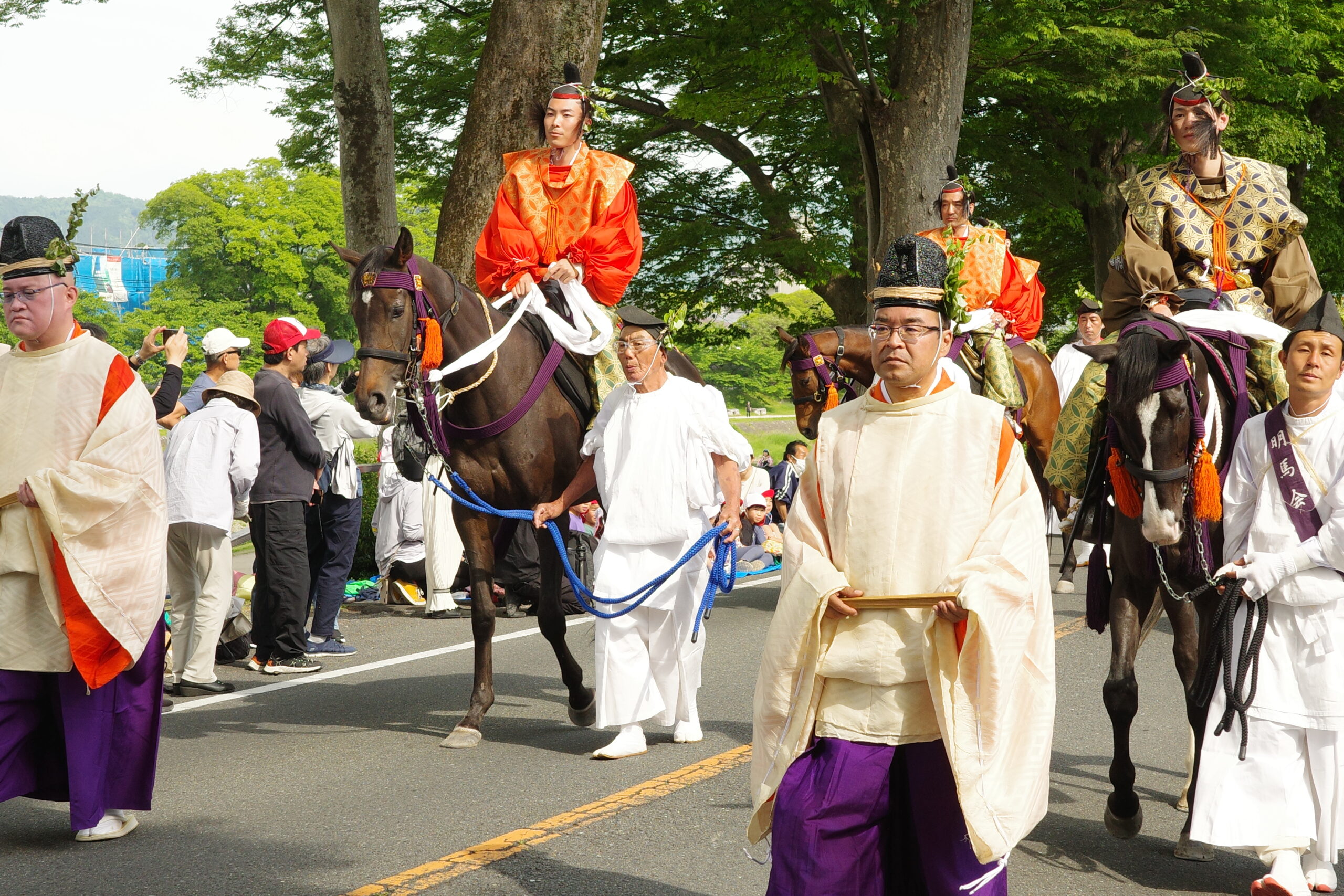
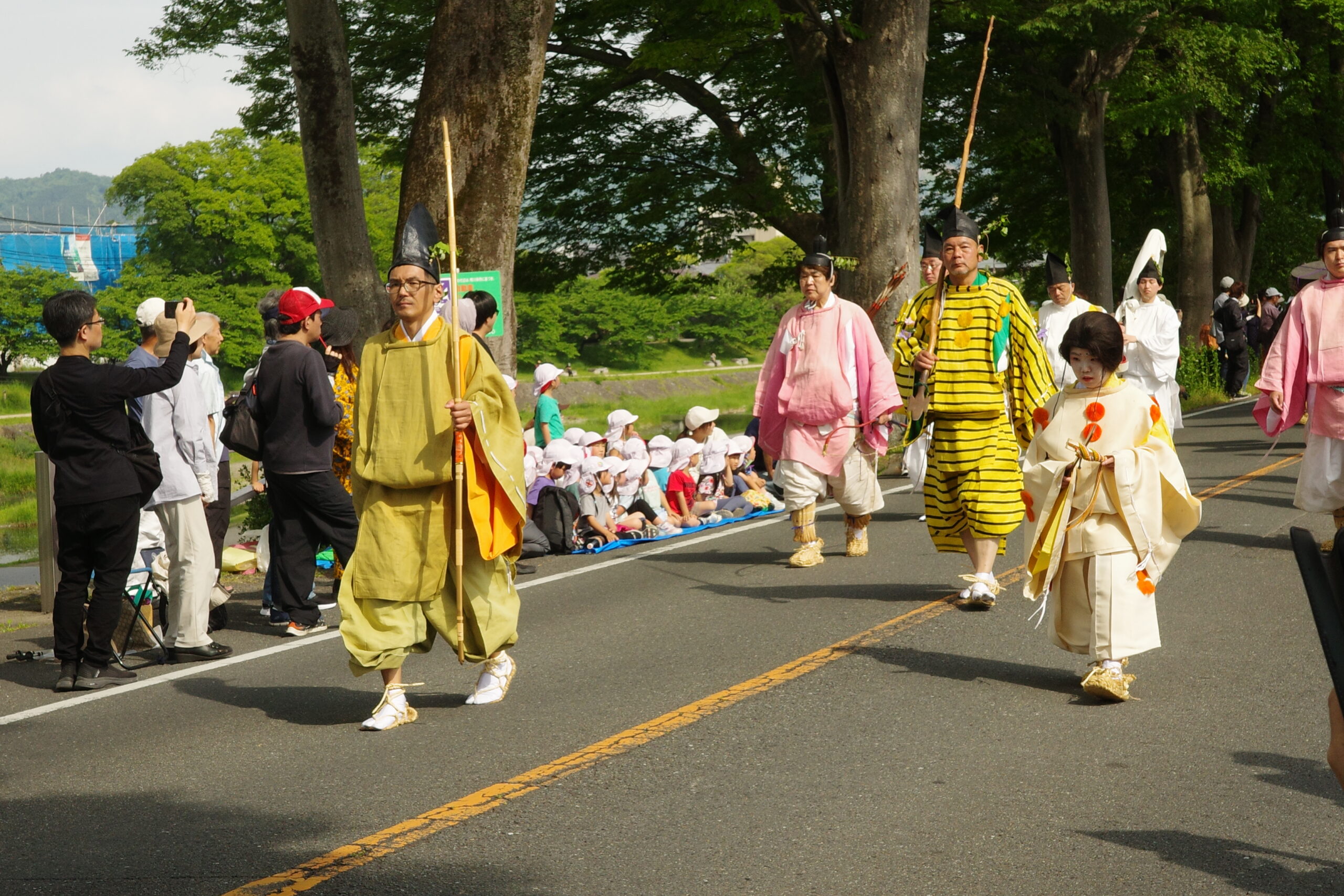
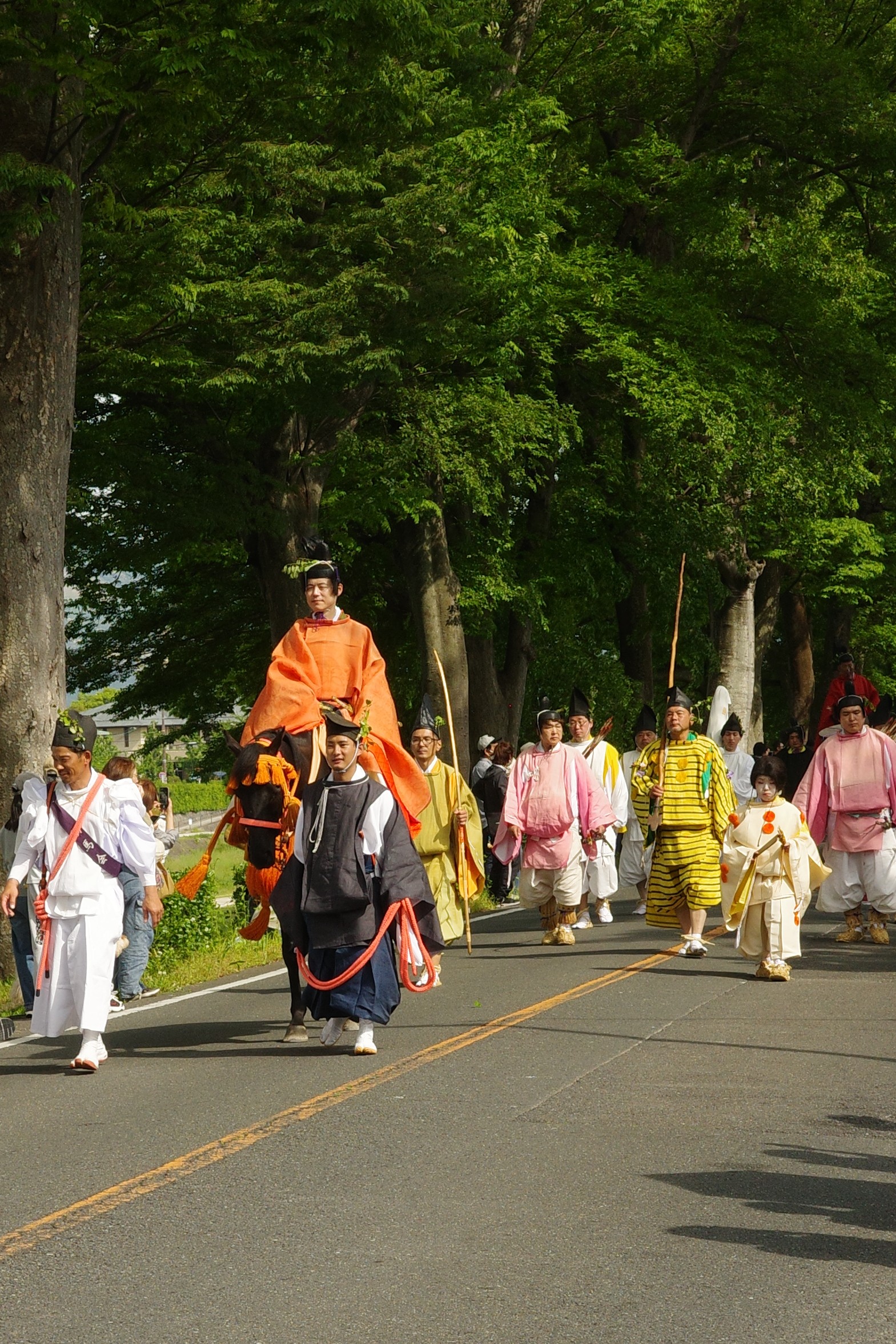
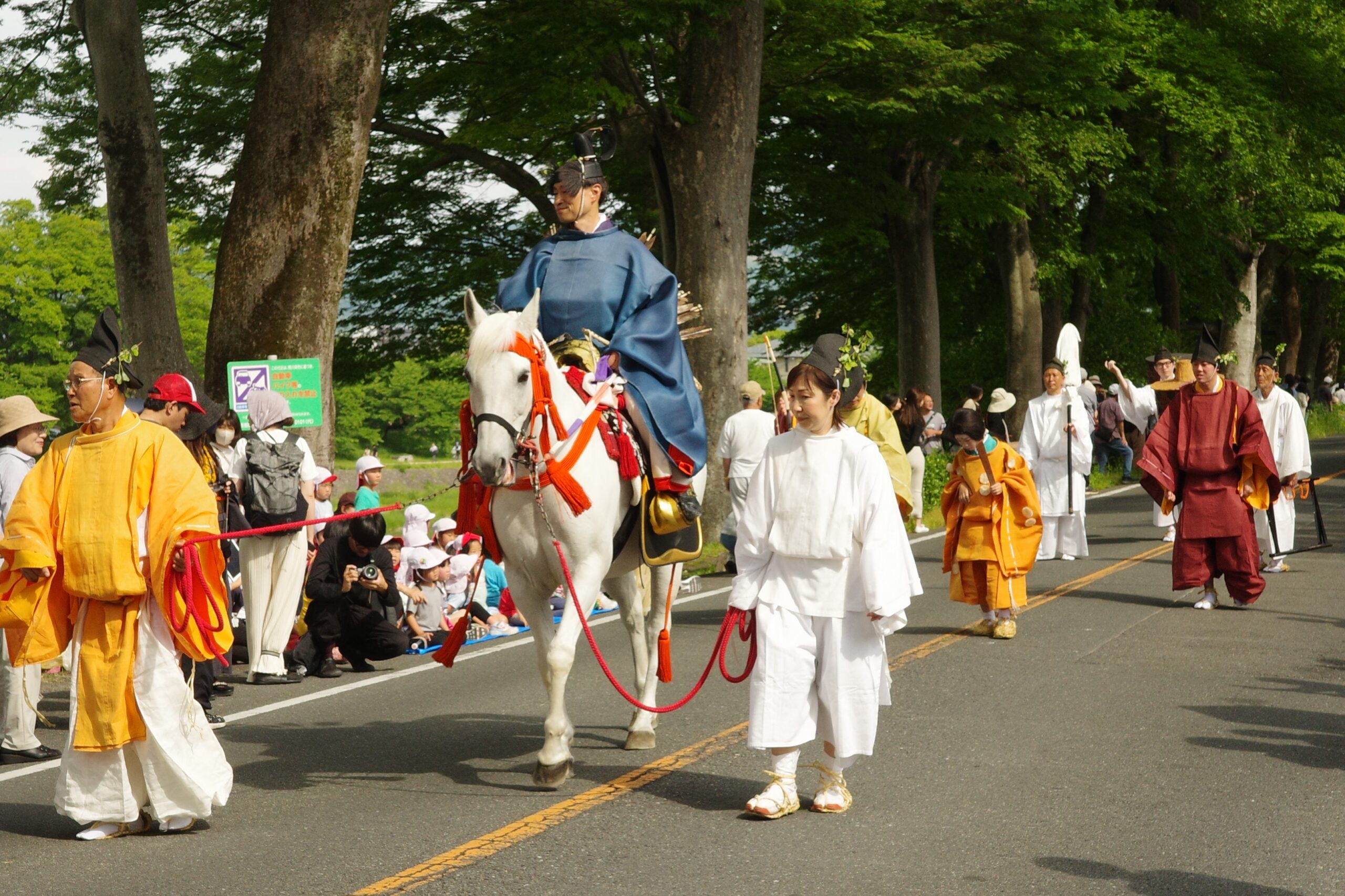
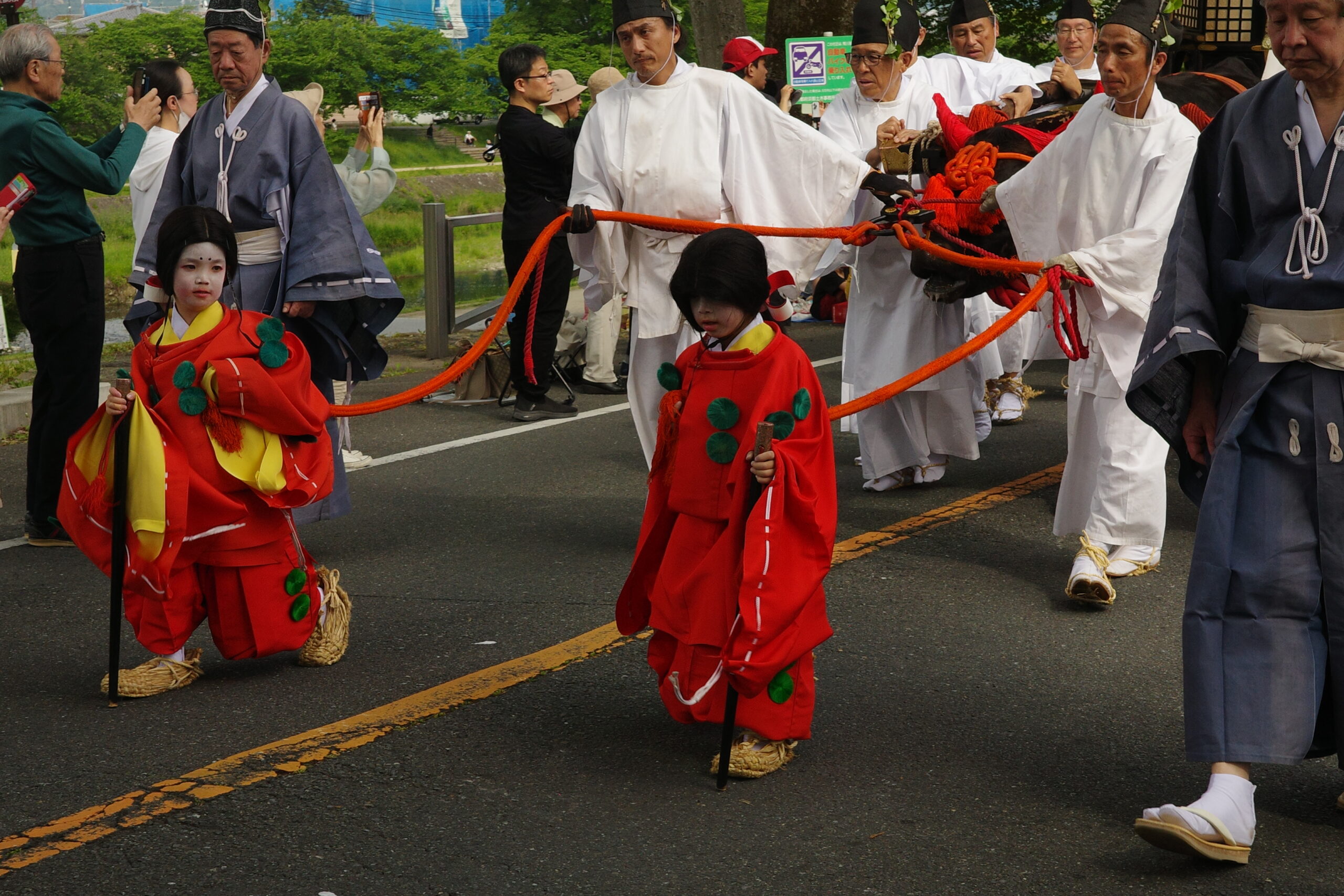
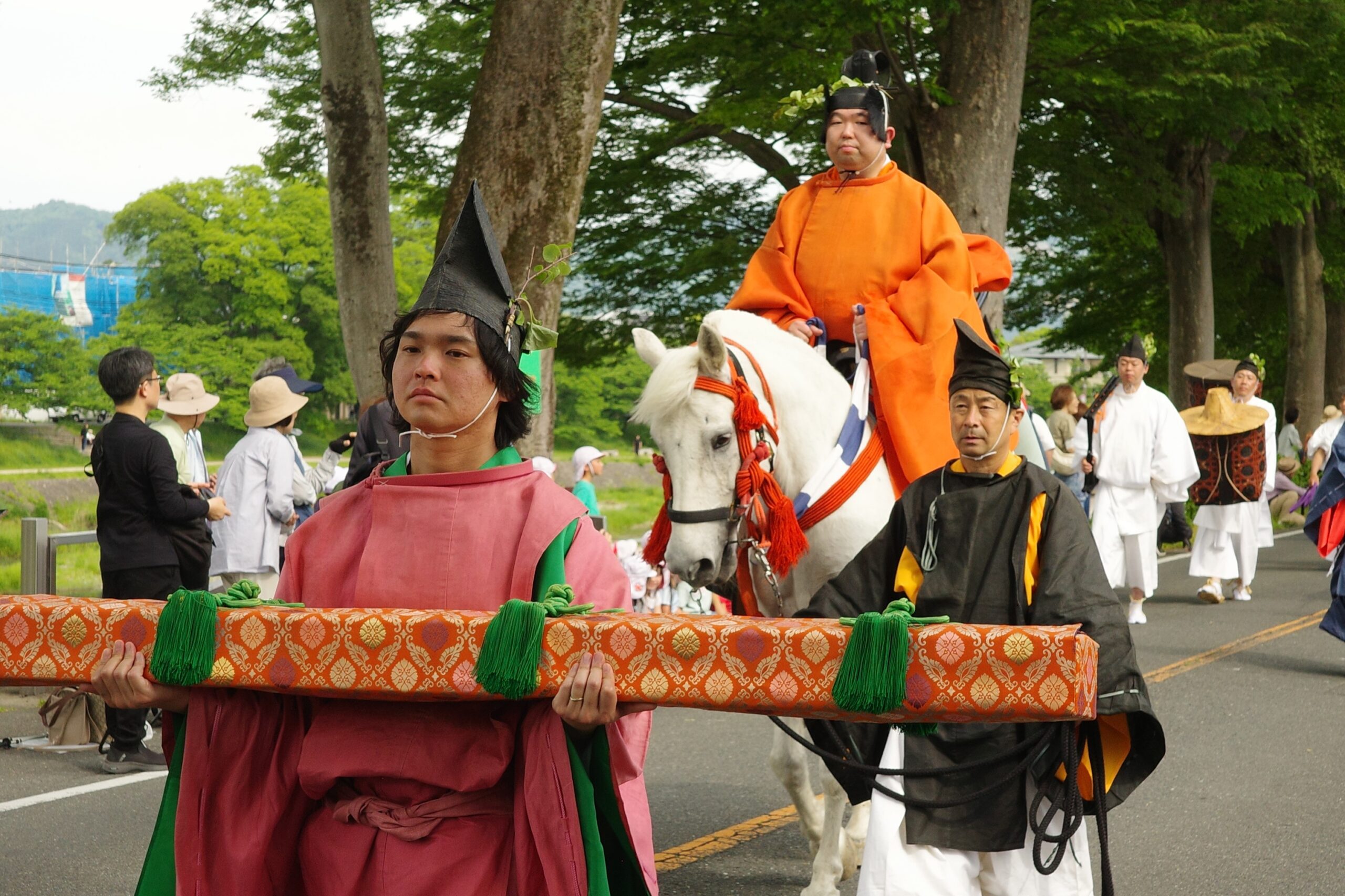
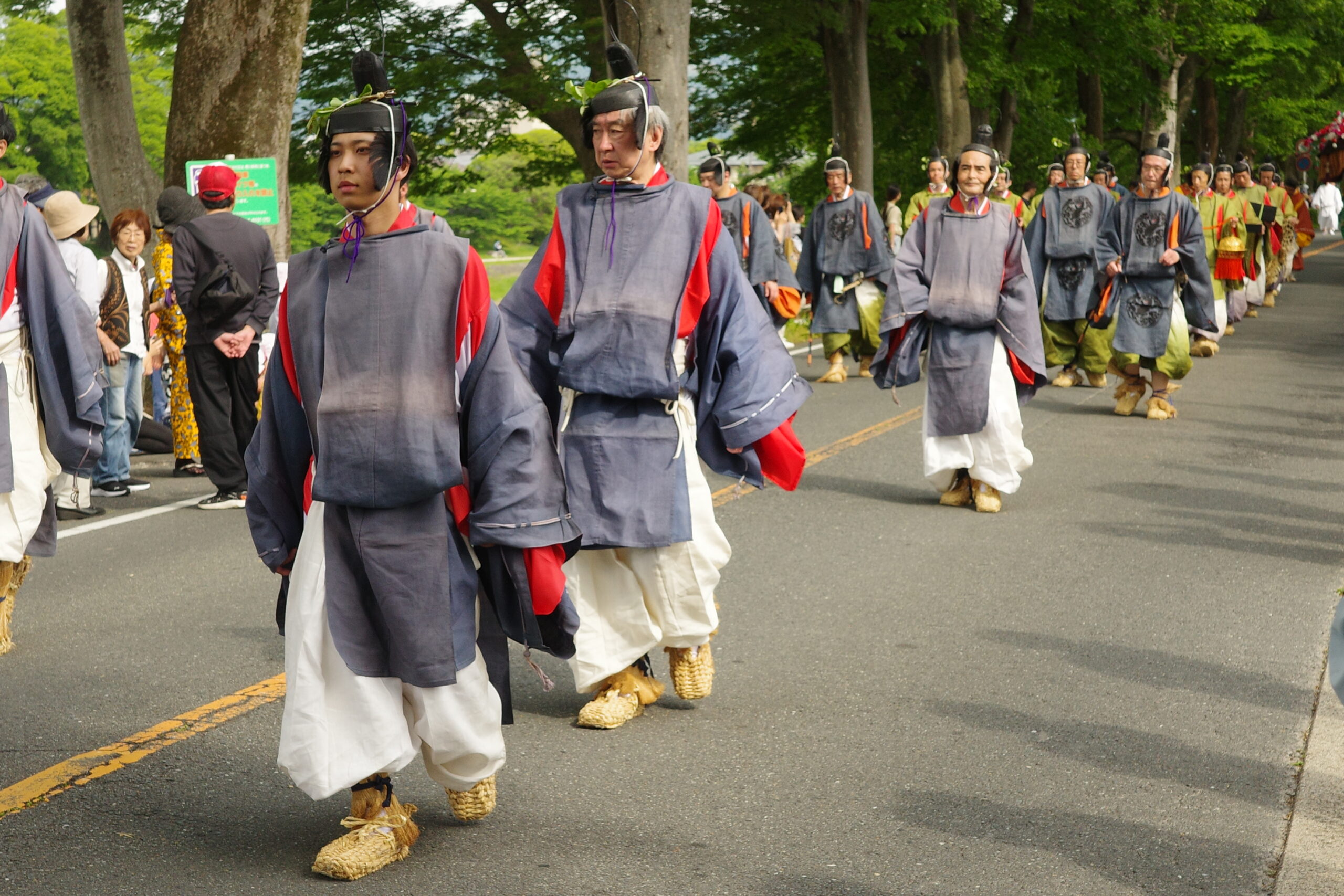
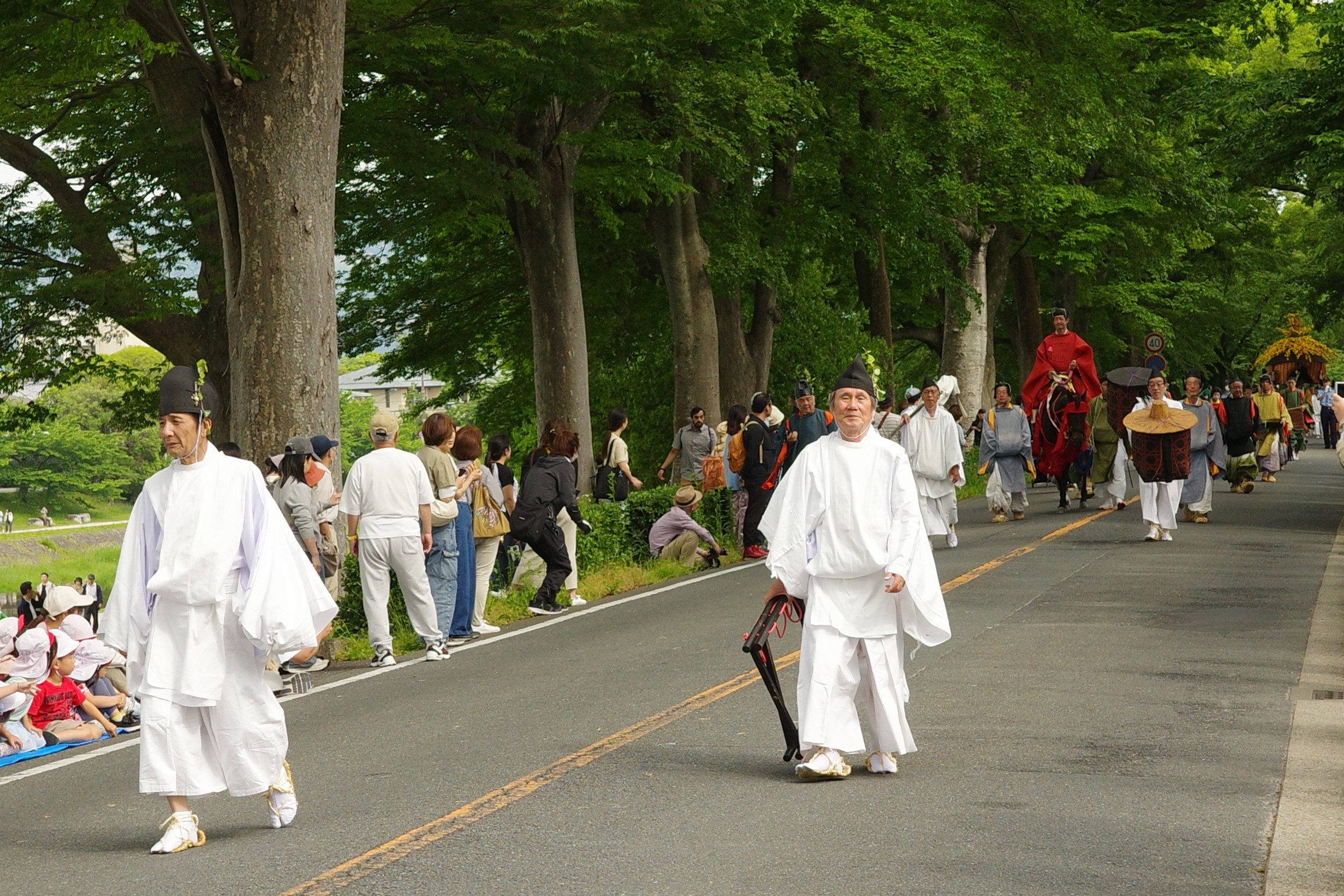
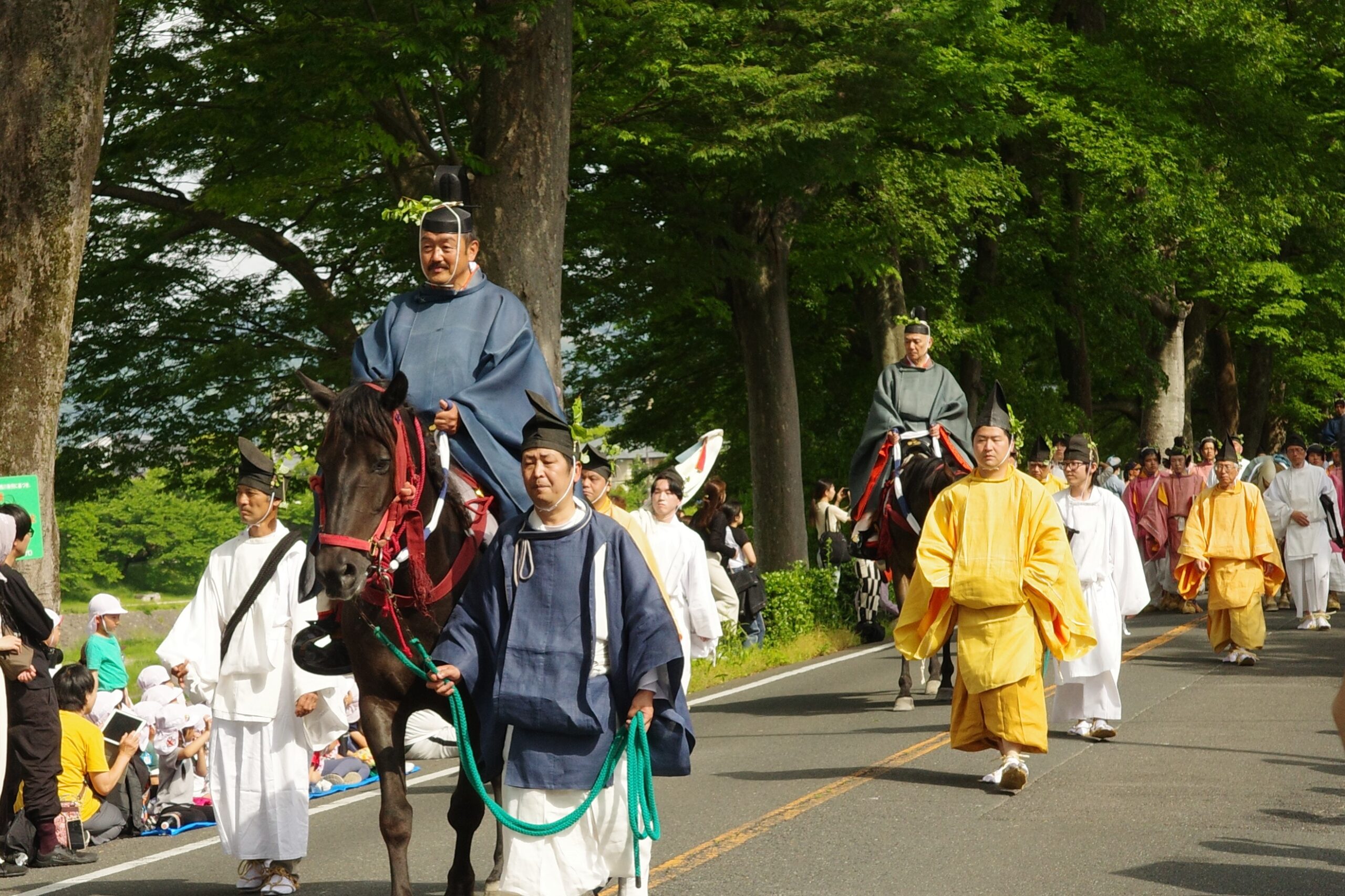
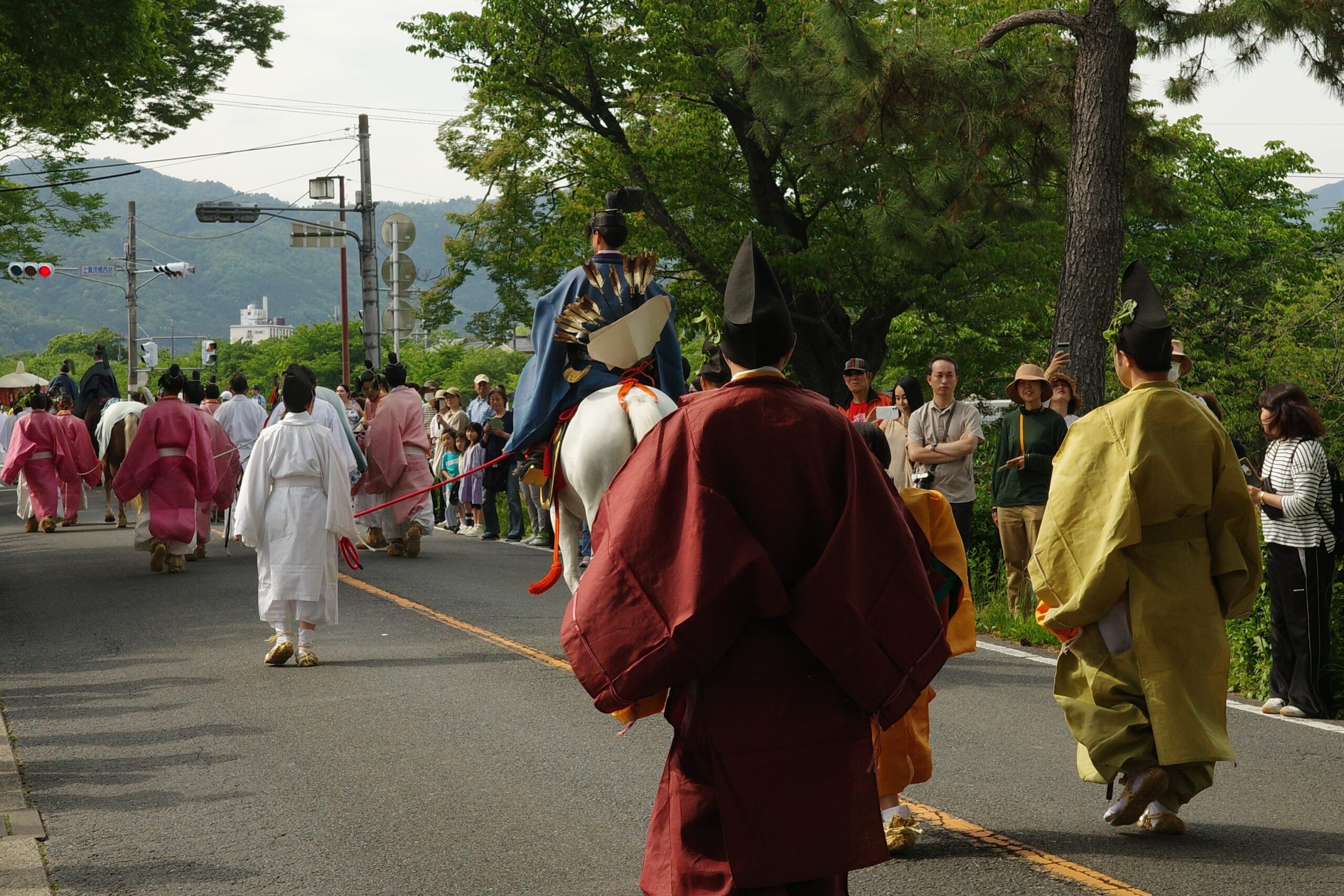
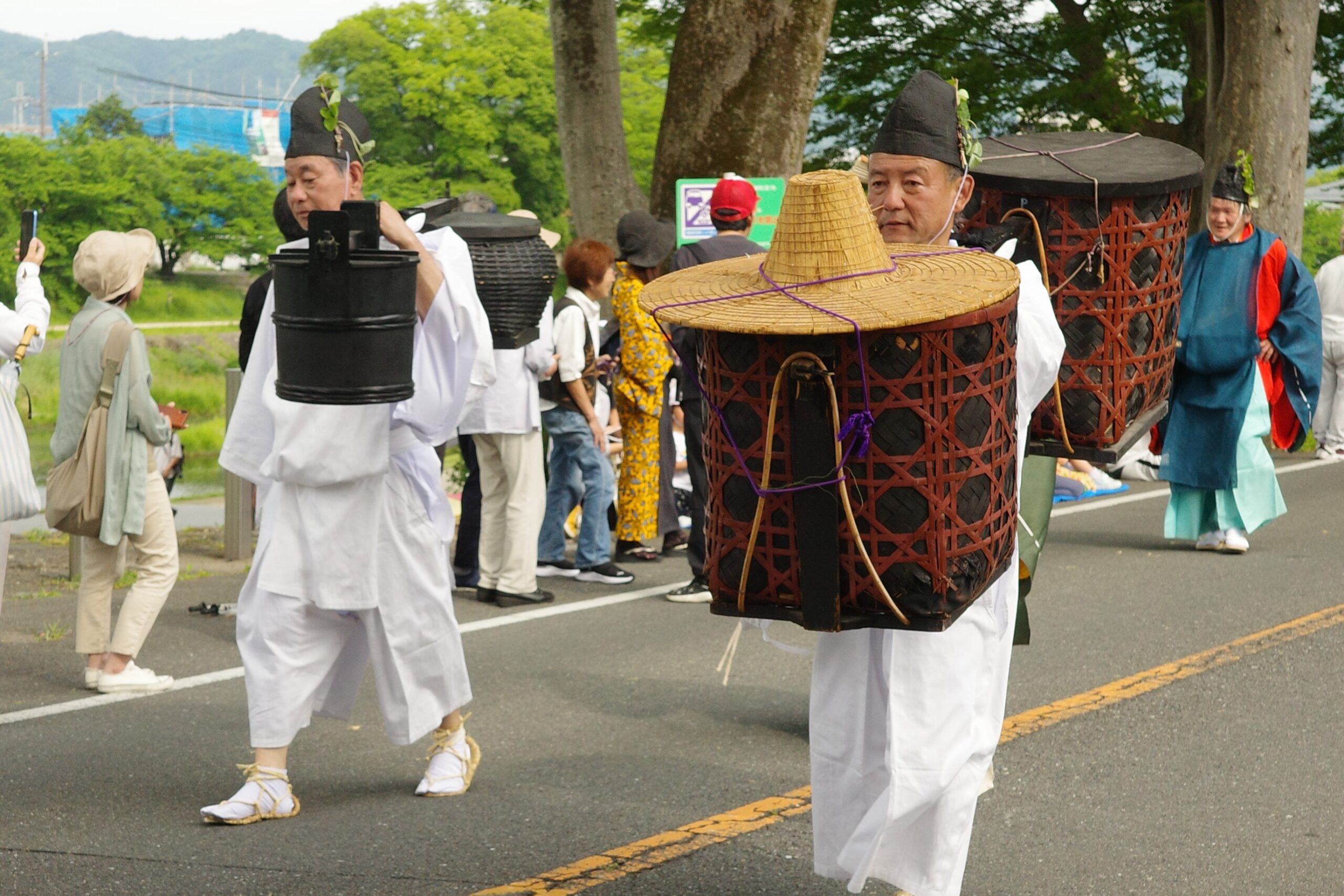
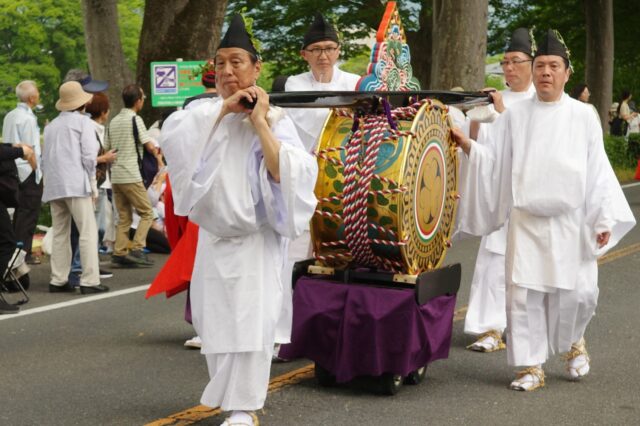
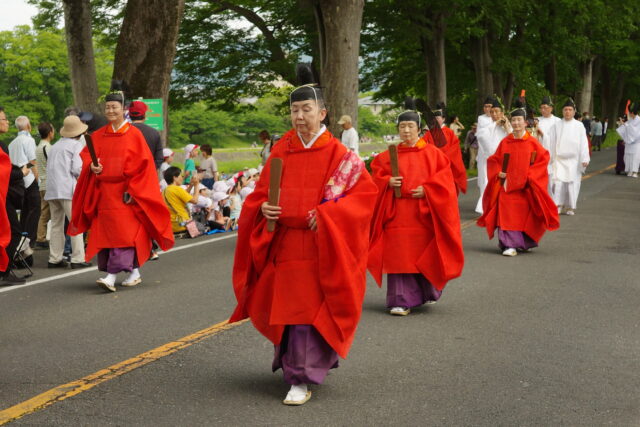
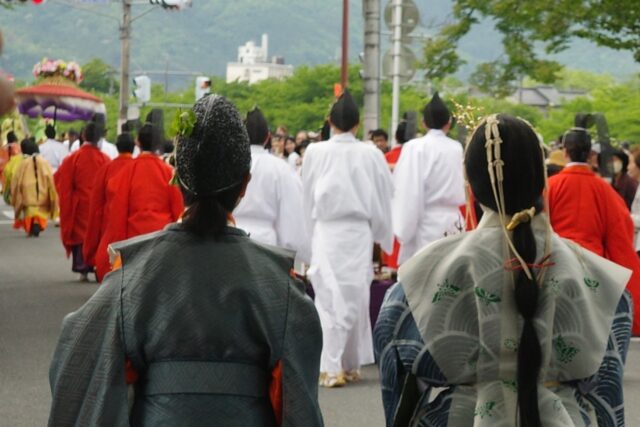
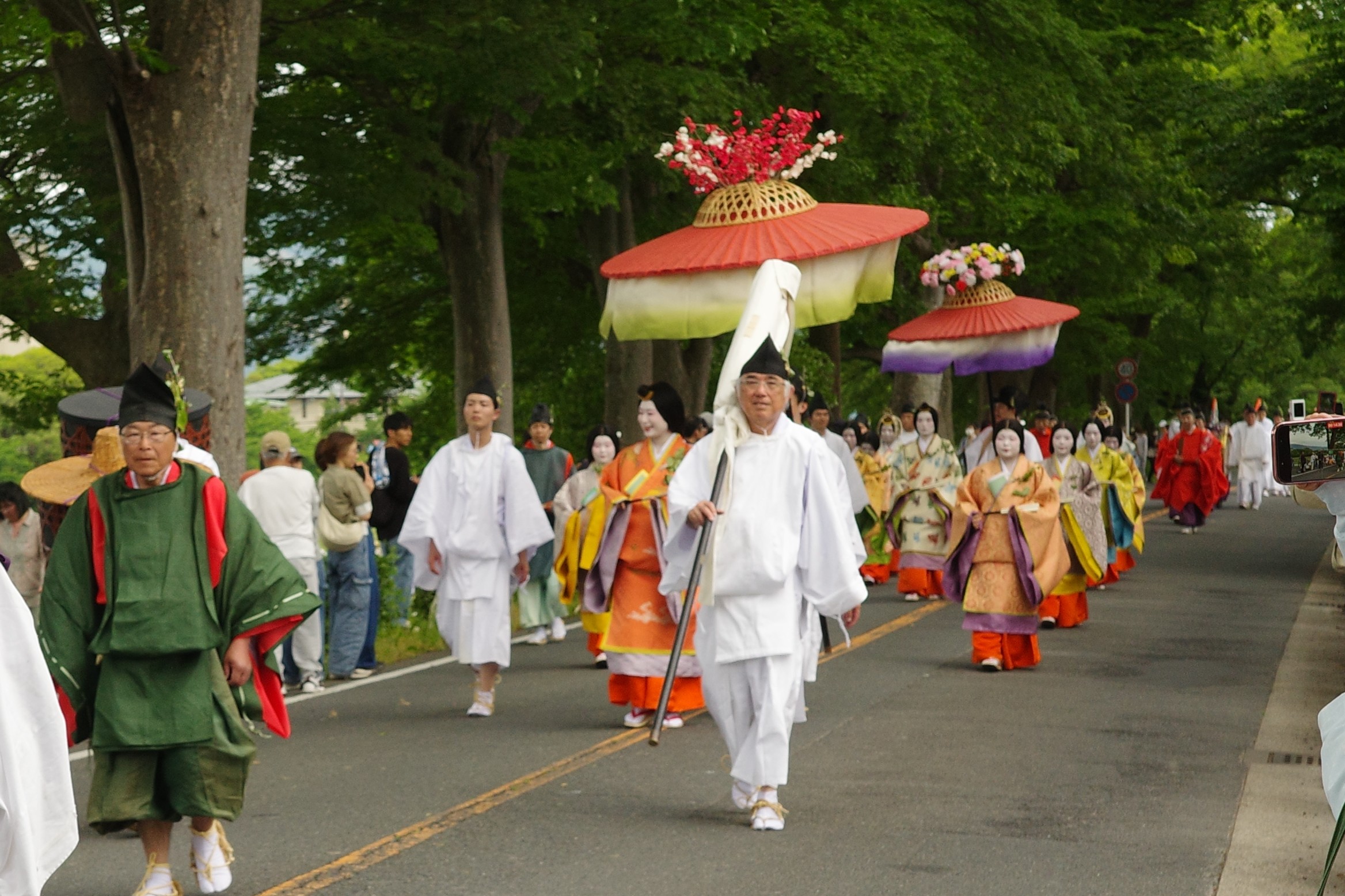
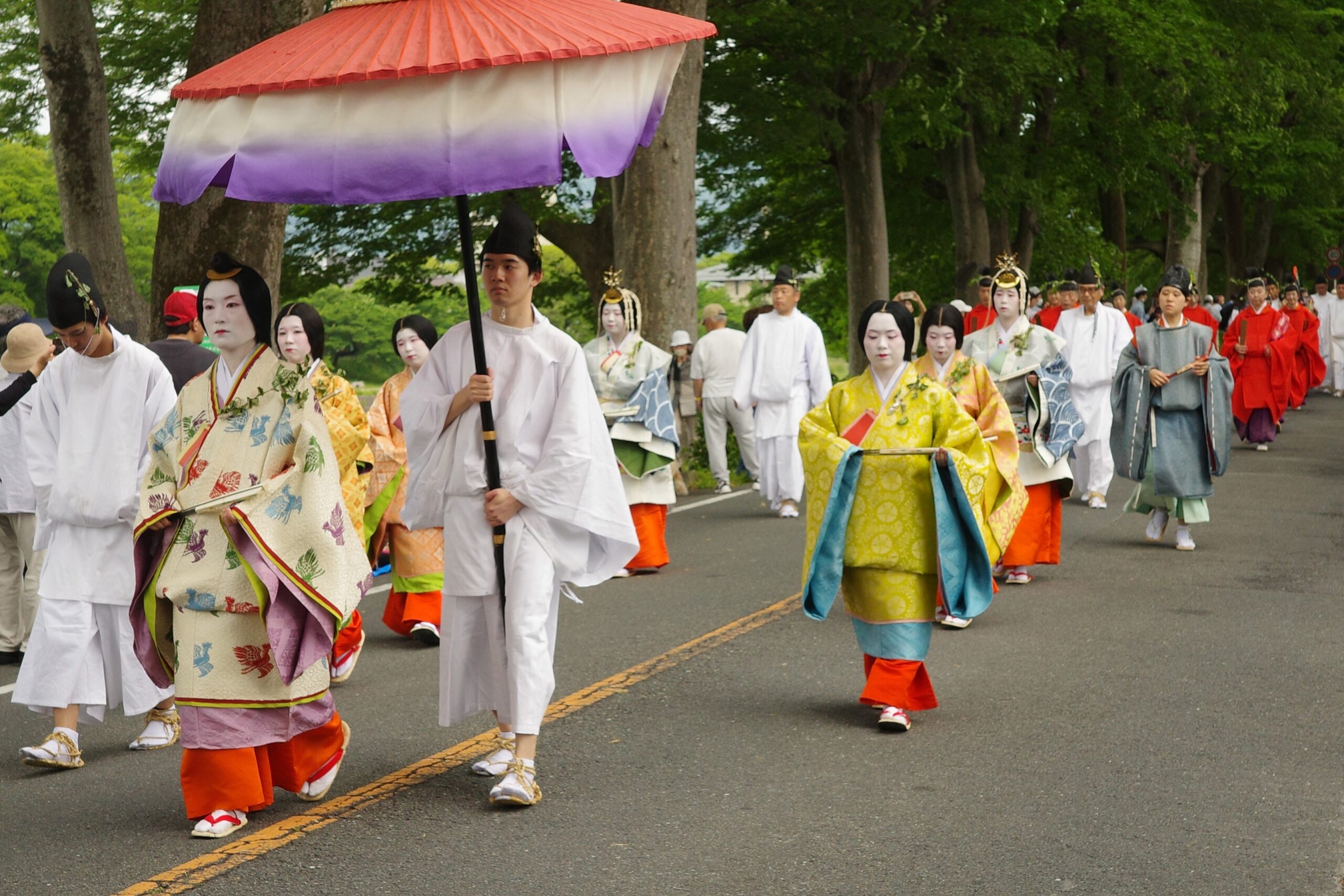
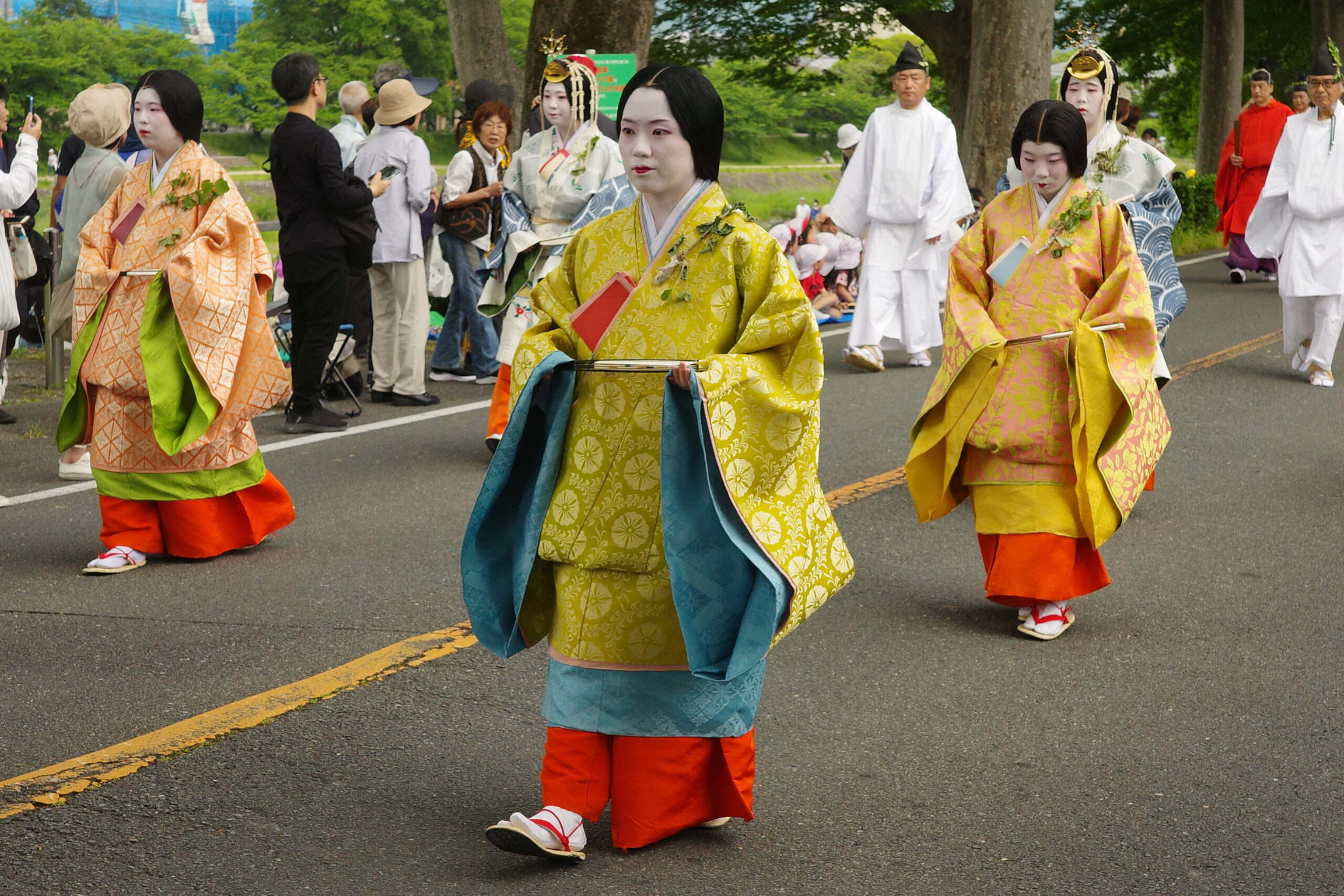
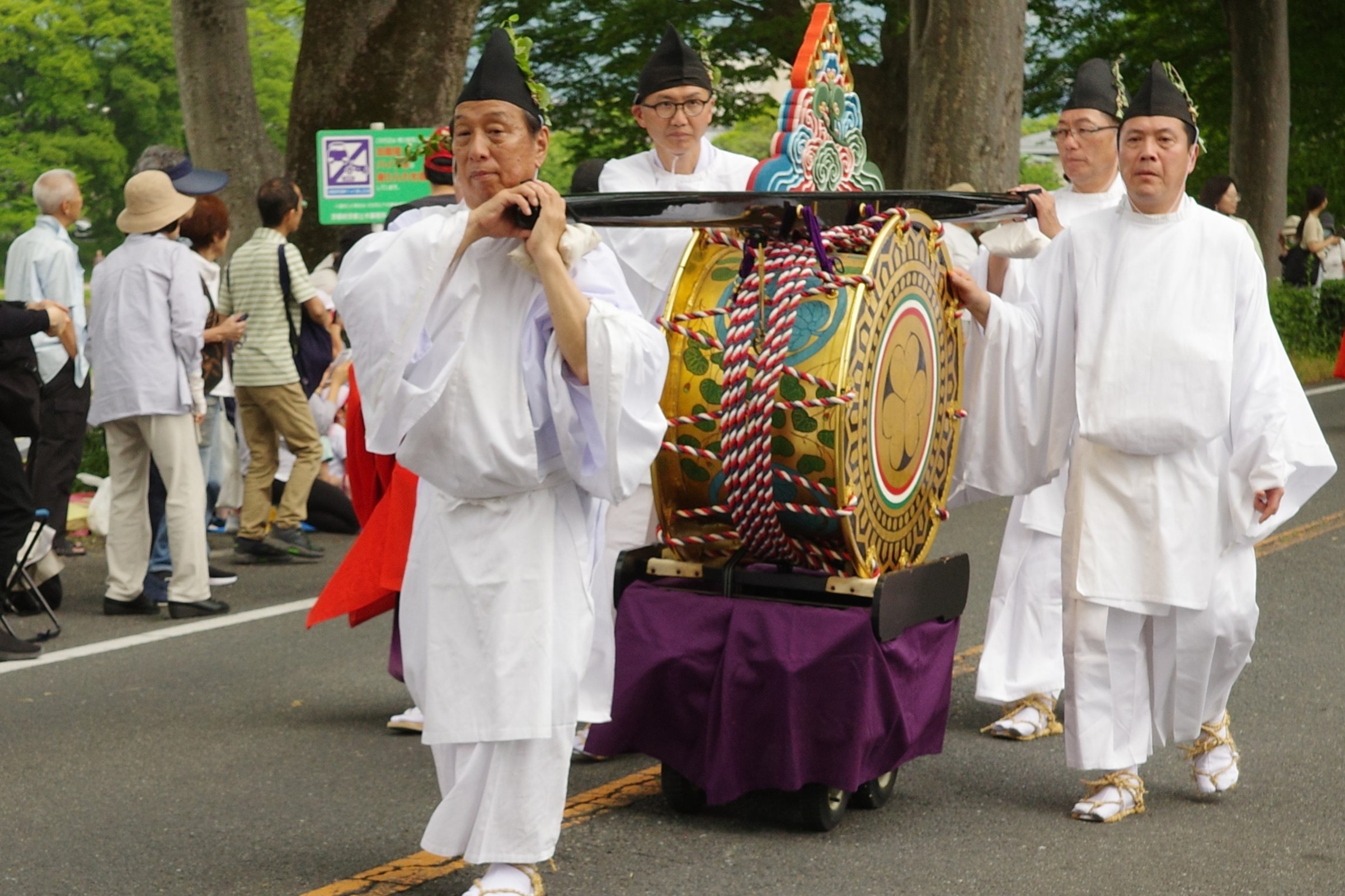
Various rituals (pre-ceremonies) are held from the beginning of May, and on the fifteenth of May, the highlight of Aoi Matsuri, “Roto-no-Gi”, is performed. In the ritual, in order to offer gifts to the God of Kamo from the Emperor, a procession composed of persons in Heian period costumes, the length of the procession being about one kilometer, parades about 8 kilometers from the Imperior Palace to Shimogamo-jinja Shrine and then Kamigamo-jinja Shrine. The procession contains a main procession including an acting imperial messenger, and a women procession including Saio-dai. I watched the parade at the foot of Kamigamobashi Bridge.
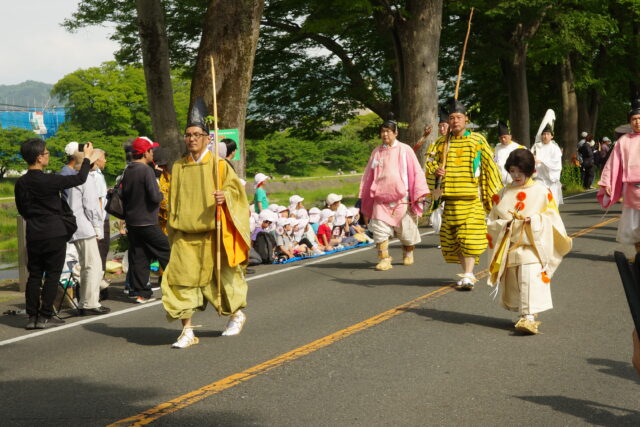
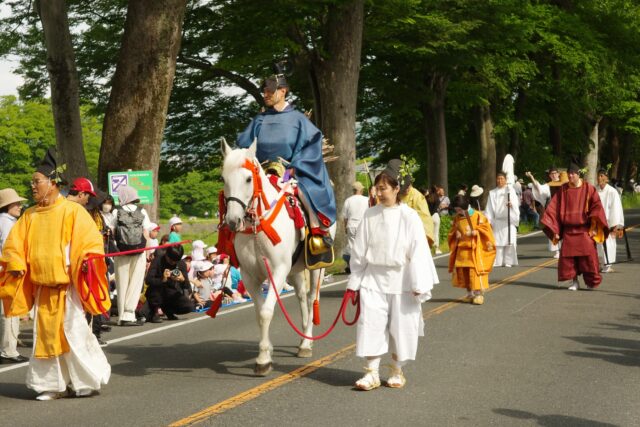
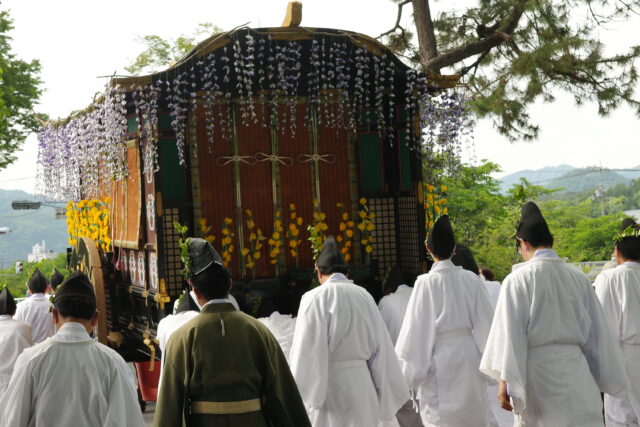
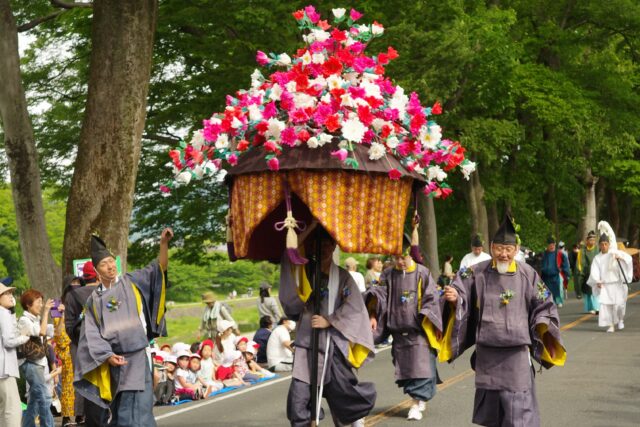
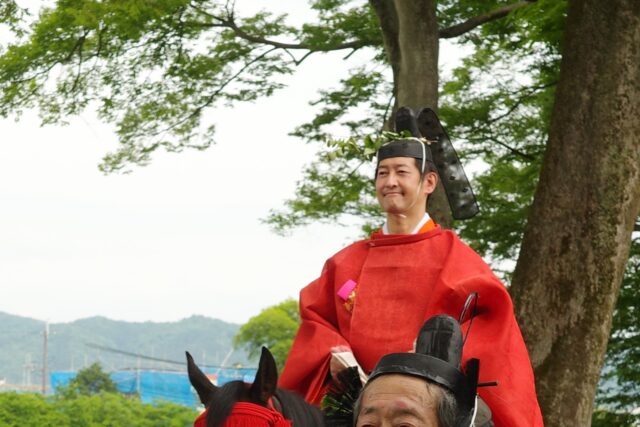
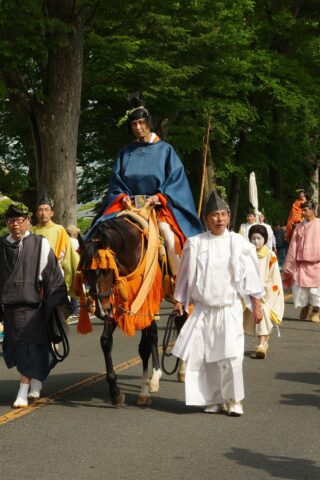
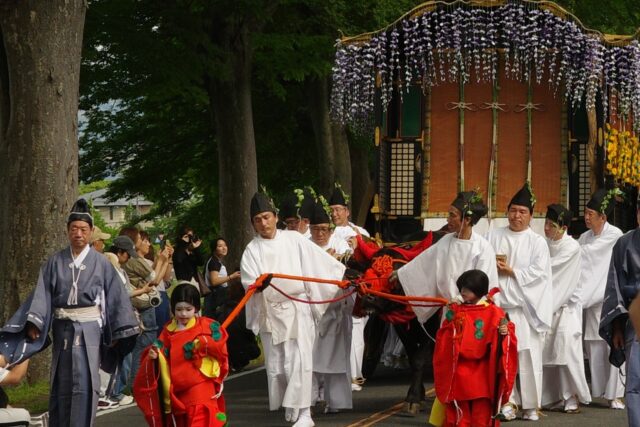
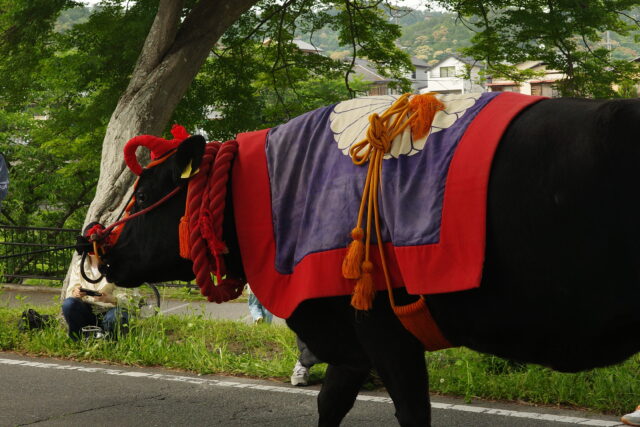
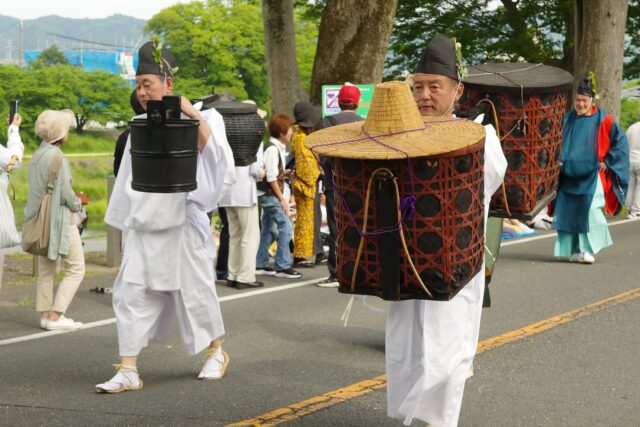
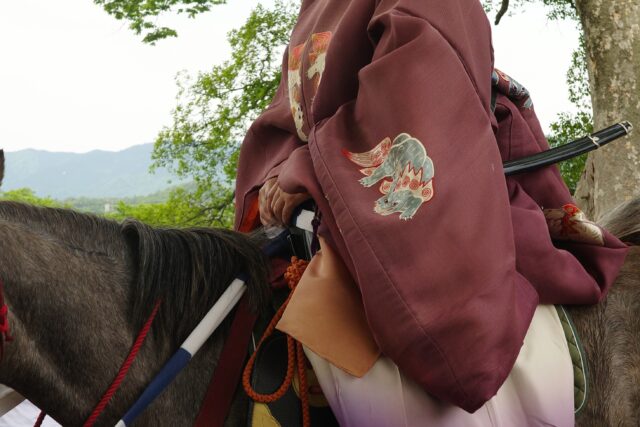
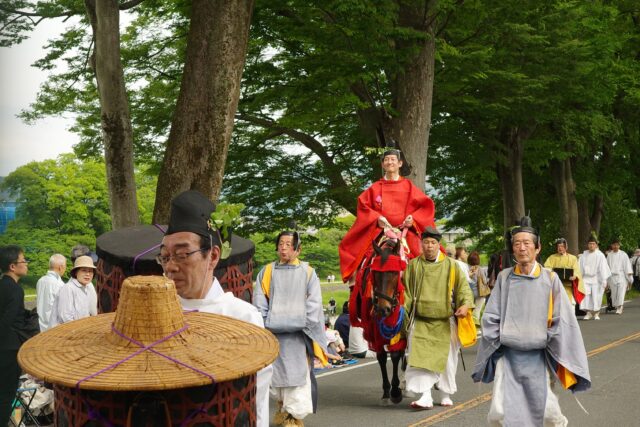
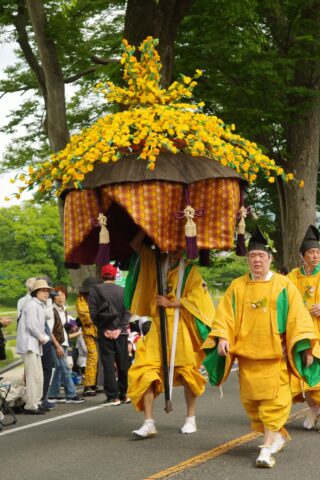
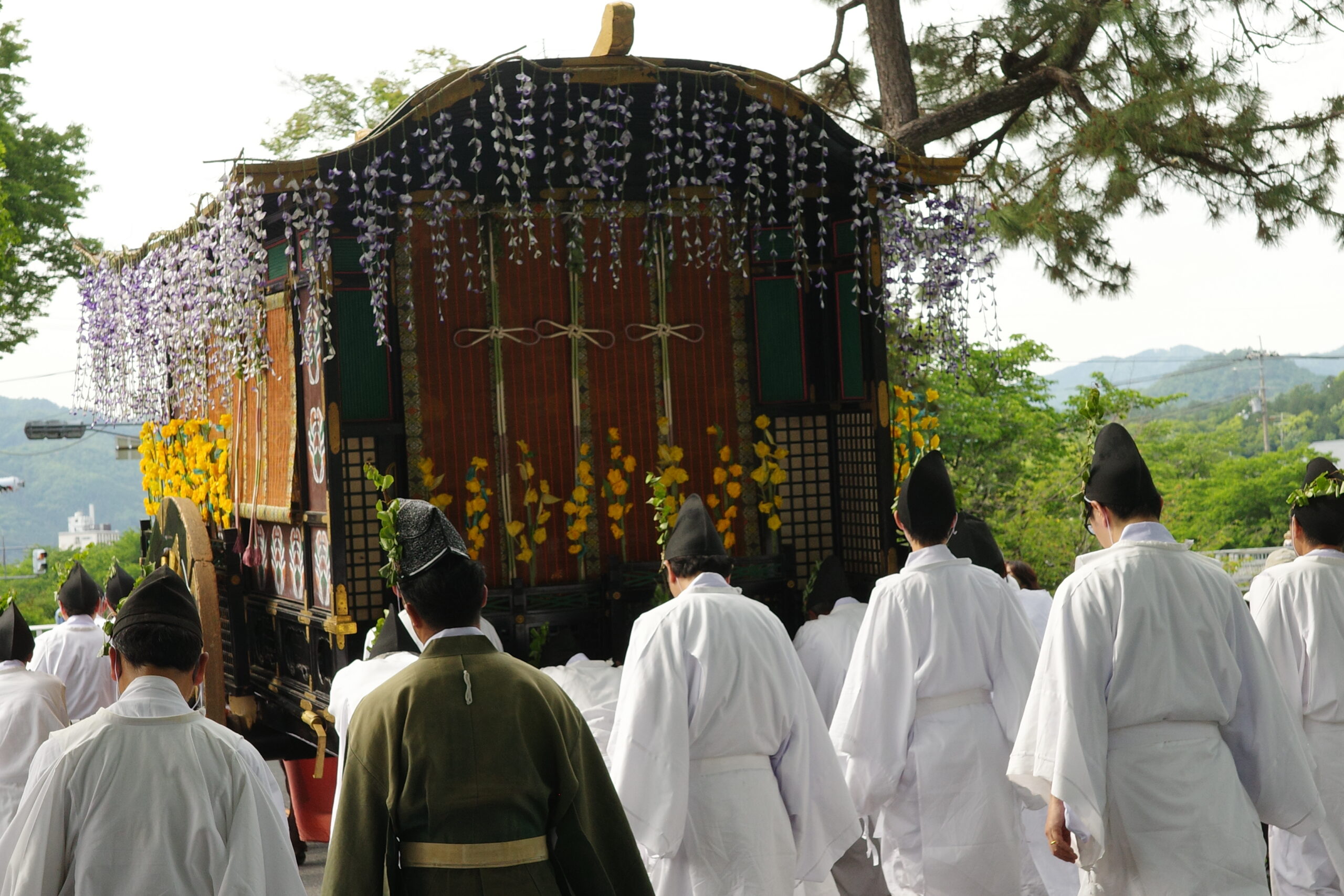
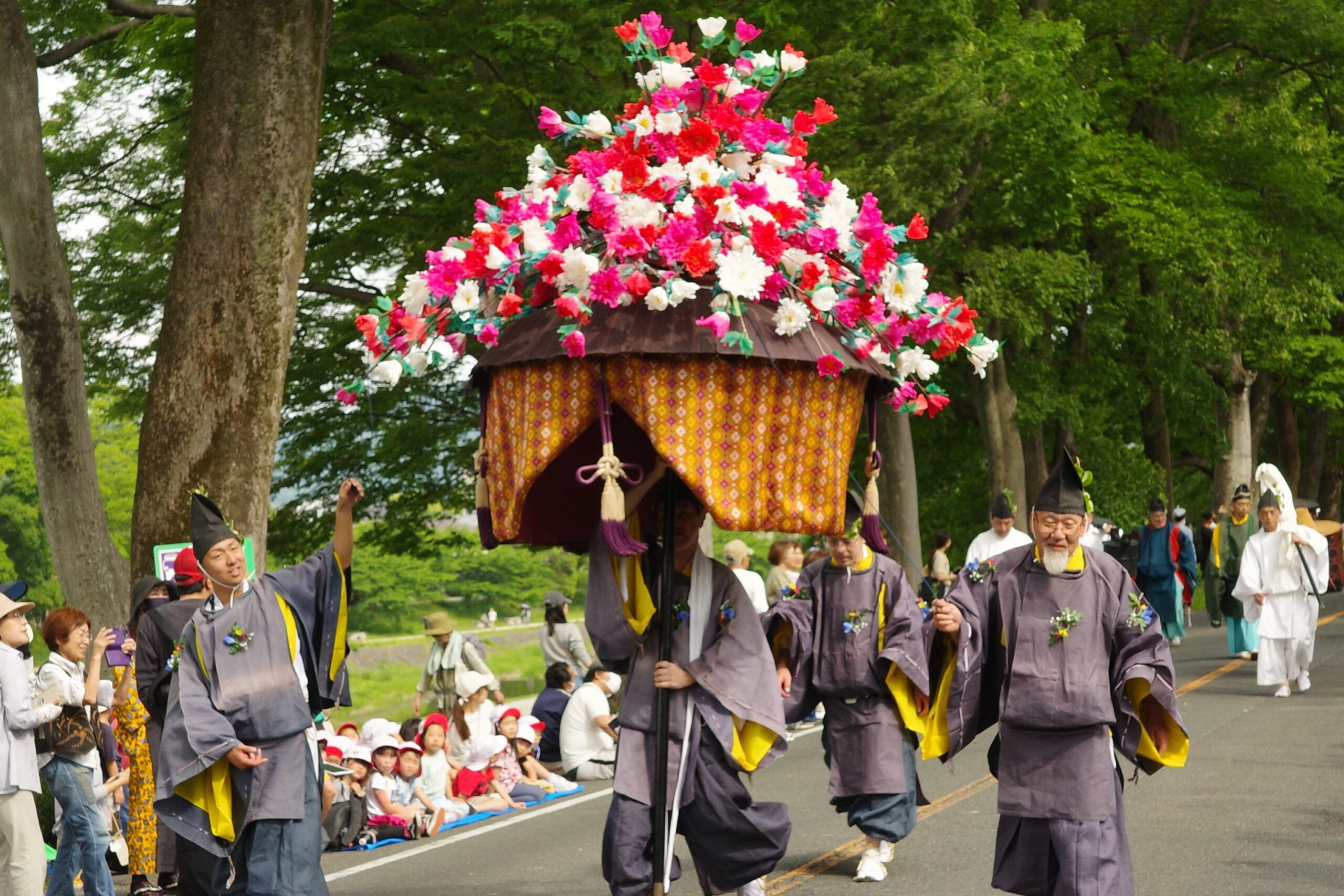
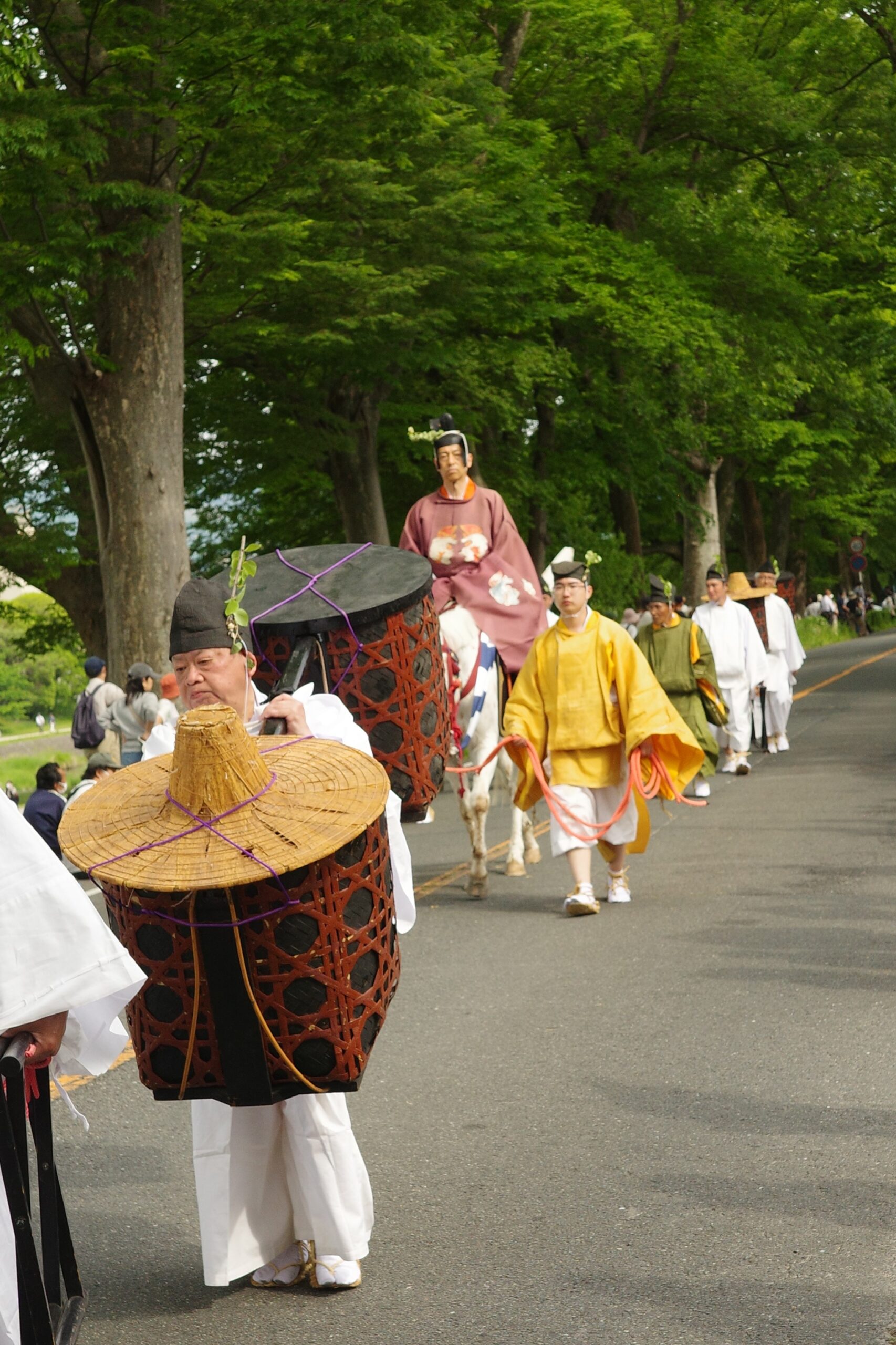
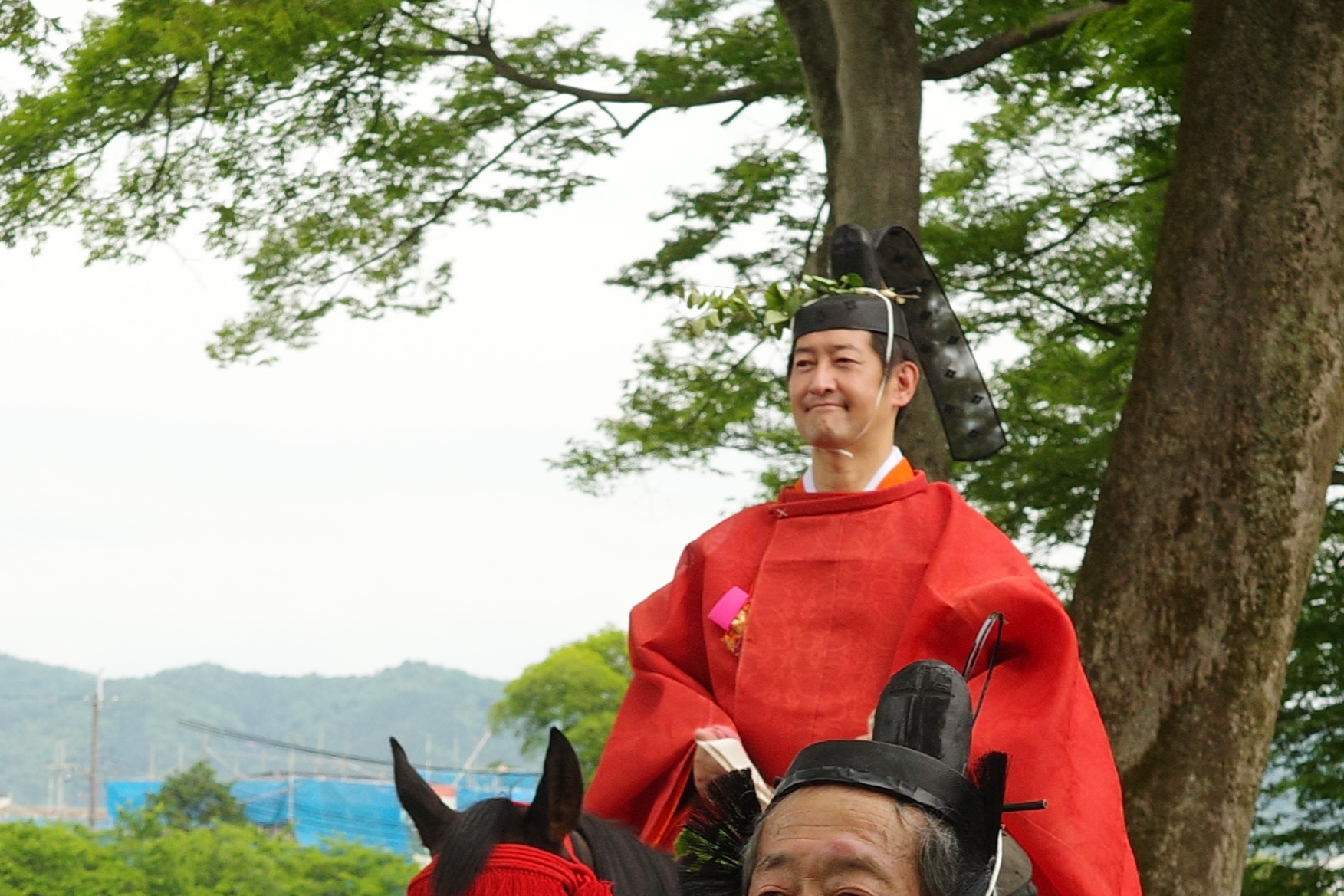
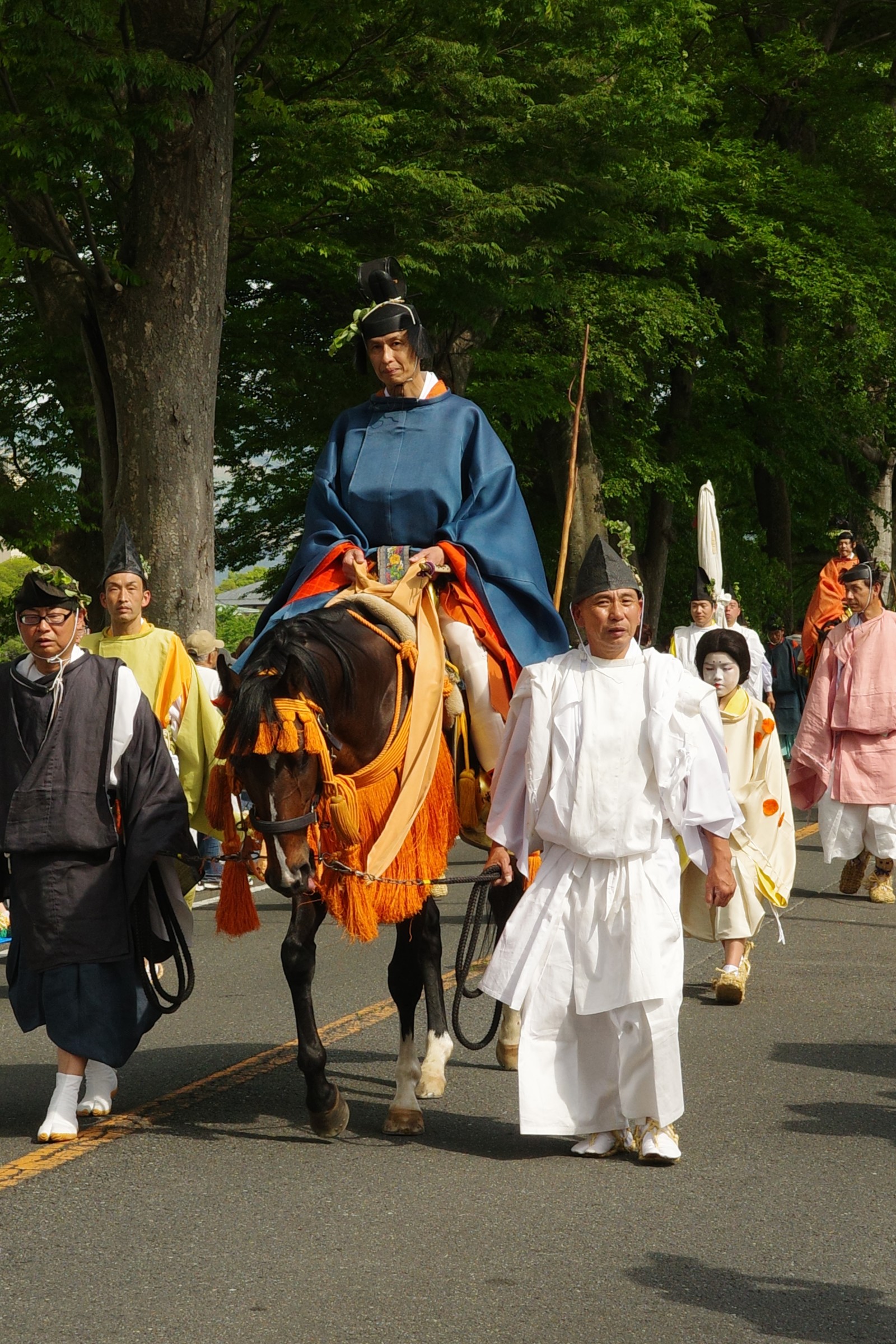
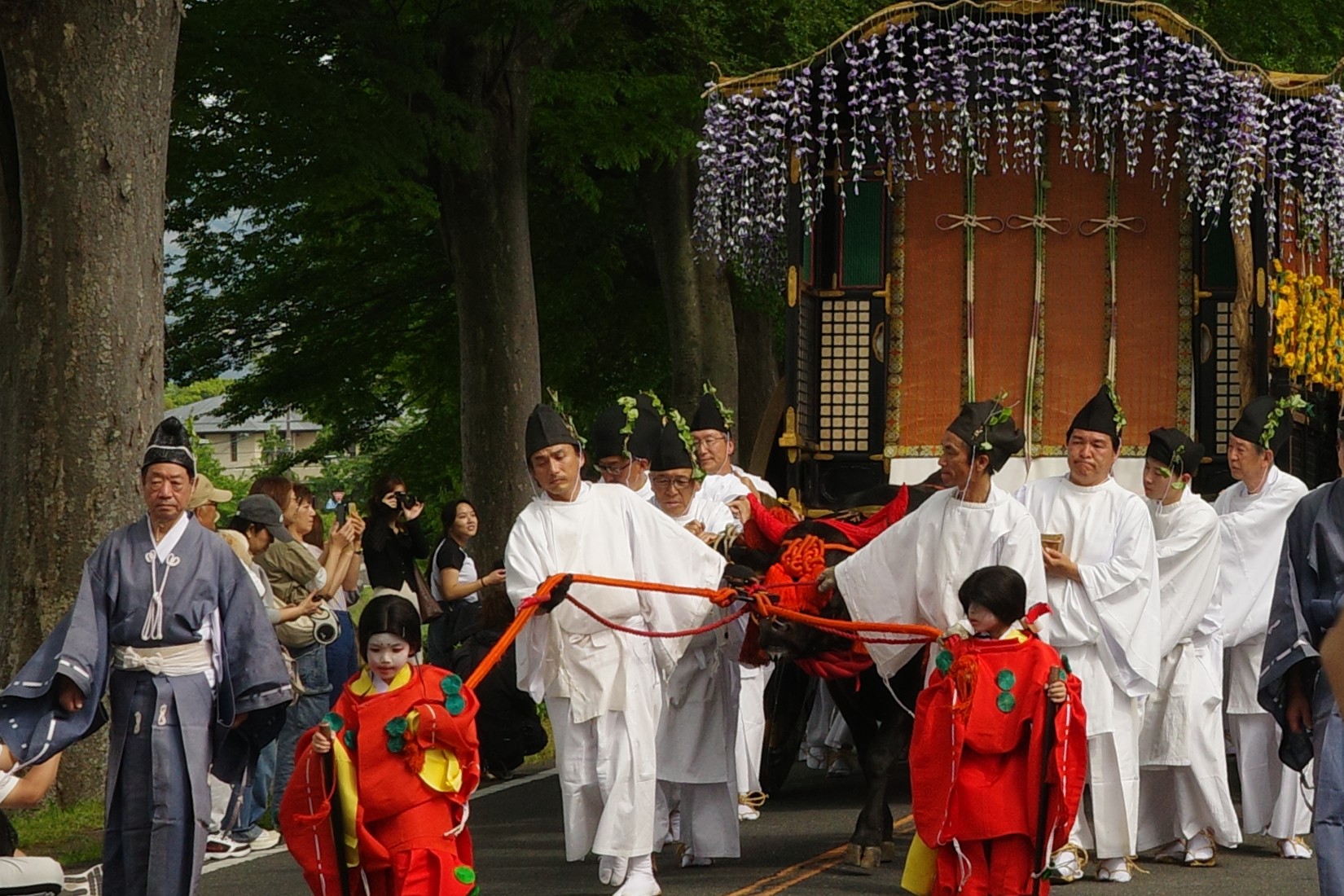
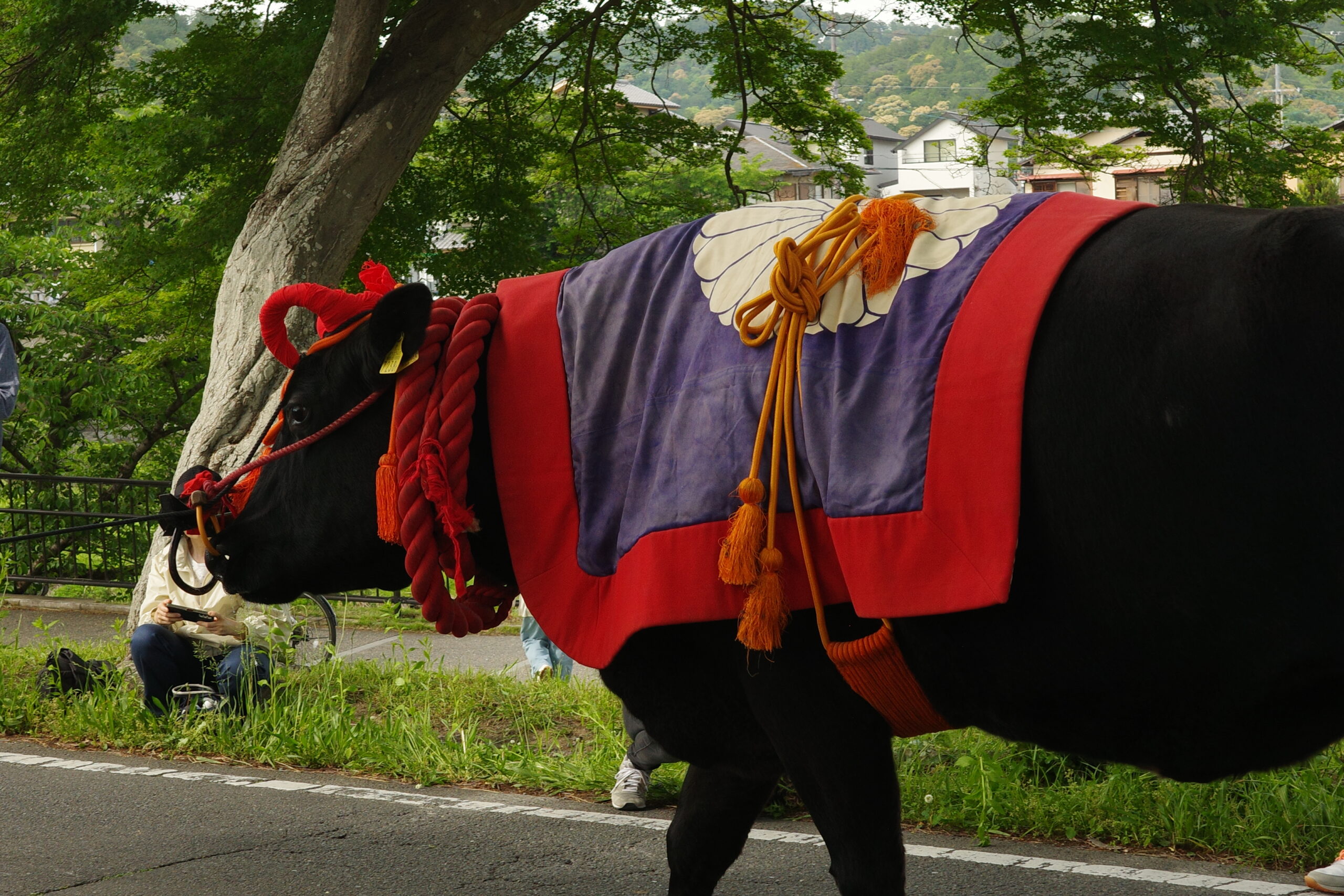
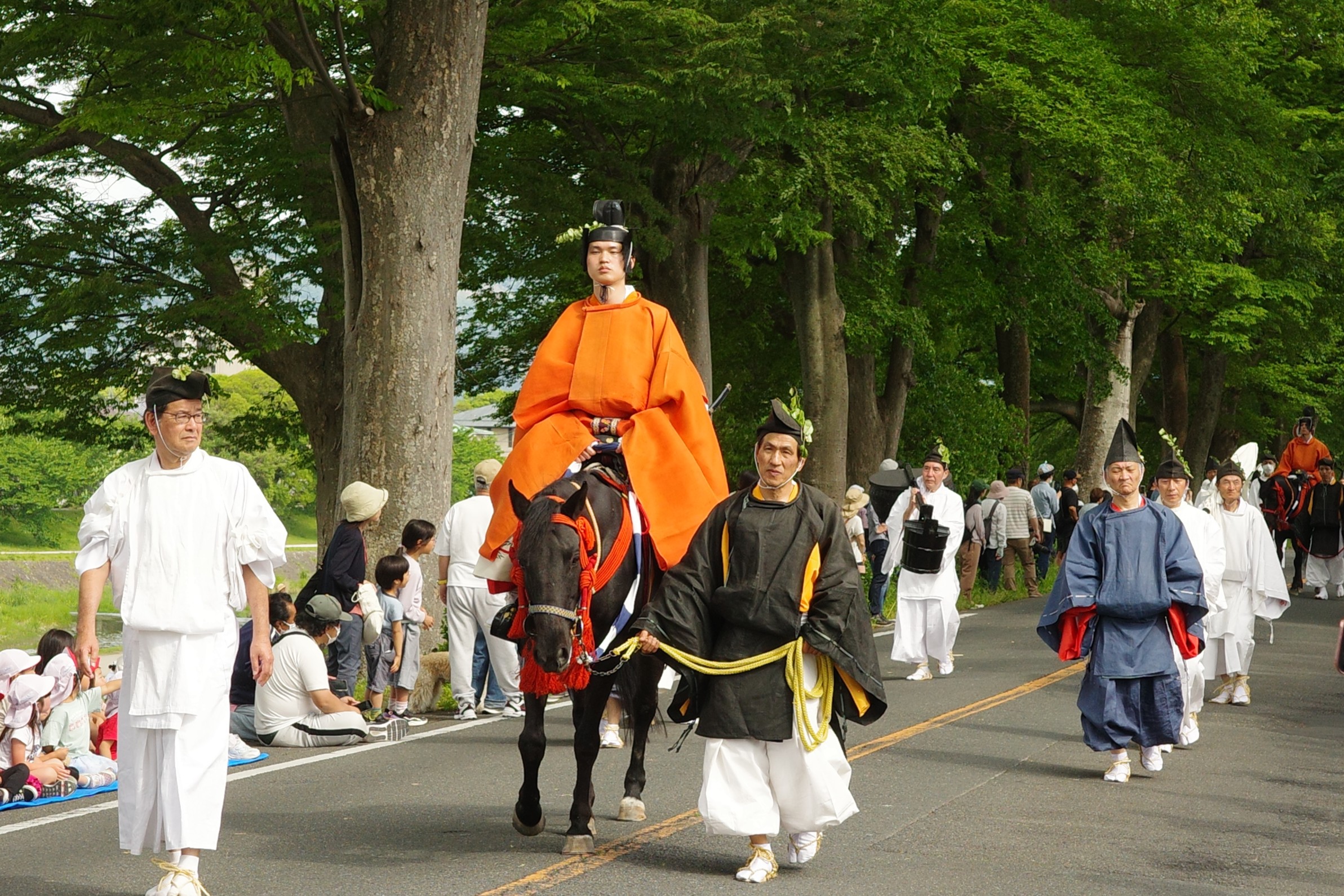
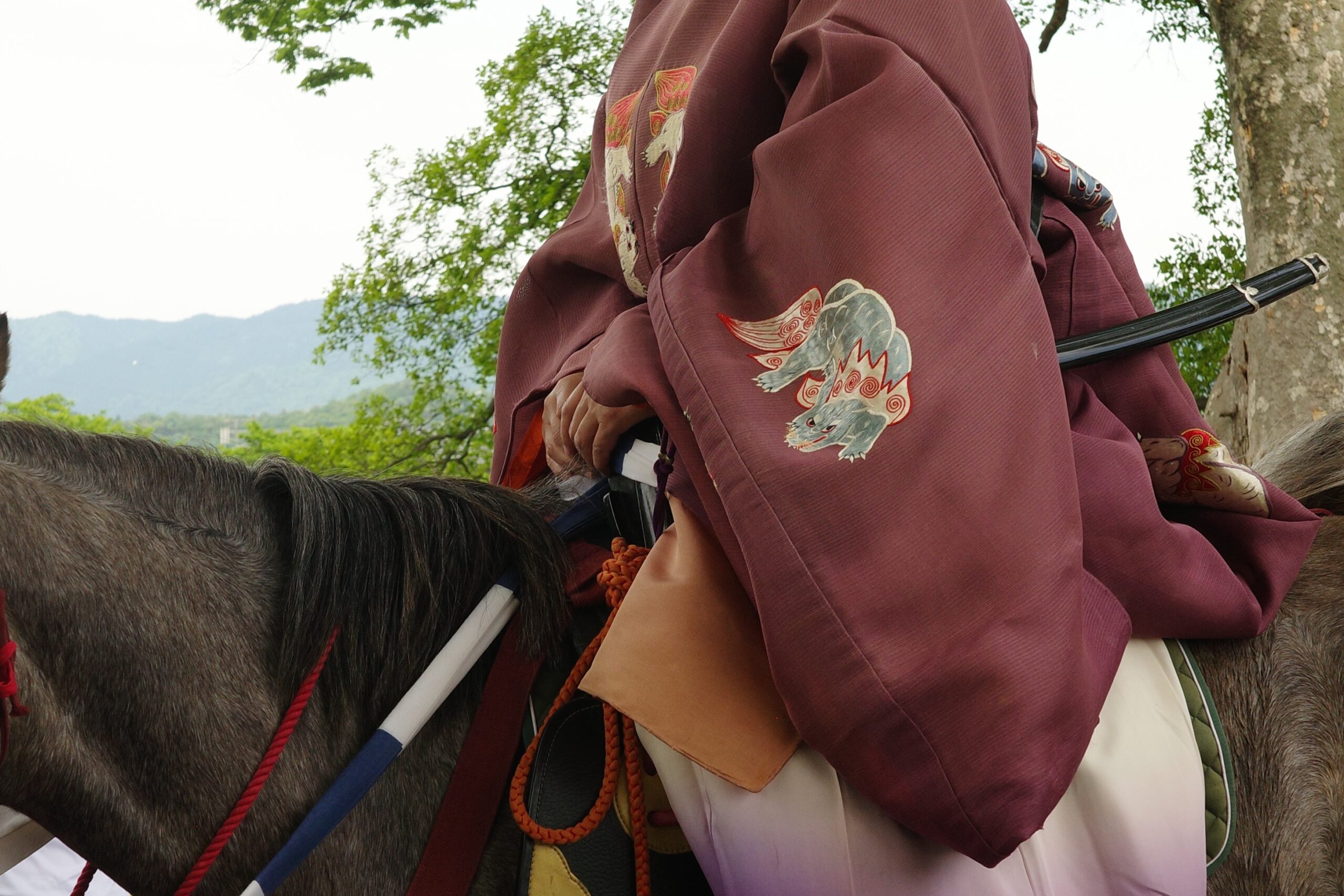
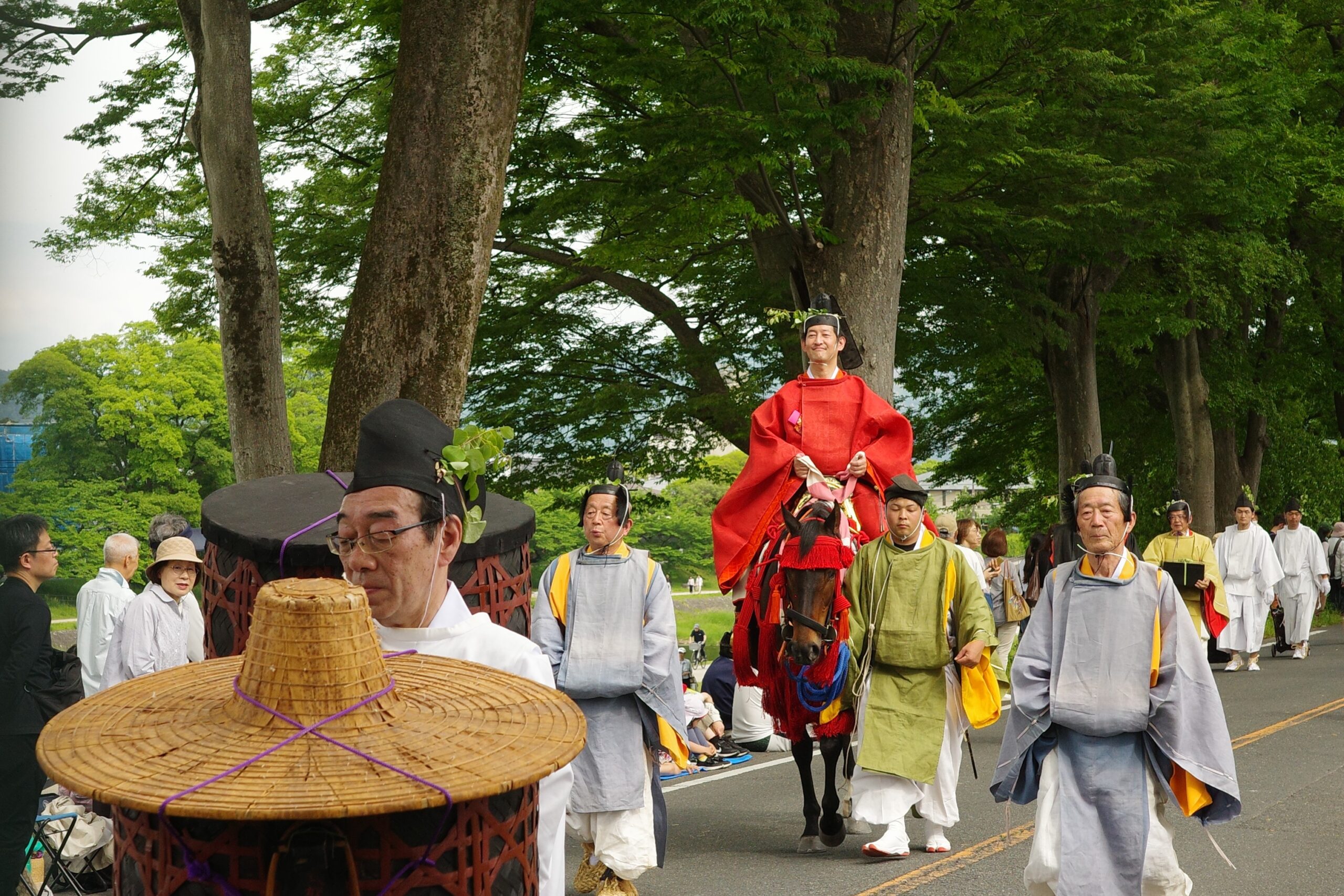
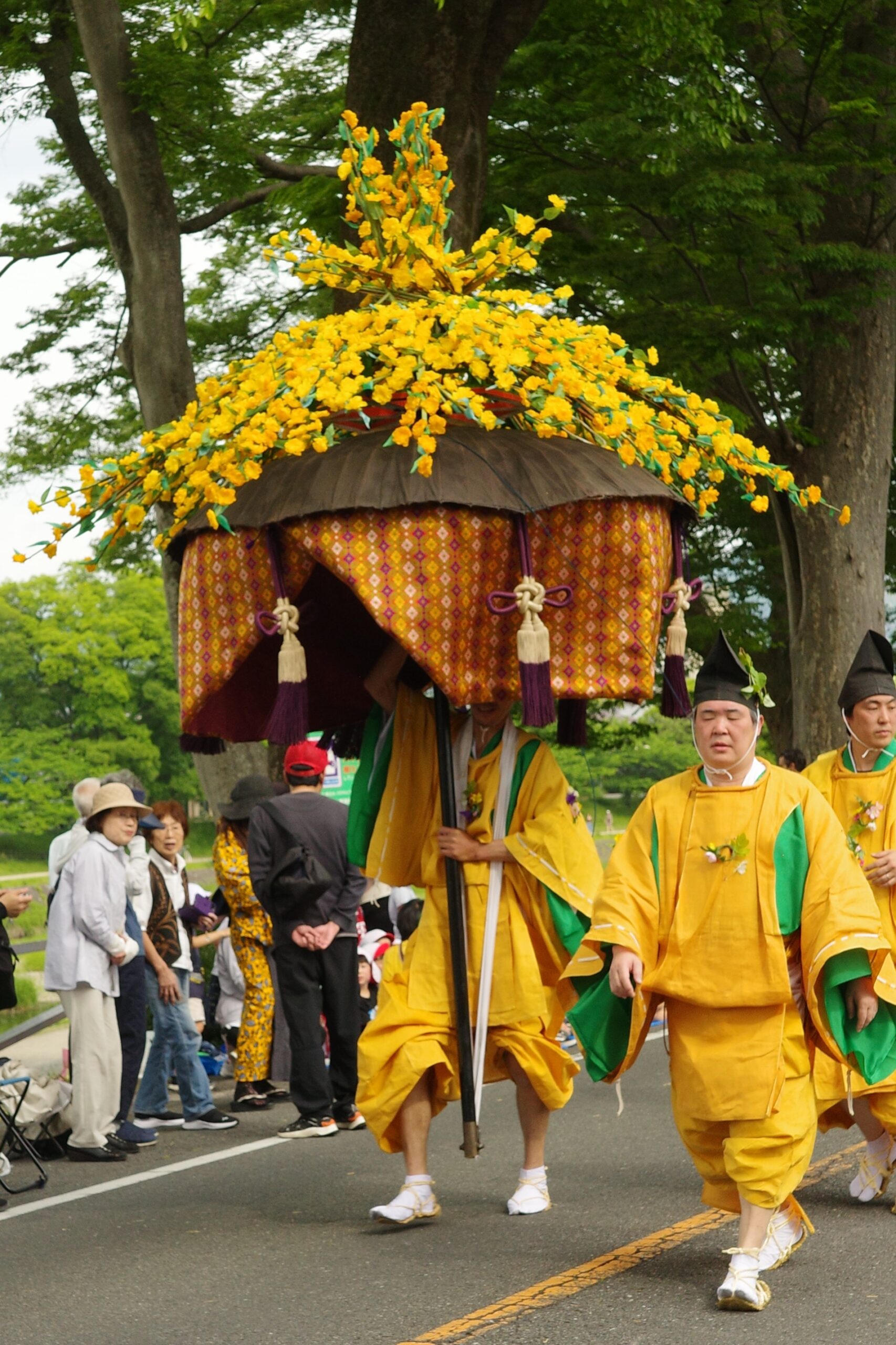
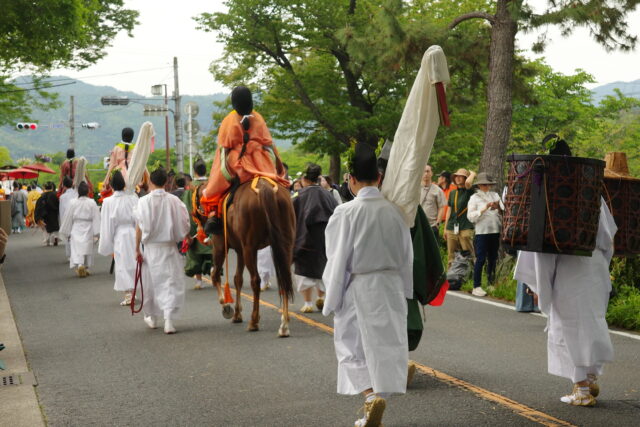
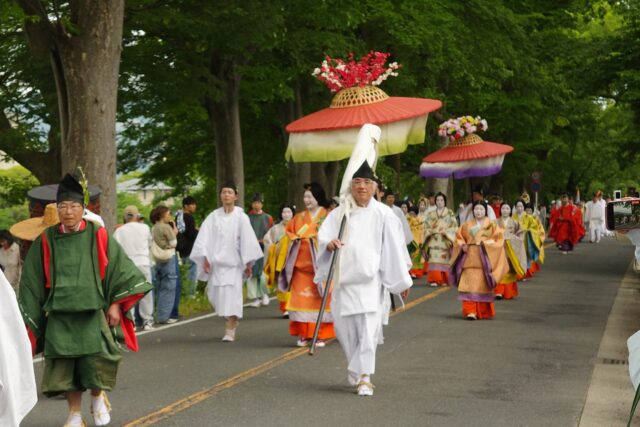
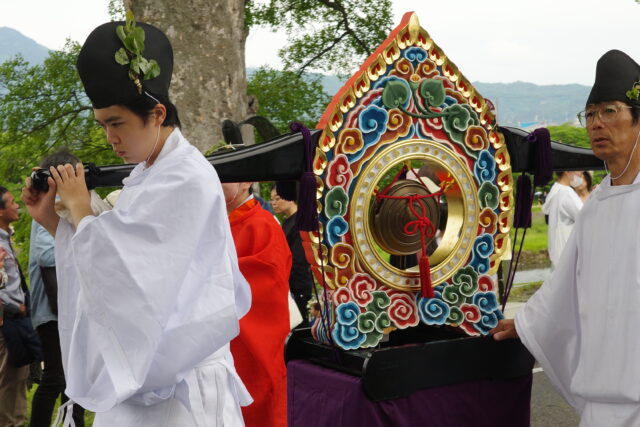
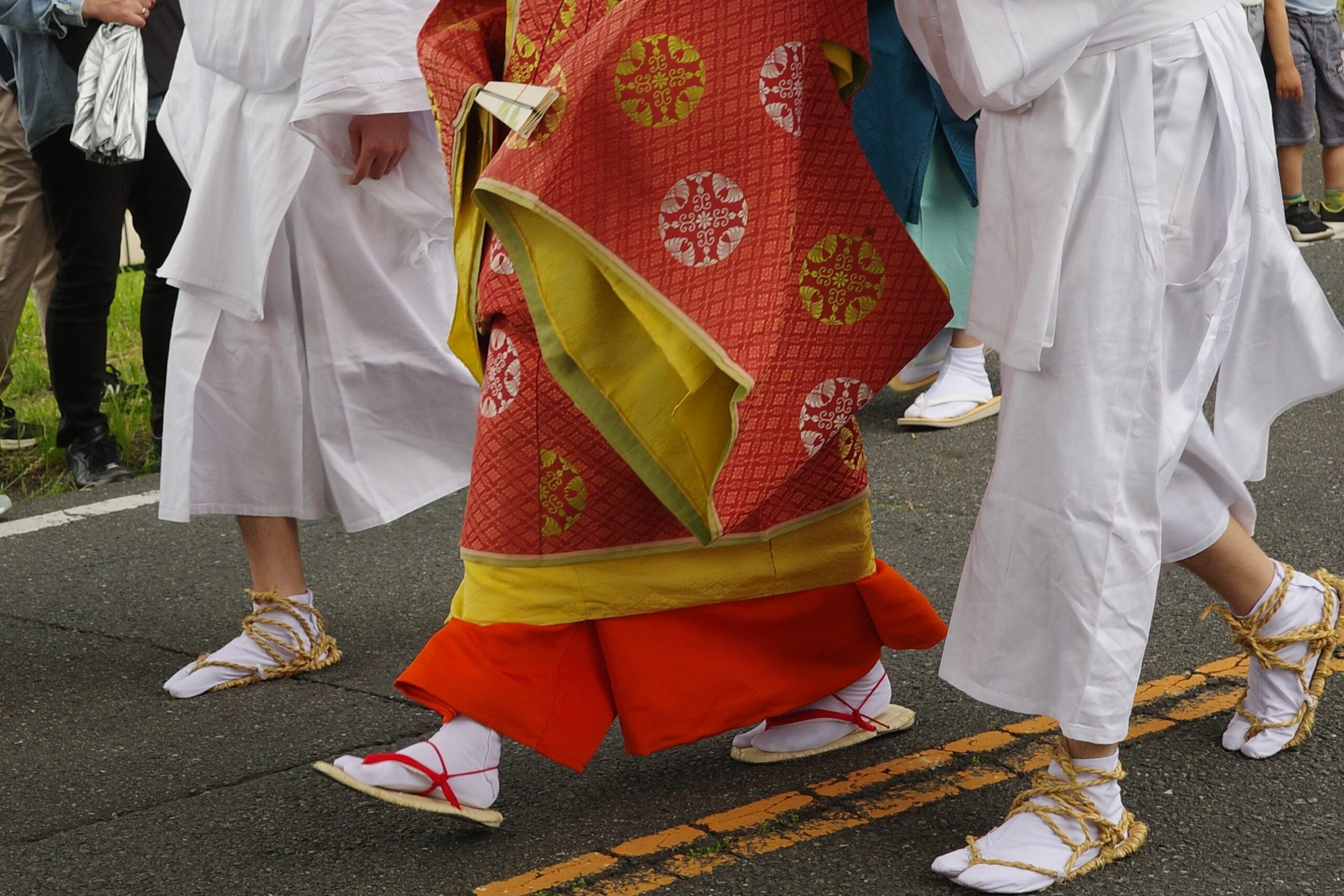
The acting imperial messenger, who is a main person in the main procession, wore a red costume and rode on a horse. He has a letter from the emperor in his bosom. Please look for the photos of the acting imperial messenger, in the photos, a part of the letter peeping from his bosom. The main procession further includes judicial chiefs, government officials, troop of horse, an oxcart, and decorated umbrellas in the procession. An oxcart particularly attracted attention of an audience along the route is called “gosho-guruma (court carriage).” It slowly moves forward while swing pale purple decorations made of wisteria flowers and making a peculiar squeak noise caused by metal whiles. Furthermore, you can see Furyu-gasa (big umbrella decorated with flowers) and various curious ritual implements.
-
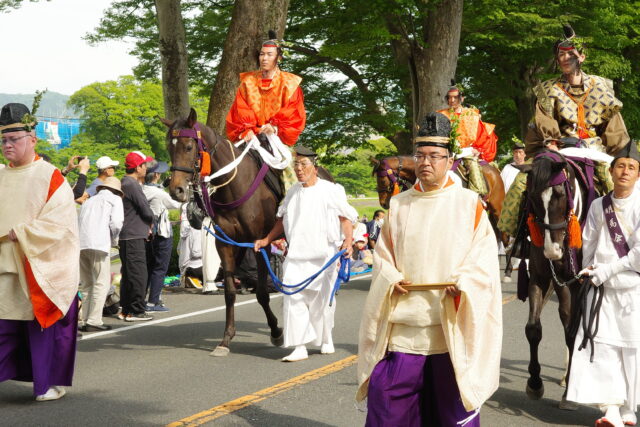
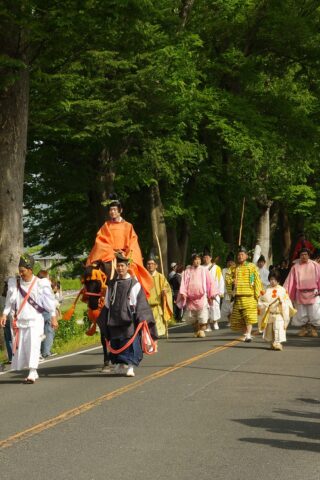
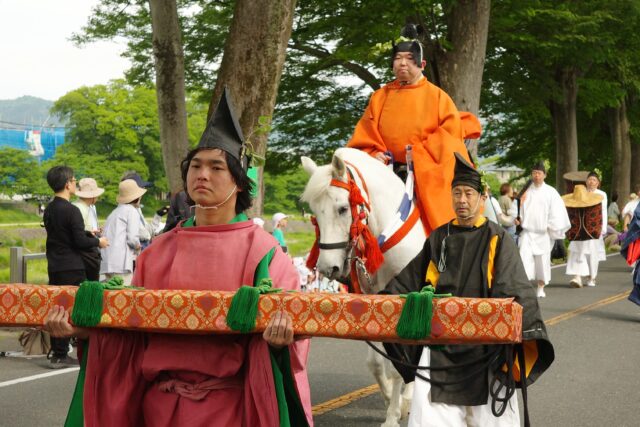
Acting Imperial Messanger in Red Costume
Letter from Emperor seen from his Bosom
-
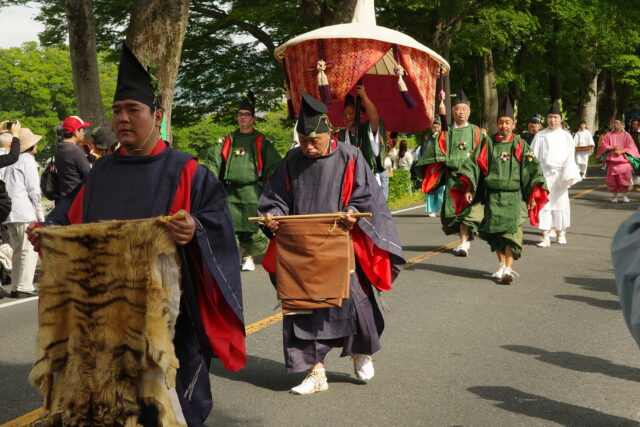
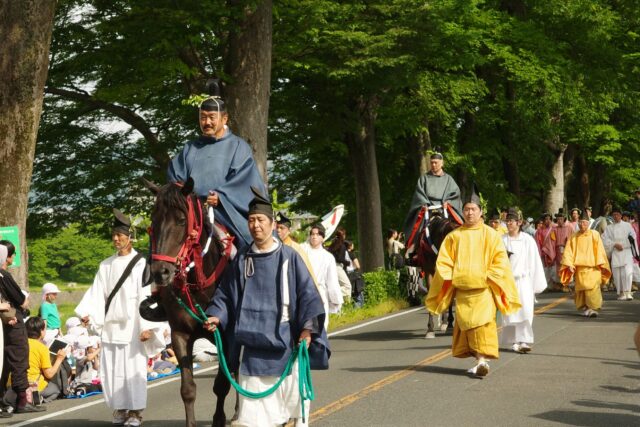
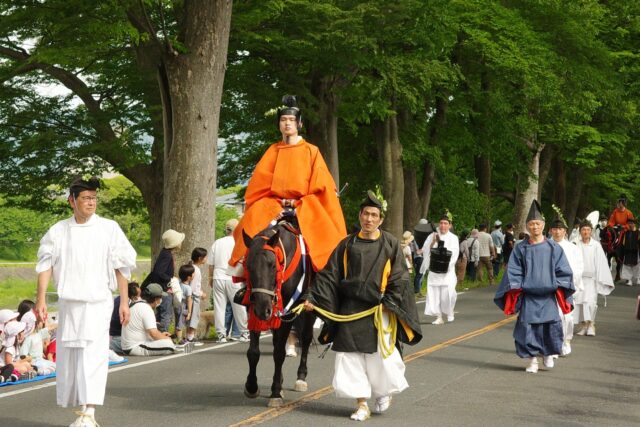
Magestic Acting Imperial Messenger
Furyu-gasa


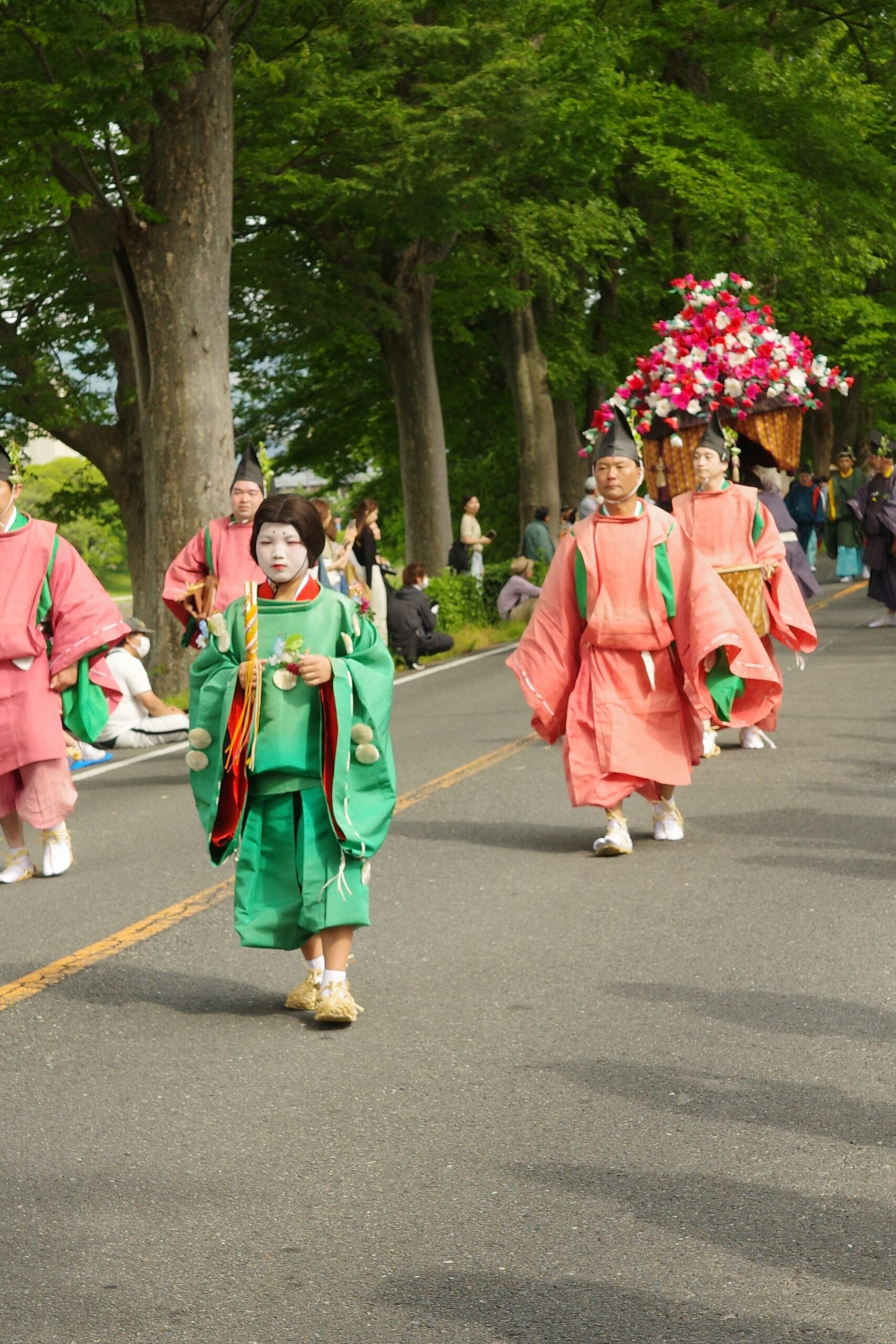
(Women Procession)
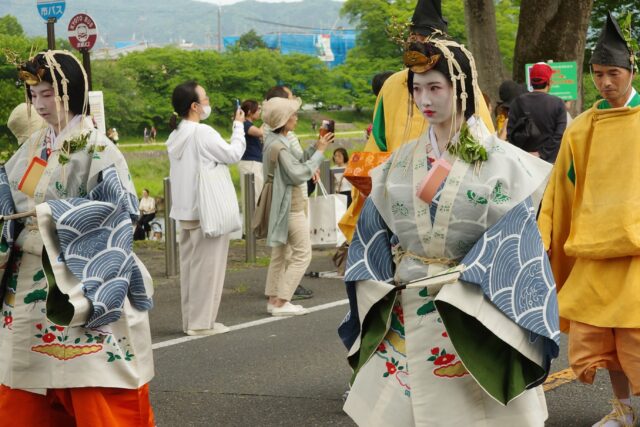
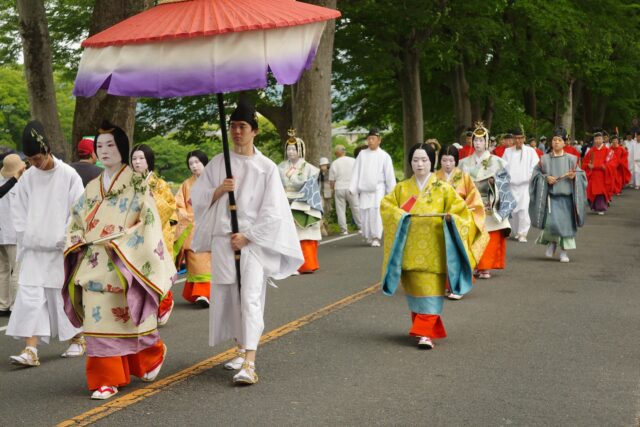
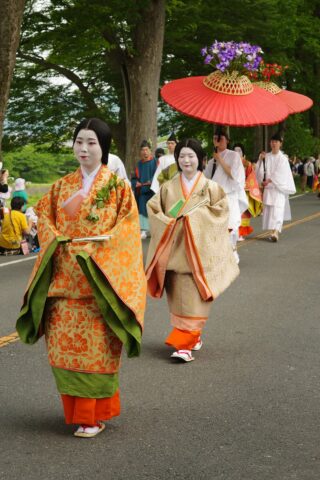
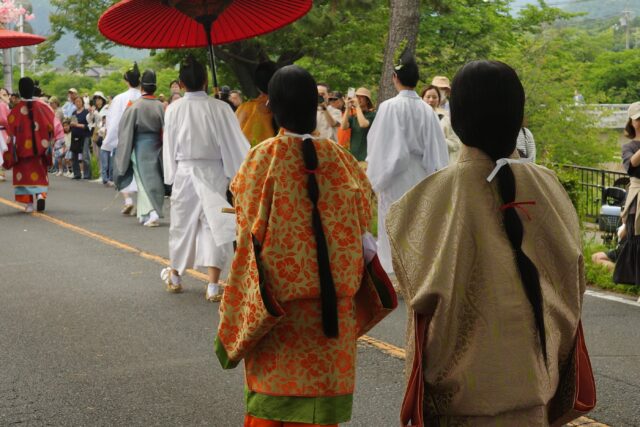
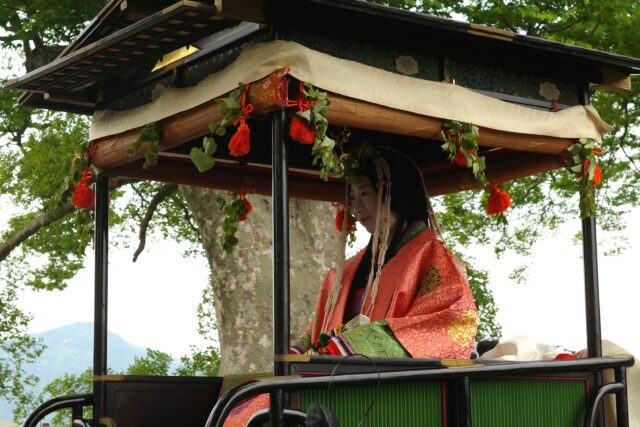
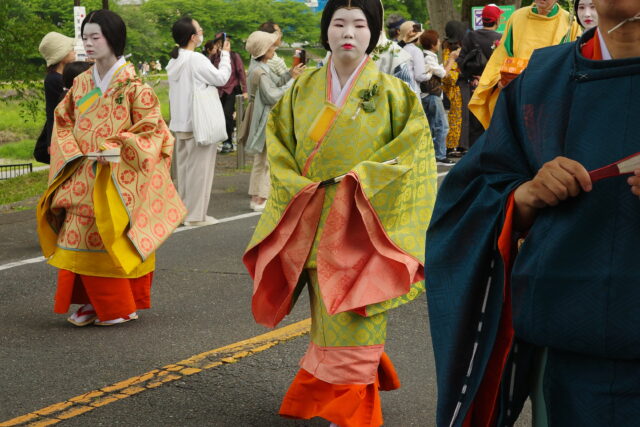
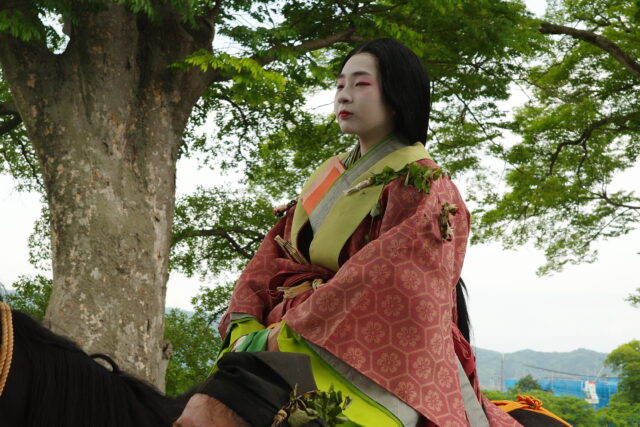
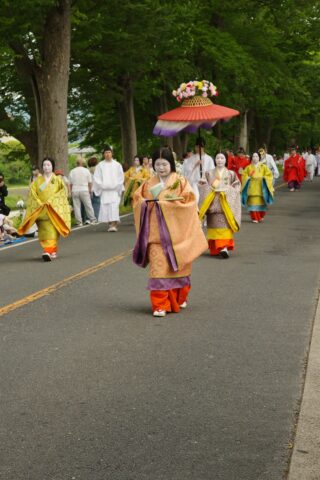
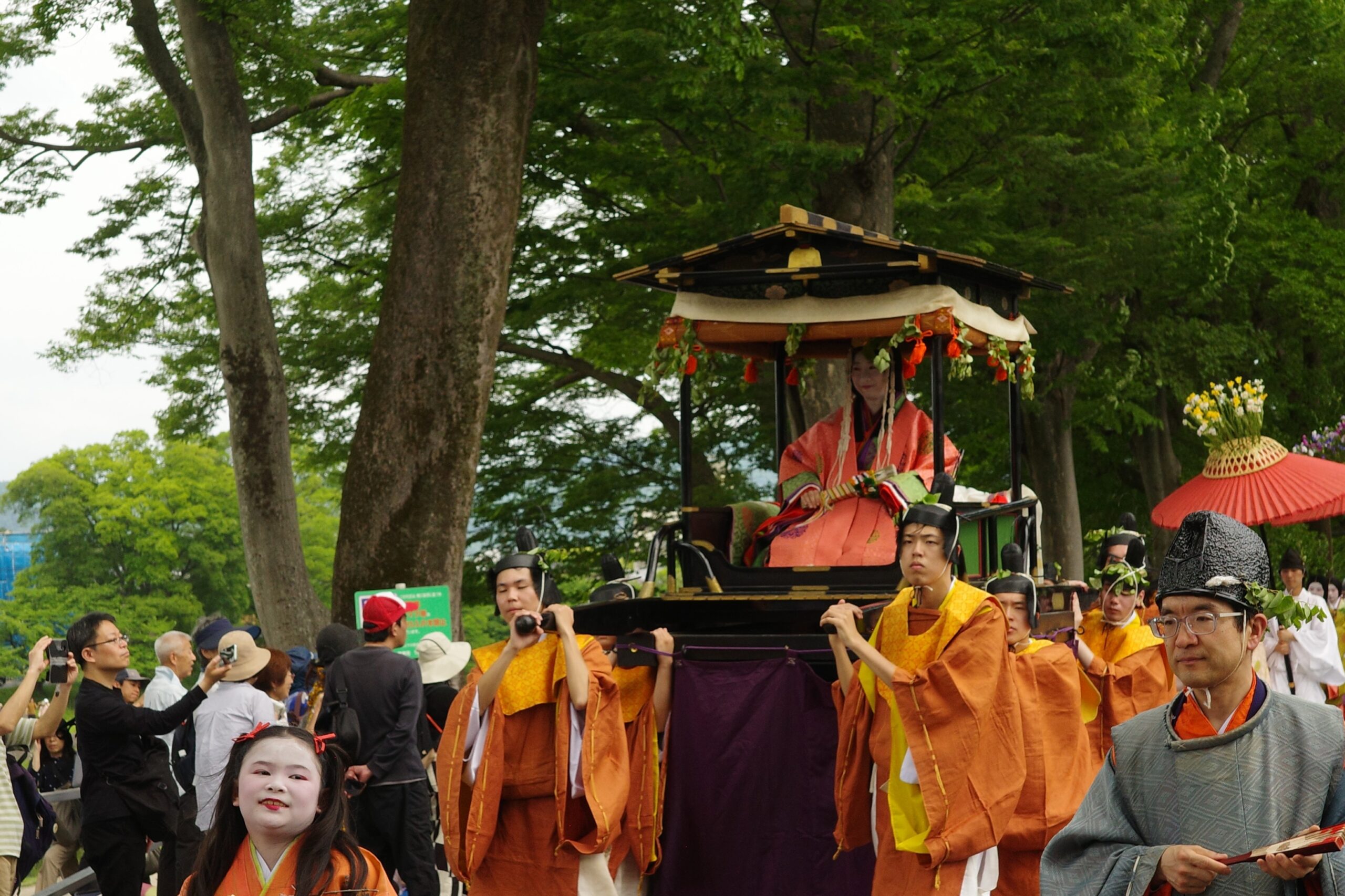
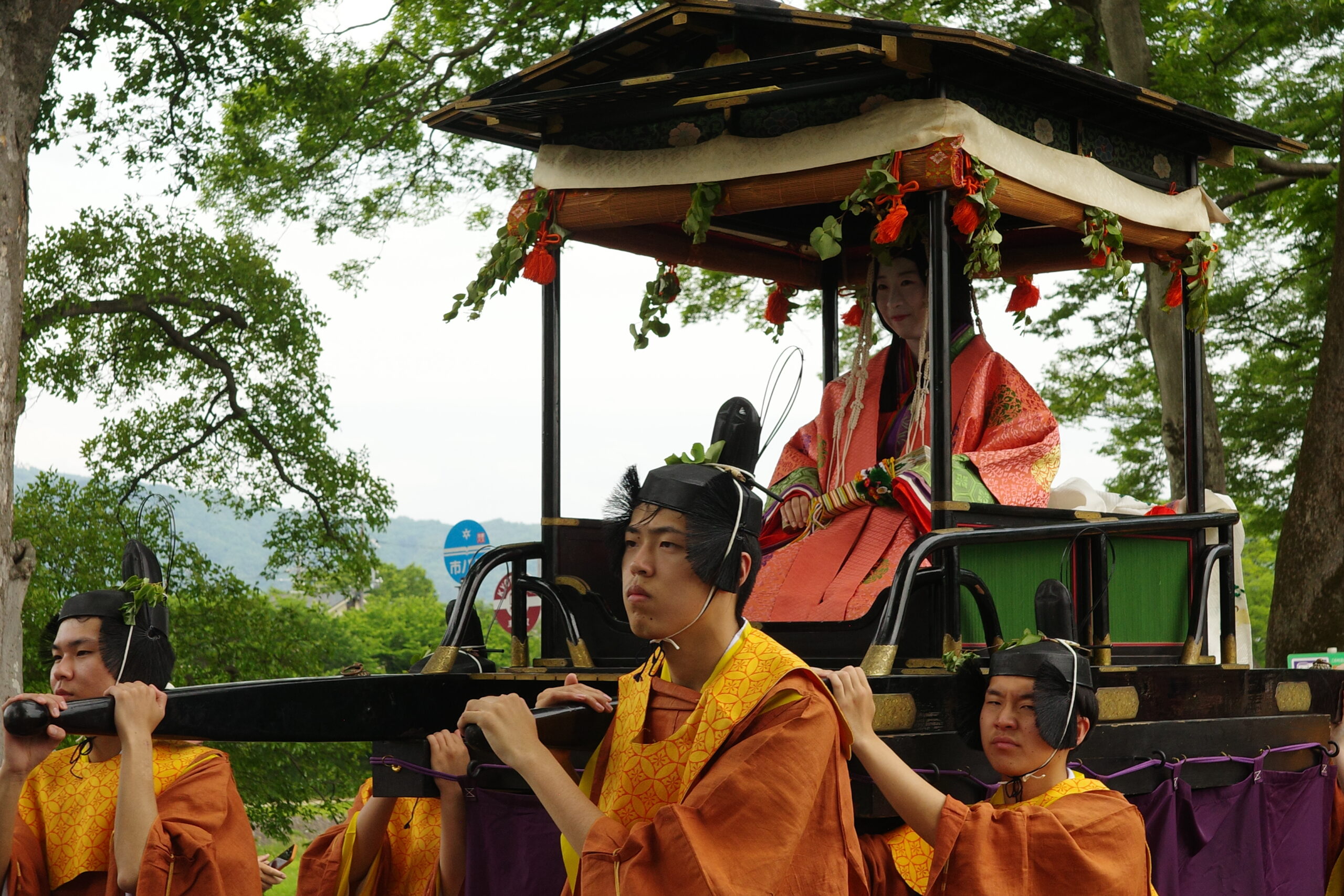
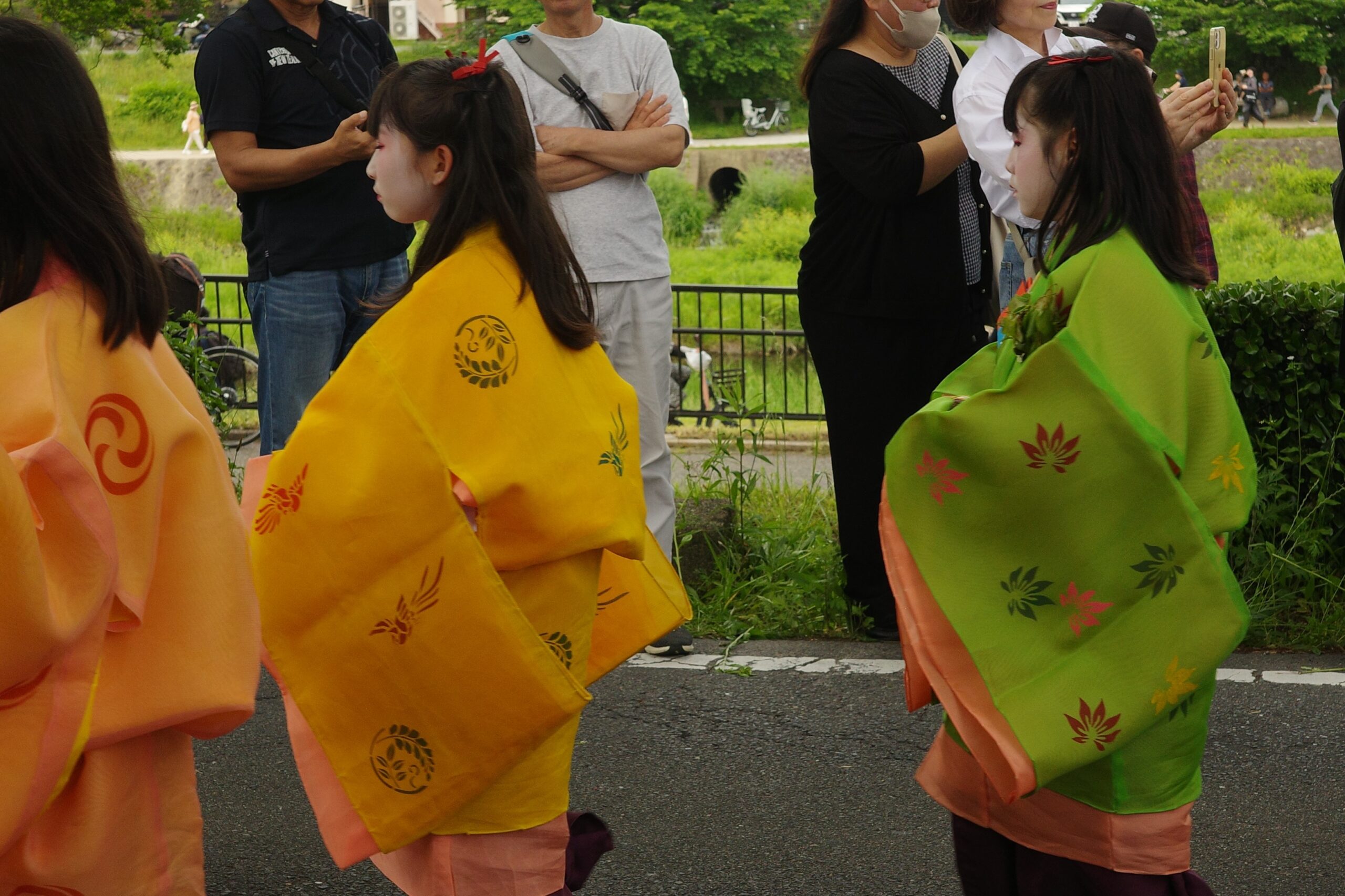
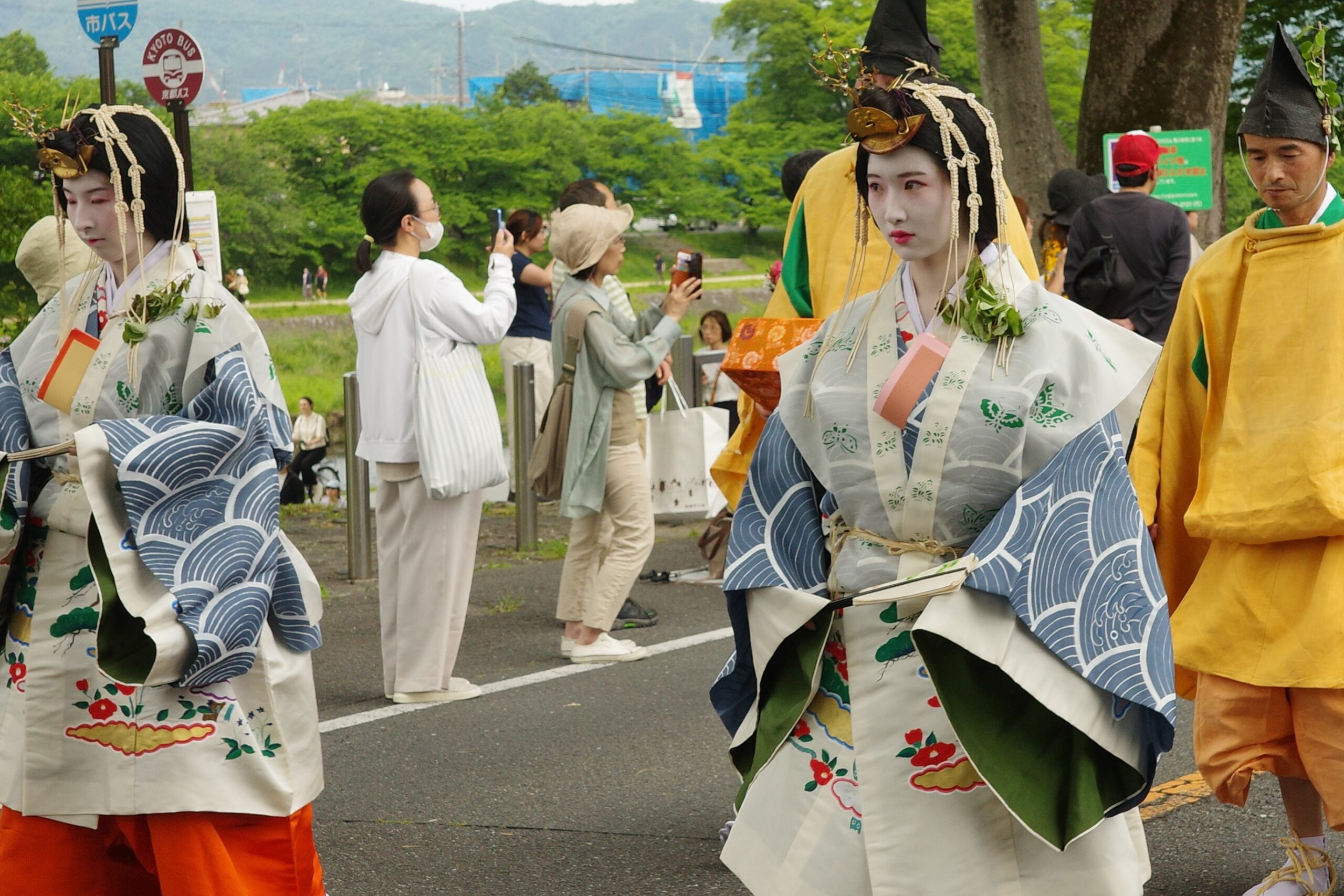
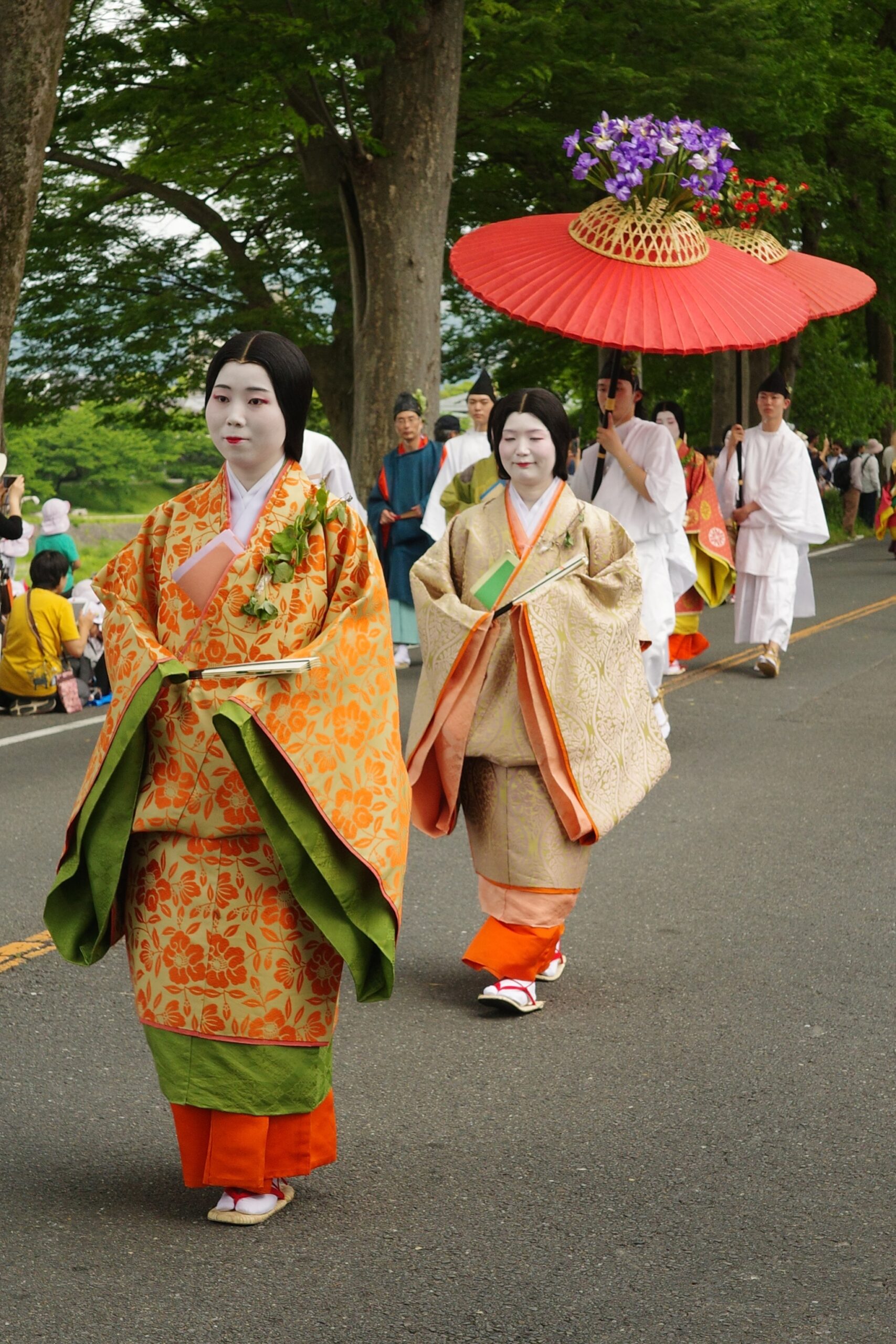
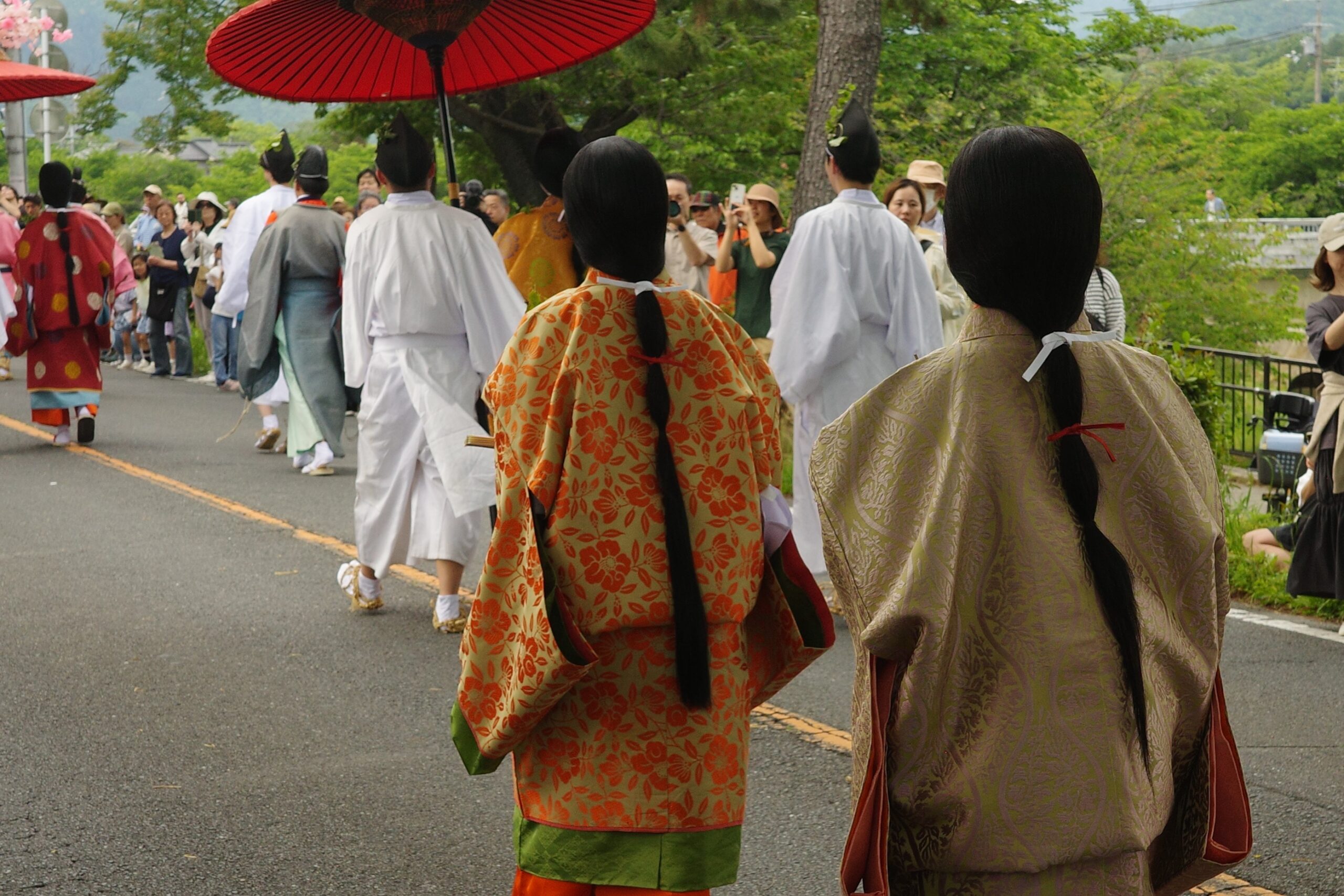
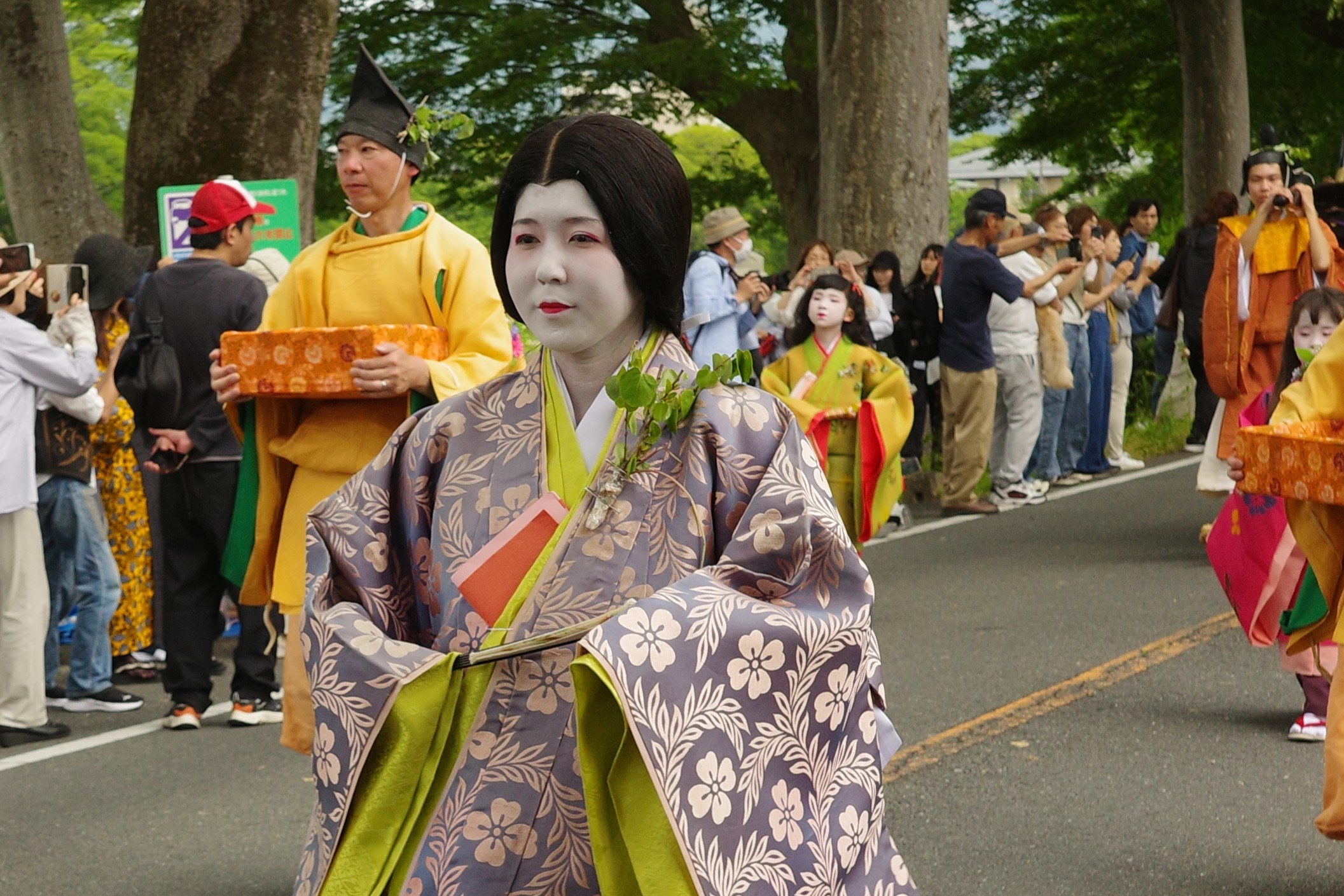
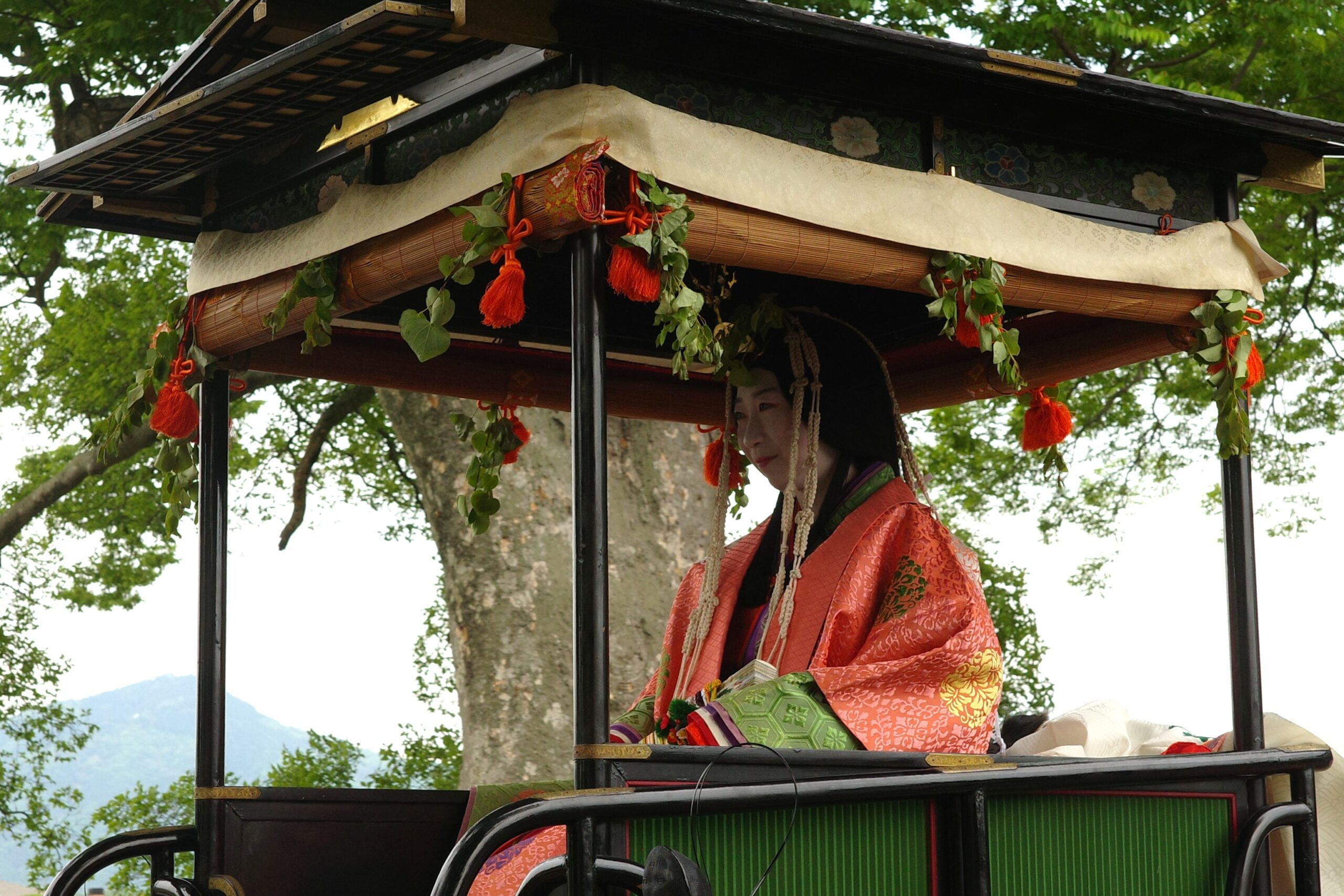
After the Furyu-gasa went away, the women procession follows it. In this procession, Saio-dai, who is a heroin of Aoi Matsuri, appears. The word “Saio” means an imperial princess who served at Aoi Matsuri in the Heian Period, but the Saio ceased in the Kamakura Period. In 1956, Saio-dai was selected from citizens in order to liven up Aoi Matsuri and the women procession could be revived. The Saio-dai wearing a Heian period costume sits on a palanquin. The women procession includes high-rank court ladies, wives of superior officers, shrine maidens riding on horses, and other court ladies. It is very gorgeous, and we rise a smile naturally even just looking.
-
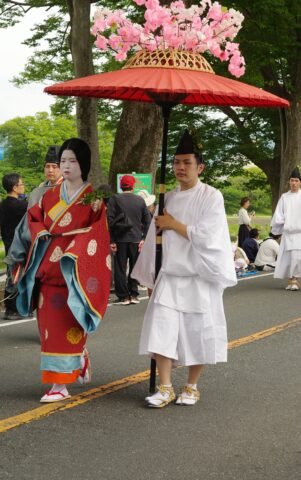

Saio-dai
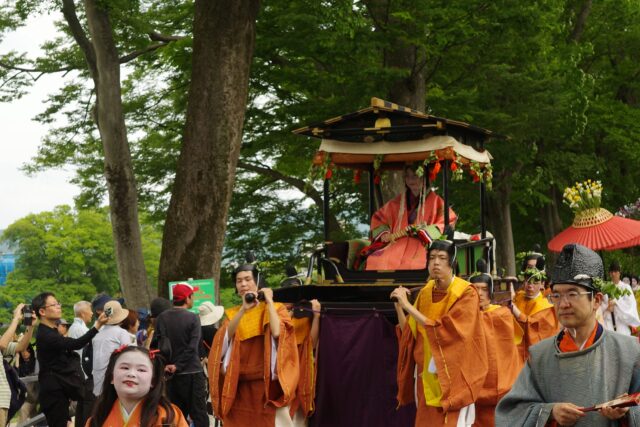
Saio-dai
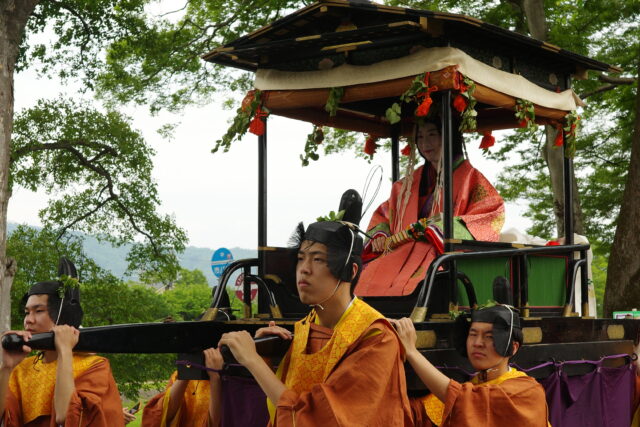
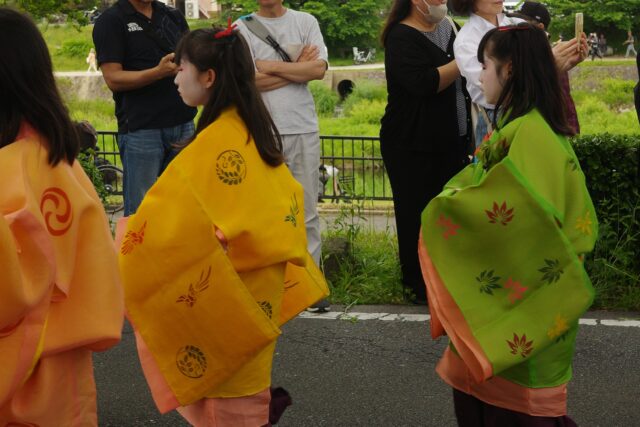

-
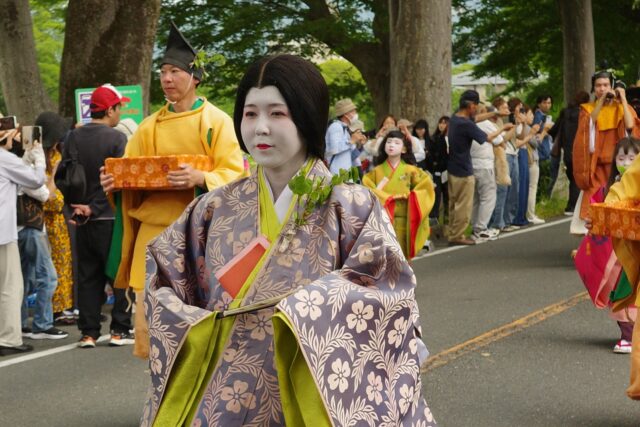
Saio-dai


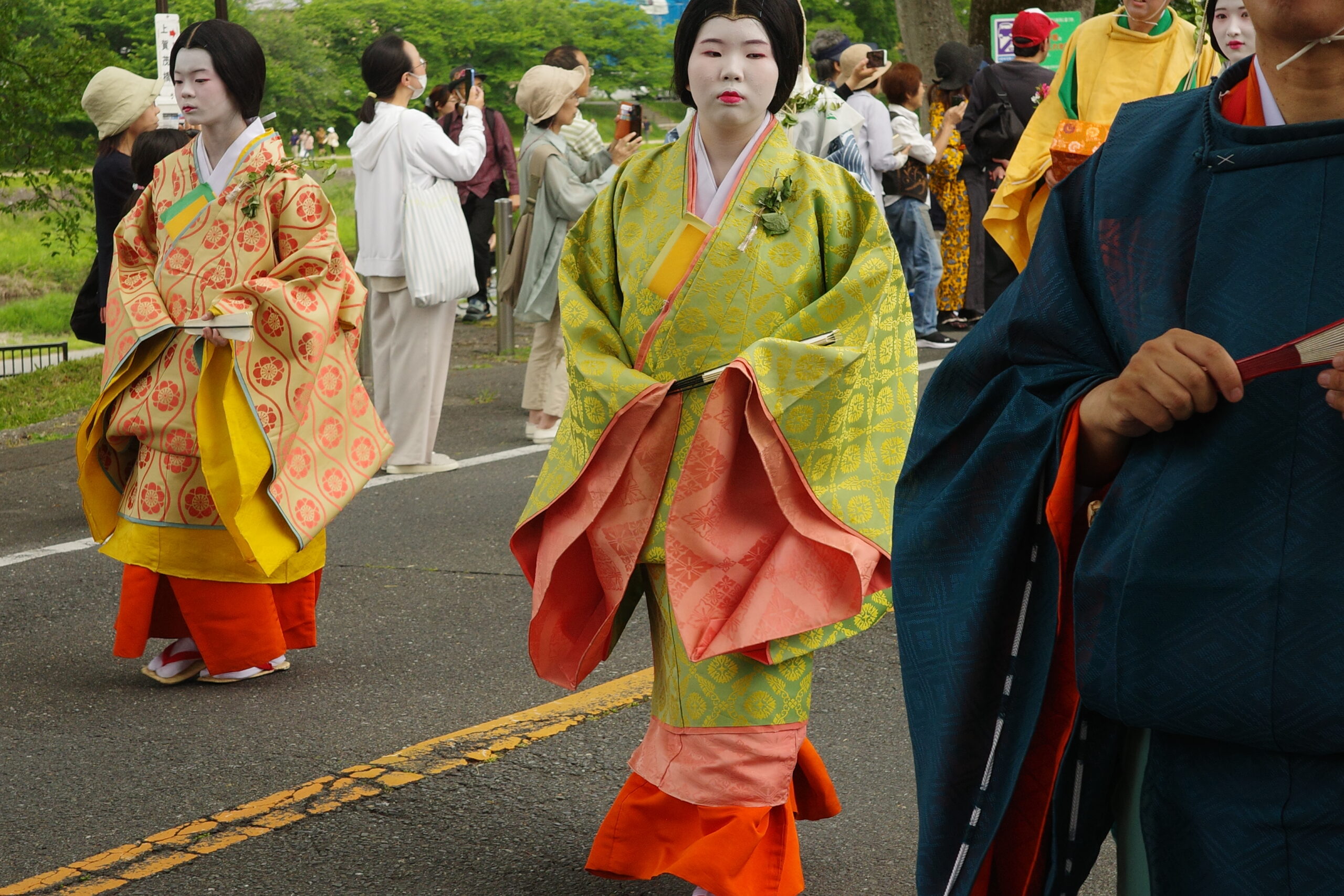
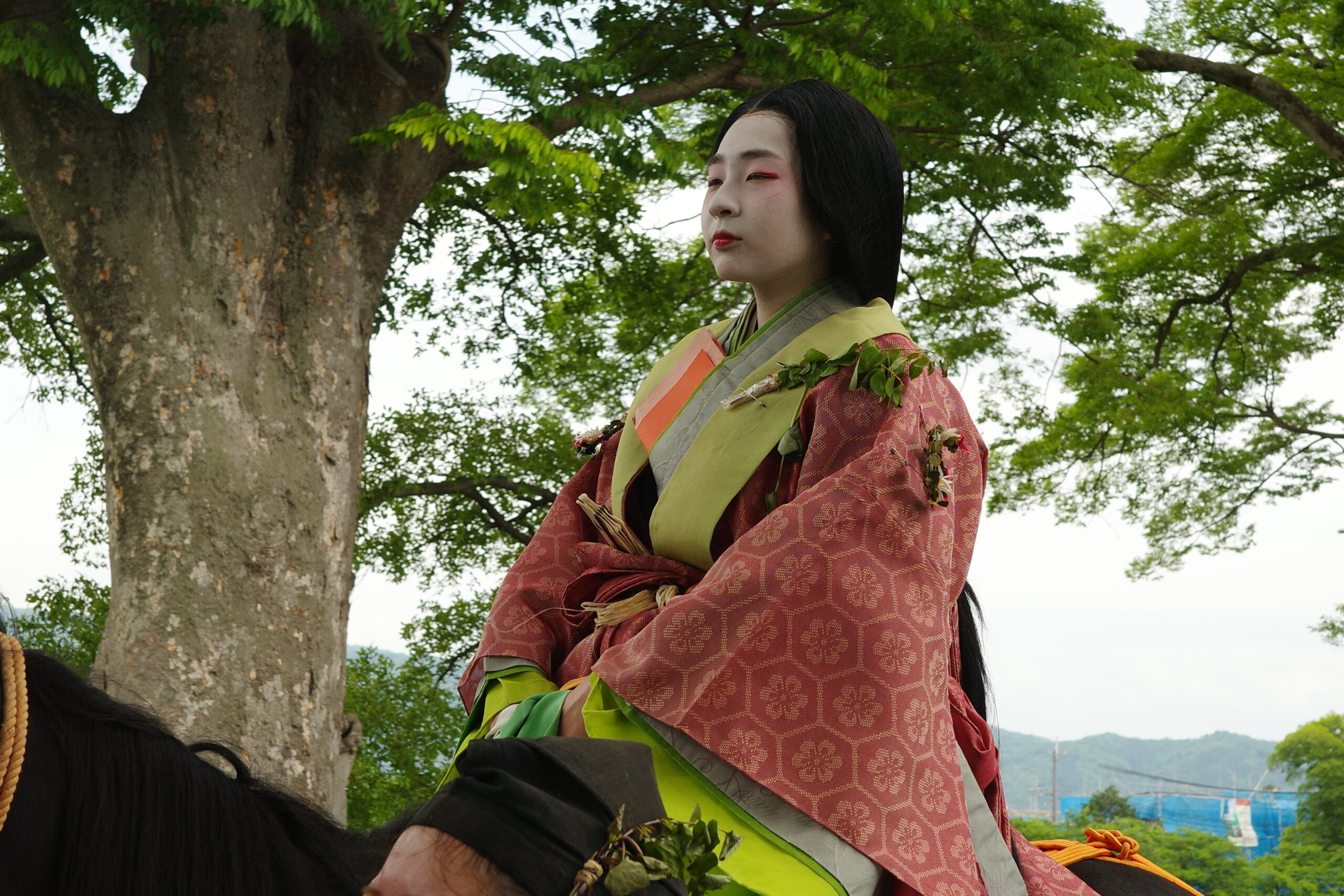
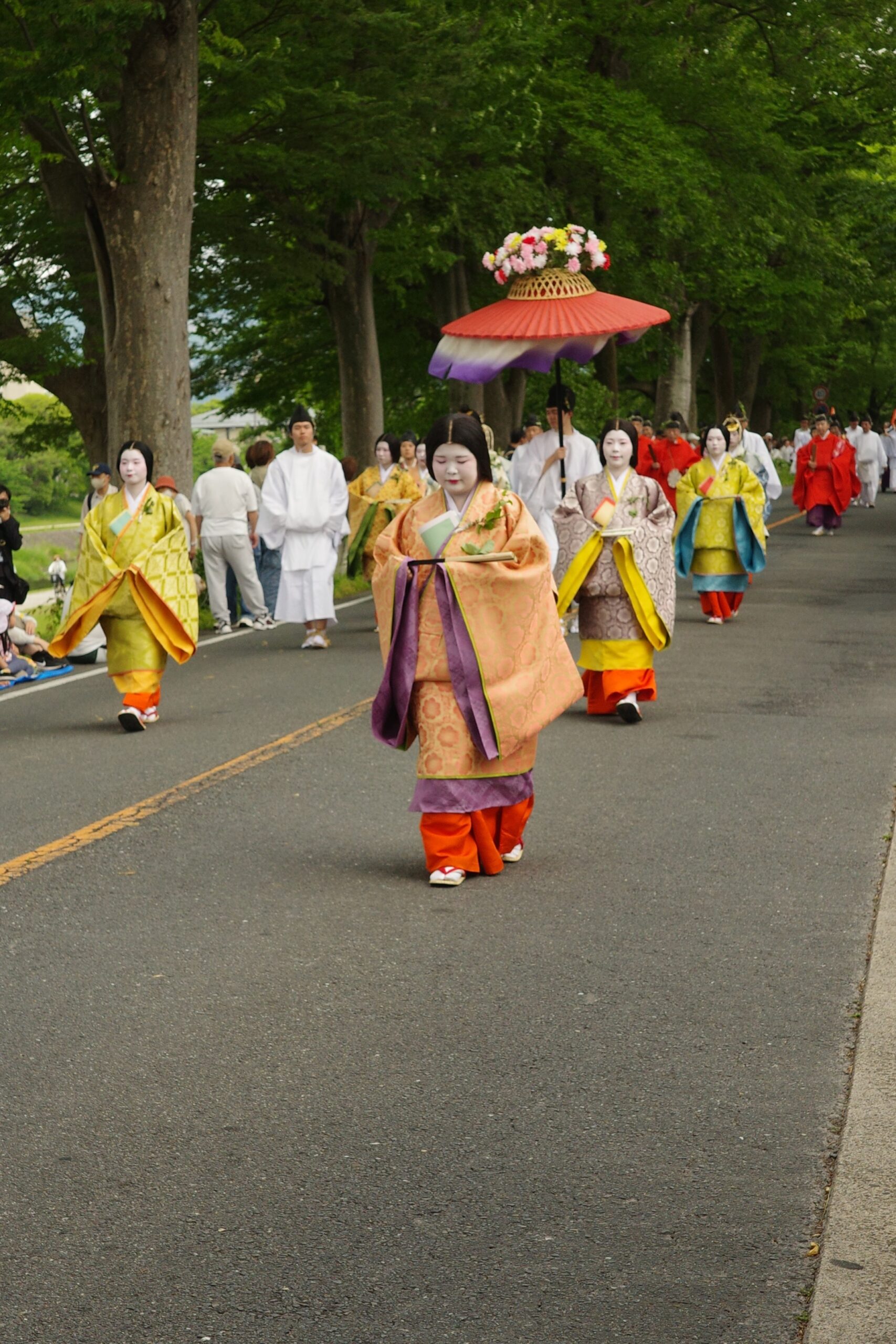
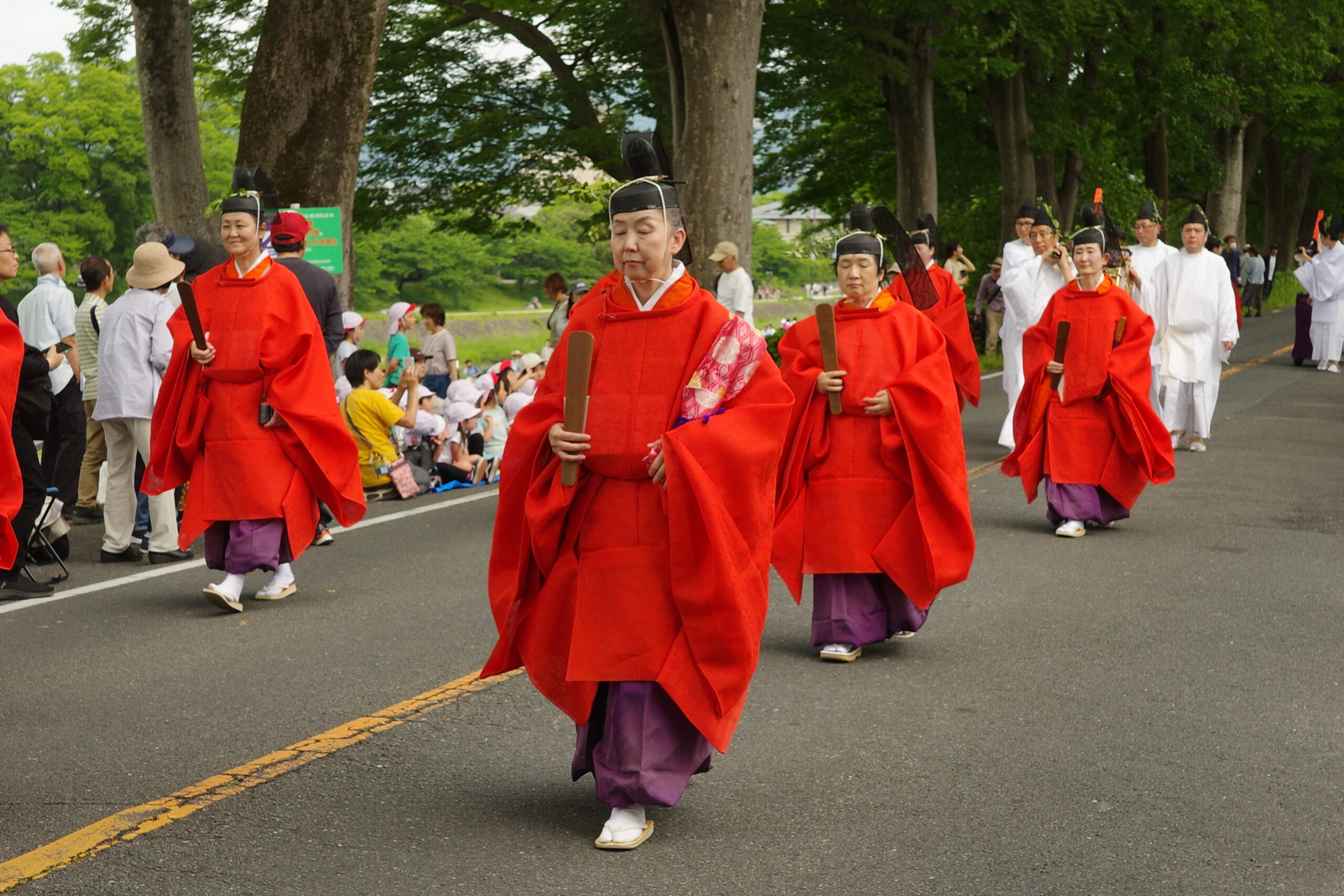
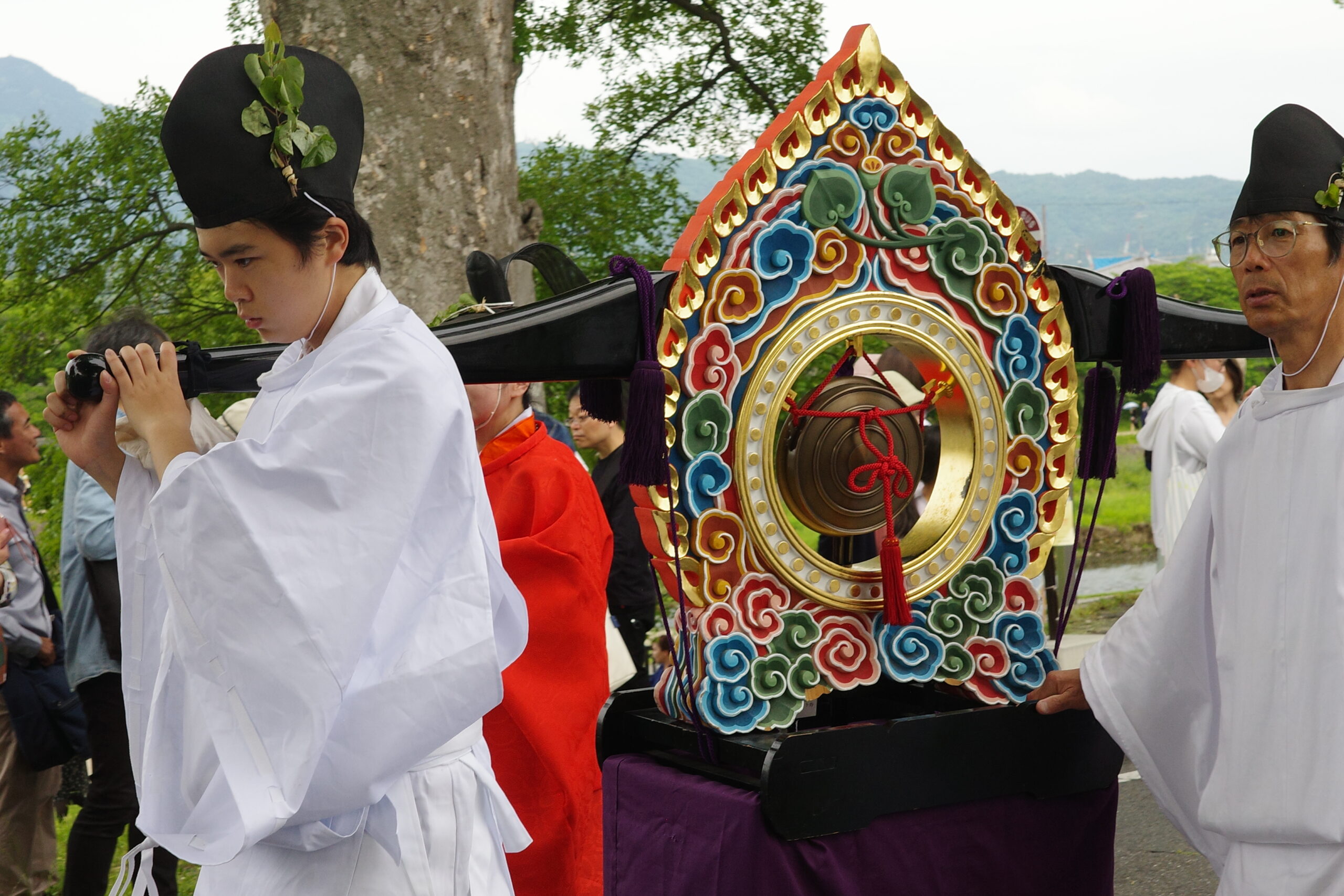
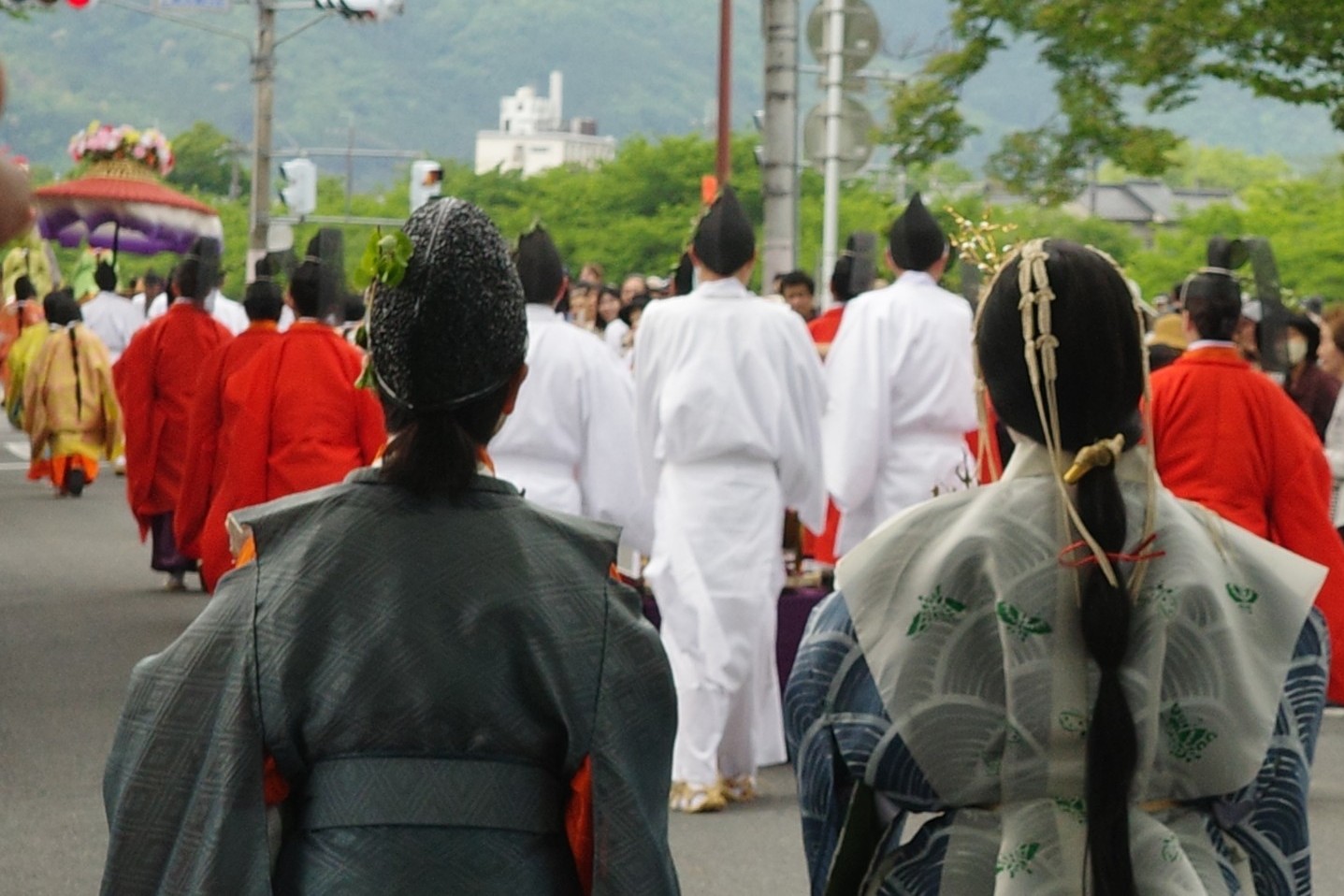
After that, we were waiting for another oxcart for about 20 minutes, but it didn’t absolutely appear. Persons following the procession from Shimogamo-jinja Shrine said that the ox was peevish from the time when it left Shimogamo-jinja Shrine. It seemed that the ox most likely didn’t go forward in the middle of the route. Oxen don’t listen to what we (human) say, and so I went home.
Leave a Reply