

On smartphones, this page is best viewed in horizontal mode.
I’d like to introduce some rites and festivals performed in the Kamigamo-jinja Shrine in this and feature posts. In the Kamigamo-jinja Shrine, various rites and festivals are performed throughout the year. Please check out the web-site of this shrine. Ten or more events are performed in one month. The shrine priests in the Kamigamo-jinja Shrine are too busy.
In this post, I’d like to report kemari. The Japanese word “kemari” refers to a type of a football game played by courtiers in ancient Japan. I watched the kemari for the first time. I had been looking forward to watching the kemari, and my expectation was not betrayed.
On the eleventh of February, the national holiday of National Foundation Day, the Kigen-sai Festival (National Foundation Festival) is held in the Kamigamo-jinja Shrine, and the kemari, in addition to Japanese military arts such as karate and kendo, is dedicated to the shrine. If hearing the kemari, you should imagine costumes of nobles in the Heian Period and their elegant behaviors. When you take only one look at the kemari, however, you will soon see that it requires physical strength and it has many complicated rules. Now, there are some preservation societies of kemari. Kemari players do a lot of training. The kemari is a ball game, but victory or defeat does not matter. The important matter is how the ball is delivered to a next player so that he/she can certainly and easily receive the ball and kick it; in other words, how the rally is continued for a long time as much as possible. Do you know a ball game in which victory or defeat does not matter other than the kemari? In addition, the kemari is a mixed-gender event in one team. Surely, the kemari is a game which does not mater the difference in the physical strength between men and women. It is nice that men and women simultaneously enjoy the game together, isn’t it?
Let’s check the kemari game out!
(History of Kemari)
A game like the kemari was recorded in a book in Yin, China, about 4,000 years ago. The Chinese game, however, was prohibited in Ming or Quing (about 650 years ago), and it disappeared in China.
It seemed that the game came from China about 1,400 years ago in Japan, but it’s not sure whether it was the kemari which we watch at the present or it was a ball game similar to hockey or polo. The kemari was developed uniquely and characteristically in Japan. The kemari game was often and enthusiastically held at court after the middle of the Heian Period (about 1,000 years ago). The rules and various manners of the kemari were completed in the Kamakura Period (about 750 years ago). The kemari was gradually spread to ordinary people during the Edo Period through the Muromachi Period. The Edo Shogunate, however, strengthened the tightening of the kemari when it was played by ordinary people as a recreation, whereby the kemari began to decline. After the Meiji Restoration, the kemari at one time came to an end. In 1903, however, a preservation society of kemari (Shukiku Hozon-kai) was established by volunteers. In 2018, another preservation society (Kemari Kikuyu-kai) was also established. Now, the promotion activities of the kemari are performed toward not only Japan but also abroad.
(Place to Play Kemari)
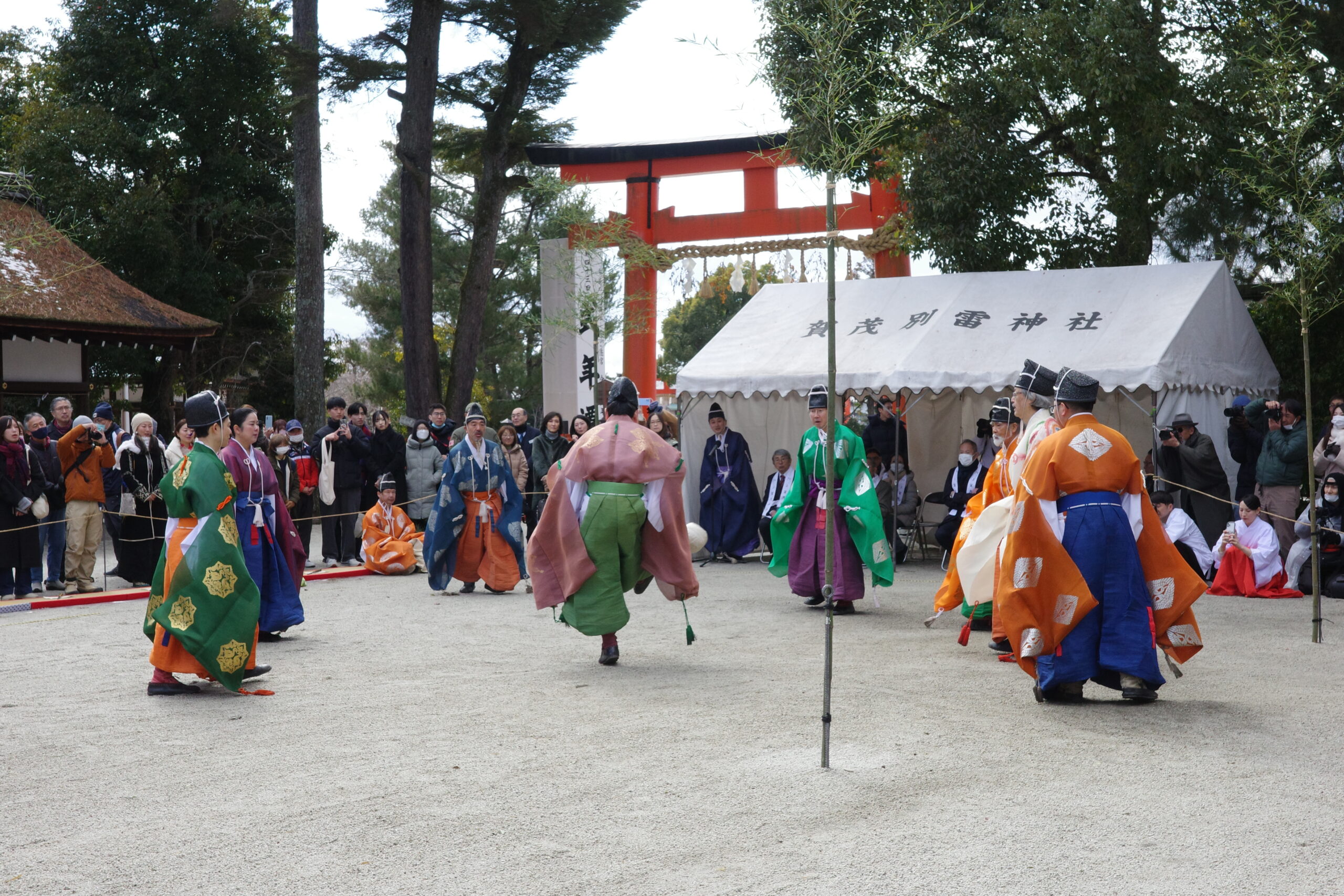
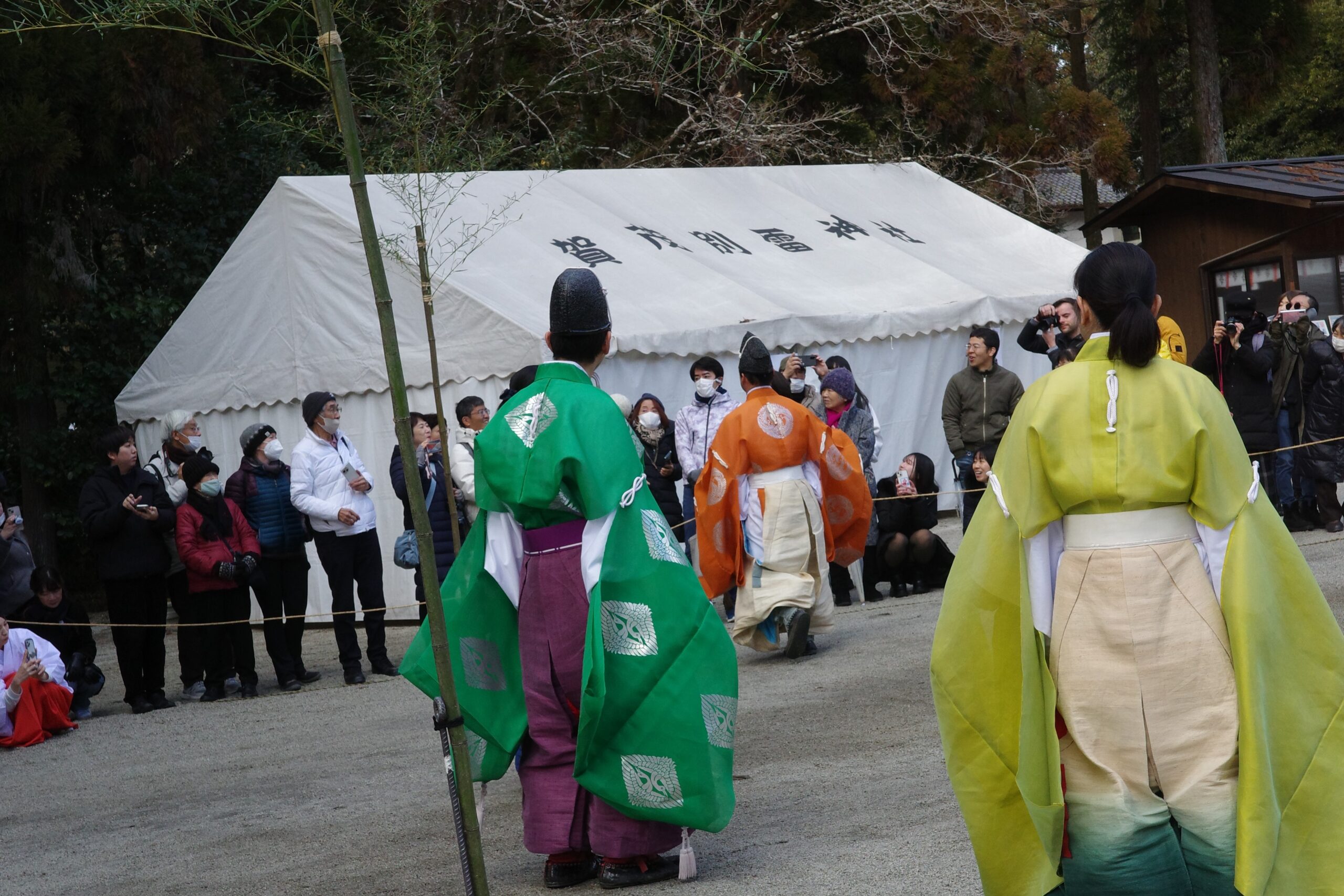
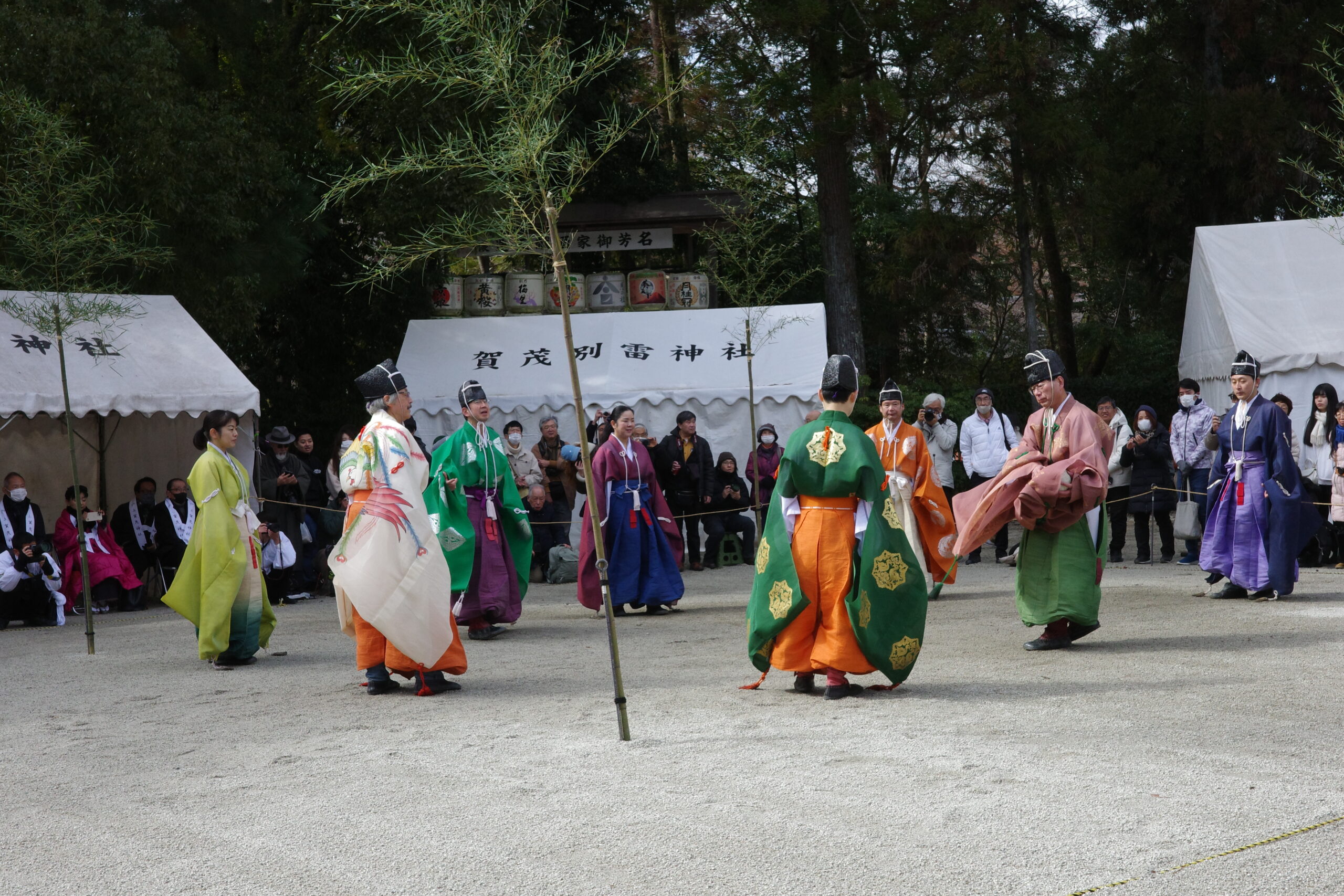
The place where the kemari is played is called a mari-niwa. It is a square with a length of 14 meters on each side, on which sand is graveled. Four trees (shiki-boku) stand on the four corners.
[Tress seen right and left are shiki-boku.]

(Mari)
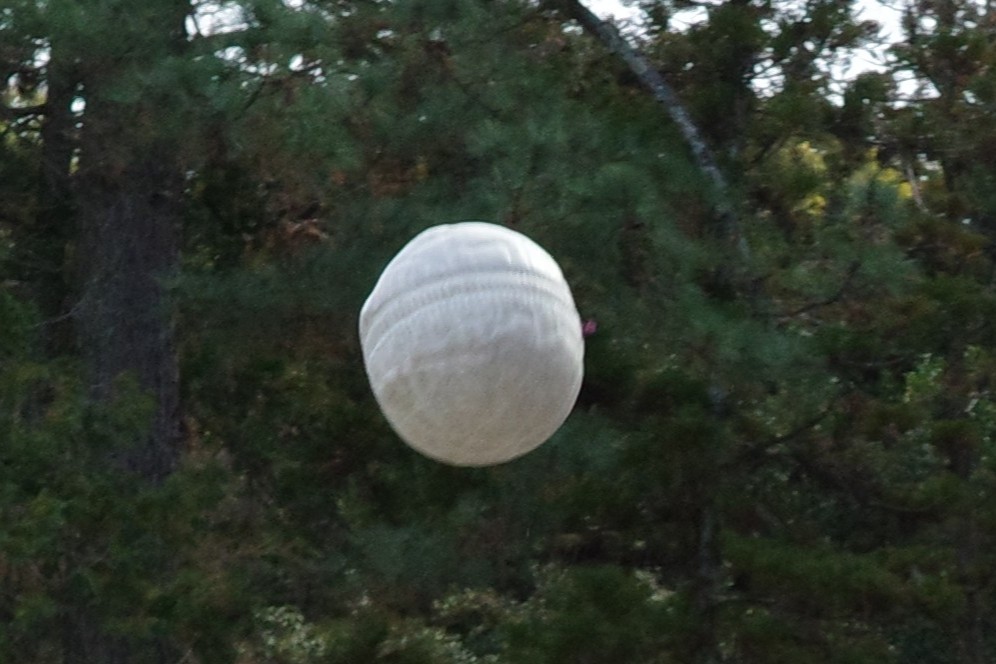
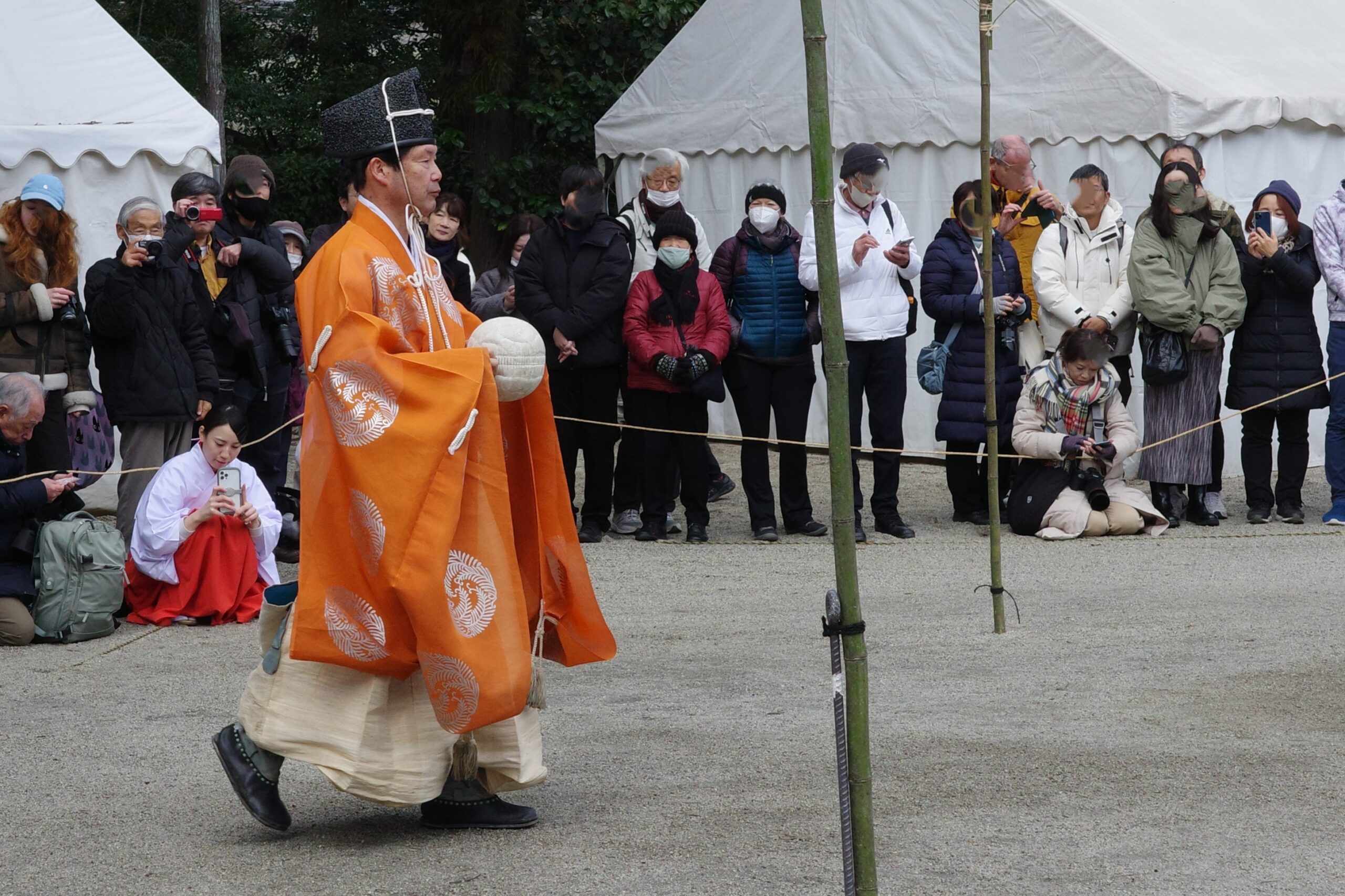
The mari (ball), used in the kemari, is made of deerskin, and has a diameter of about 20 centimeters and a weight of about 120 grams. Two deerskin pieces are connected to each other inside out (deer fur is inside the ball), and the border line between the deerskin pieces is sewed with a hard leather, a horse skin being often used. The specific method for making the ball, however, is passed down only by an oral instruction, and now there is only one person who can make the ball in Japan.
[The surface of the ball is coated with a white pigment.]
(Costume)
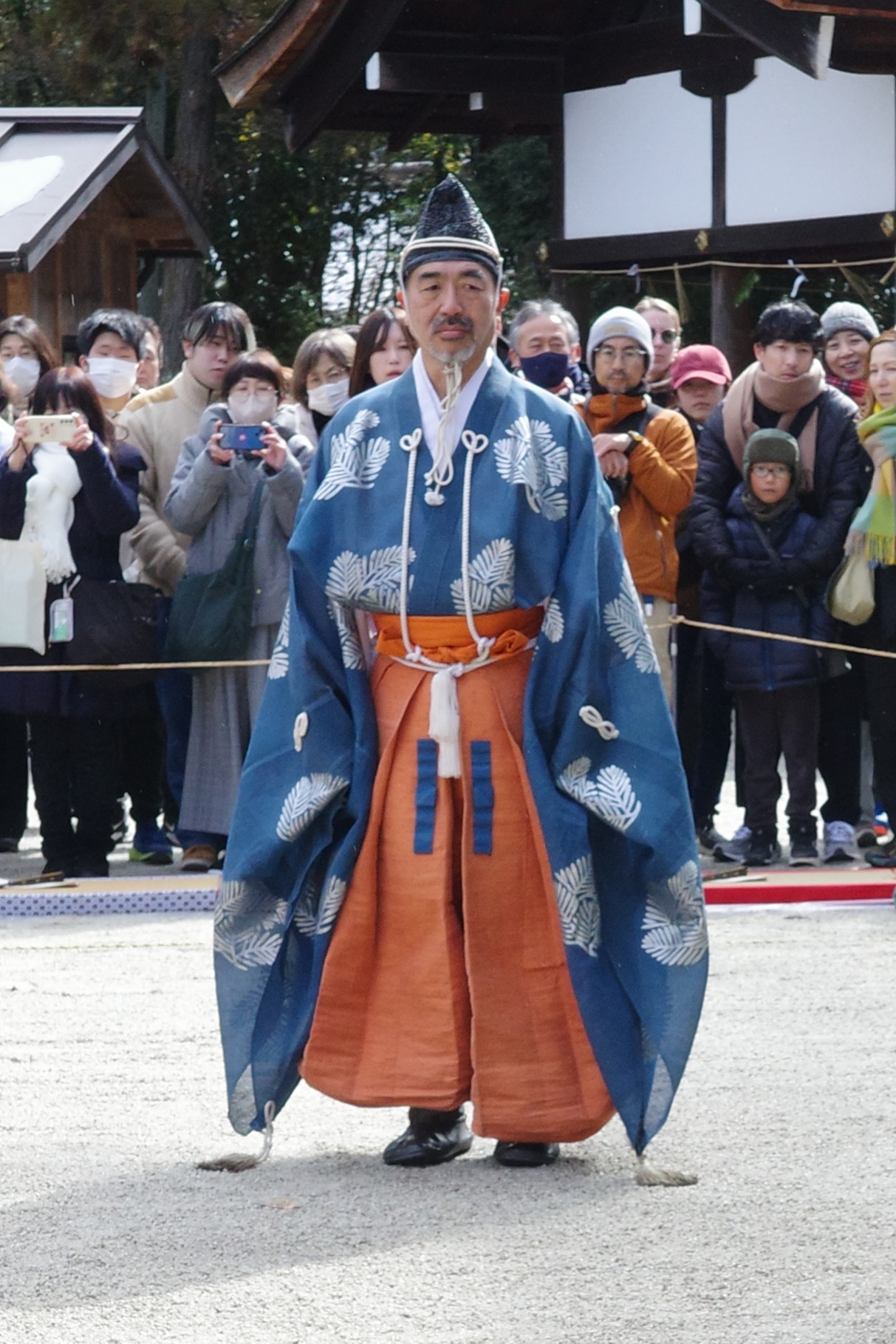
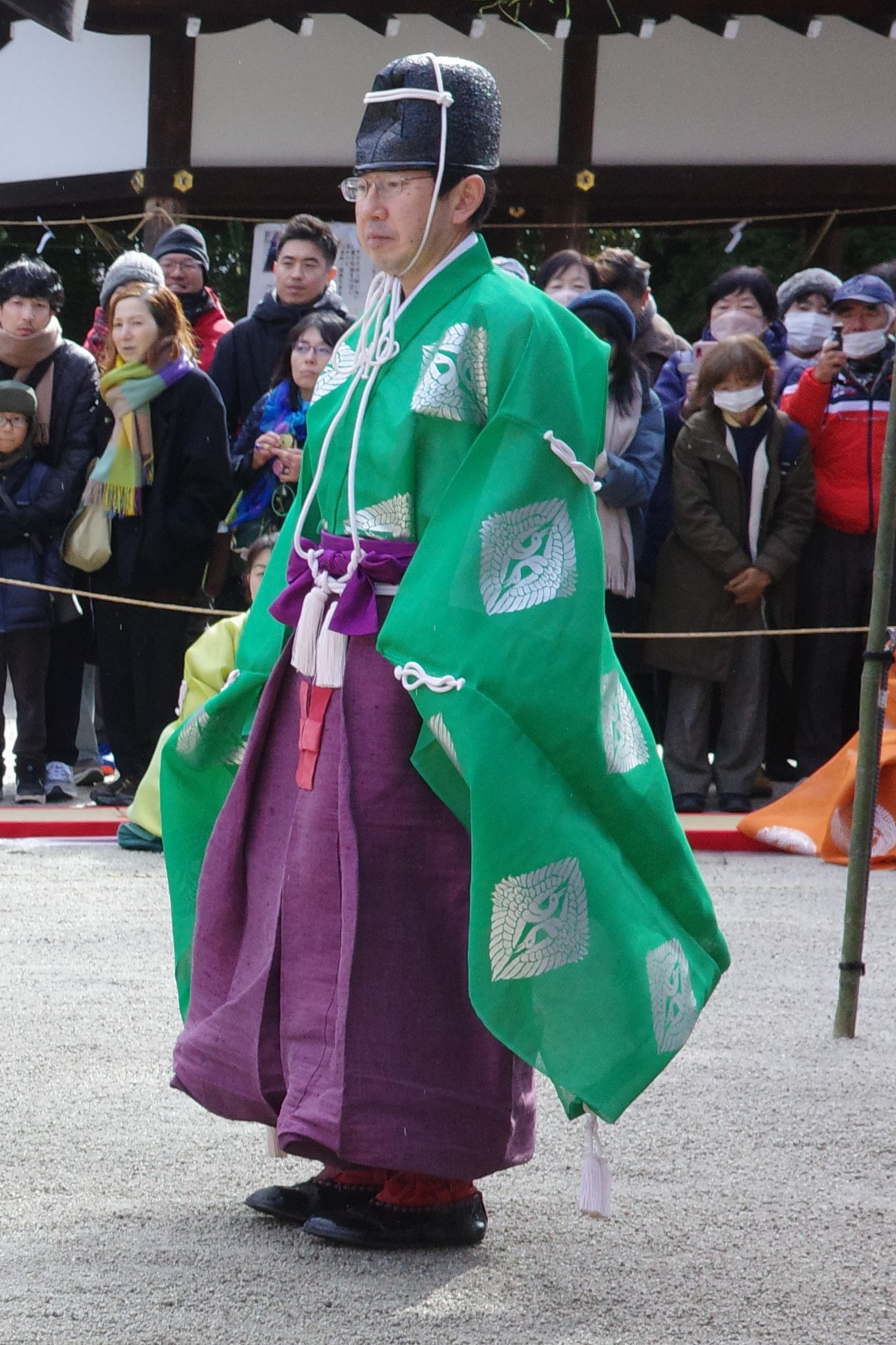
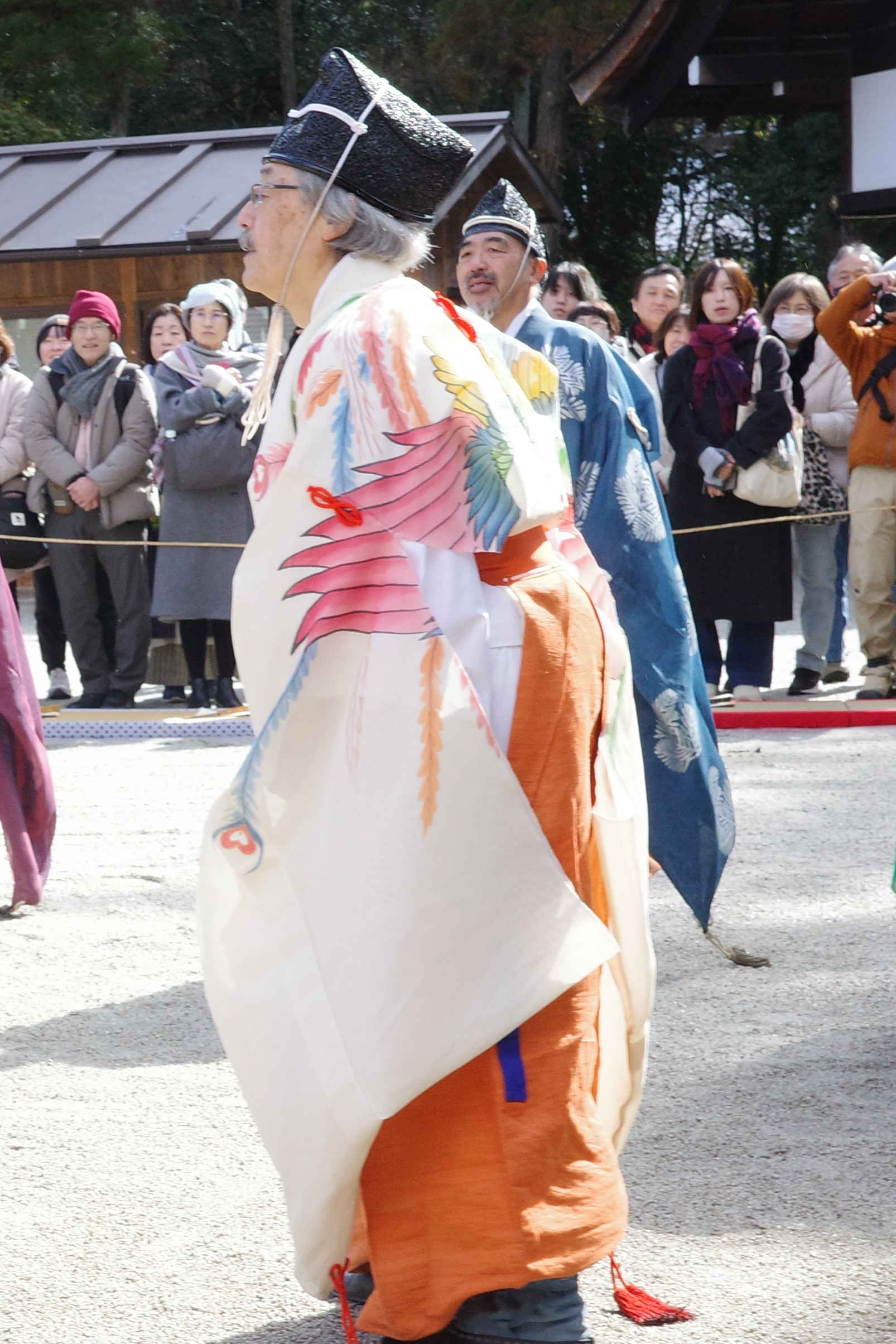
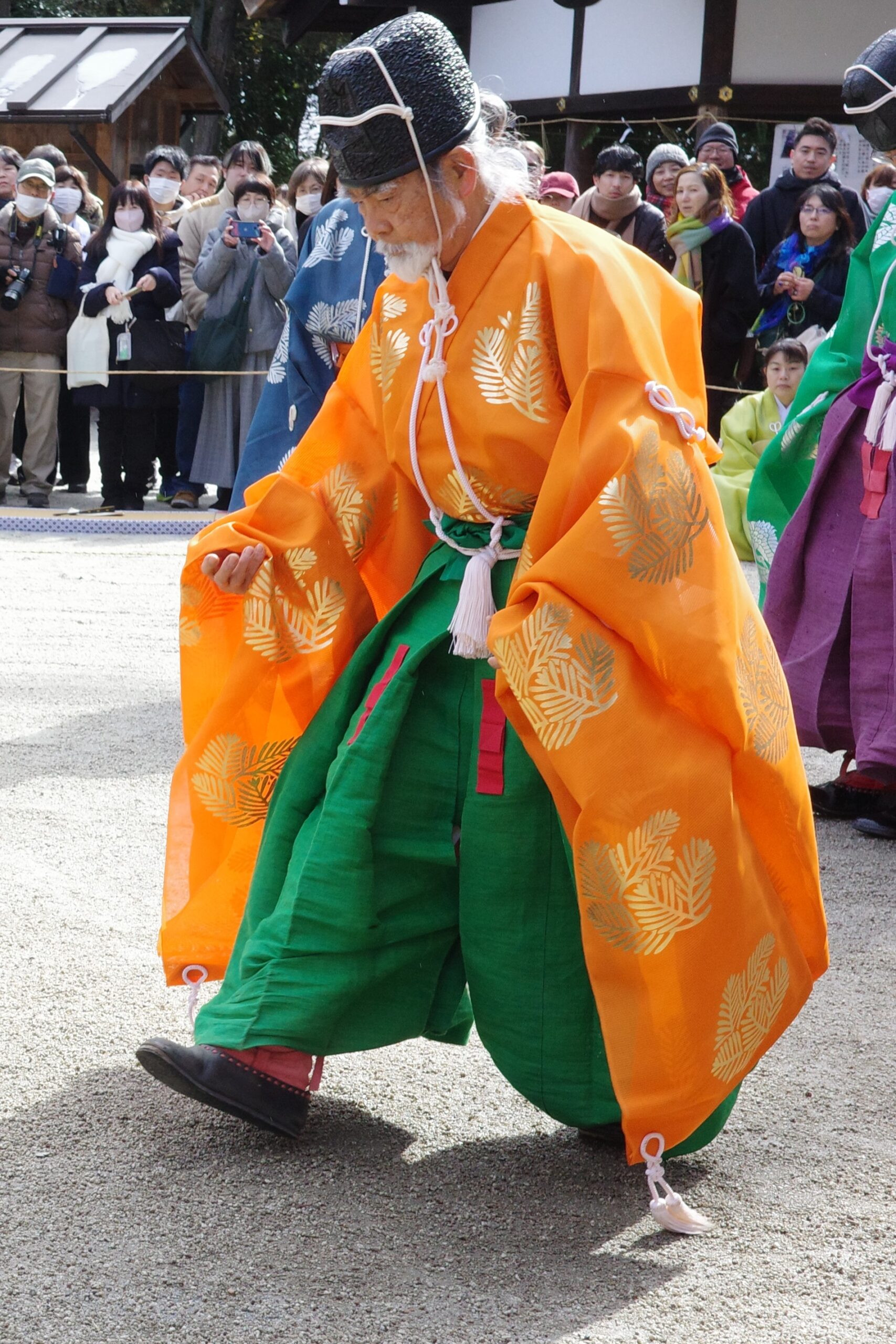
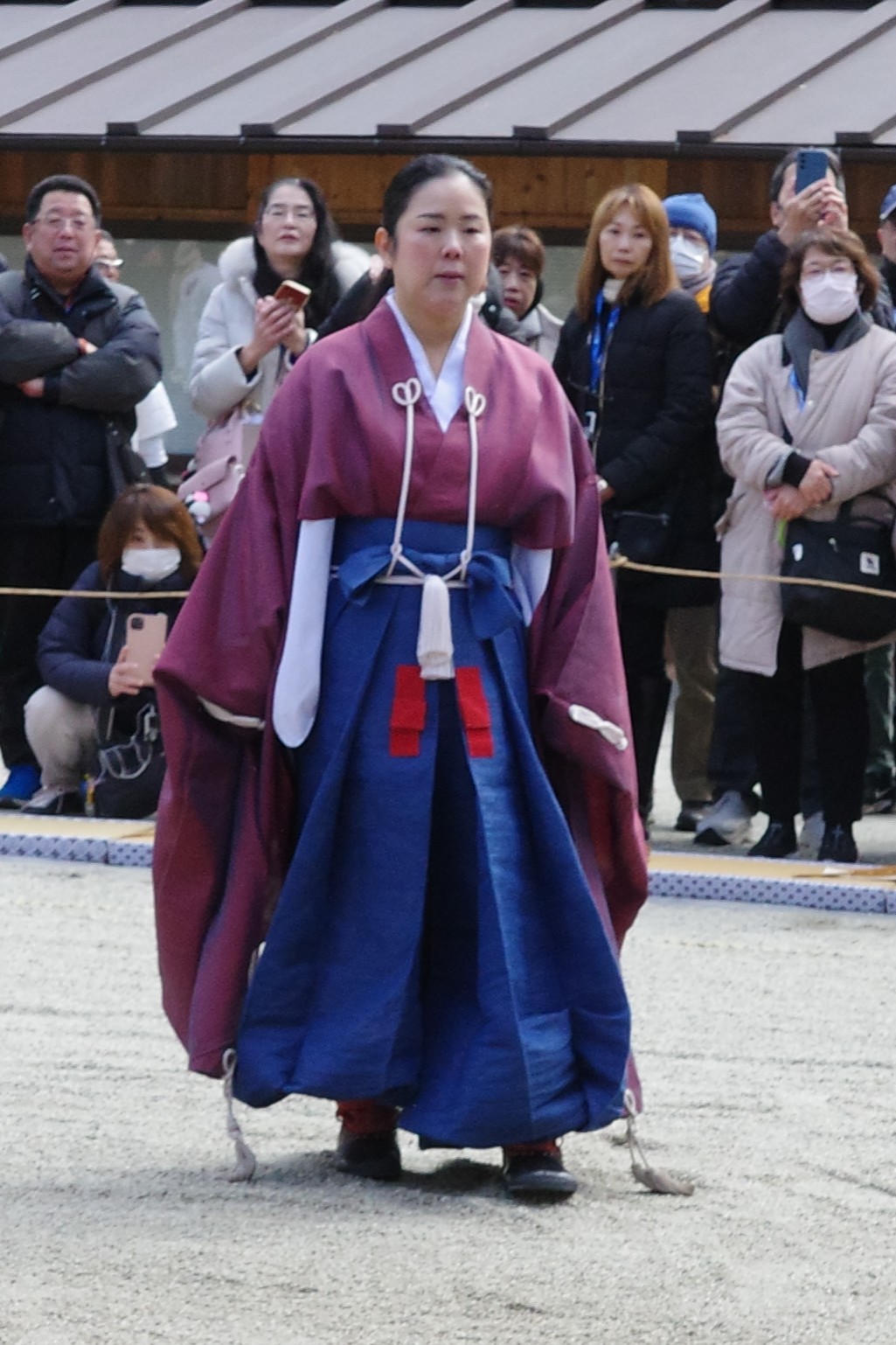
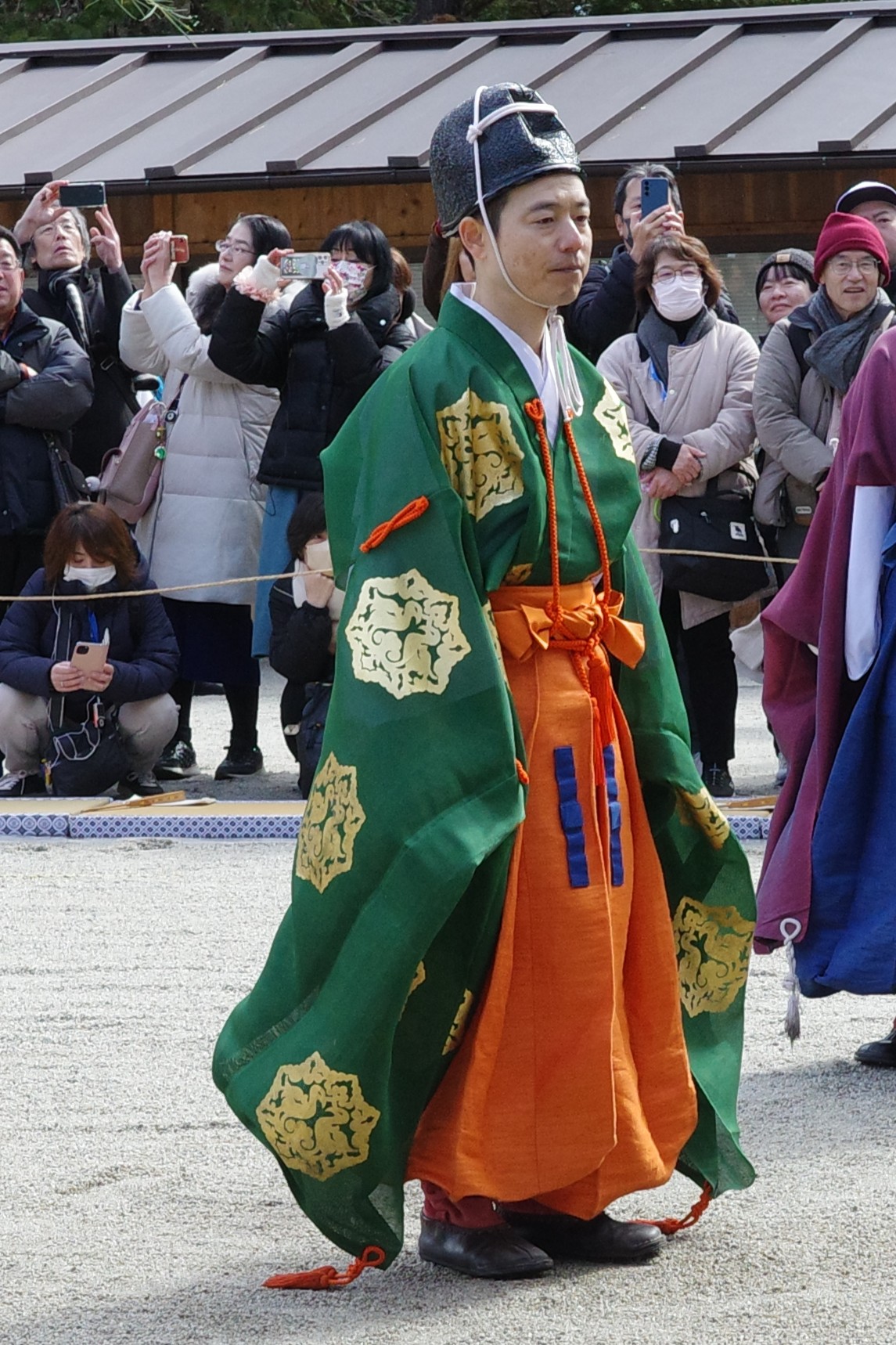
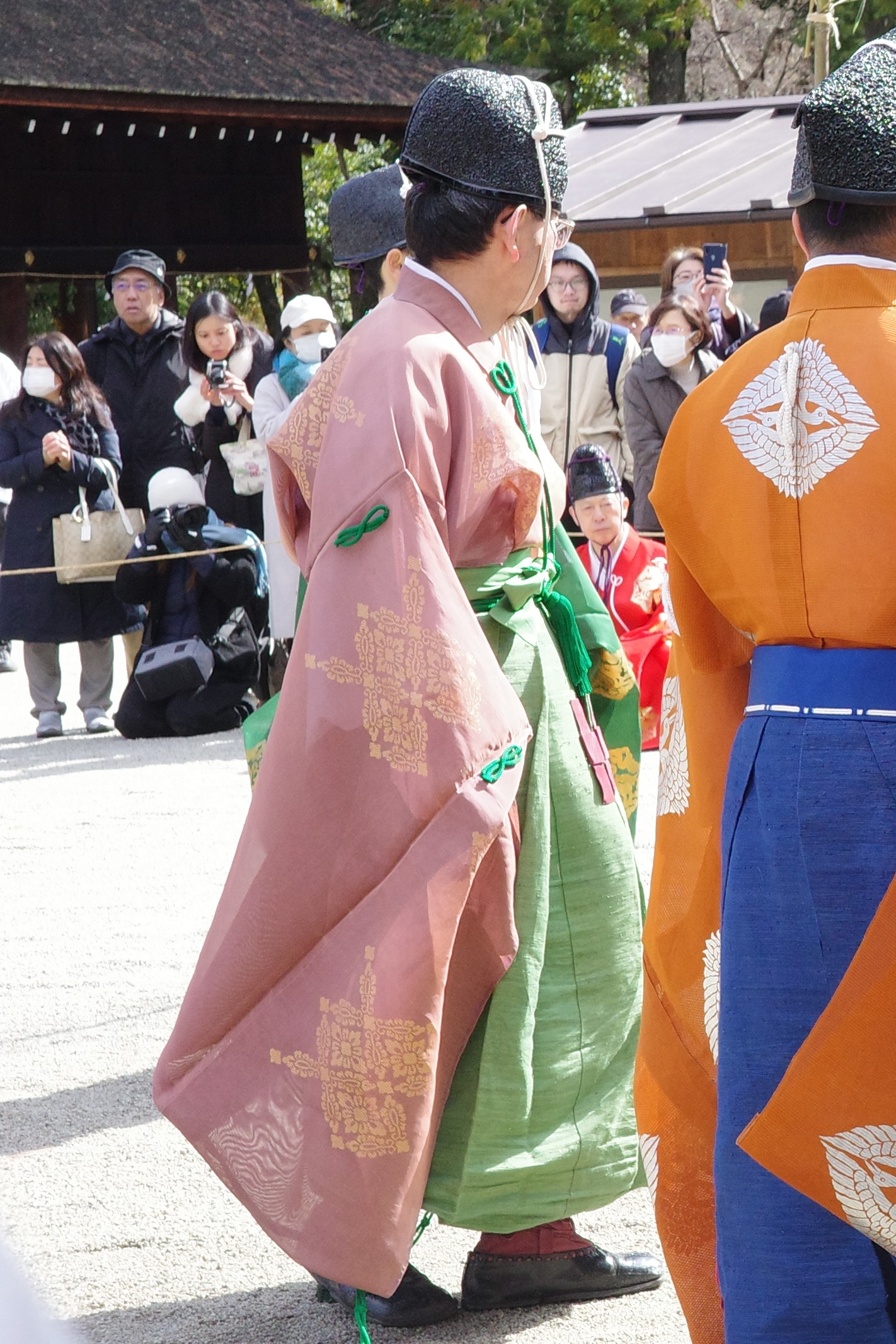
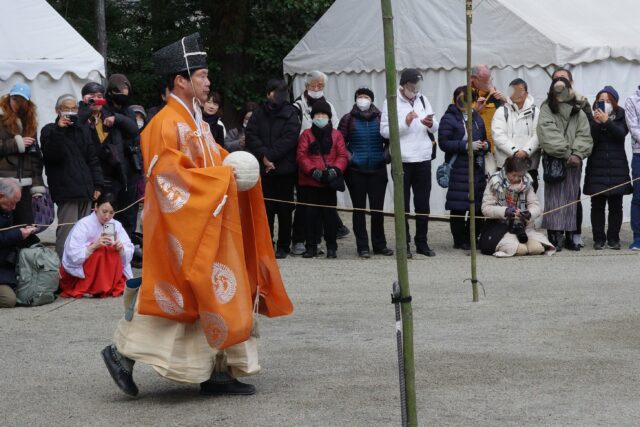
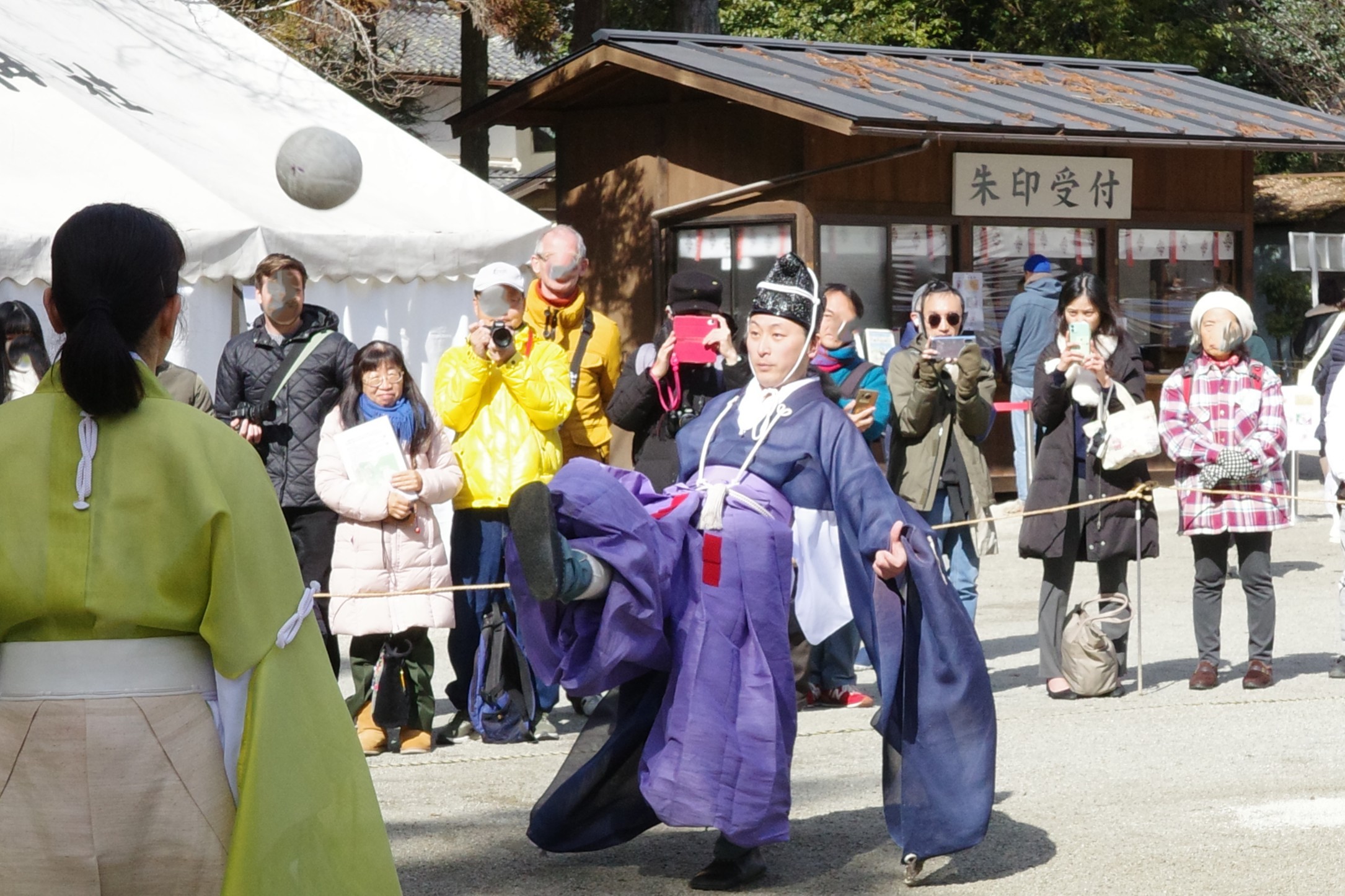
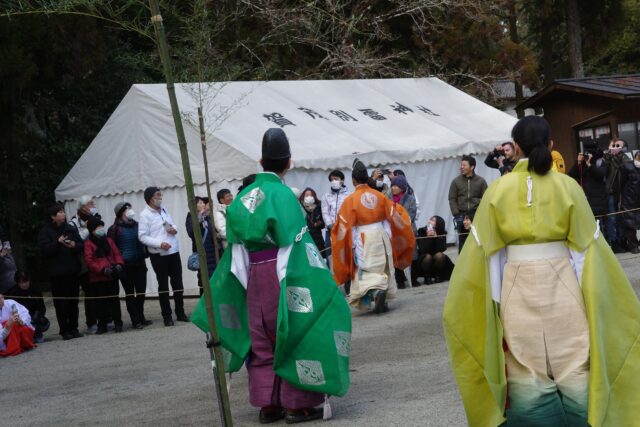
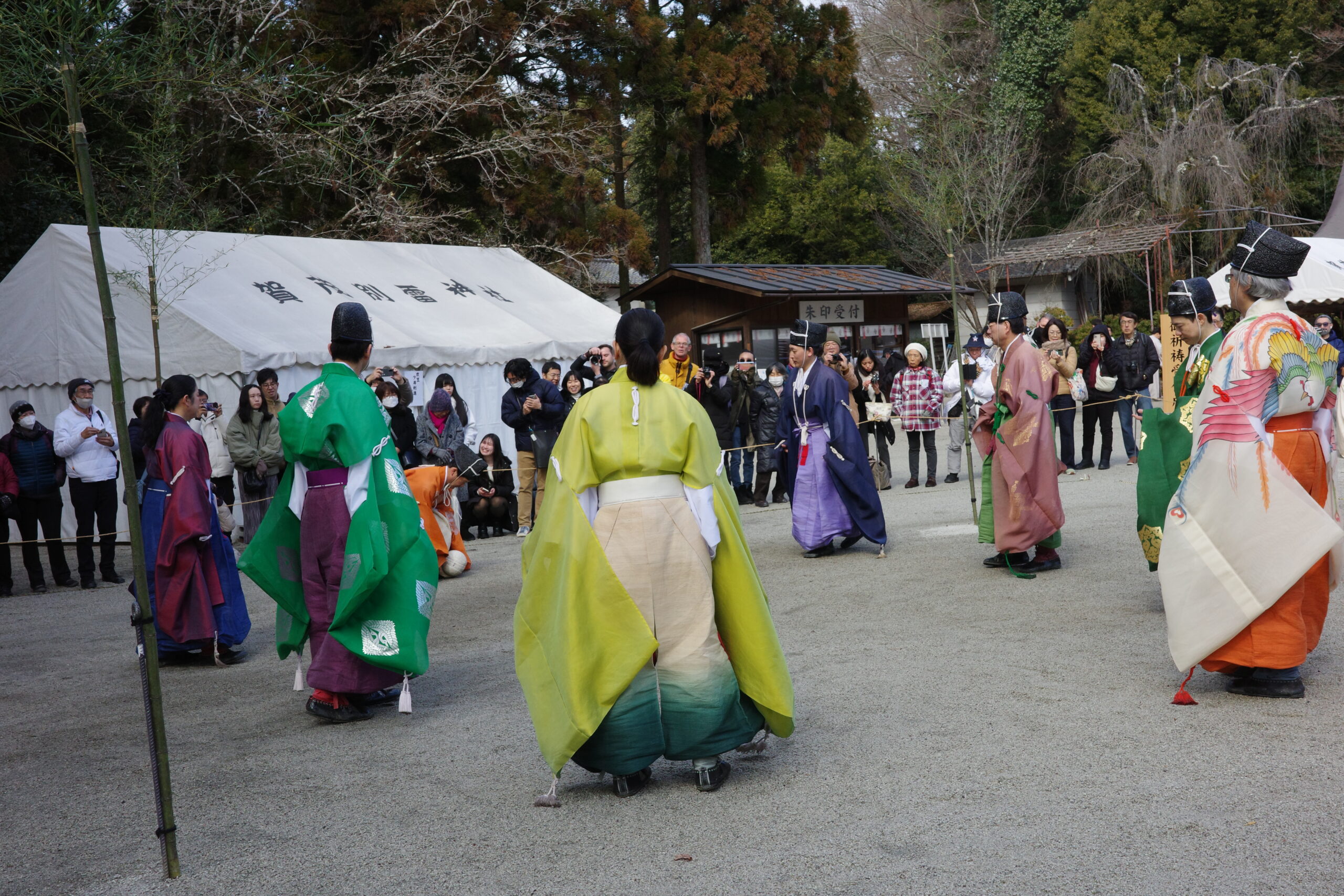
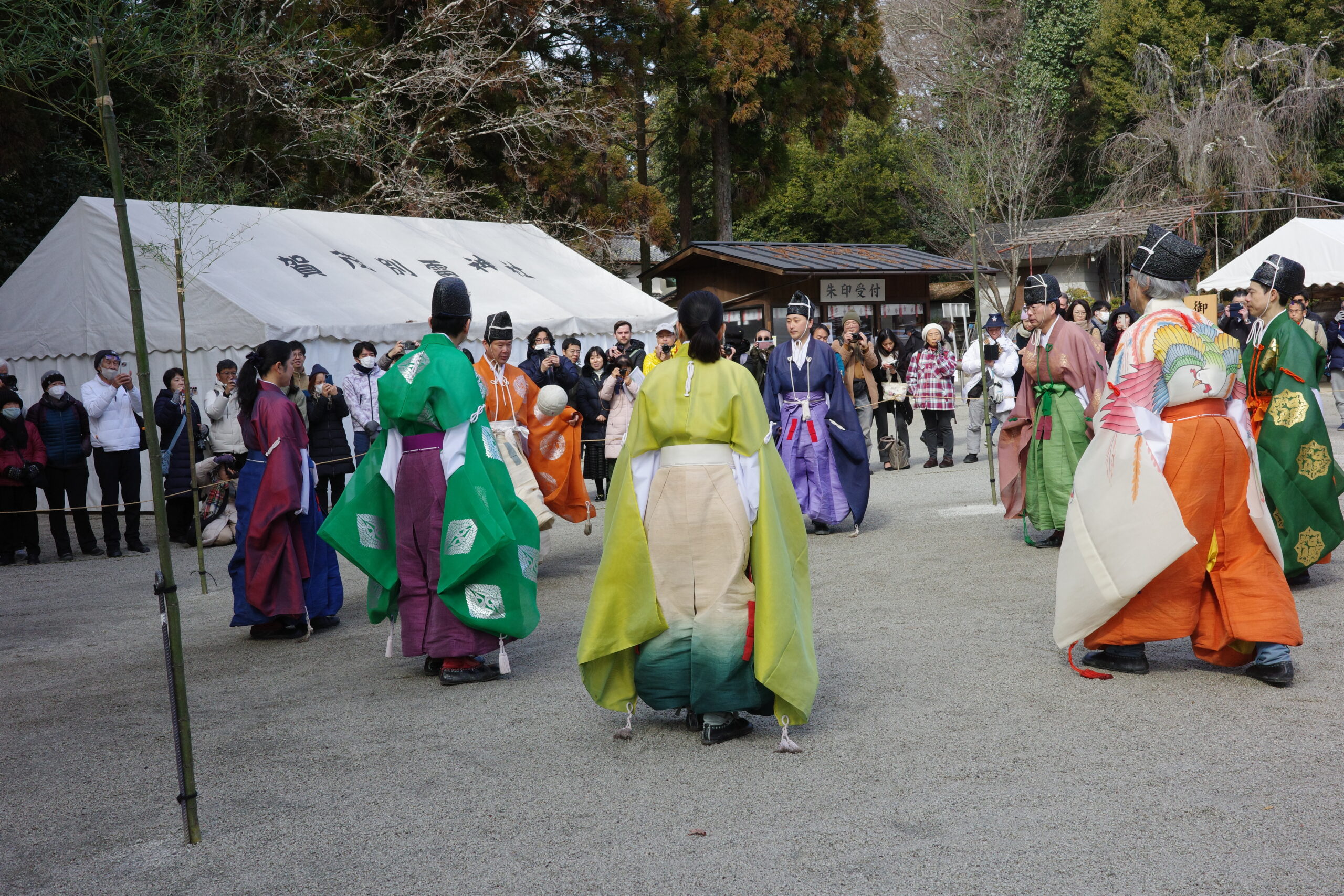
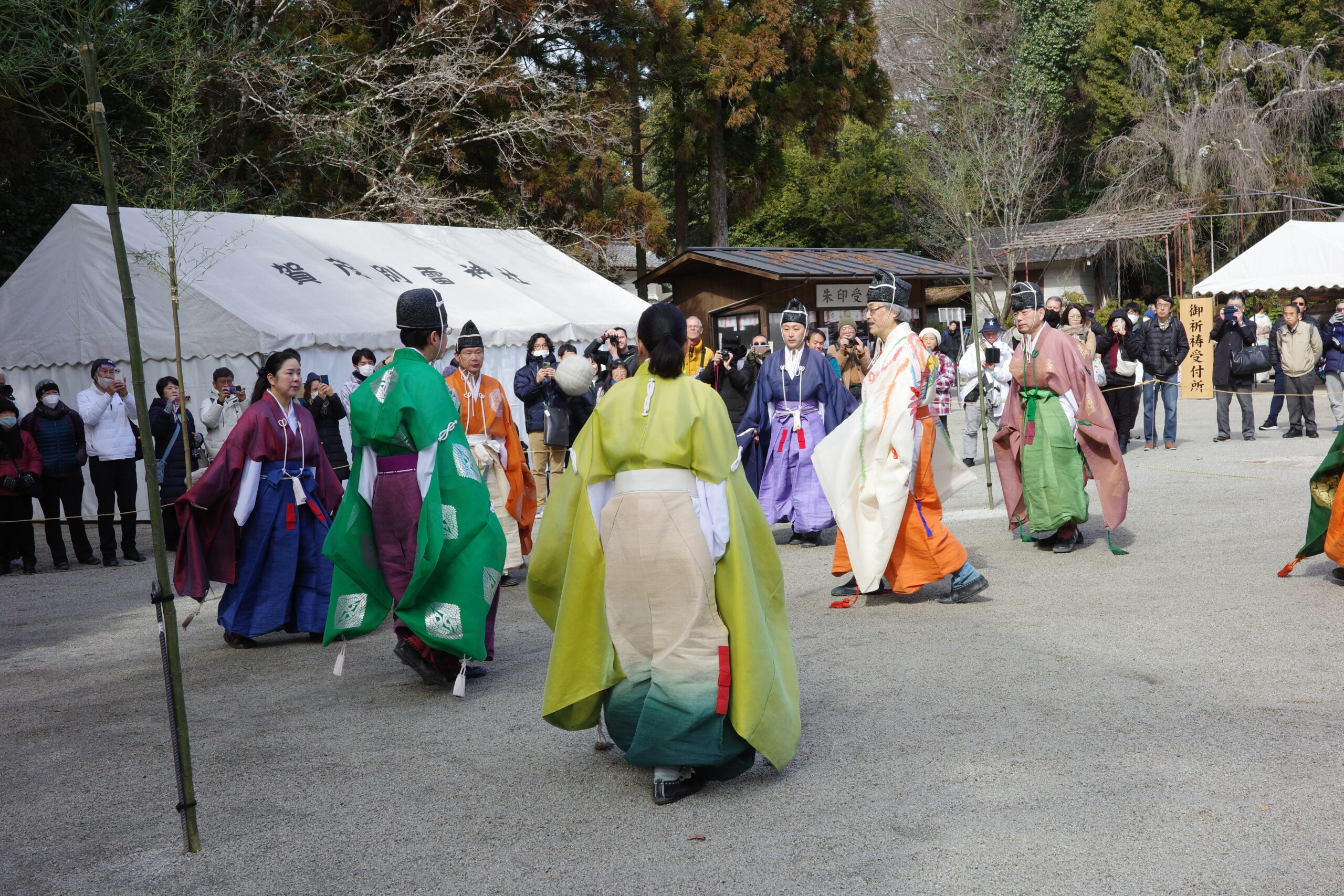
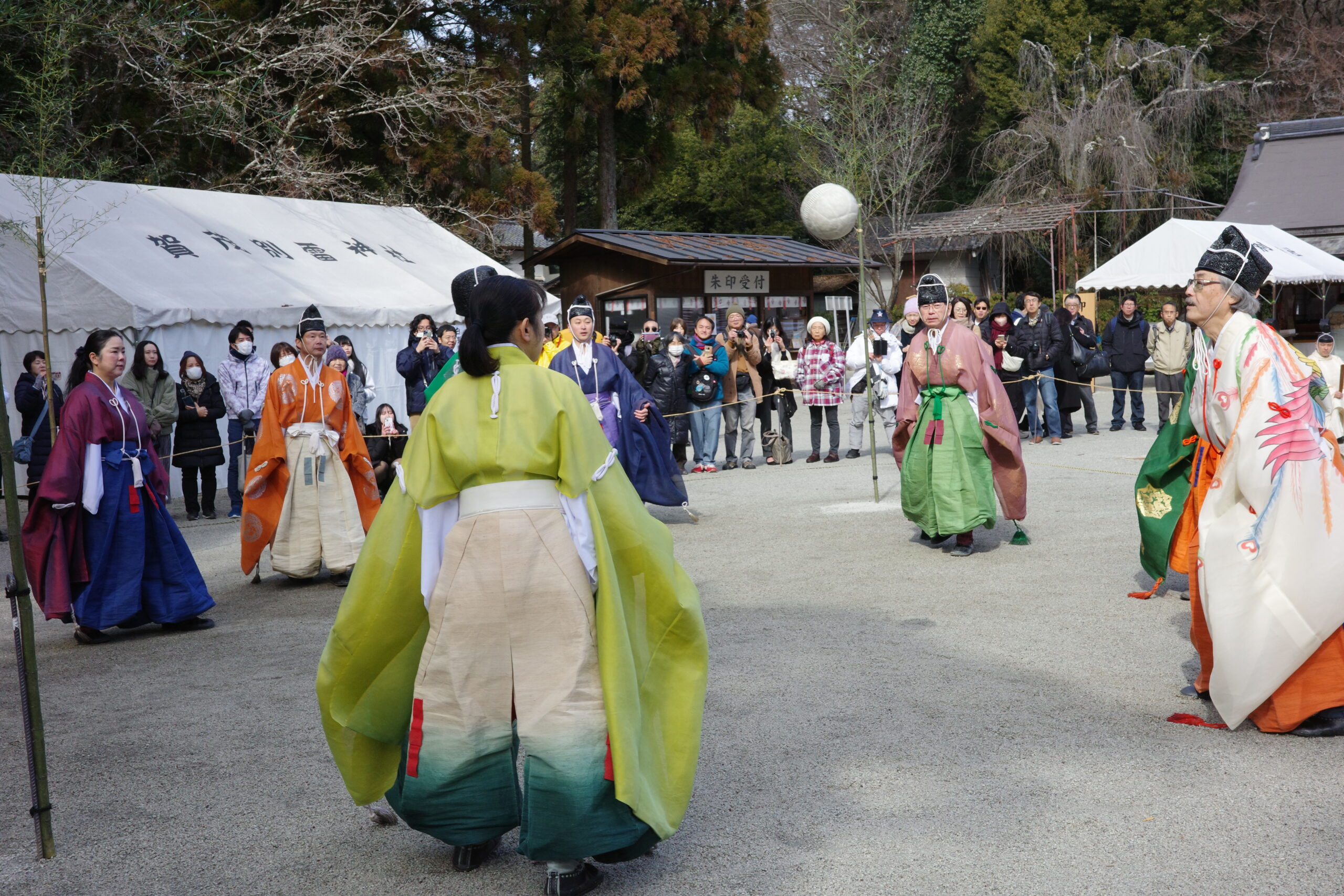
When the kemari is played, kemari players have to put on a kemari-shozoku (costume), which looks like a costume worn by nobles in the Heian Period. In the photo at the upper left shown below, the headgear is called eboshi, the jacket is called mari-suikan, the trousers are kuzu-bakama, and the shoes are called kamo-gutsu.

(Start of Kemari)
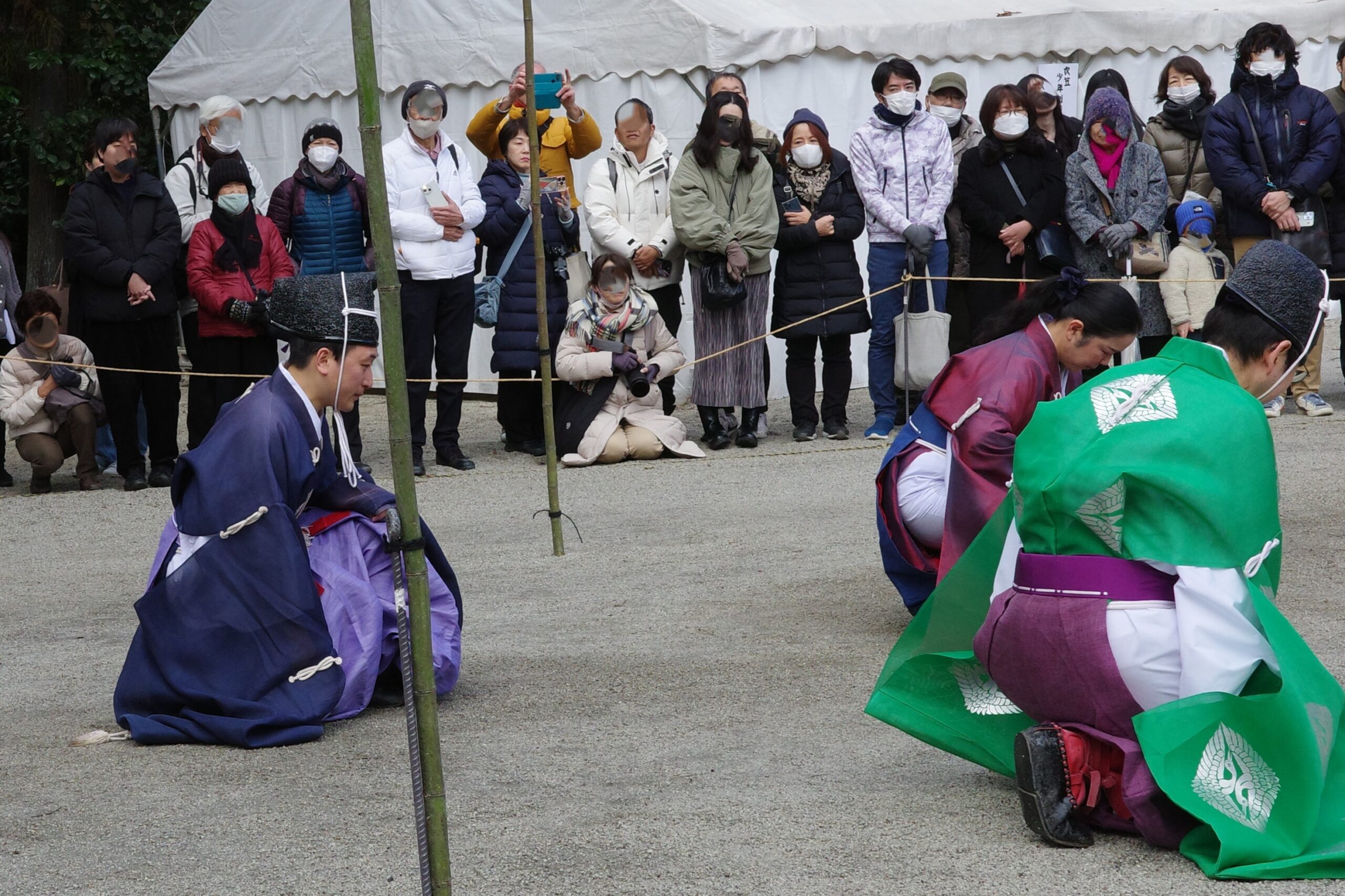
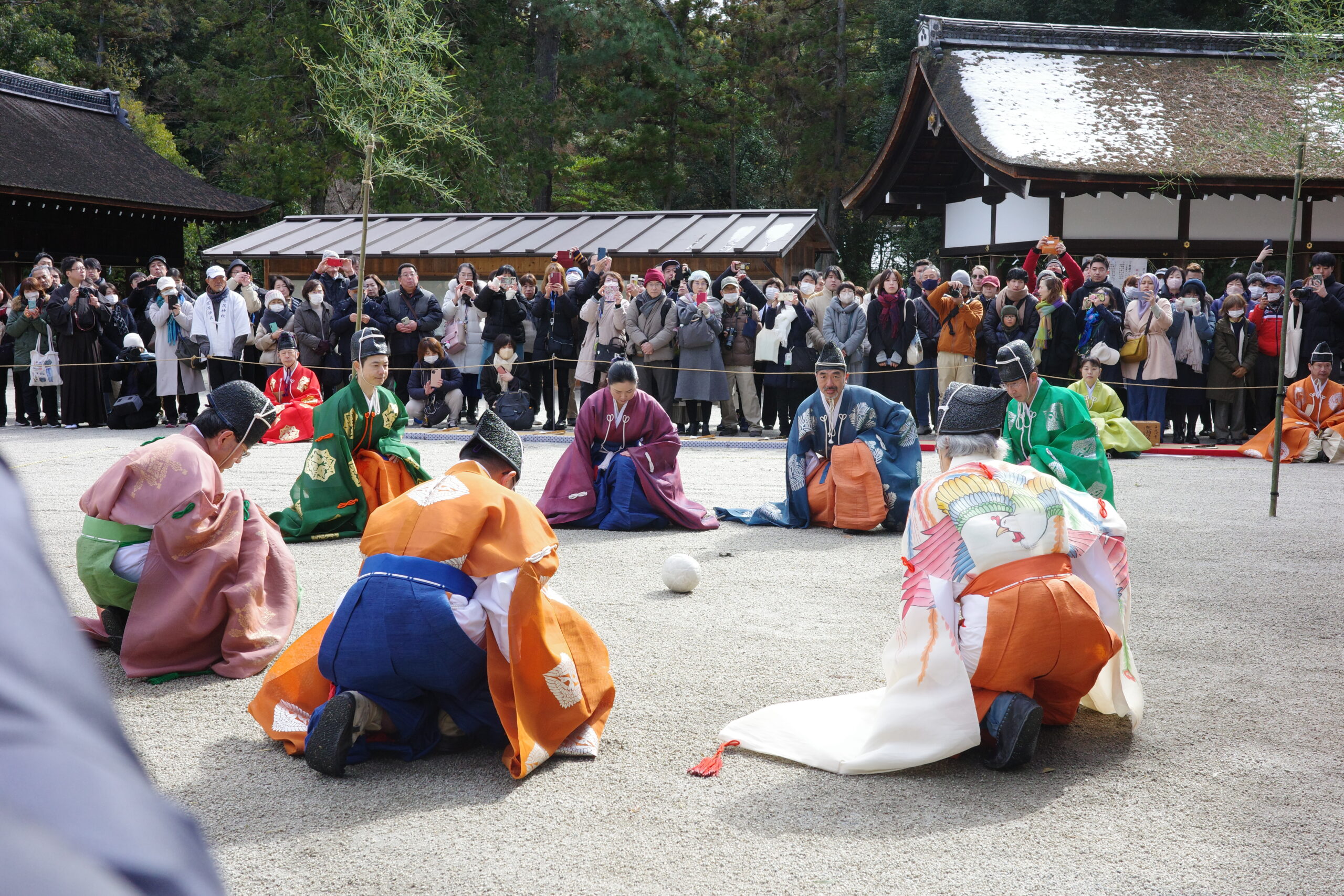
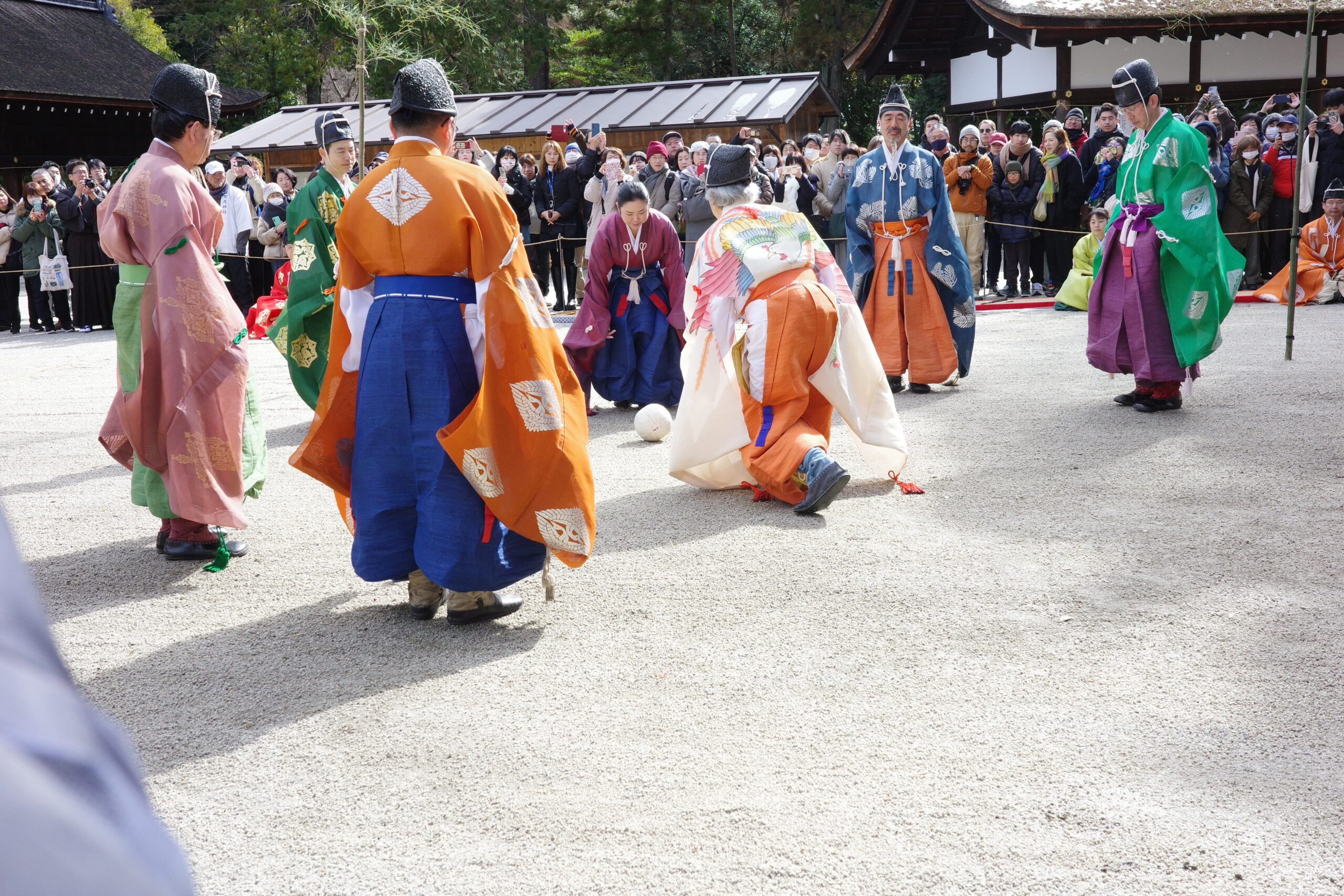
The number of players in the kemari is usually 8, sometimes 6. The 8 players enter the mari-niwa (game site) in the order given and form a circle. Before the game, all members grasp the conditions of a ball. After that, the game starts.
-
Entrance of Kemari Player
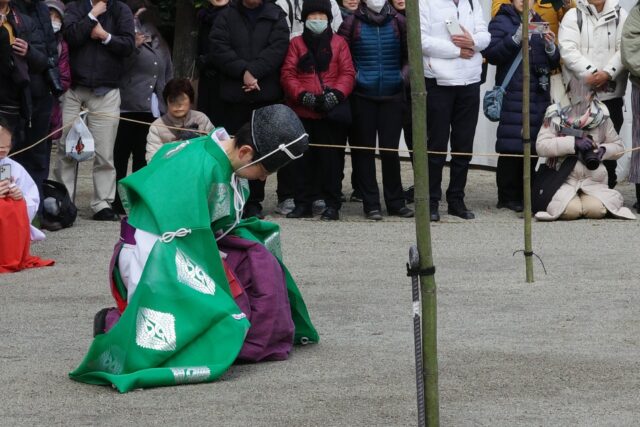
Formation of Circle
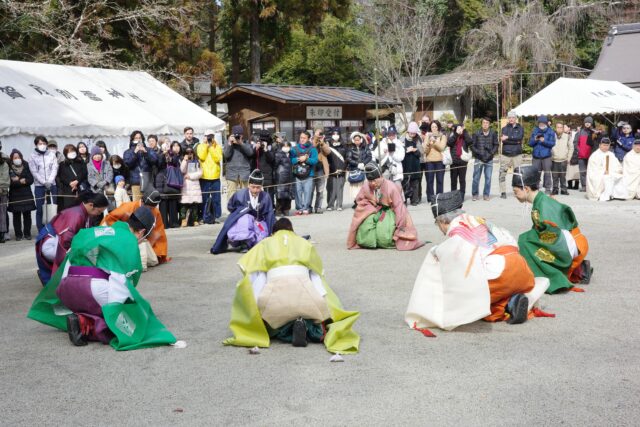
Confirmation of Ball Condition
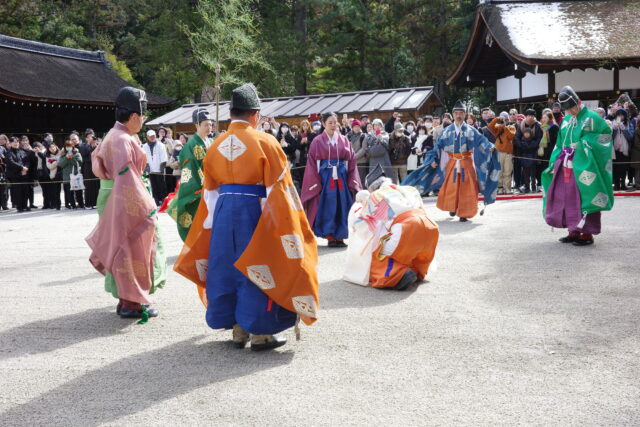
-
Entrance of Kemari Player
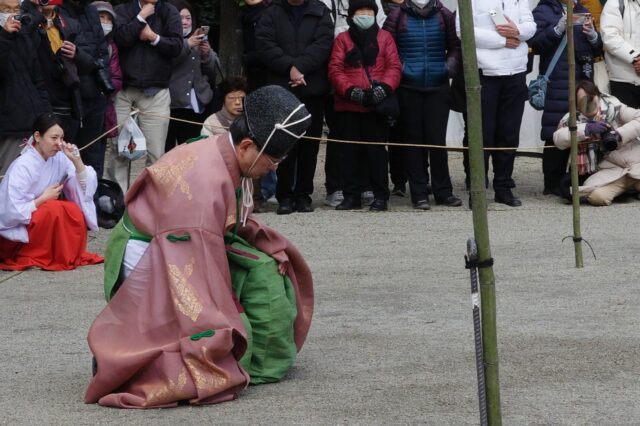

Confirmation of Ball Condition
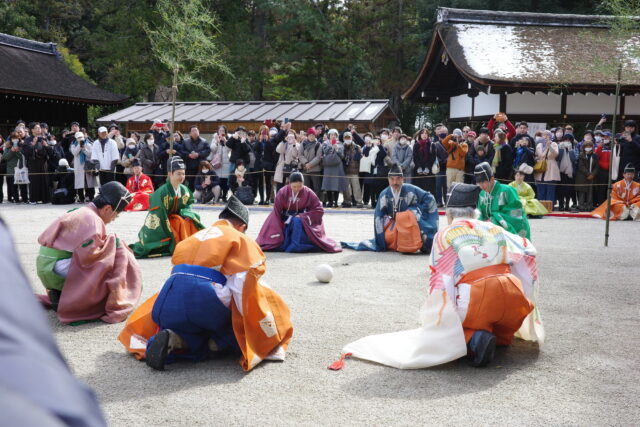
Confirmation of Ball Condition
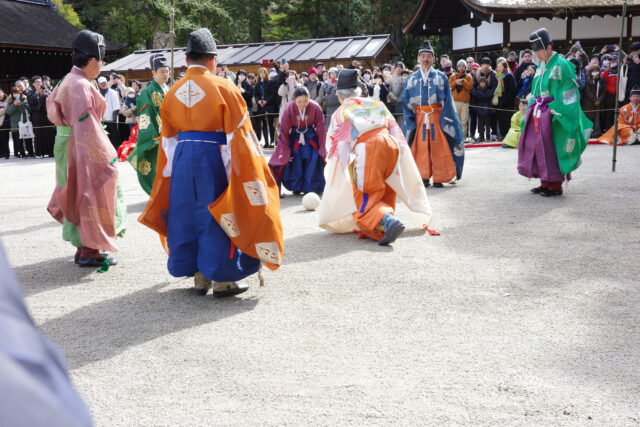
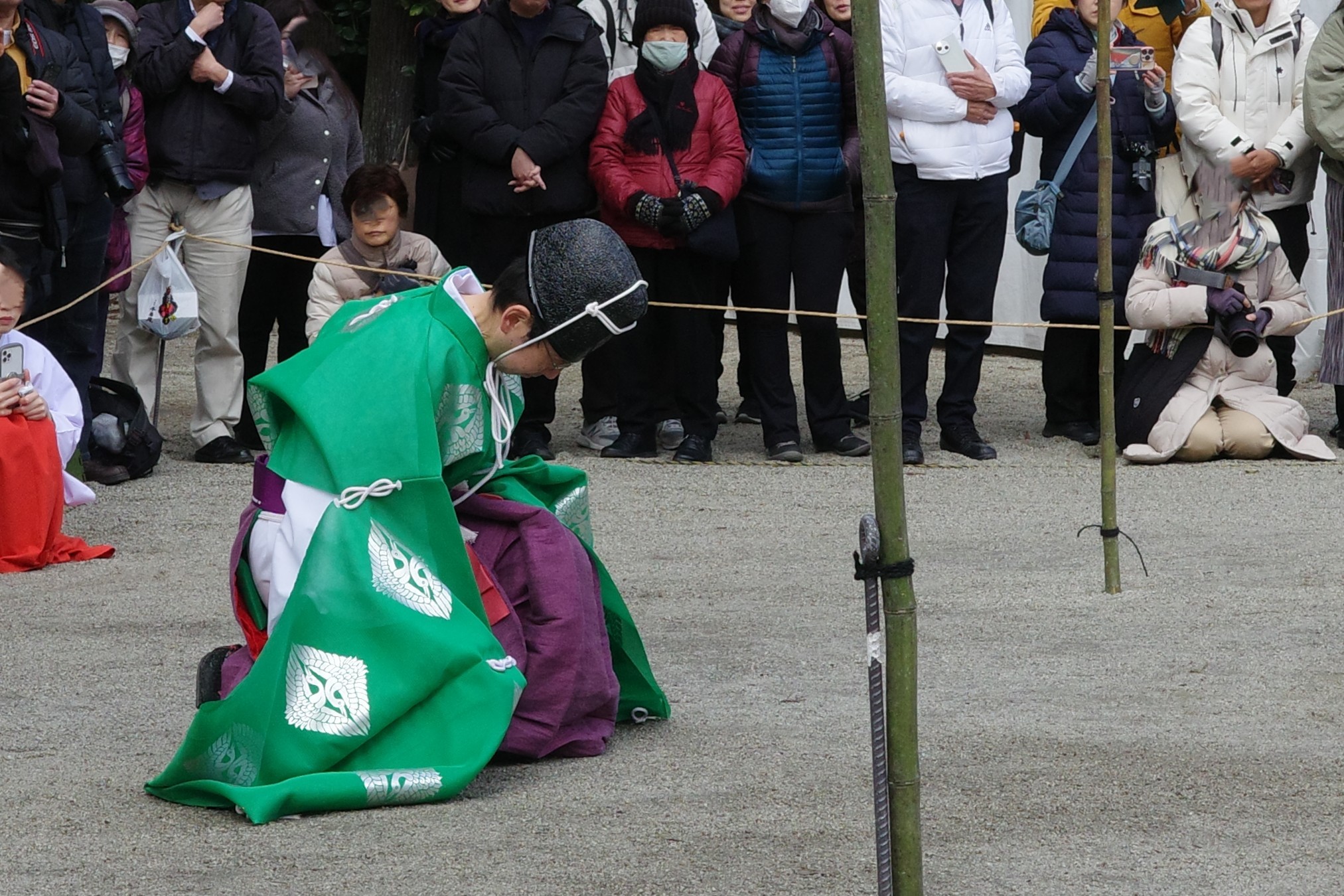
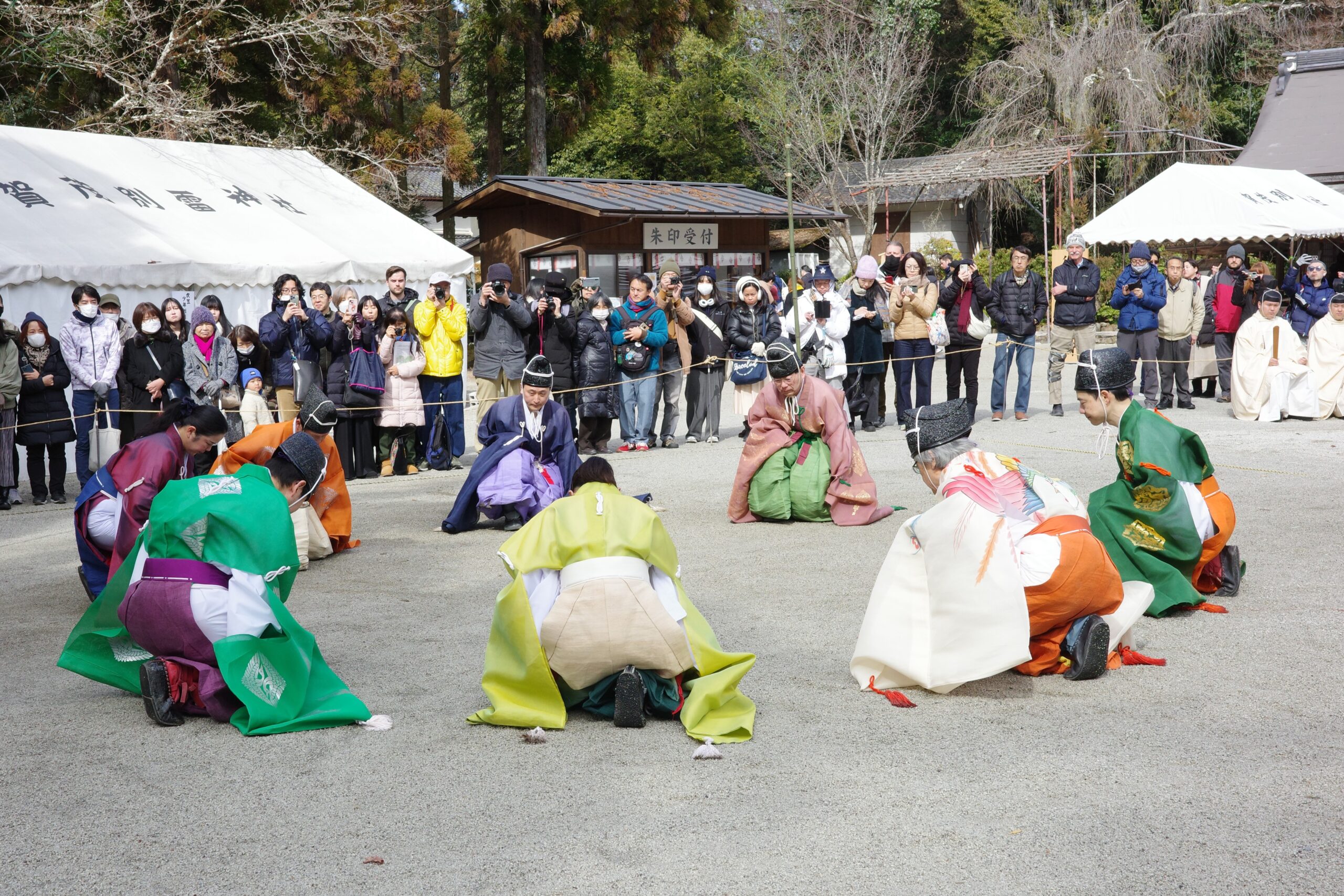
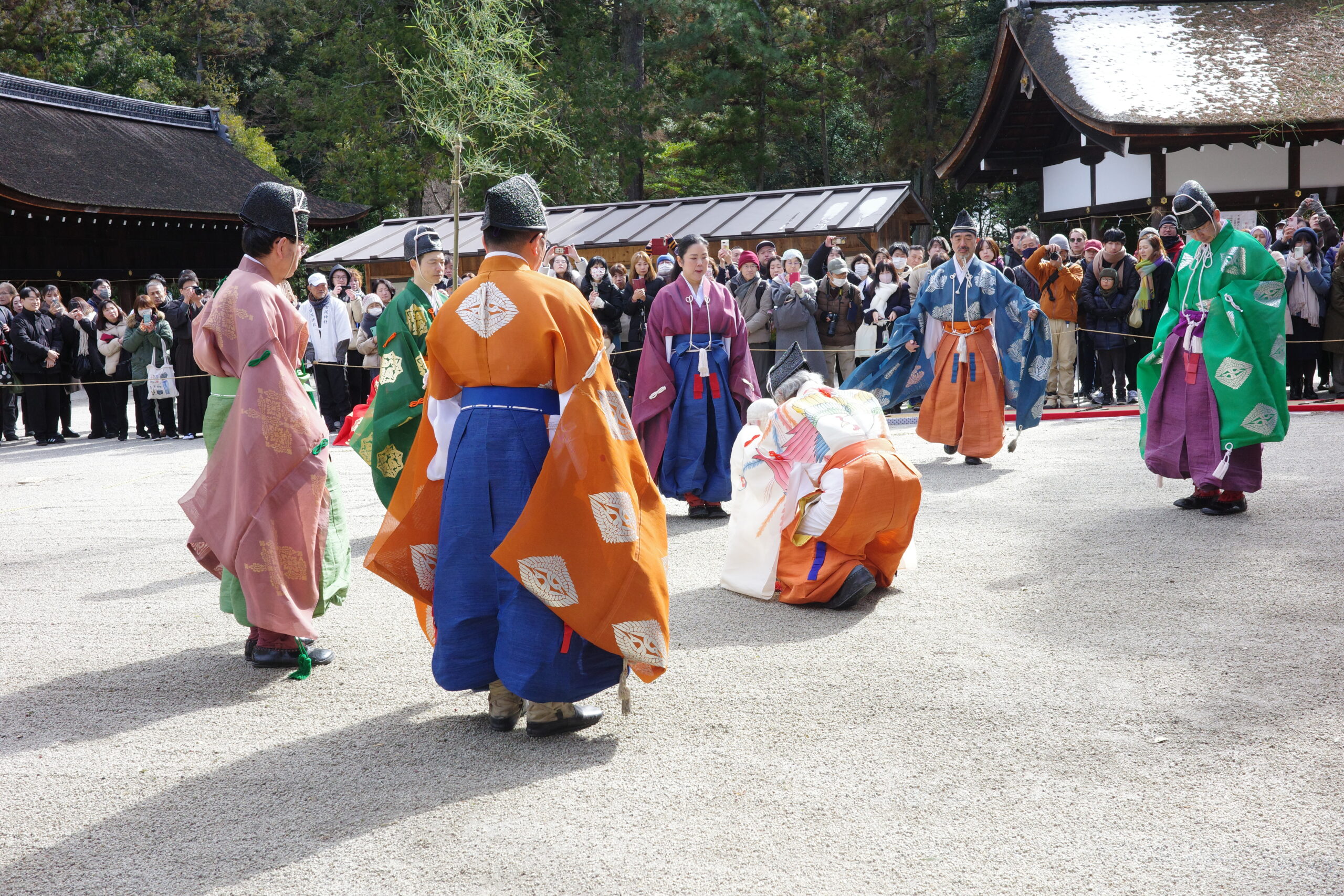
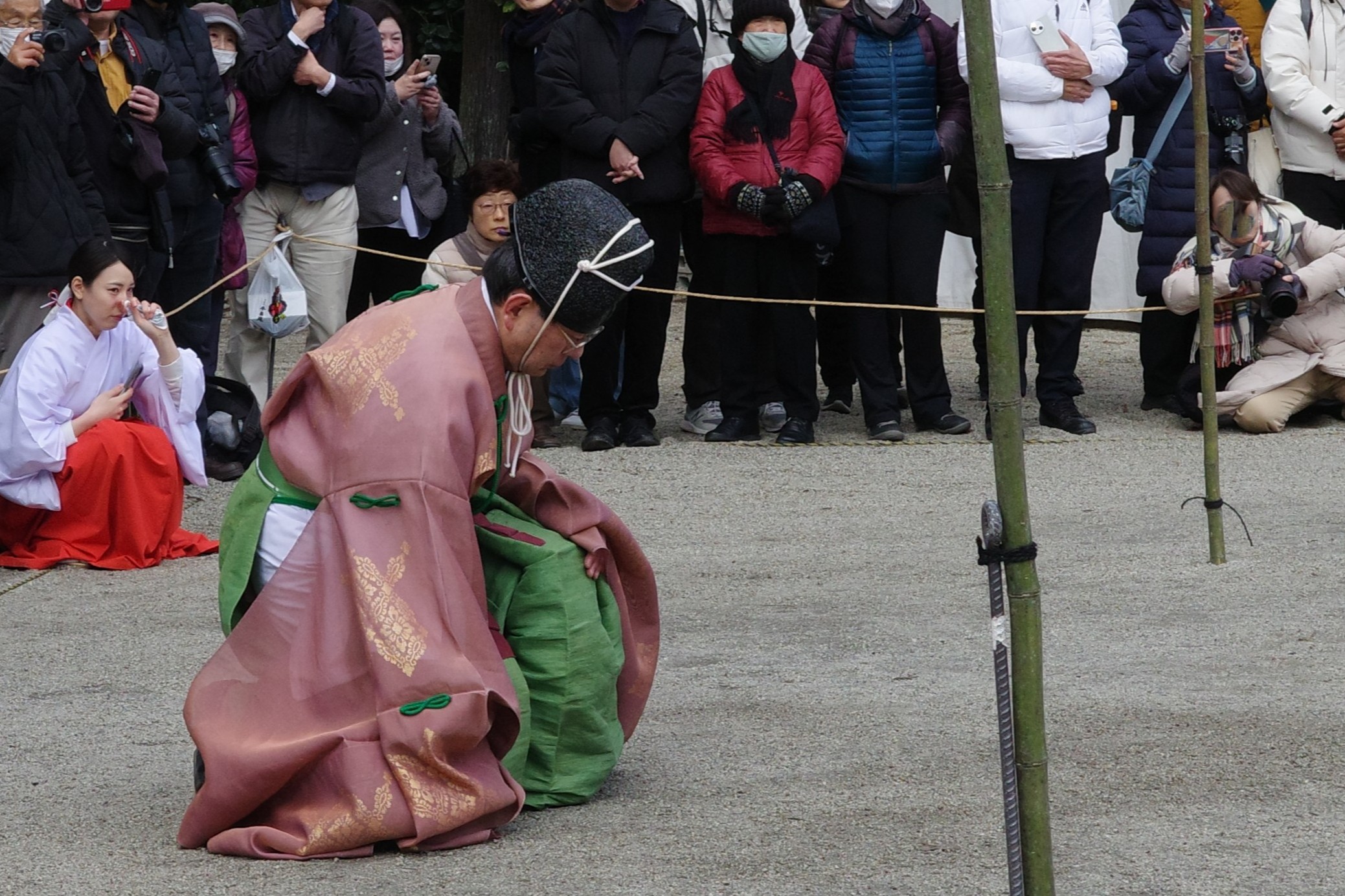
(Game)
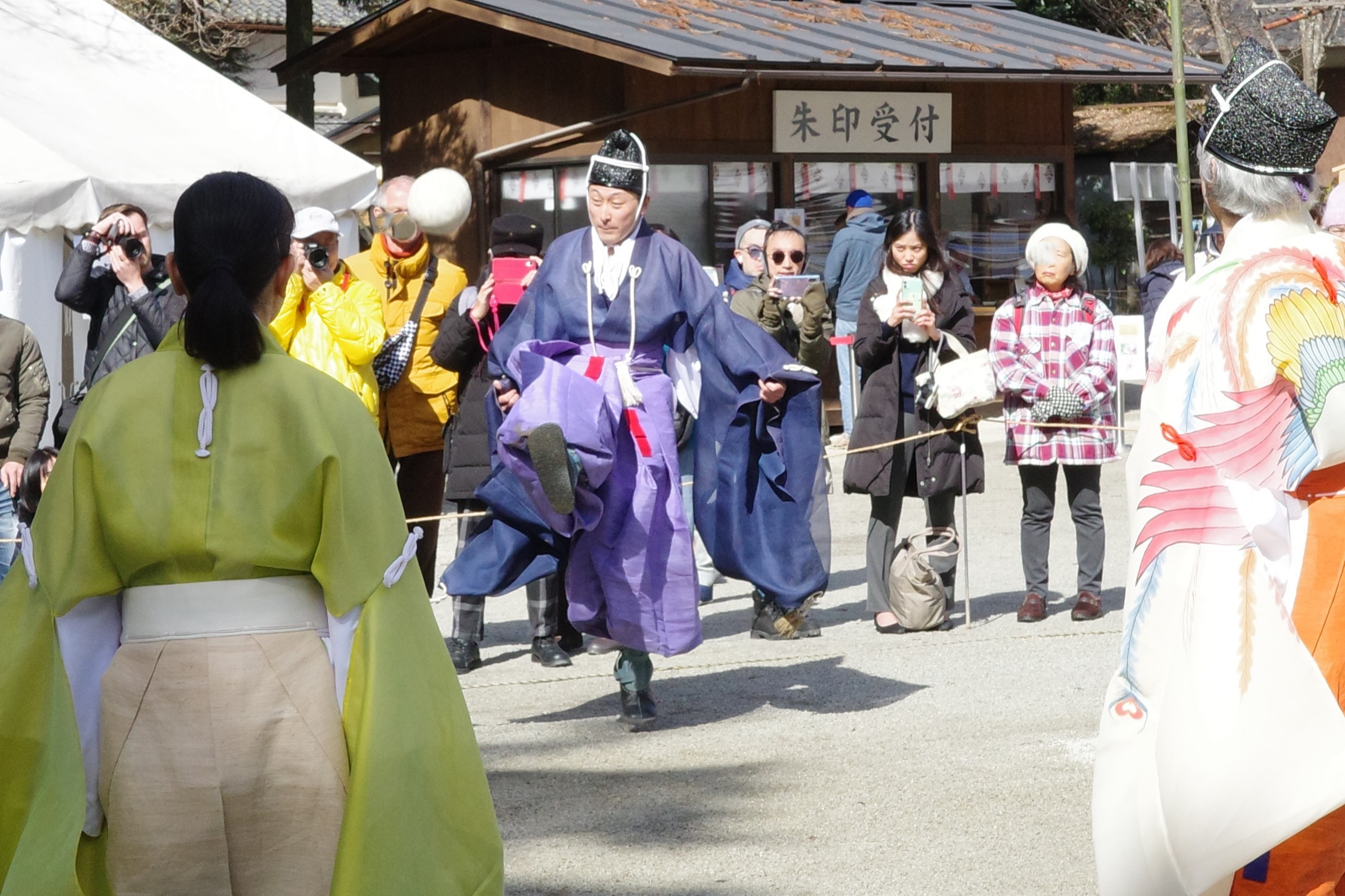
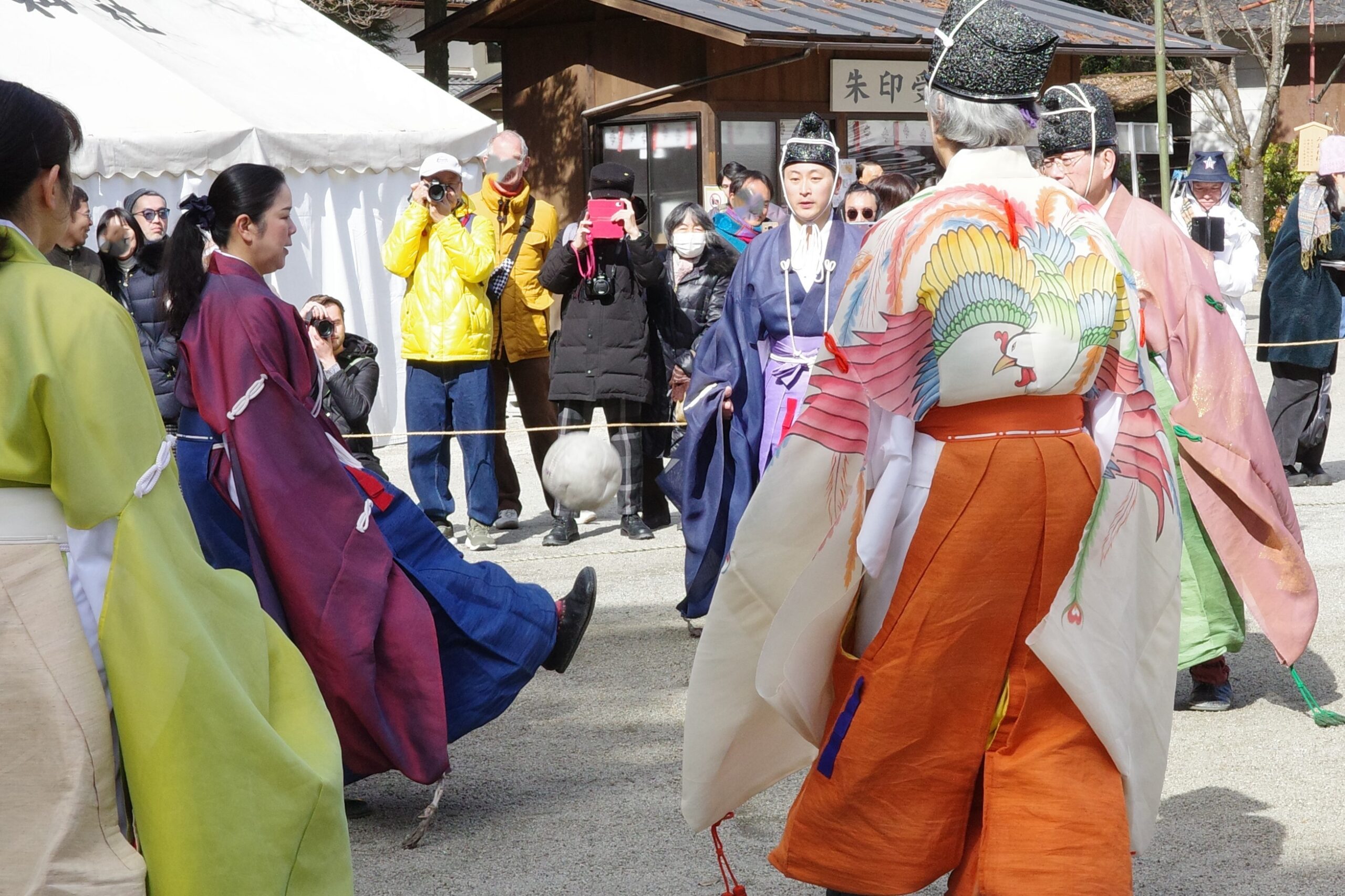
When the player kicks the ball, he/she should call out to other players in order to avoid accidents such as kicking another player’s body or foot. The calls are “Ari” “Yaa” or “Ou”. They derive from the spirits of the mari (ball), Geanrin, Shunyouka, and Shuon.
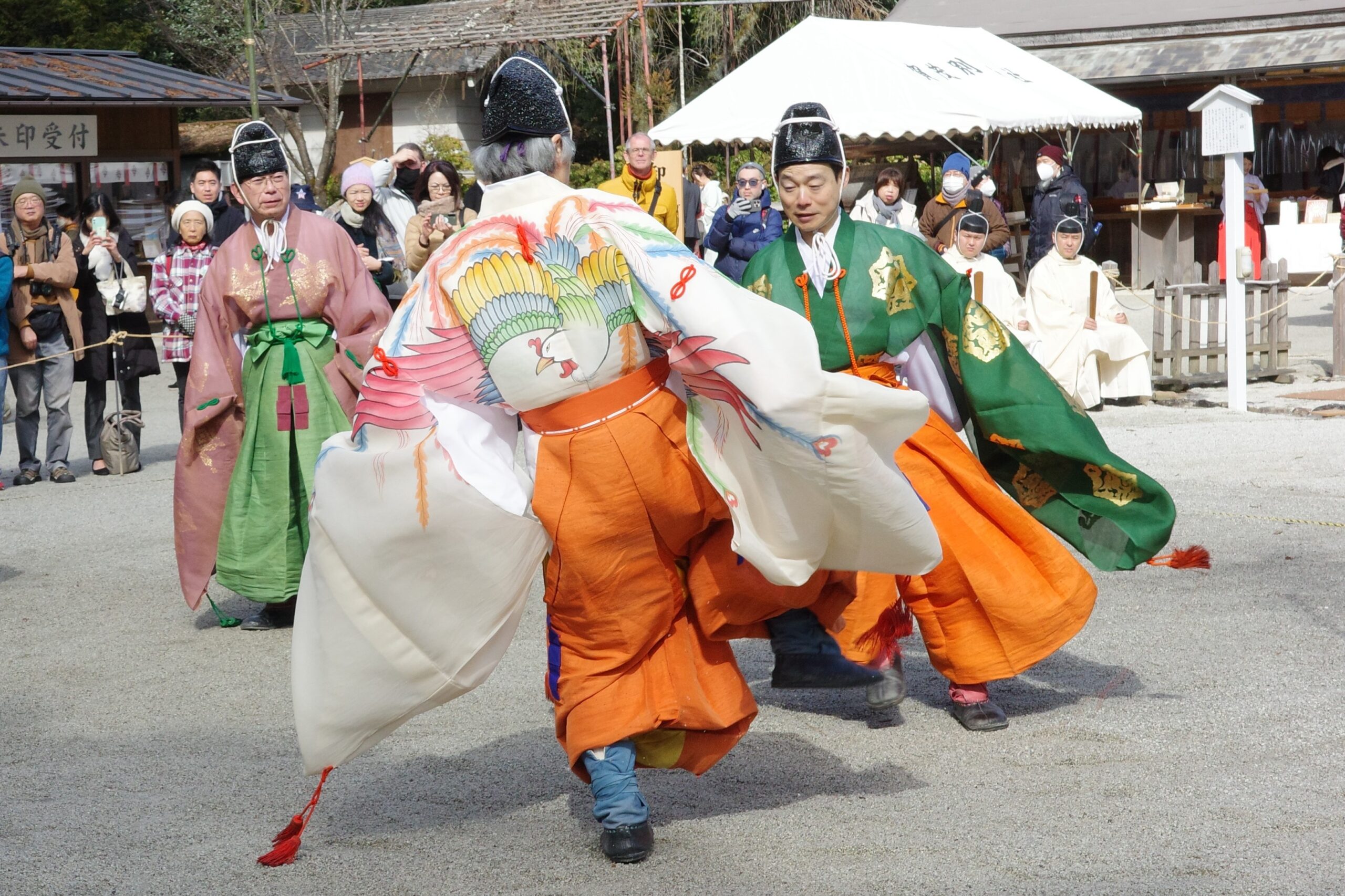
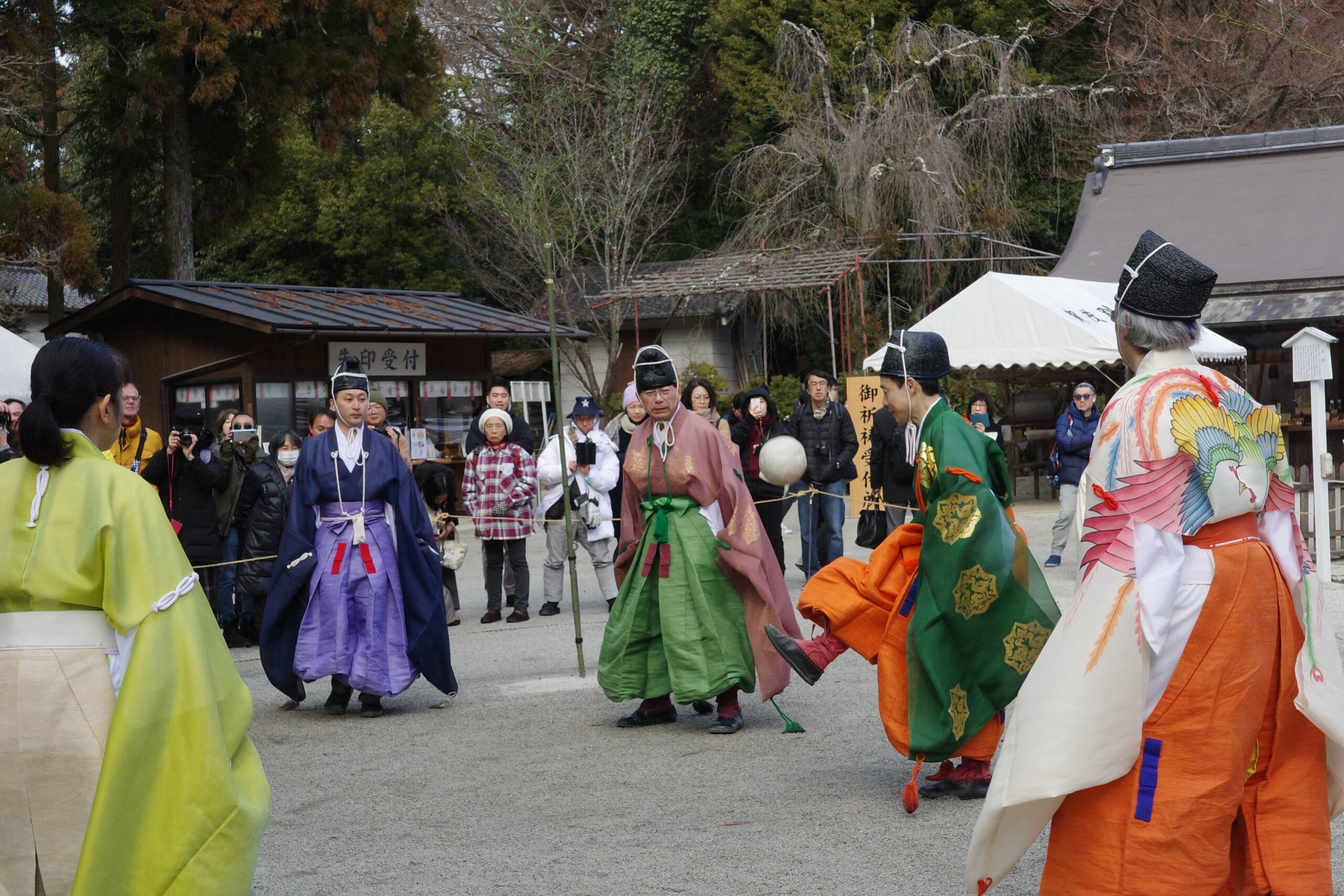
In the game, a player should not move his/her upper half of the body, and has to shuffle his/her feet (move his/her legs forward without letting his/her feet leave the ground). When a player kicks the ball, he/she should not bend his/her knee. It is good that the sole isn’t shown and the kicking position of the ball is as near the ground as possible. Further, from the spiritual aspect, even if the ball flies from a difficult direction, the player should put on the appearance of calm, a player sometimes should kick comically the ball so that an audient doesn’t get bored, and the player never show lowering looks. It’s tough going for the kemari players.




(Rally)
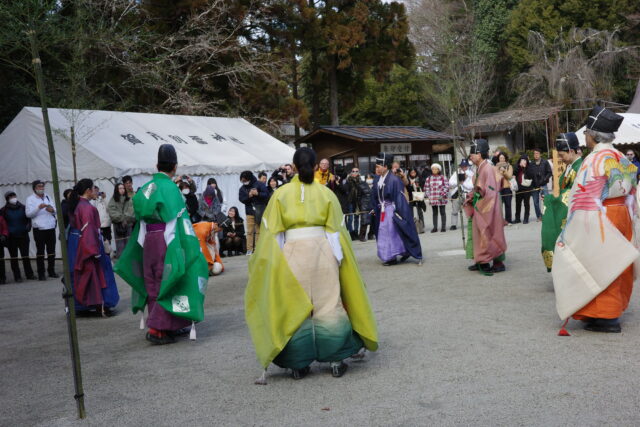
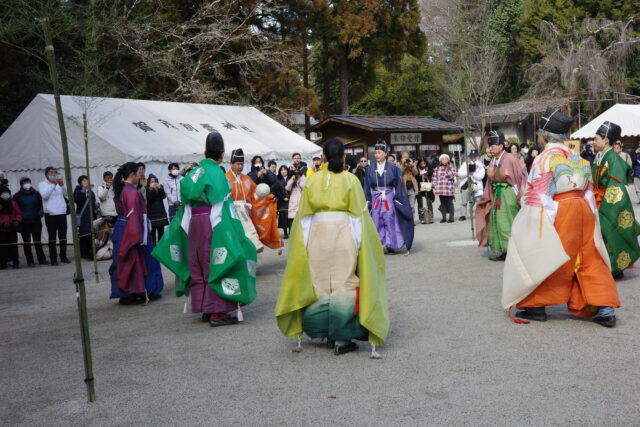
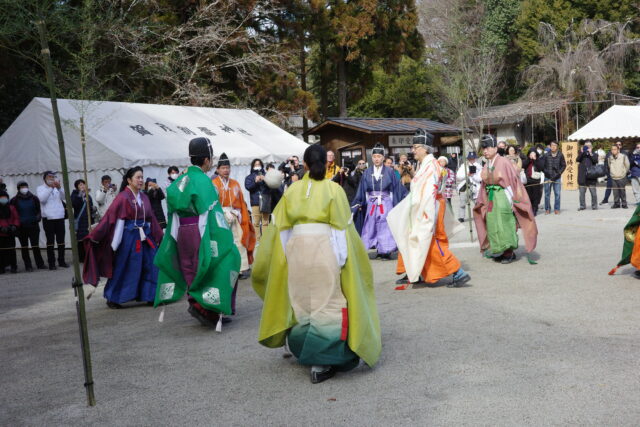
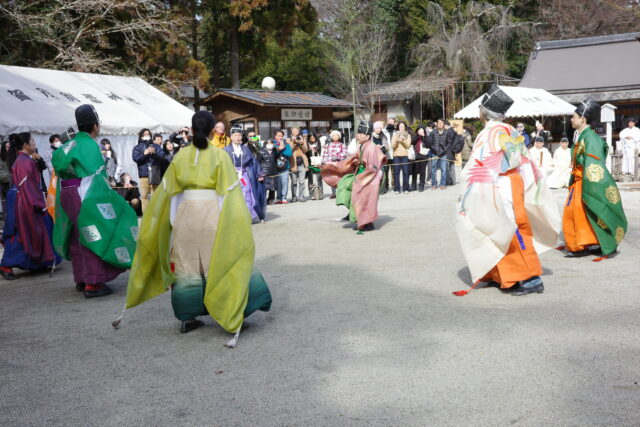
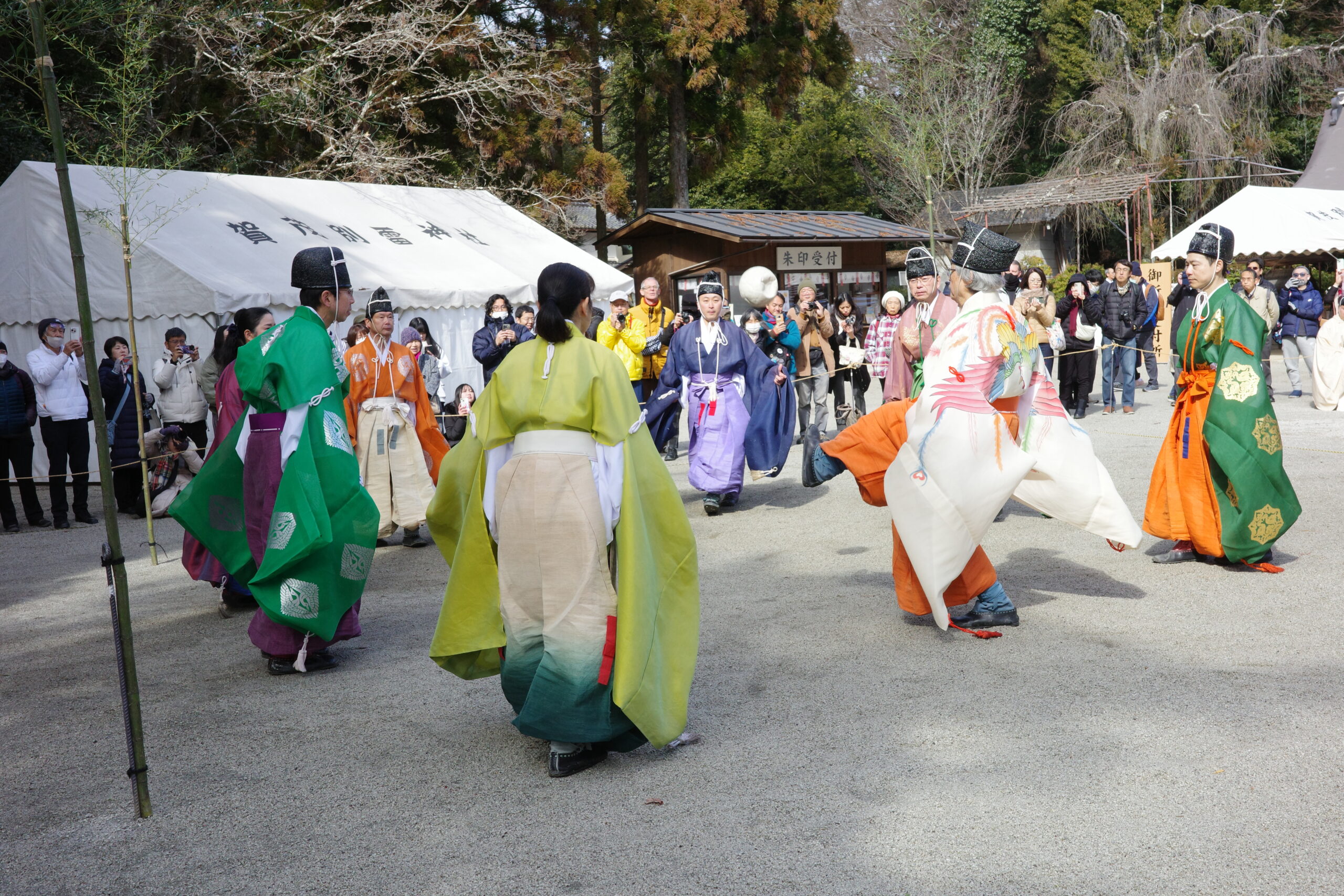
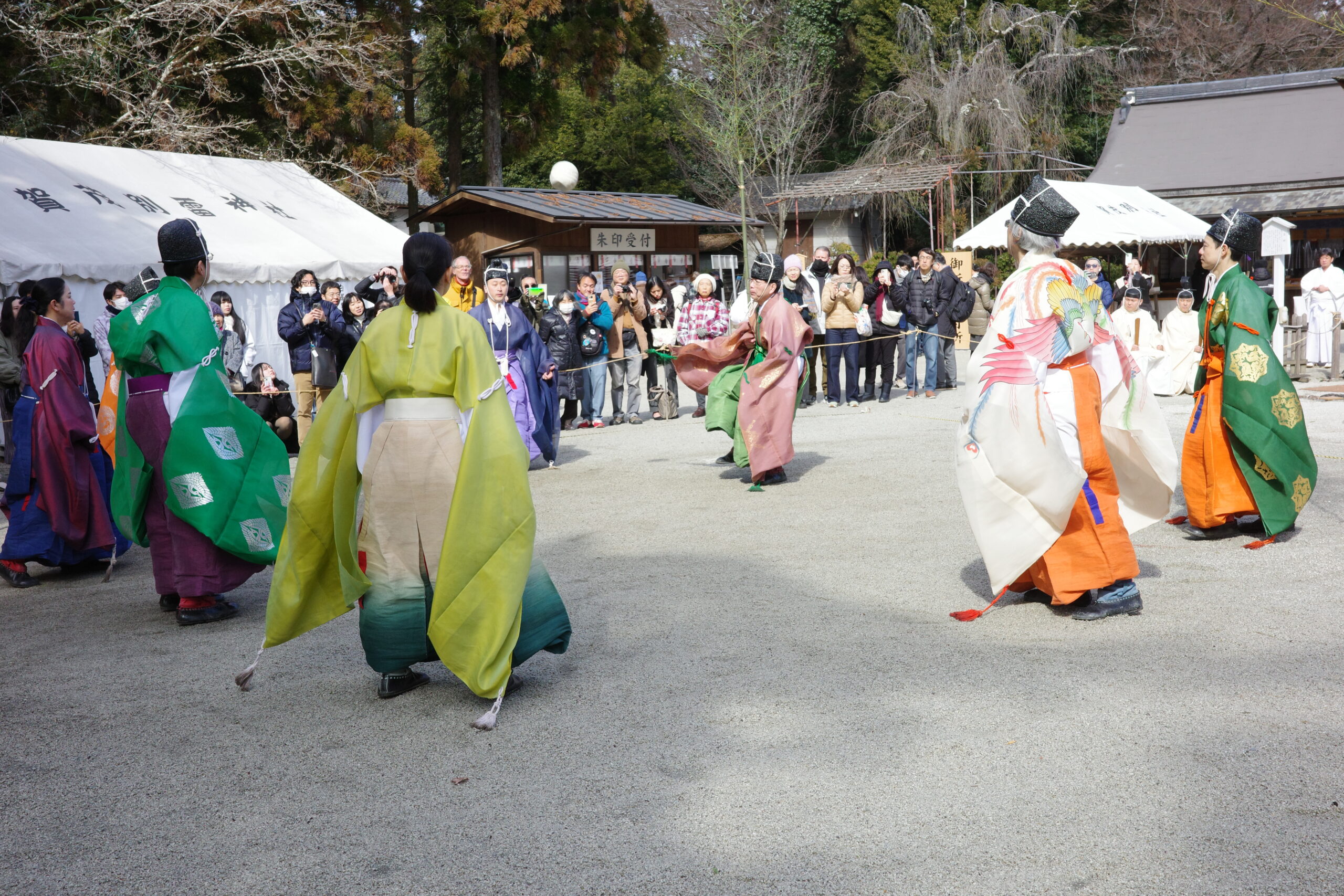
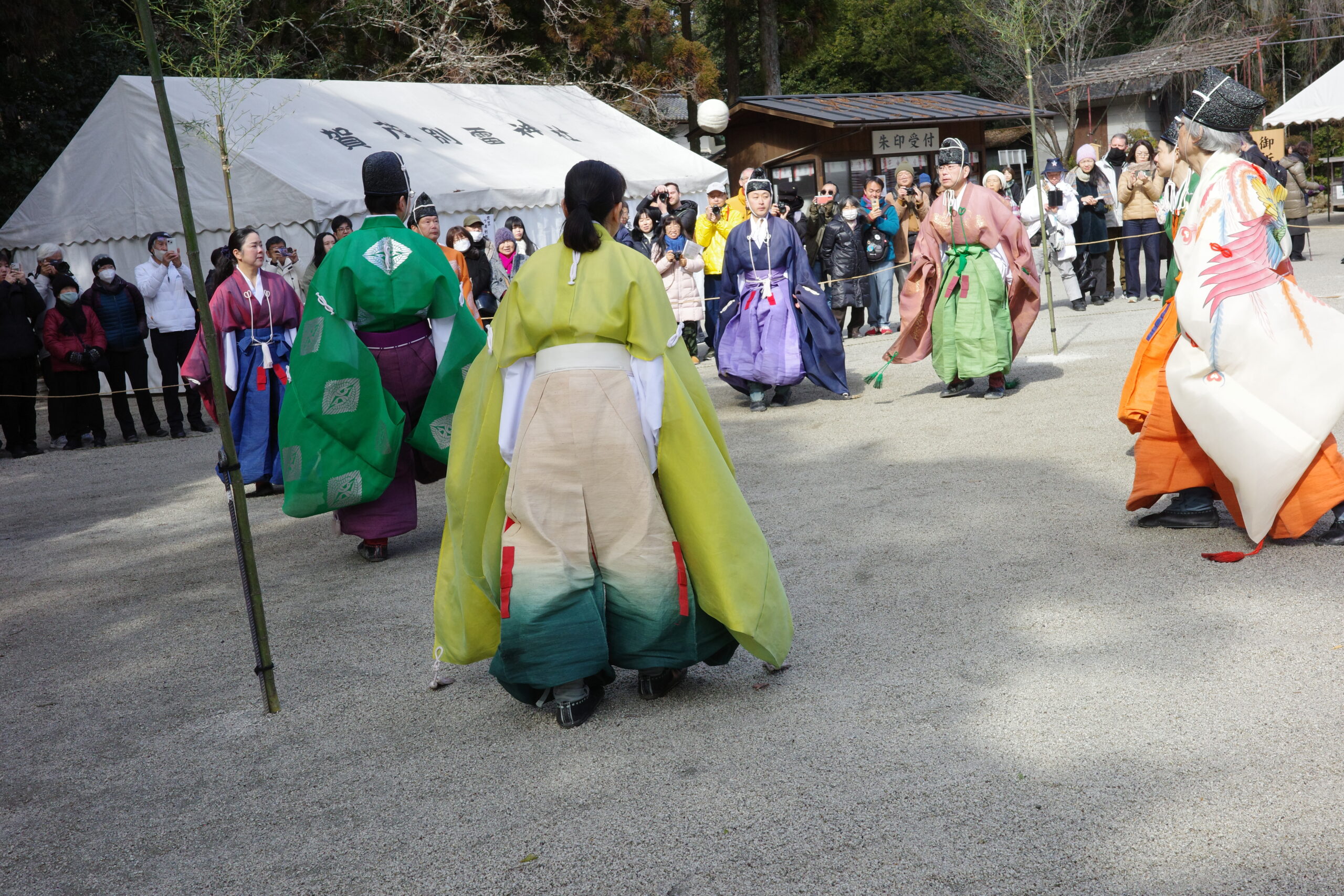
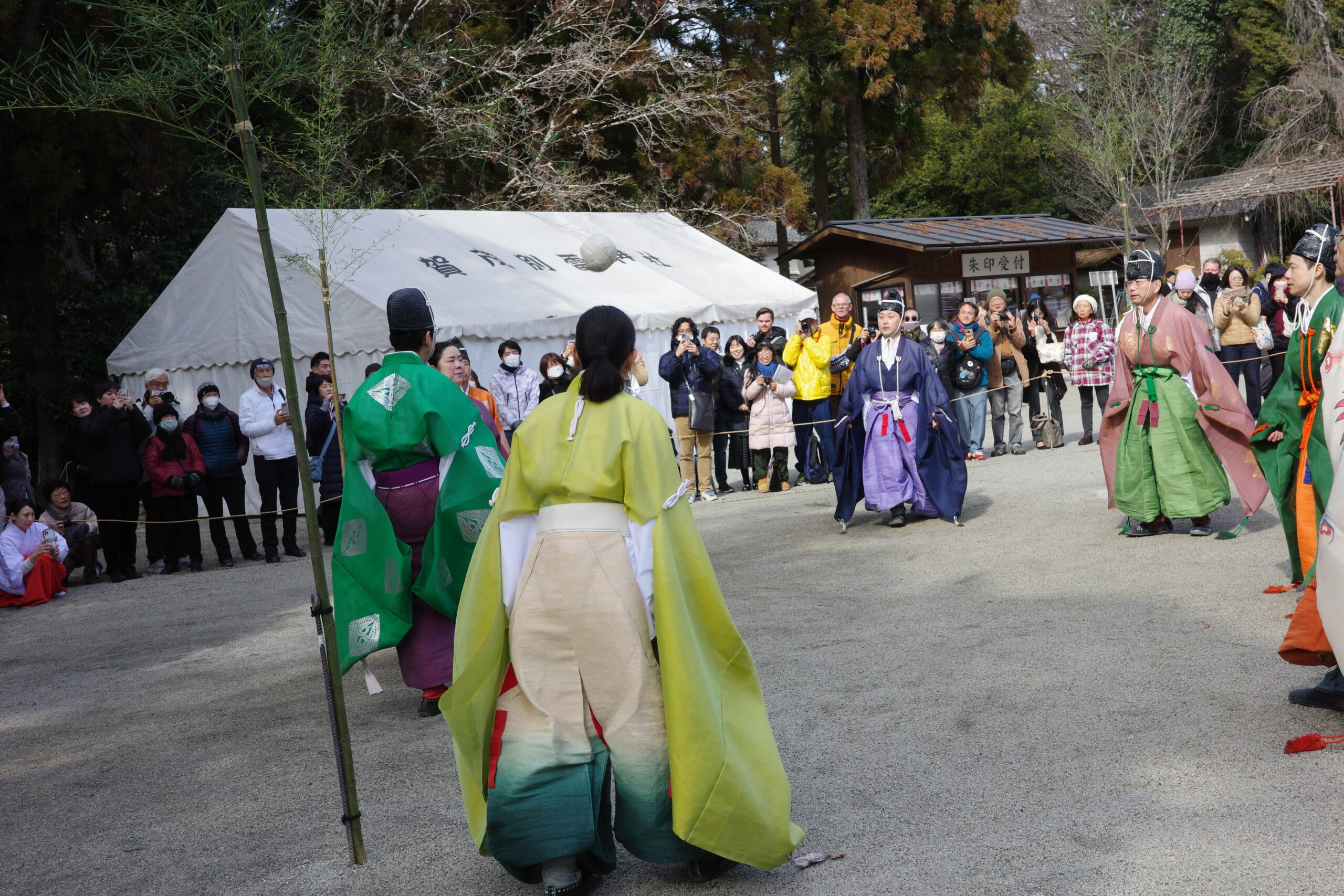
As described above, the kemari is the ball game in which it is important for the players how the rally is continued even a little longer, but, as apparent from the players’ costumes and shoes, and the ball used, it’s very difficult. On that day, however, the players showed us the fruit of their daily practice! When the rally was continued, the venue fell silent, and only player’s calls “Ari”, “Yaa”, and “Ou” echoed. (The rally was continued in order of 1 to 10 in the following photos.)
-
1.
2.
3.
4.

5.
-
6.
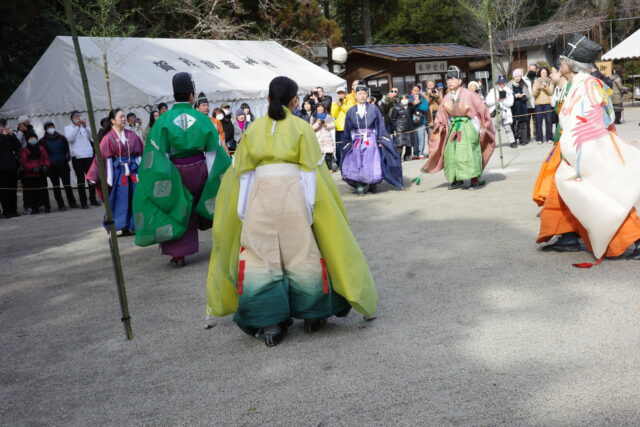
7.
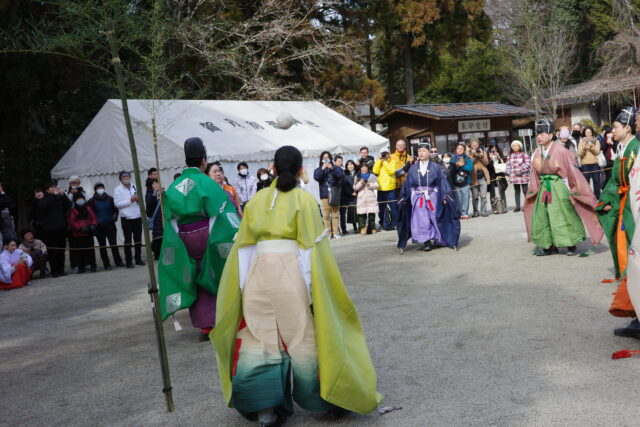
8.
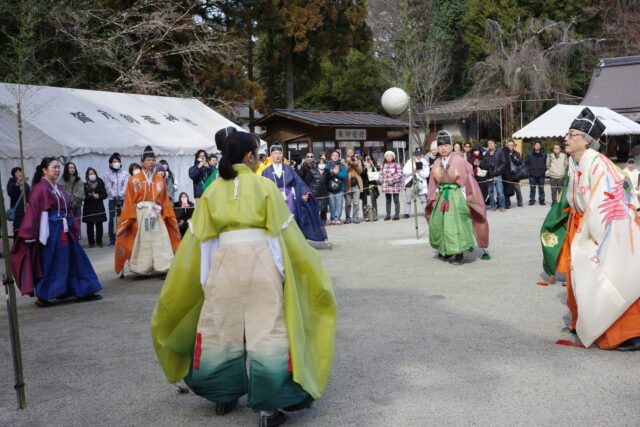
9.
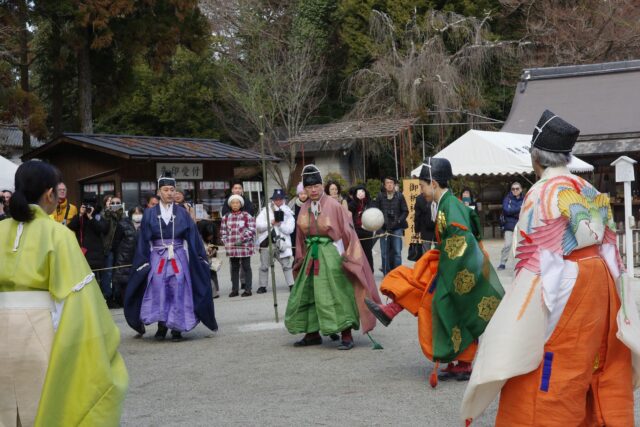
10.
(Finish of Kemari)
The kemari has no rule of the play time. The leader reads the physical conditions of the players and the conditions of the ball during the game, decides the end of the game and sends a signal of the end to the players. The players are out one by one as the same as the entrance. The playthrough time of one game seems to be about 15 to 20 minutes. Usually, the game is performed two times.


Leave a Reply