

February 3 is “setsubun” the day before the beginning of spring. The Japanese word setsubun means a division between each two seasons, in other words, one day before the first day of each season, and so setubun comes 4 times per year. However, we began to call only the day before the first day of spring Setsubun at some point in the past, because old Japanese people recognized that spring was mostly esteemed as the beginning of the year. In the past, people believed that “oni” (evil or ogre, meaning a diseases and disaster, particularly epidemic) generated at a time of change from winter to spring, and performed events event for driving the oni away. One of the events is throwing beans. The throwing beans is an event for driving the evil away and praying for good health in the new year.
The throwing beans is performed not only in each family but also in shrines and temples. Every time I watch a scene in which actors in Kamishimo (a samurai costume) or beautiful maiko or geisha girls throw beans from a high stage in TV, I feel that spring soon will come. In some shrines and temples, various setsubun events are performed, and Daikakuji Temple in Amagasaki is famous for the setsubun festival.
I’d like to introduce the setsubun events performed in Daikakuji Temple in Amagasaki.
You’ll reach Teramachi in which 11 temples are gathered when you go in about 5 minutes on foot from the Amagasaki Station in Hanshin Railway. Daikakuji Temple stands in Teramachi. It was a small town created in the first stage of the Edo Period in which some temples standing on a planned site for building Amagasaki Castle were removed and reconstructed. In the noisy area filled with the downtown taste around the Amagasaki Station, only the area is filled with a quiet and calm atmosphere.
Daikakuji Temple, in which the setsubun events introduced below, were performed, is the oldest temple in the existing temples in Amagasaki. It is said that Torodo hall (lantern hall) built in 605 under the orders of Shotokutaishi was rebuilt as a temple in 1275.
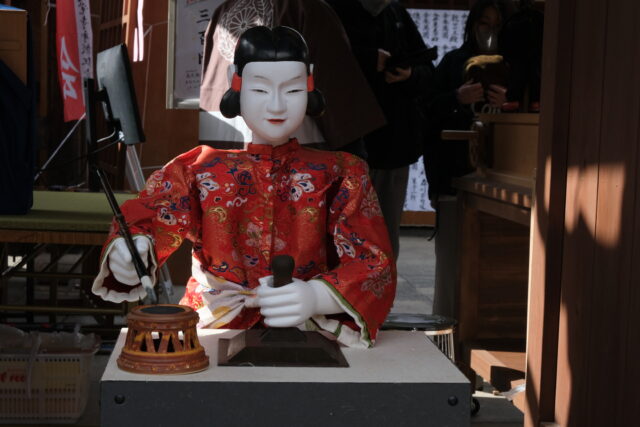
In the setsubun festival, in addition to the throwing beans, “Kyogen” (Noh farce) and a string puppet show were performed, and “mikuji” (a fortune slip) and “shuin” (a red seal) were sold by string puppets. These performances are only one time per year, and so the precincts were crowded with many visitors.
1. Ashikari String Puppet Show
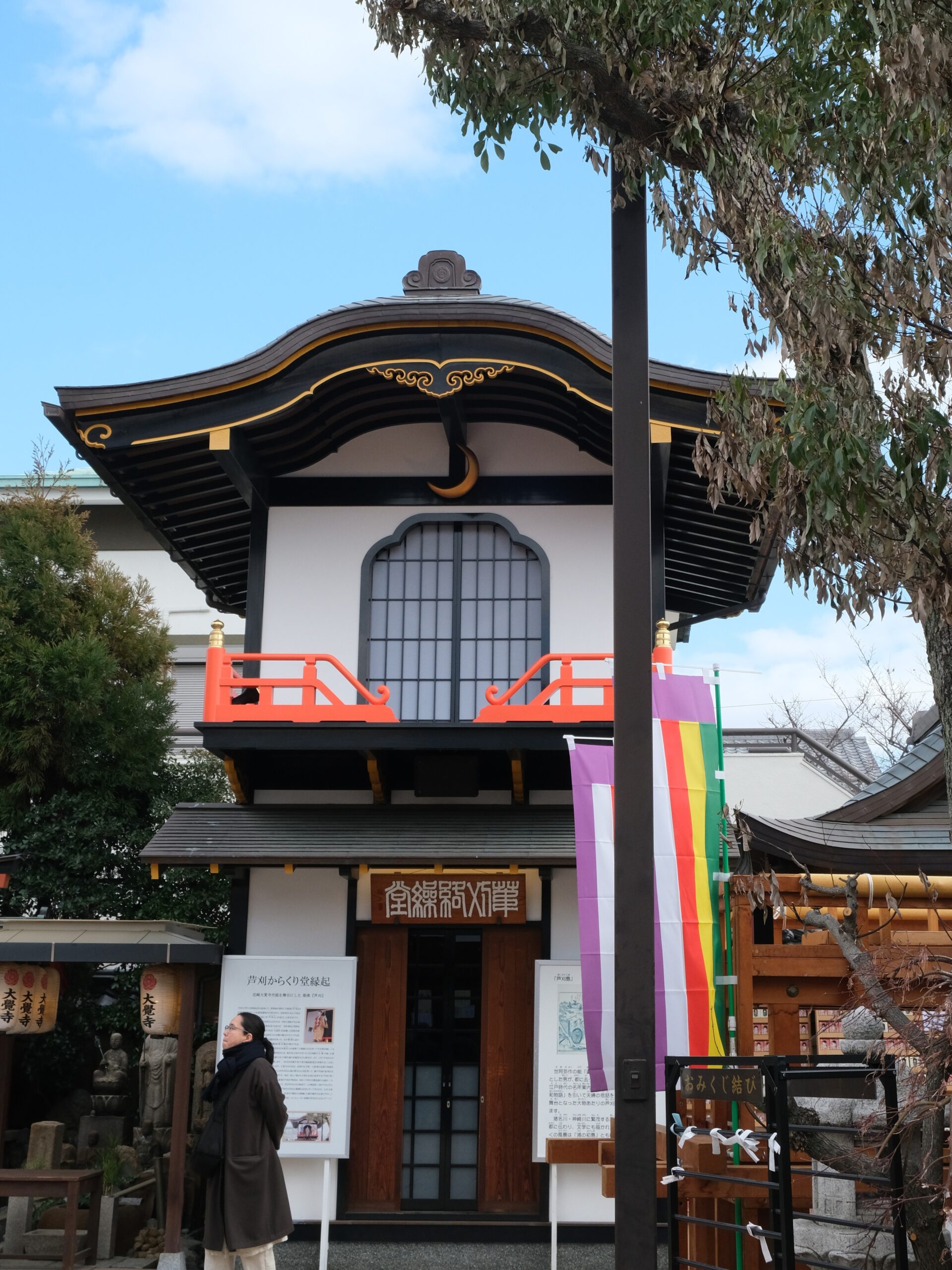
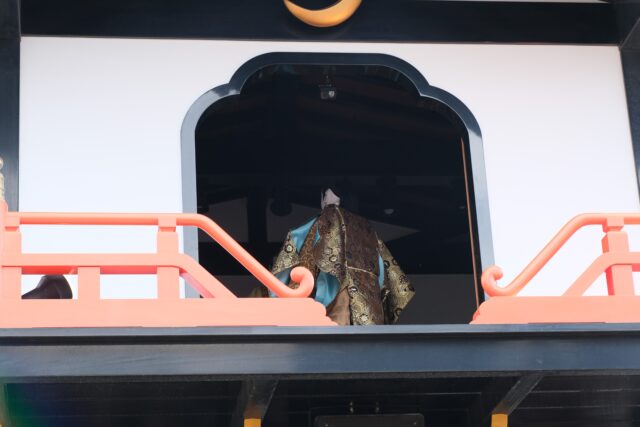
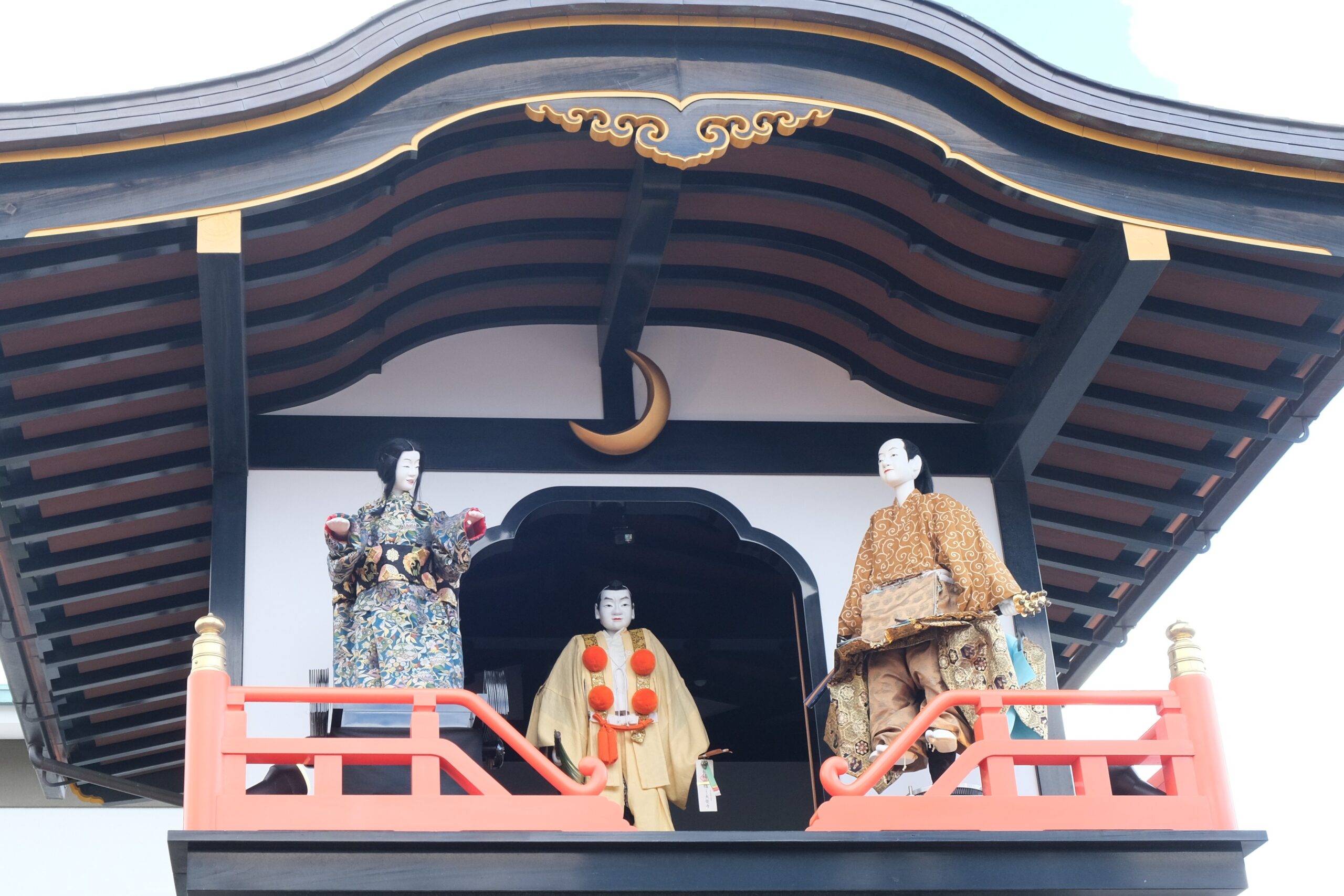
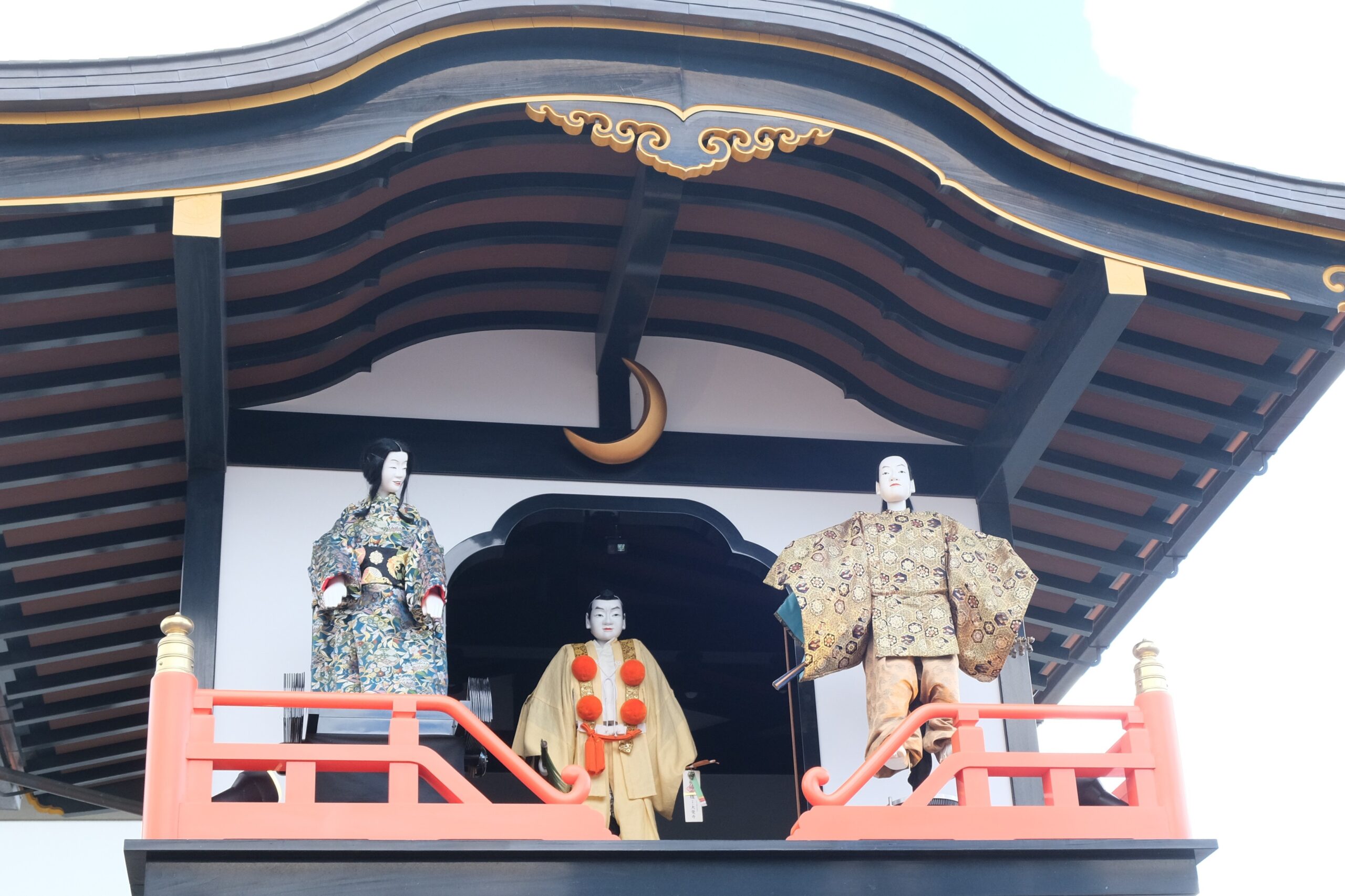
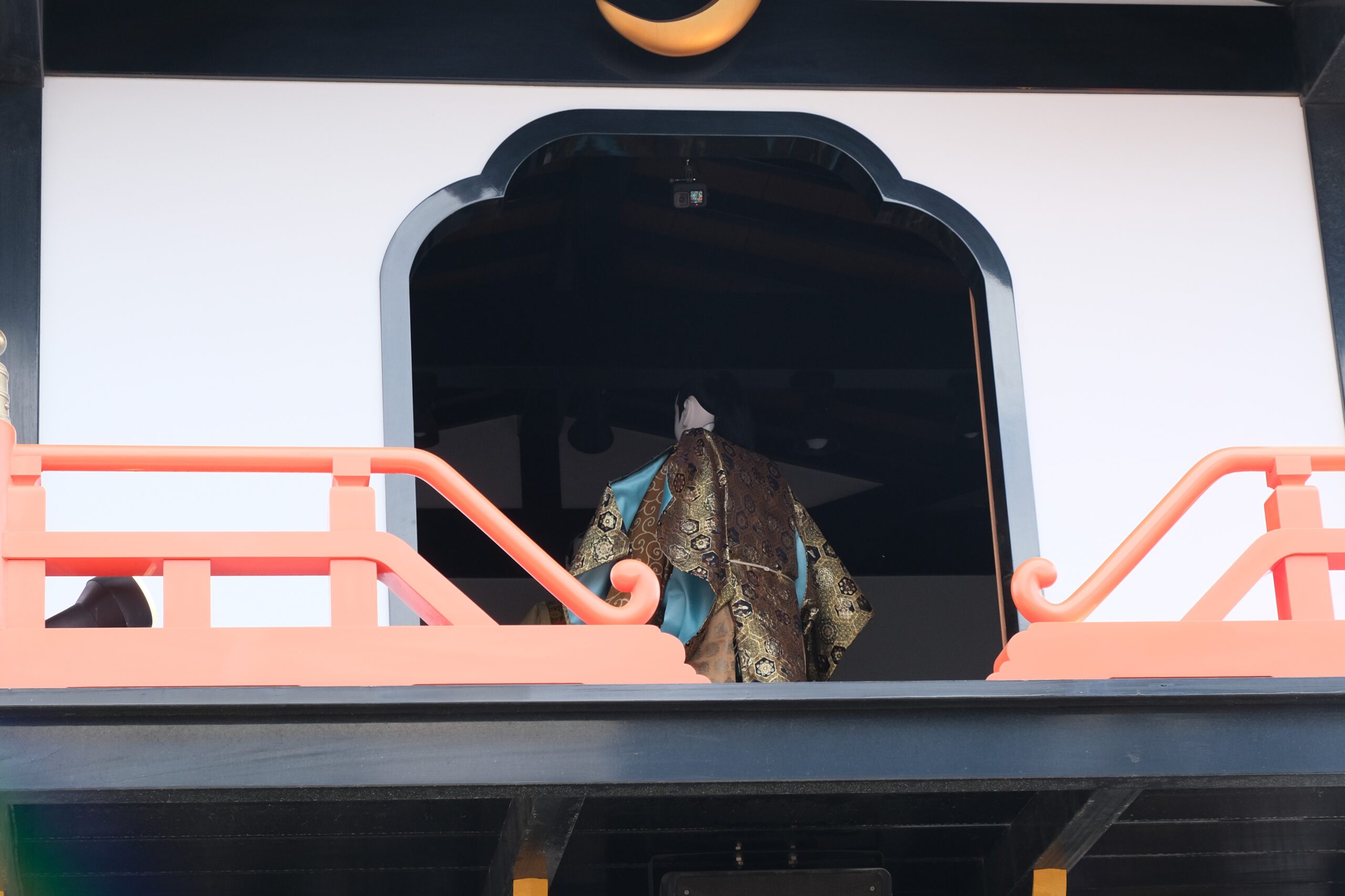
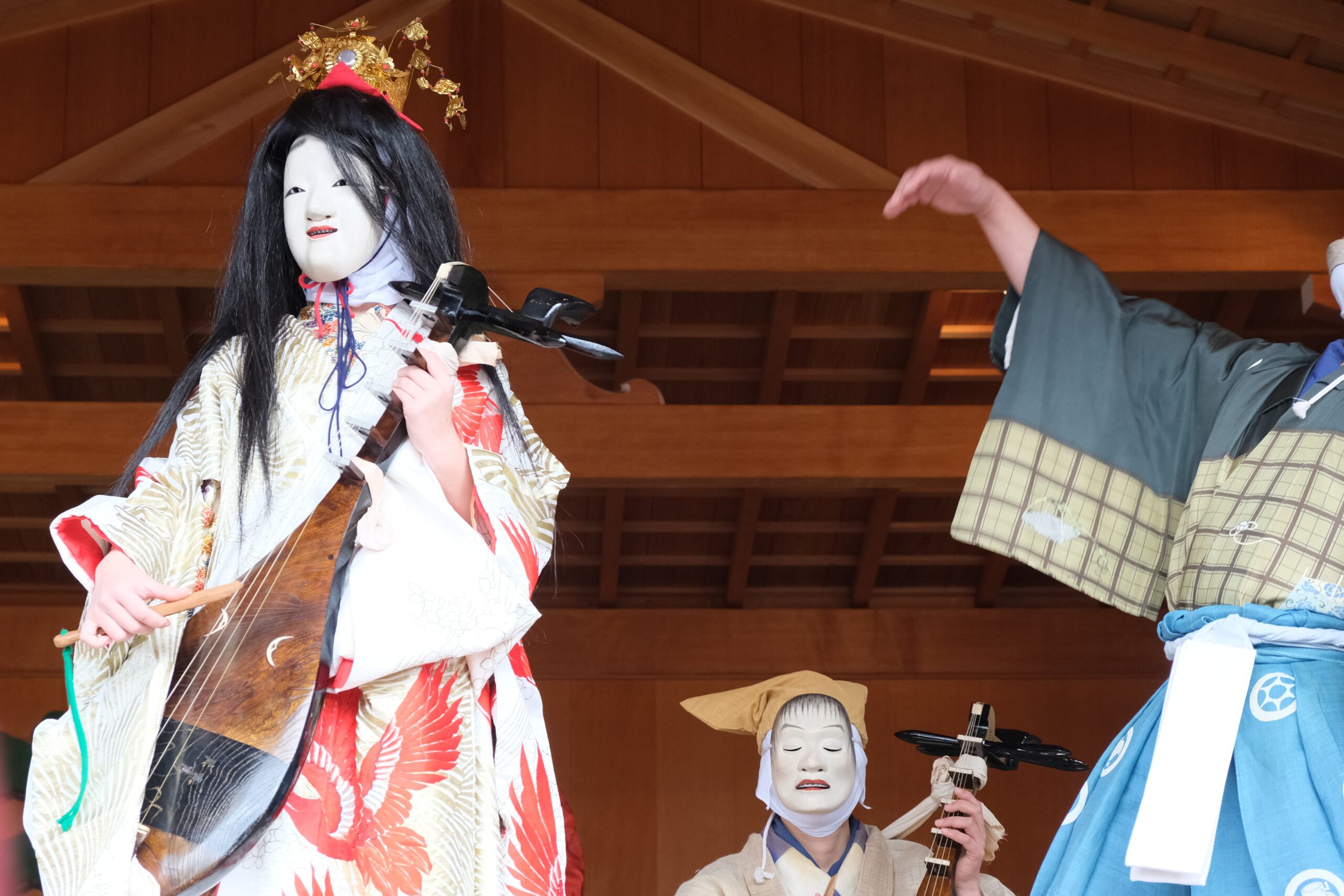
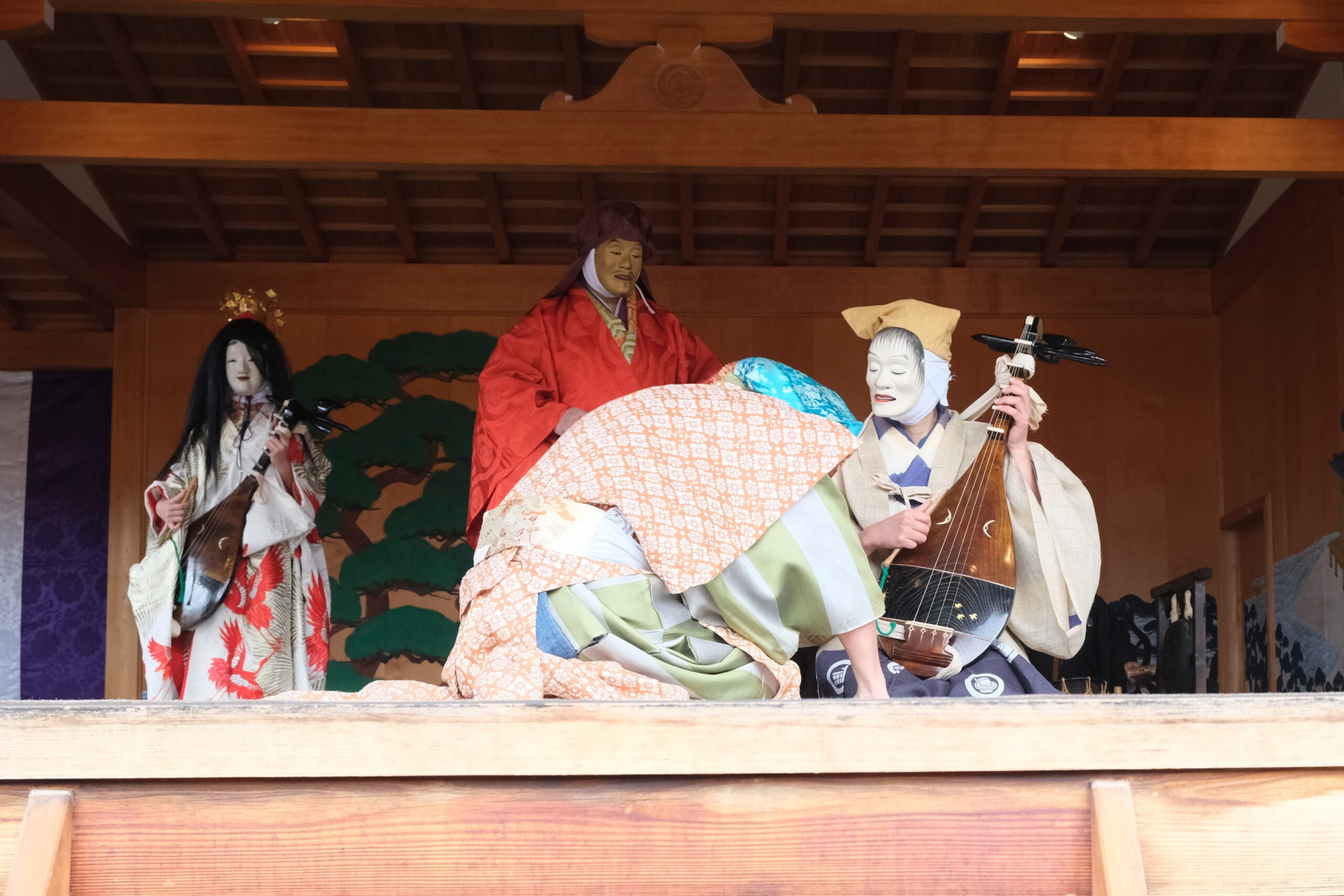
The string puppet show was performed in Ashikari String Puppet Hall in the precincts. The string puppets used in this show were made in a faithful manner of traditional techniques handed down from the Edo Period. On the other hand, as the motive power to use for moving the puppets, air cylinders controlled by a computer is used instead of operations of pulling strings by experts. It is the stunning combination of the traditional techniques and manufacturing know-how in Amagasaki. The story is: the separated couple made up by
Karakurido Hall
-
Yamabushi (Buddhist monk)
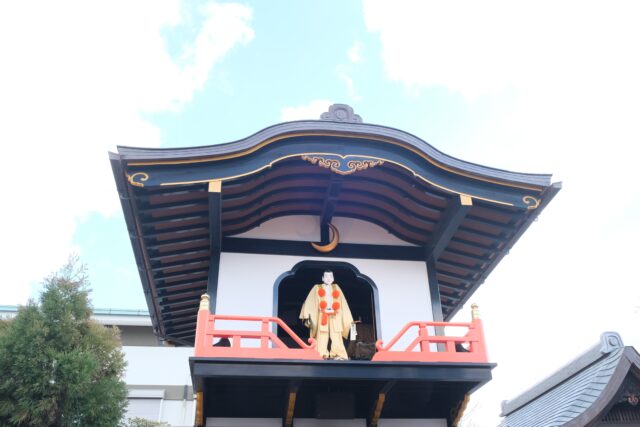
Quick Chanbe of Costume (the same puppet as above)
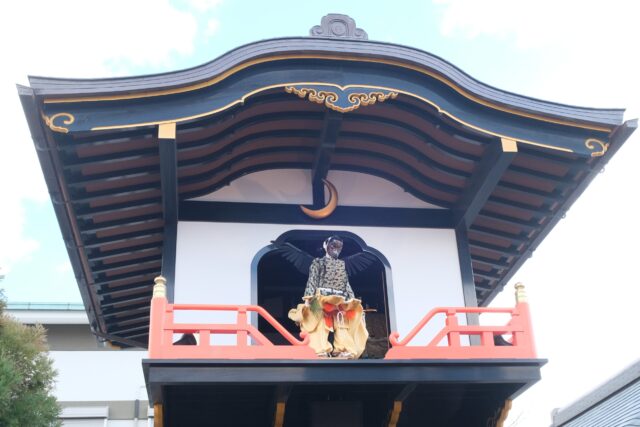
Man

Oxcart in which the wife was

-
His wife appeared. (quick change from the oxcart)
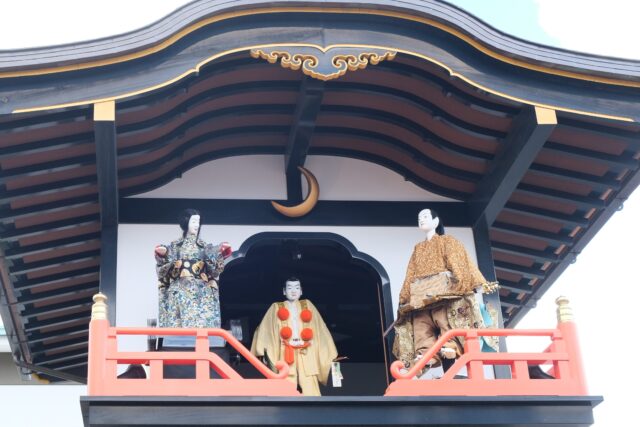
The couple made up by waka poetories. (Quick change of the costume of the husband)

They decided to go to the miyako together.

Happy End



2. Throwing Beans
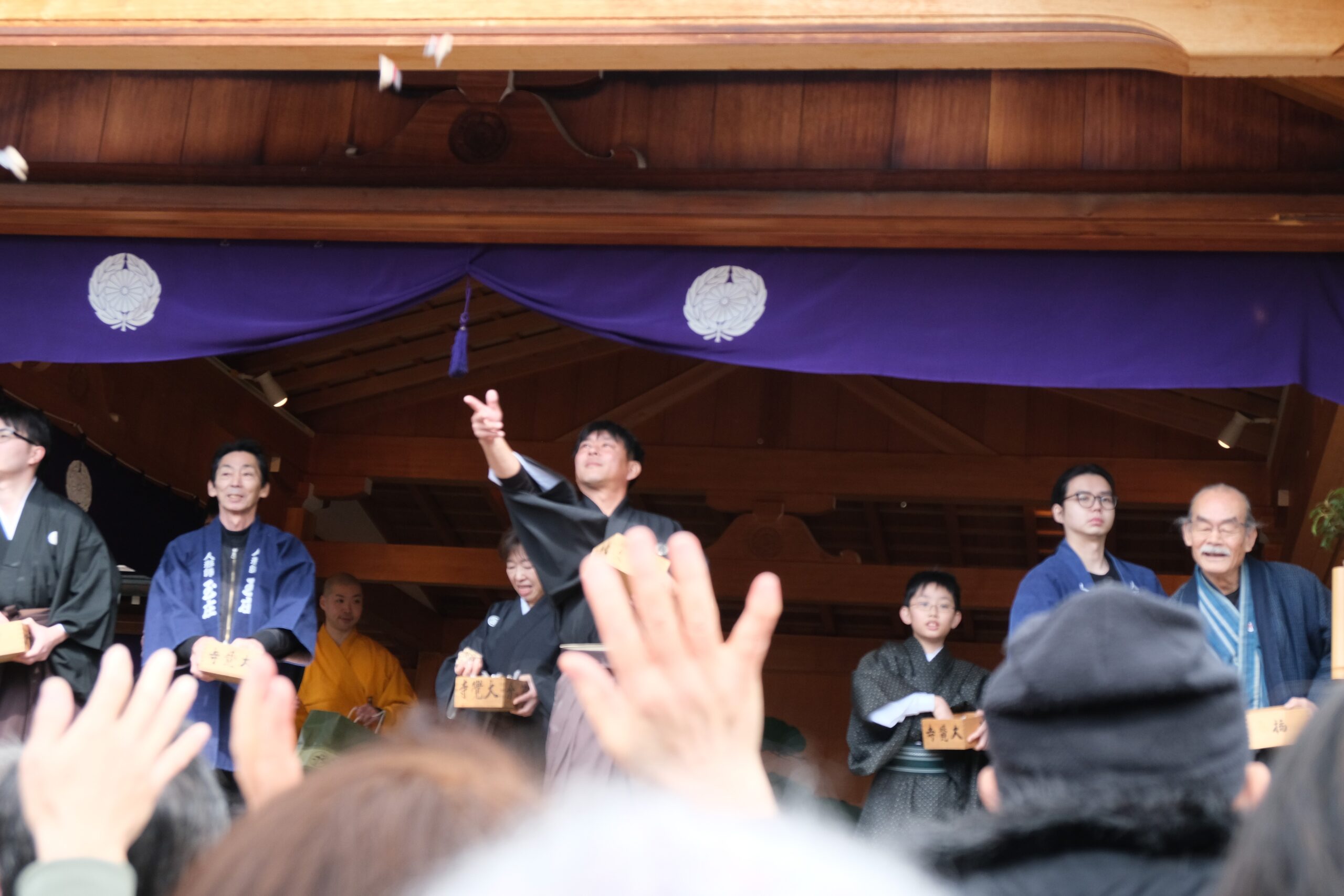
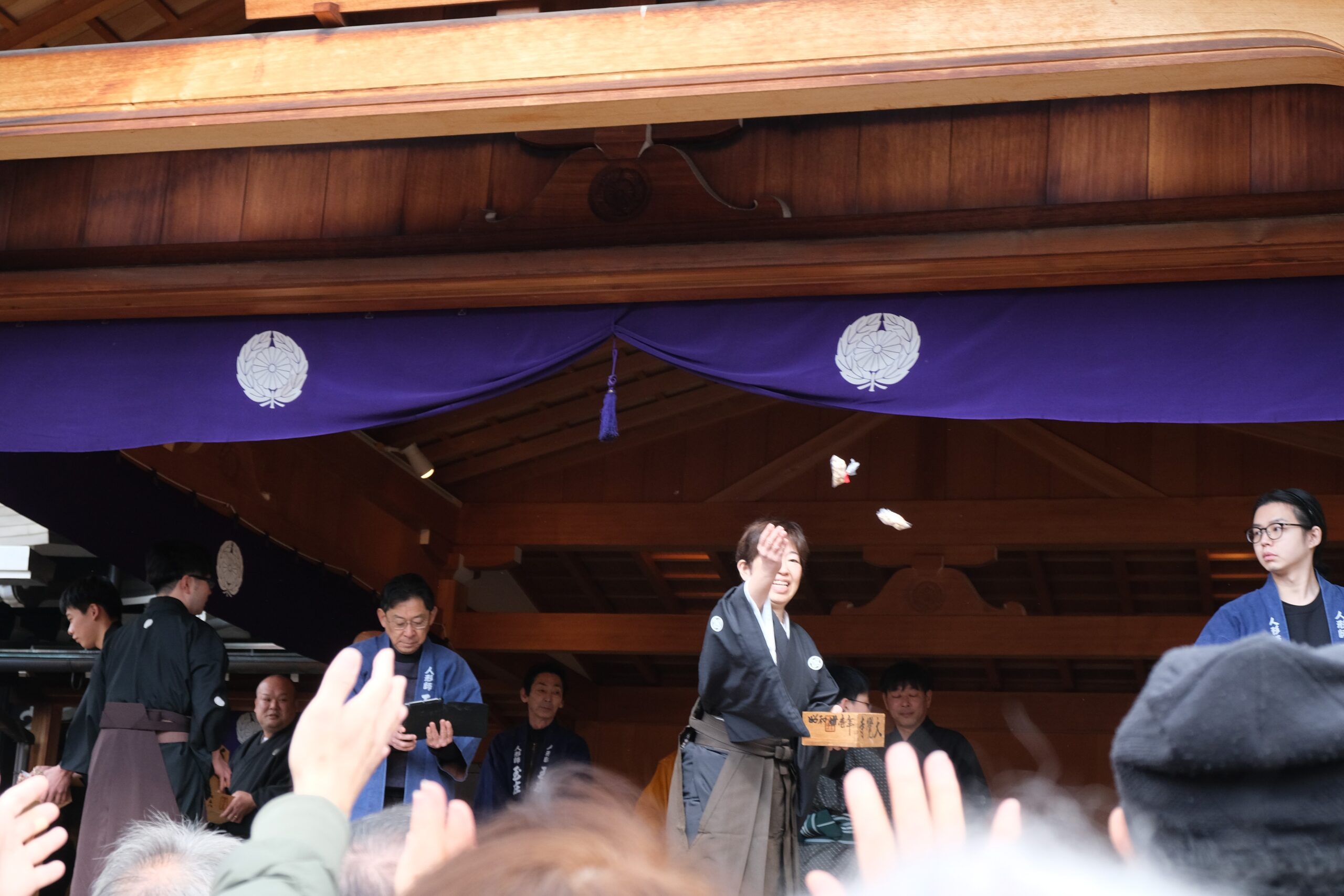
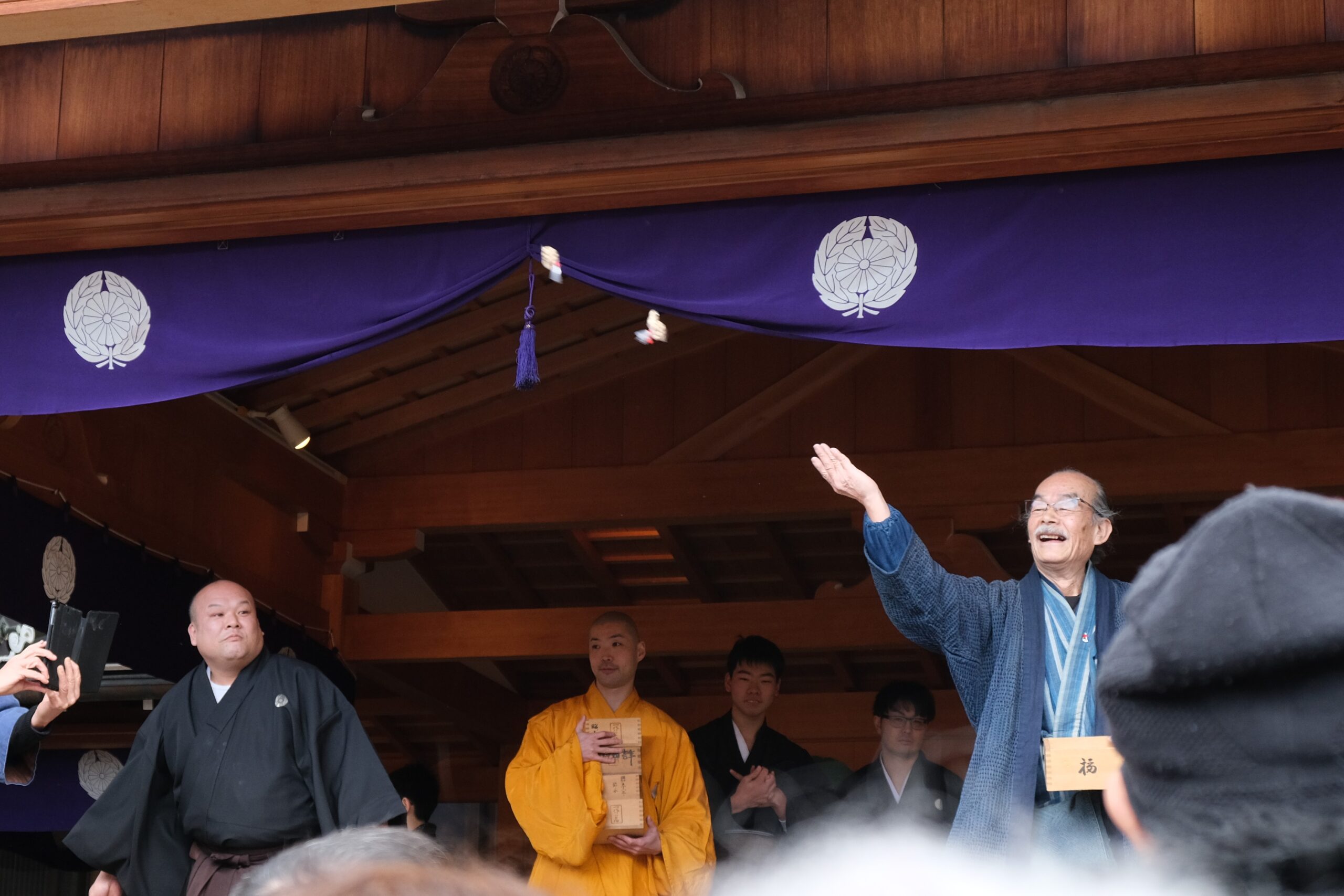
After the performance of the puppet show, the throwing beans was performed. Small bags in which several beans were included were thrown from the stage. I couldn’t catch the bags directly, but I pecked up one bag dropped by my feet.

3. Kyogen
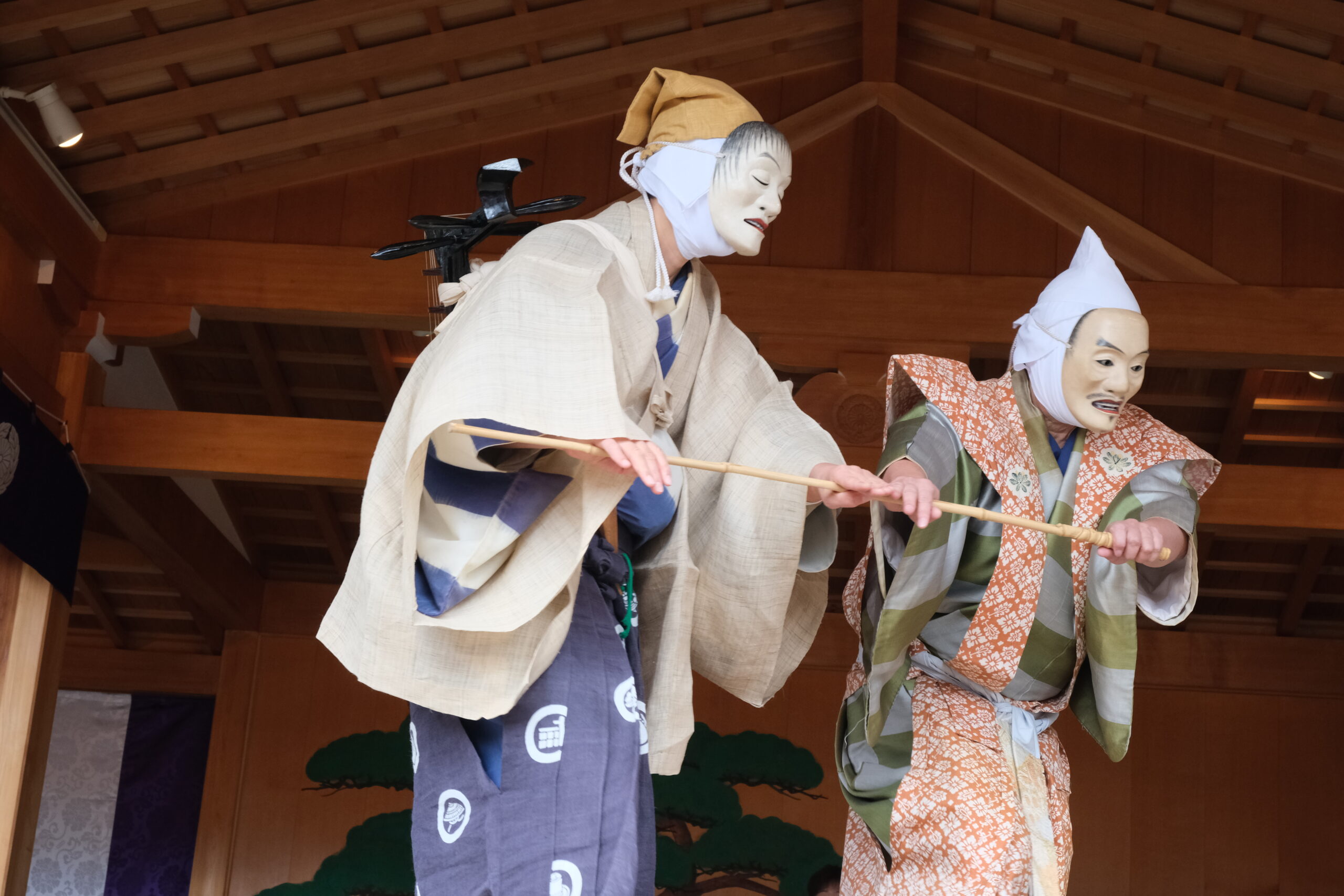
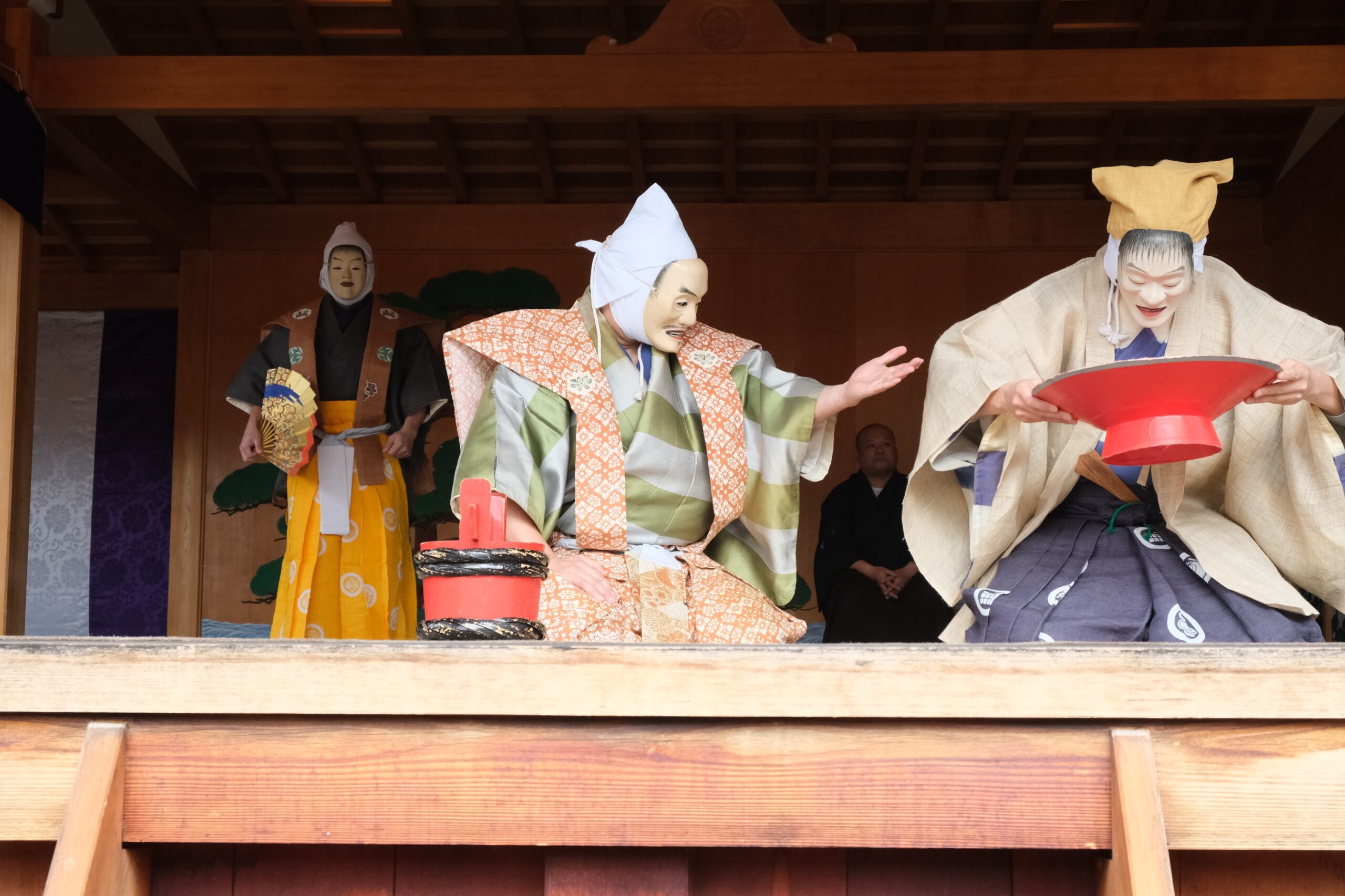
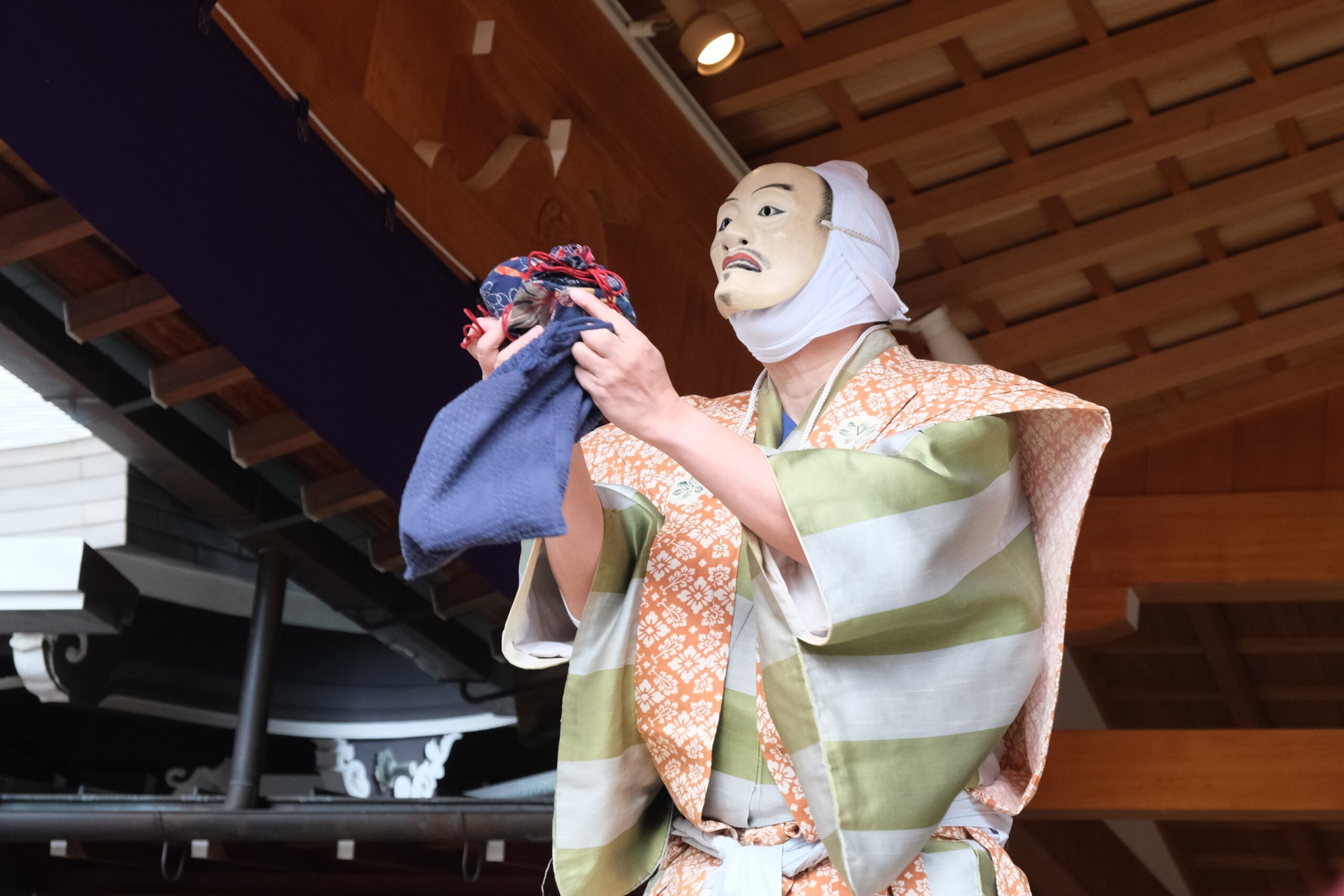
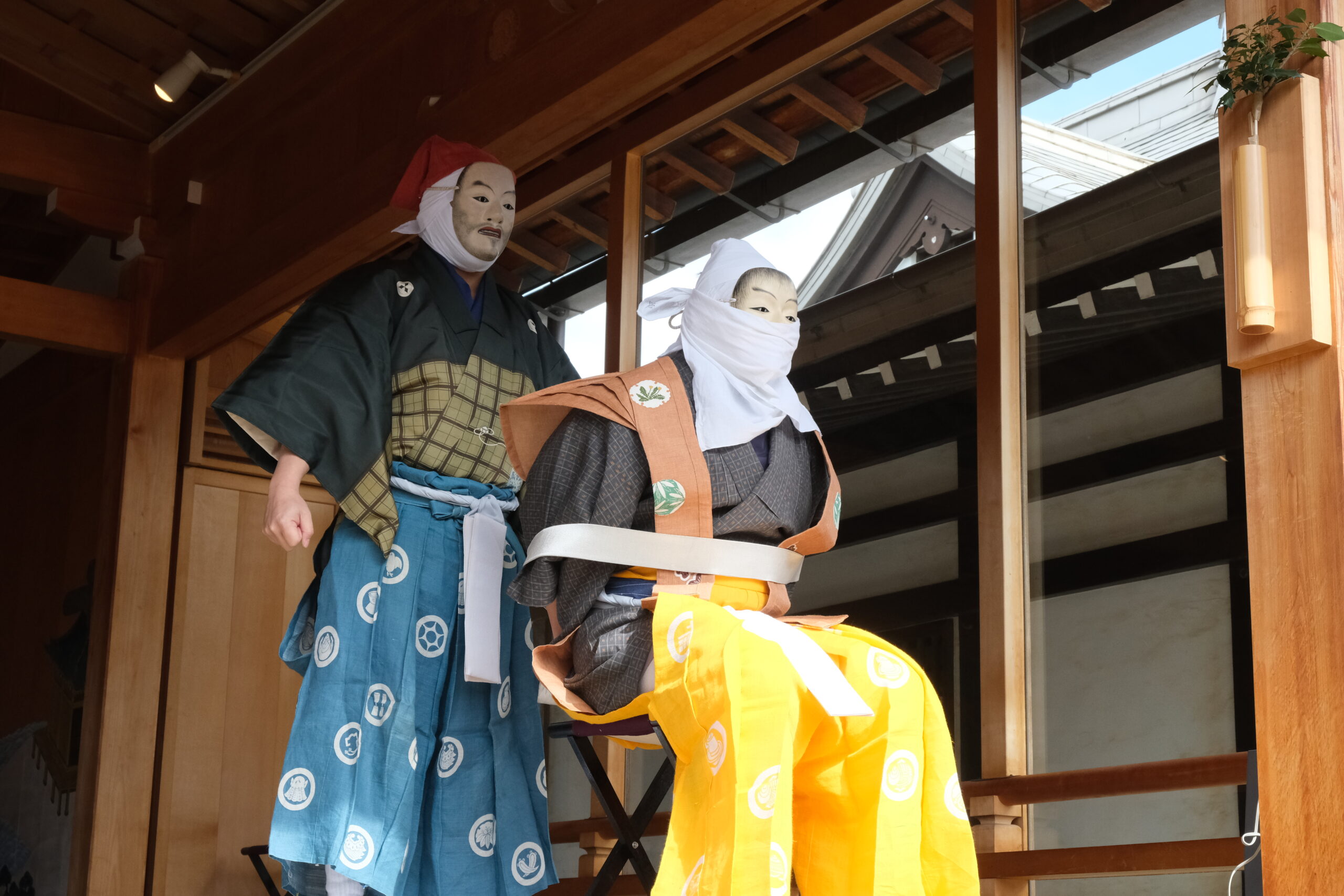
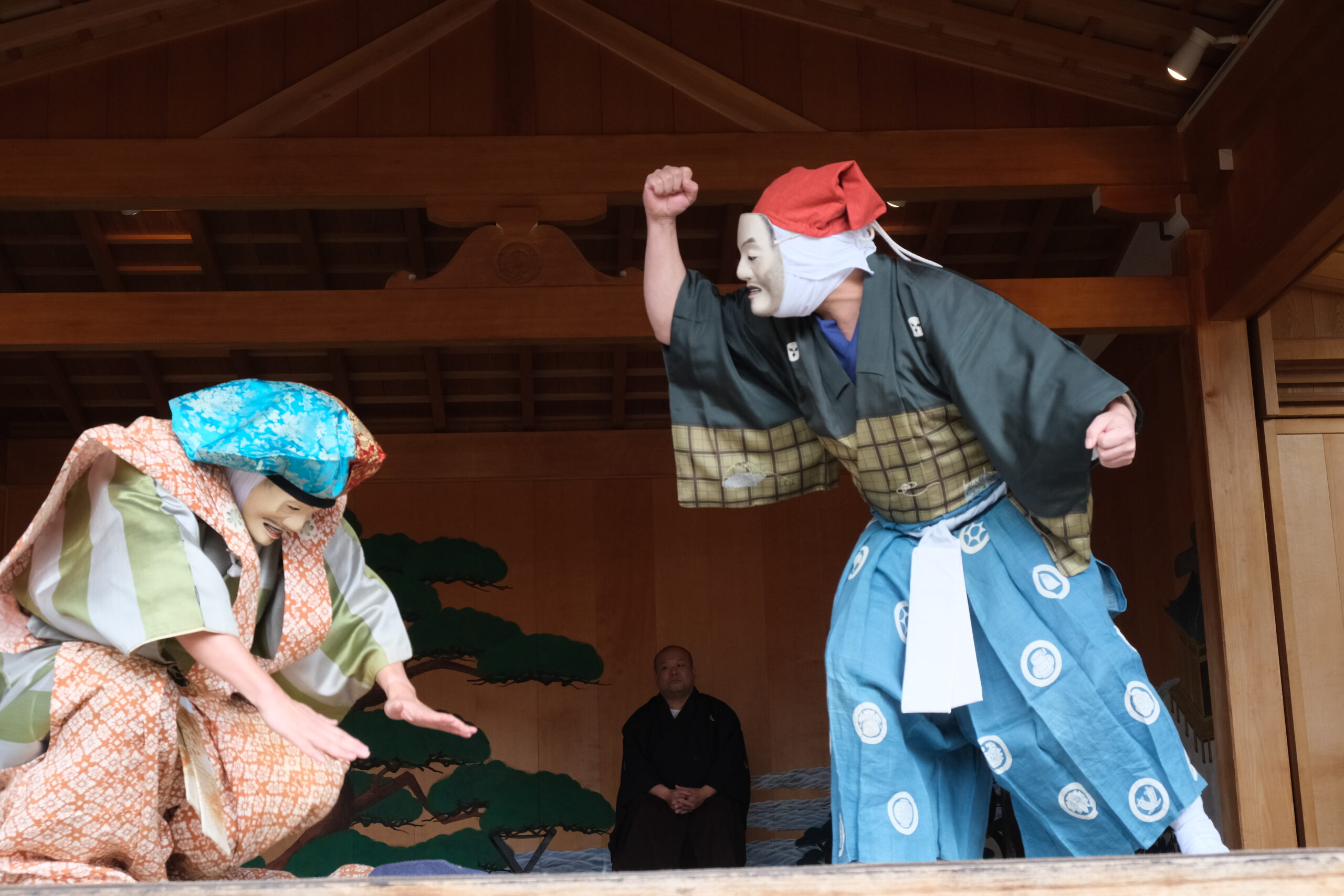
Kyogen is a 600-year-old traditional Japanese comic drama that uses stylized movements and dialogue to make people laugh. It is often performed between serious Noh plays.
Although, in Daikakuji Temple, Kyogen farces had not been performed for a long time, program records of Kyogen, made in the Edo Period, were found in the early Showa Era, and then the Kyogen was revived at 1953. Now, 5 kinds of the farces are performed once every year. In the Kyogen played in Daikakuji Temple, an incident, state, or emotion is represented only by action.
Noh Stage
The throwing beans and Kyogen were performed on the stage.









4. String Puppet
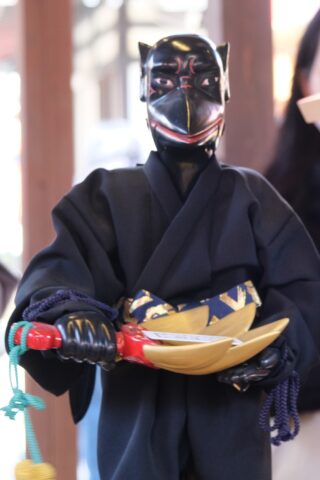
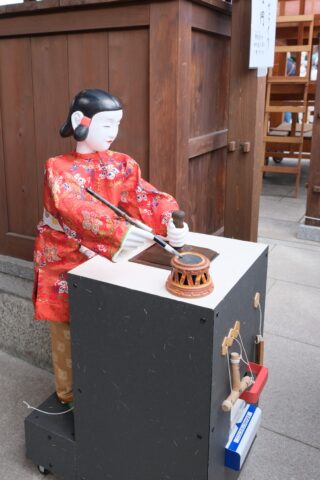
There are two kinds of string puppets: one gives fortune slips and the other gives a red seal. I managed to operate the puppets pulling strings with the assistance of the experts, thought it was very difficult to do it. I got “shokichi (slightly good luck)” in my fortune slip. The puppets were made using the traditional technique that has been succeeded from the Edo Period.
-
He gave me a fortune slip.


-
She made a red seal for me.


Leave a Reply