

On smartphones, this page is best viewed in horizontal mode.
The Kamigamo-jinja Shrine is located to the north of Kyoto-City, and has the oldest history in Japan. It was built as a shrine deifying a guardian god of the Kamo Family, who dominated the area once. The enshrined deity of this shrine is Kamowakeikazuchi-no-Okami, who is said to have a force stronger than that of the God of Thunder, and is believed to be a god of avoidance of bad luck, avoidance of troubles, and confident victory. The Kamigamo-jinja Shrine’s formal name is Kamowakeikazuchi-jinjya Shrine, and so the Kamigamo-jinja Shrine is the common name. There are several stories about its foundation, and, according to the shrine’s biography, it has been said that the shrine started from the descent of Kamowakeikazuchi-no-Okami at the bottom of Mt. Koyama during the Emperor Kammu Period (781 to 806).
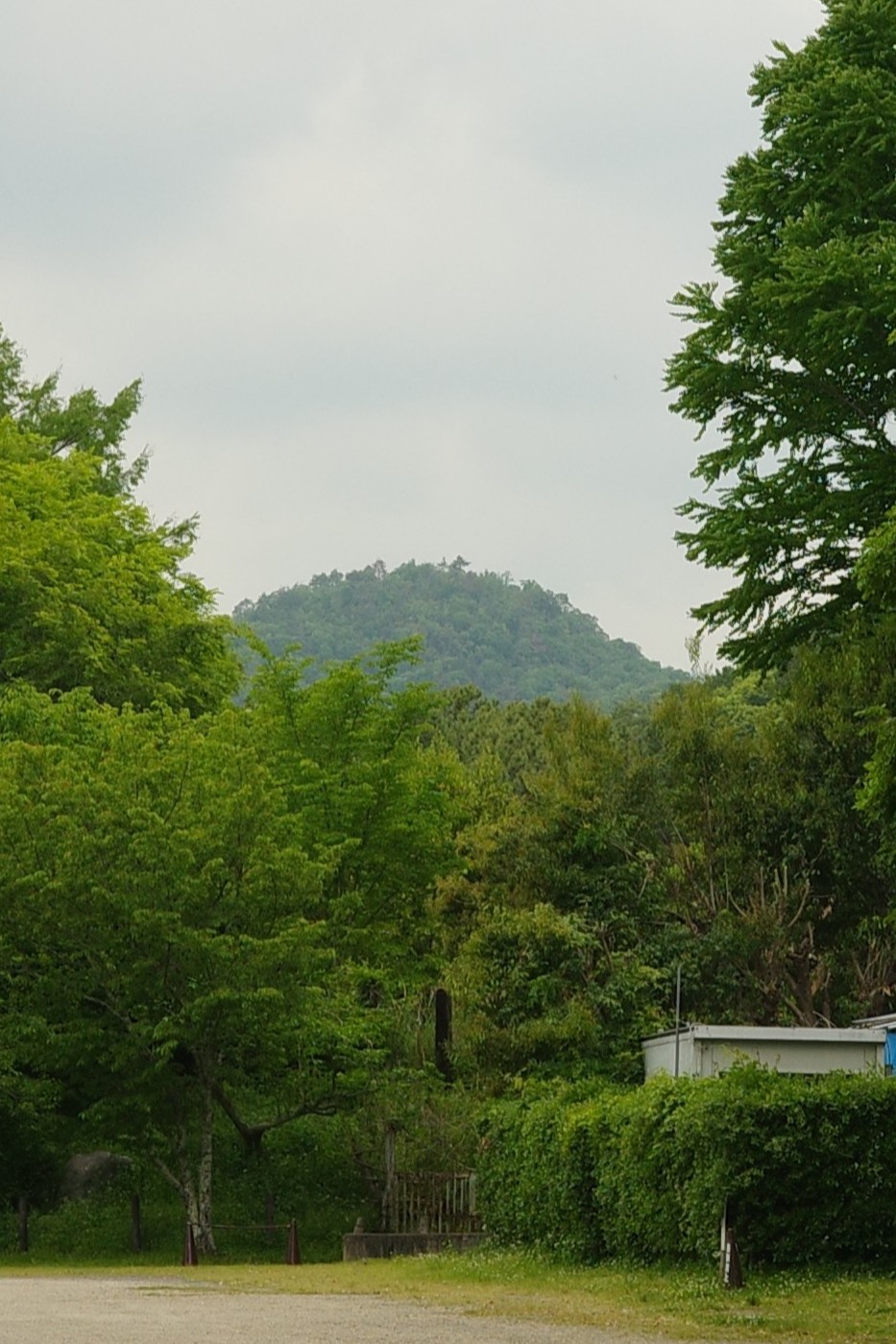
Mt. Koyama, which is the object of worship at the Kamigamo-jinja Shrine
The Kamigamo-jinja Shrine and its wide precincts, whose area is about 760,000 square meters, including two shrine buildings, the Inner Shrine and Gondo Shrine, designated as a National Treasure, and 41 shrine buildings designated as an Important Cultural Asset, was registered in 1994 as a UNESCO World Heritage Site.
I’ll introduce shrine buildings in the Kamigamo-jinja Shrine and events performed in the shrine to you.
First, the shrine buildings are shown below.
Precinct Map
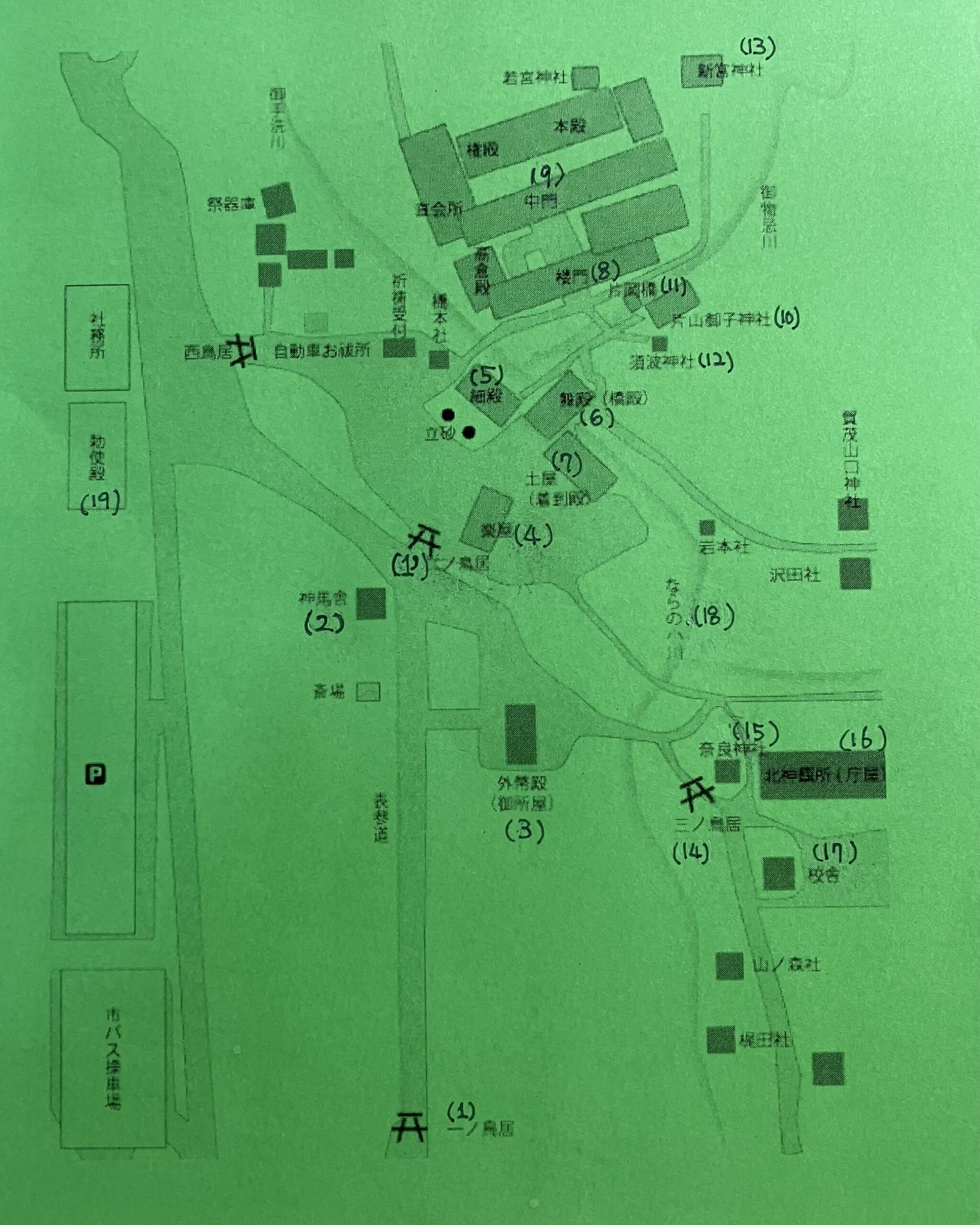
in which the top of the map is the north and the bottom is the south.
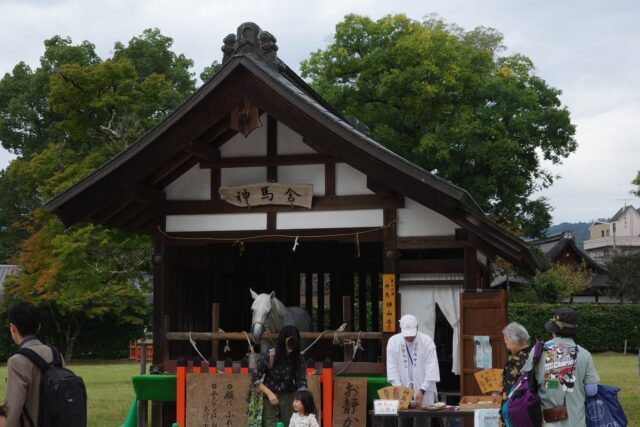
You can see a white horse in Shinme-sha (horse barn) (2) in front of Ni-no-Torii Gate (1’) on days on which a big festival is held, Sundays, and holidays. The name of the horse is Koyama-go, who is a messenger of the God. If you want, you can give carrots to him.
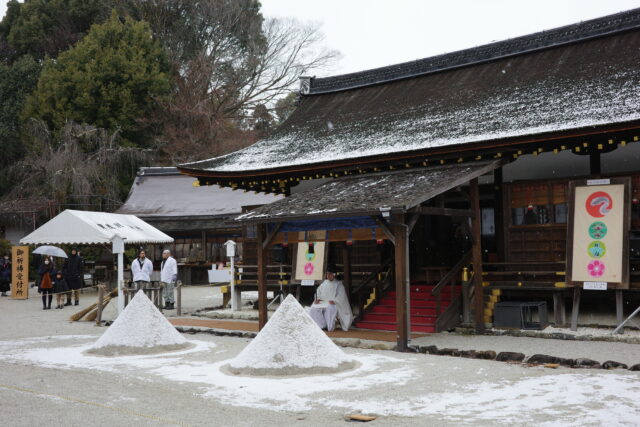
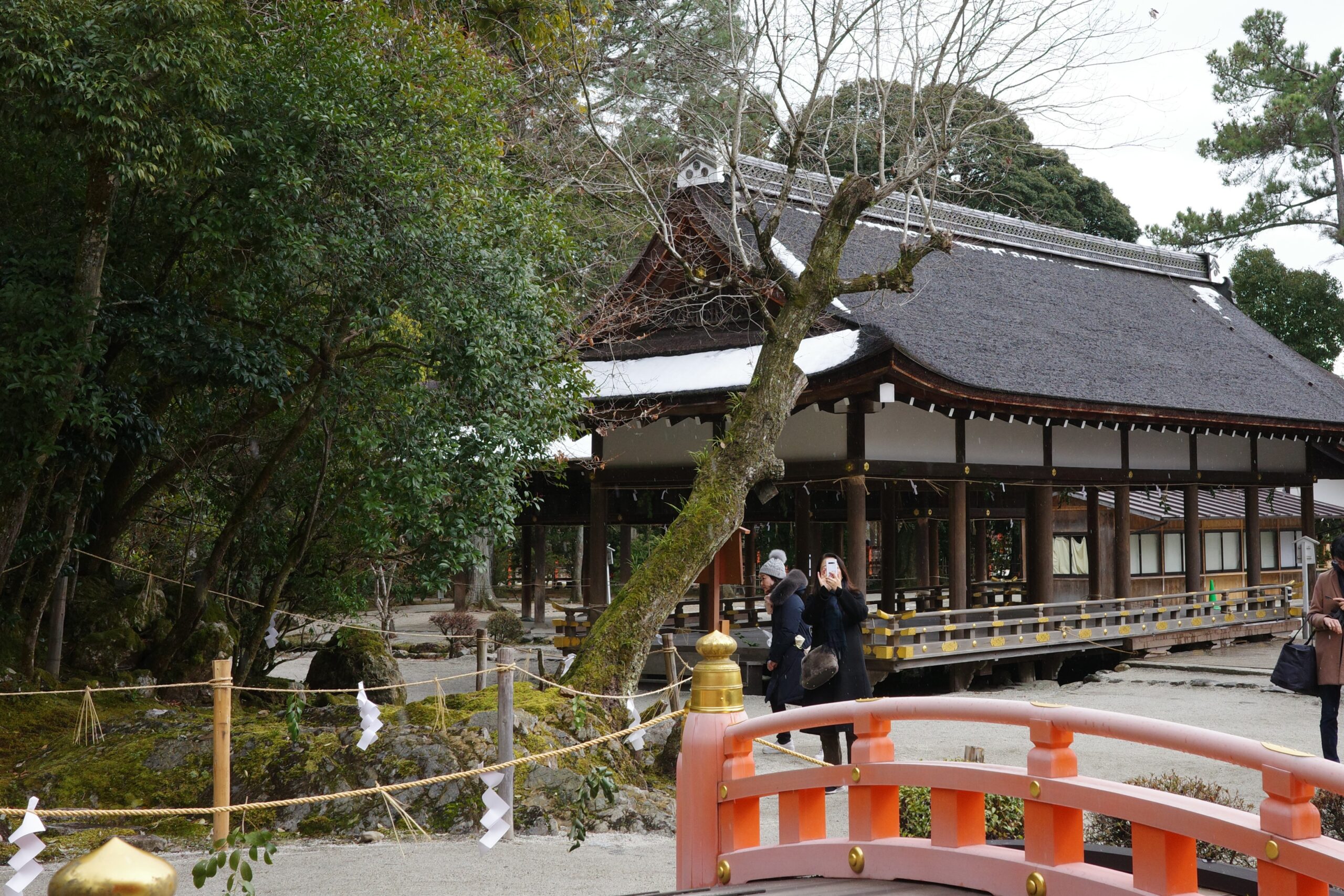
Hosodono (5), seen at the front after entering the Ni-no-Torii gate (1’), is a shrine building in which an Emperor or Saio put on a Japanese formal dress when he/she went to worship service, in which the Japanese word “Saio” means an unmarried imperial princess serving at the Kamigamo-jinjya Shrine in place of the emperor. The Hosodono is one of the most prestigious shrine buildings in the precincts. The two conical sand mountains in front of the Hosodono are called “Tate-zuna,” which are Yorishiro to which the God comes drawn from Mt. Koyama.
The shrine buildings on the east side of the Hosodono (5) are Buden (6) and Tsuchinoya (7). The Buden (6) is a shrine building in which an Imperial messenger gives an address to the God from the Emperor upon holding of the Aoi Matsuri. The Tsuchinoya (7) is a shrine building in which Saio executes a specific event, “Gokei-no-Gi” (purification ceremony), on the river running in the precincts. A rock in a place enclosed with Shimenawa (a rope used to cordon off consecrated areas) behind the Buden (6) is called “Ganjyo,” which is an area where the Shinto priest responds with a Shinto prayer to the address to the God from the Emperor during the Aoi Matsuri.
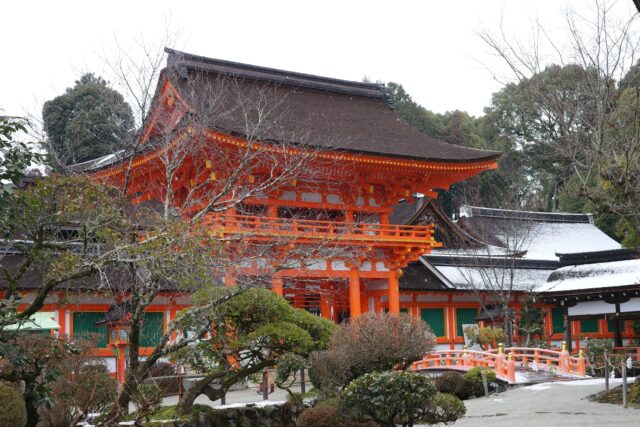
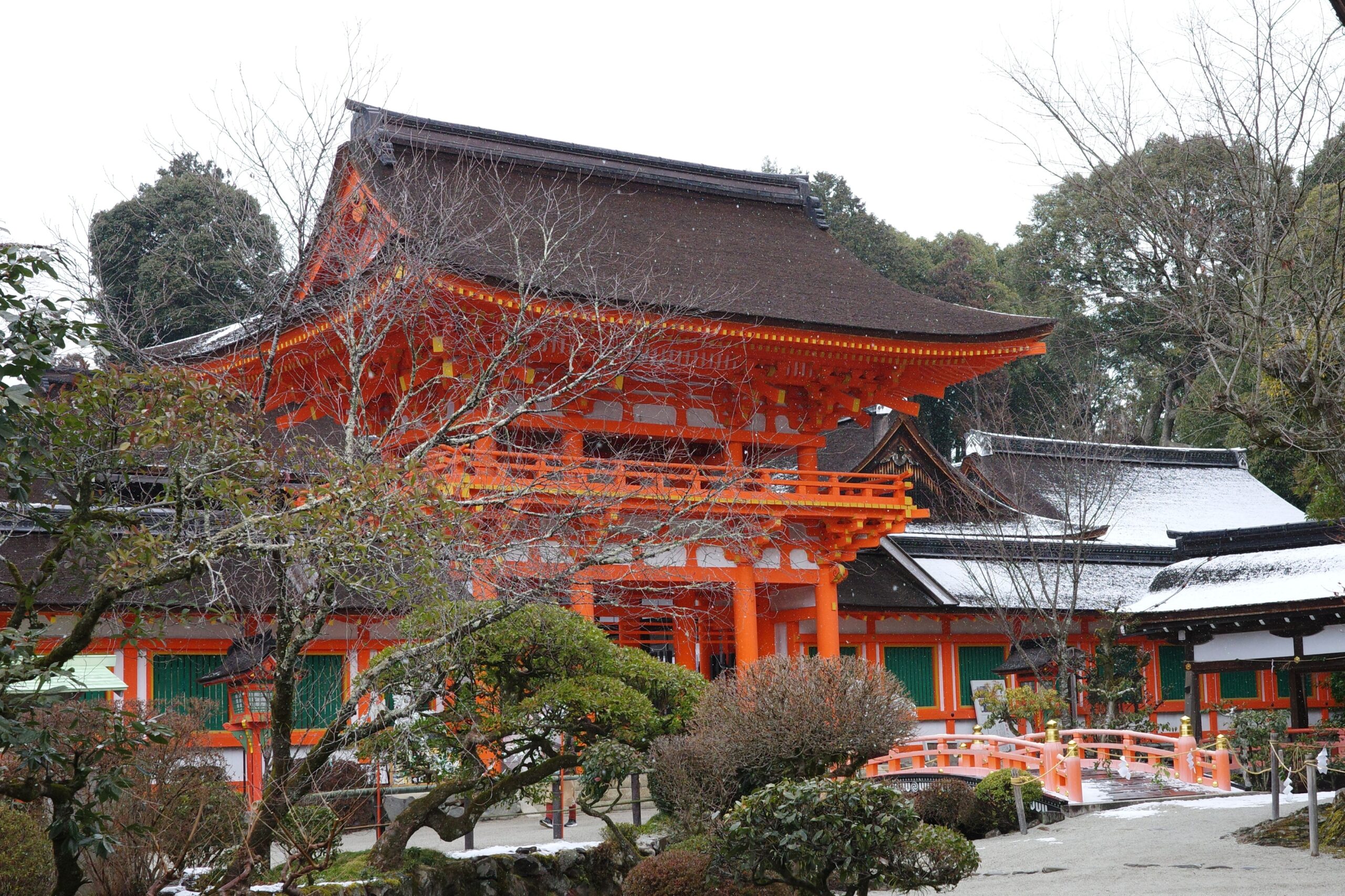
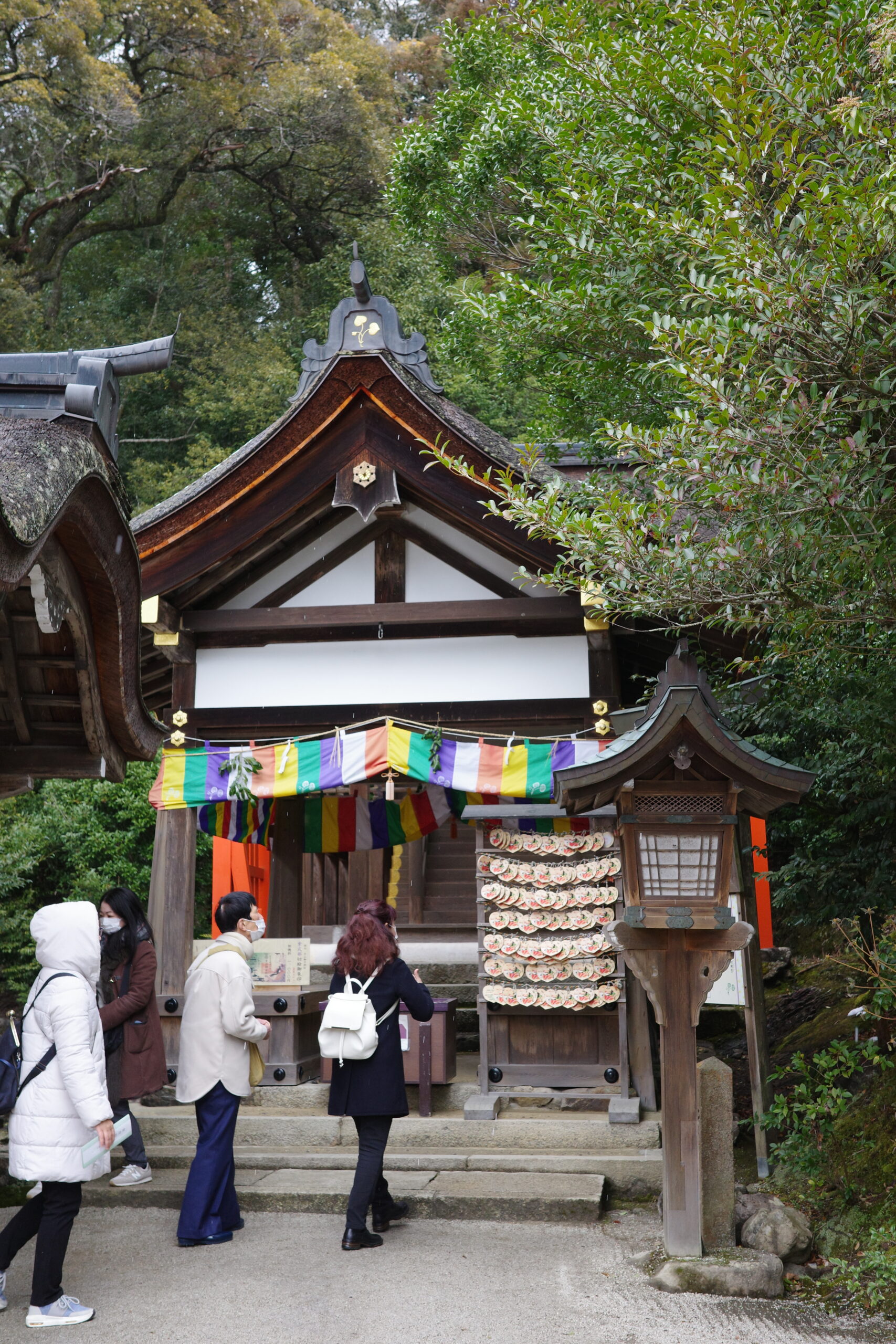
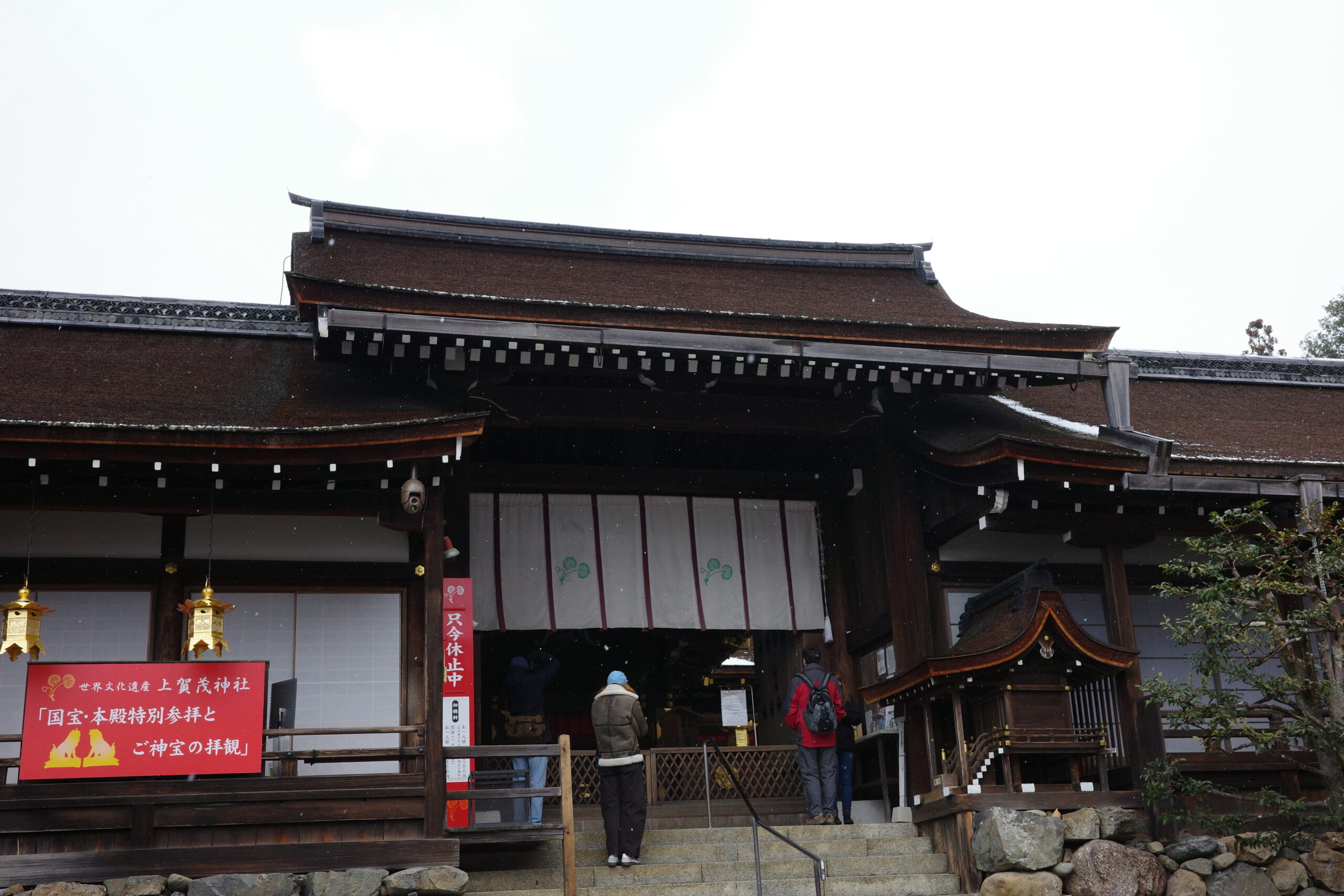
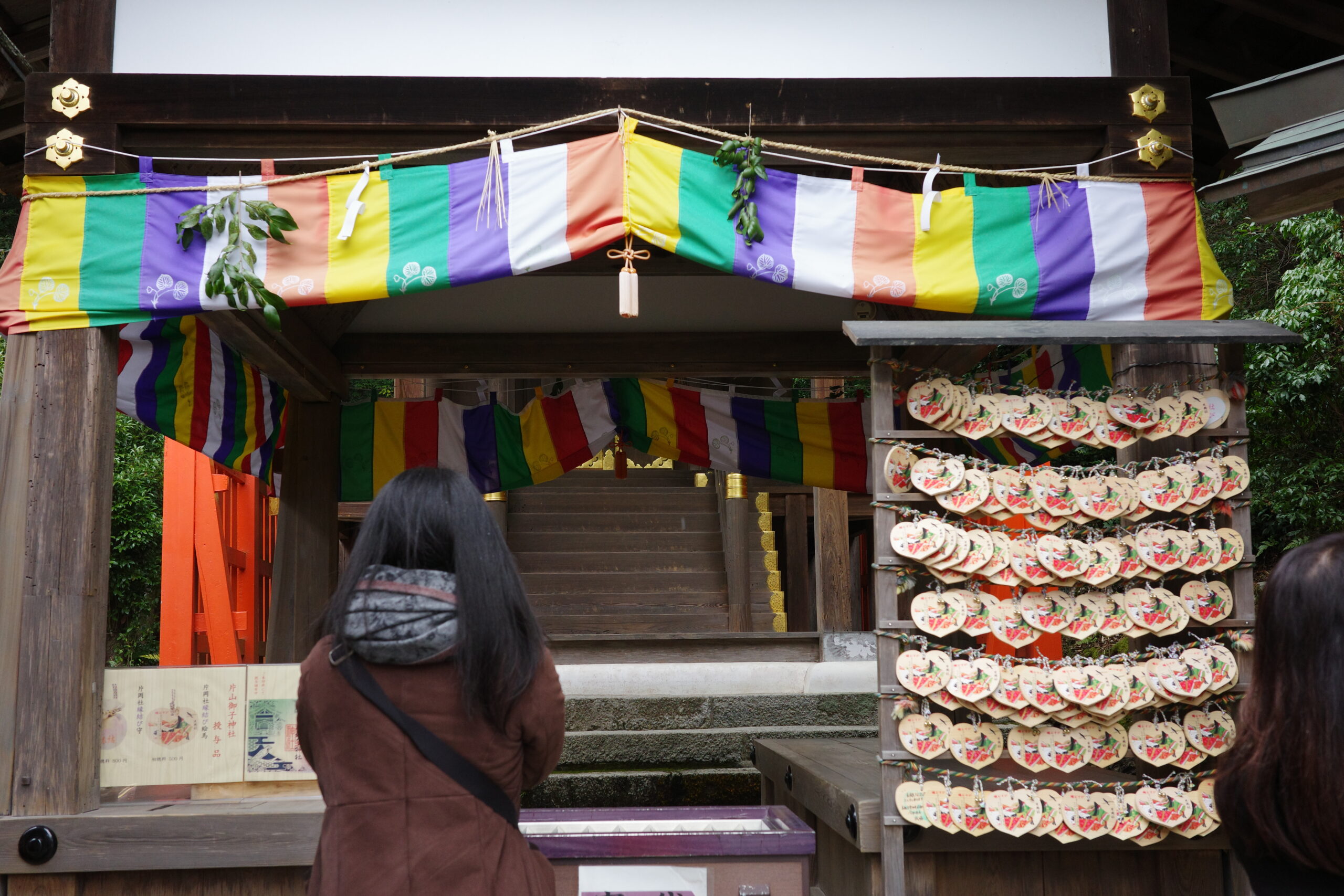
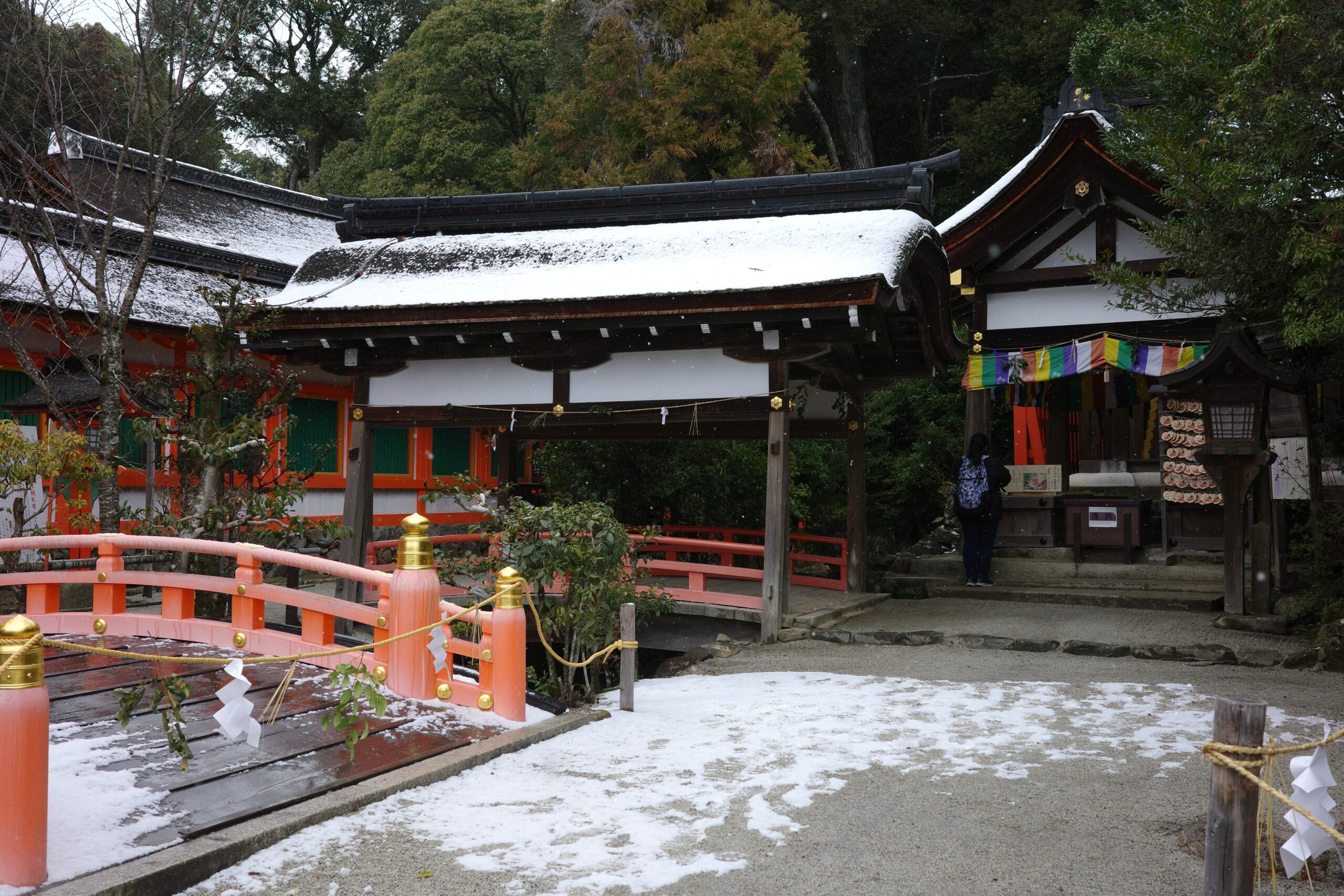
The photo of Romon, a two-storied gate, (8) and an arched bridge, Tama-bashi bridge in front of the gate (8) may strike you as a little gorgeous, because the color of almost all shrine buildings, except for Torii gates, are dark brown which is the intrinsic color of the wooden material. There are Honden and Gonden, designated as National Treasures, behind Chumon Gate (9), standing ahead of the two-storied gate (8). Although I haven’t entered there yet, two shrine buildings having the same structure (Sangenshanagare-zukuri structure) sit side by side, and the Honden is on the east side and the Gonden is on the west side. The Gonden is a permanent building that is used the temporary Honden when the Regular Shrine Removal is performed. Katayamamiko-jinjya Shrine (10) deifies Kamotamayorihime-no-mikoto, the mother of Kamowakeikazuchi-no-Okami, who is the enshrined deity of this shrine. She is the Goddess of matchmaking, blessing mothers with children, and easy delivery.
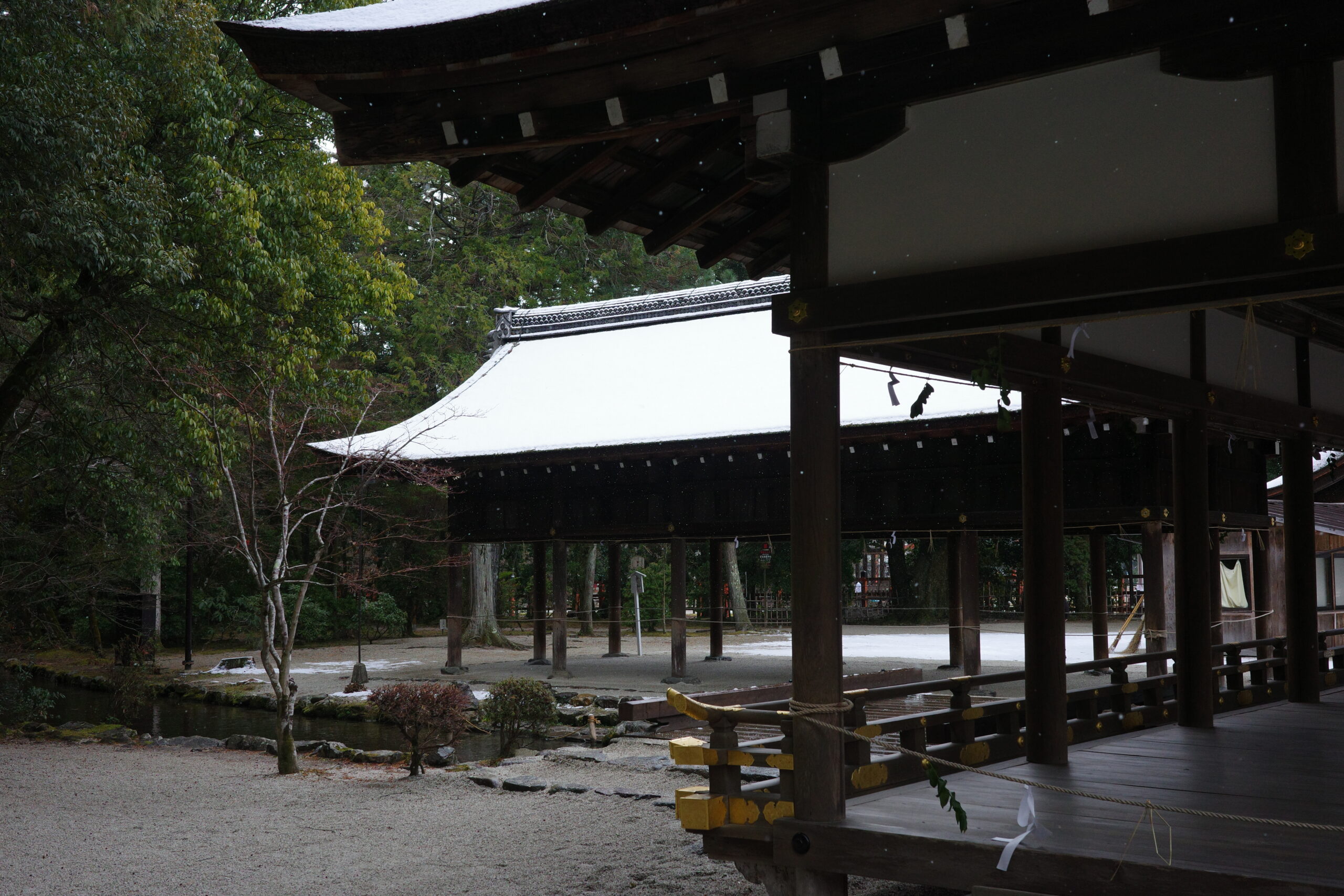
When you go through San-no-Torii Gate (Nara-Torii Gate) (14), you will see Nara-jinja Shrine (15), standing with its back to the front approach of the Kamigamo-jinja Shrine. A shrine building built so that its eaves overlap with those of the Nara-jinja Shrine is Choya (16) in which a food offering to the God was made.
Some events such as Kamo-Kyokusui-En, which is a pastime done by ancient Japanese nobles, are performed in Shokeien Garden.
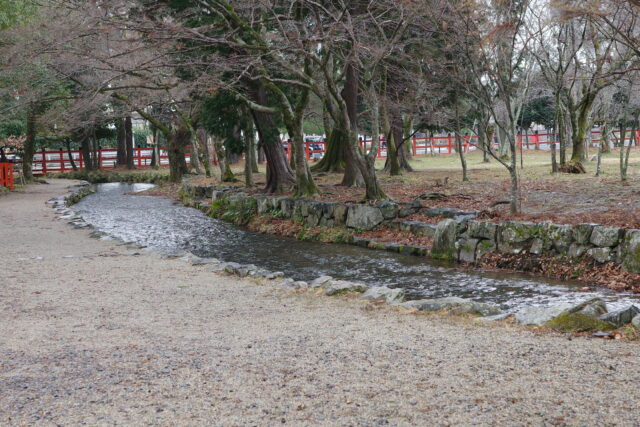
Two rivers flowing in the precincts, Mitarashi-gawa River flowing on the east side and Omonoi-gawa River flowing on the west side merge into Nara-no-ogawa River (18).
-
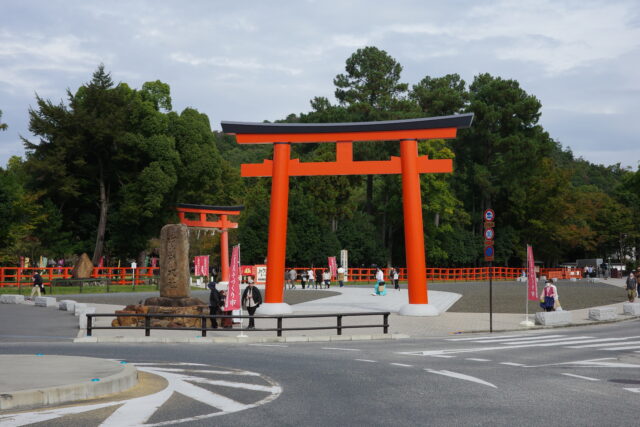
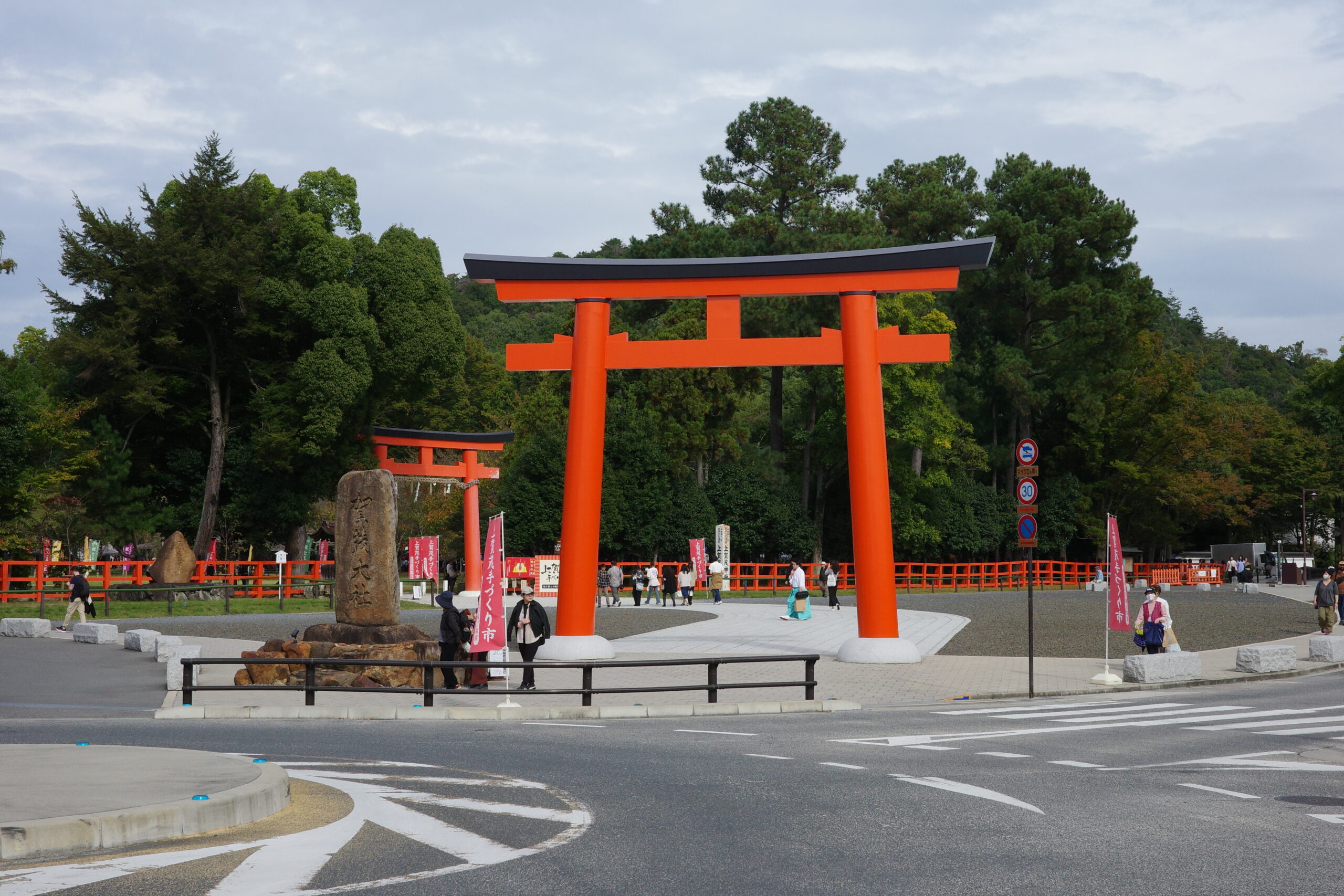
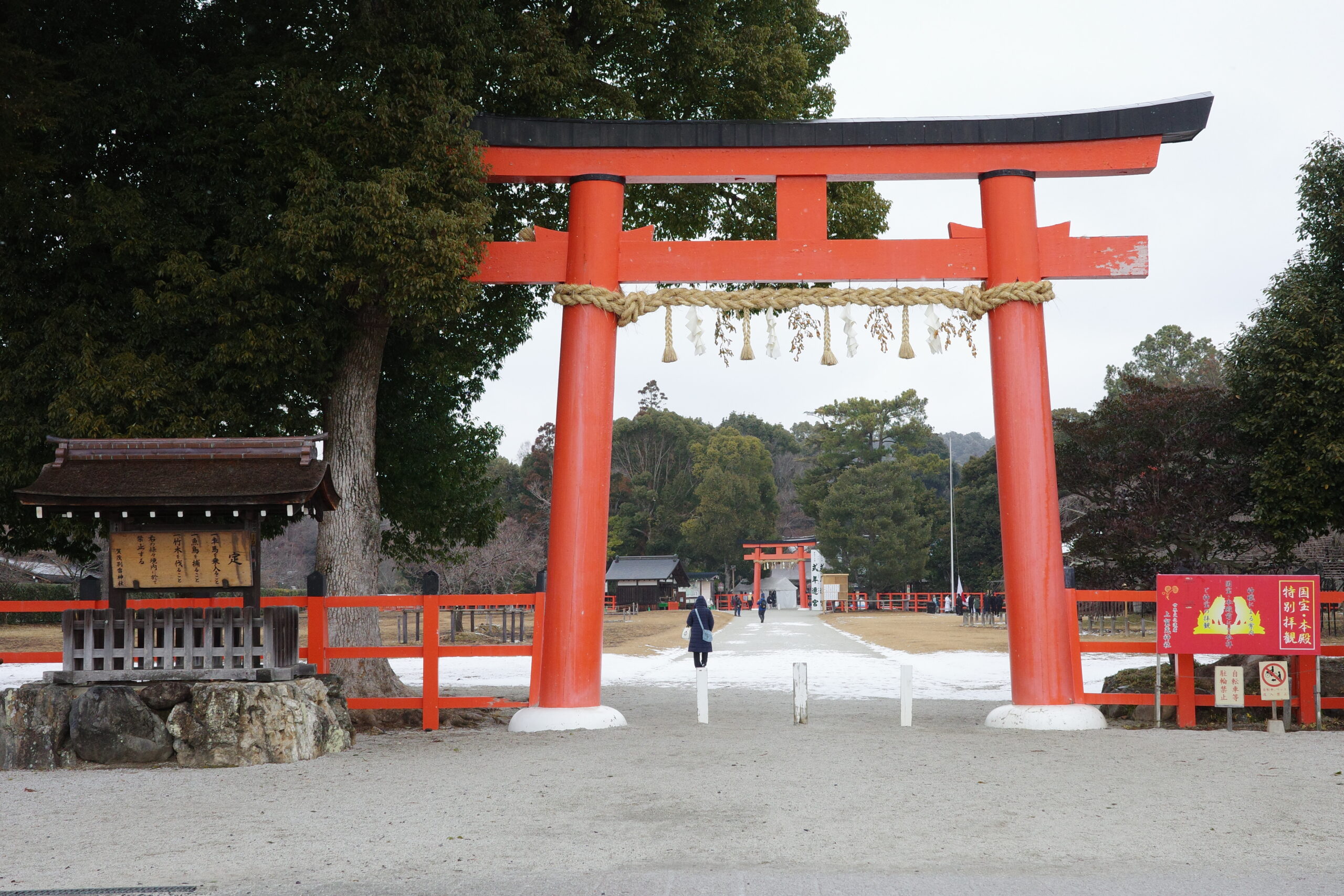
Otorii Gate and
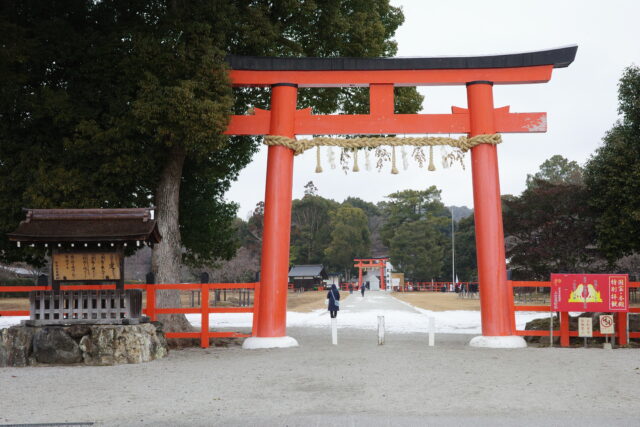
Ichi-no-Torii Gate (1) behind
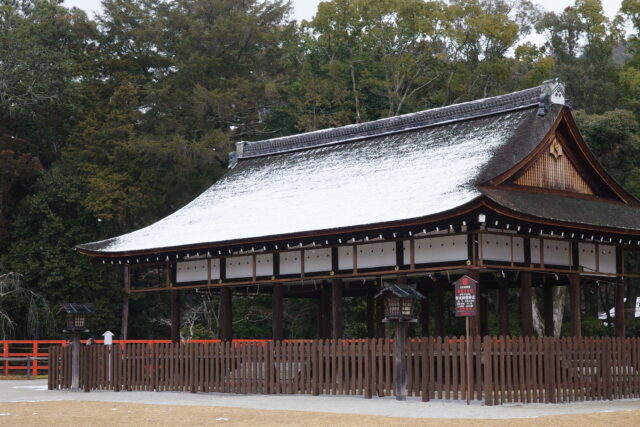
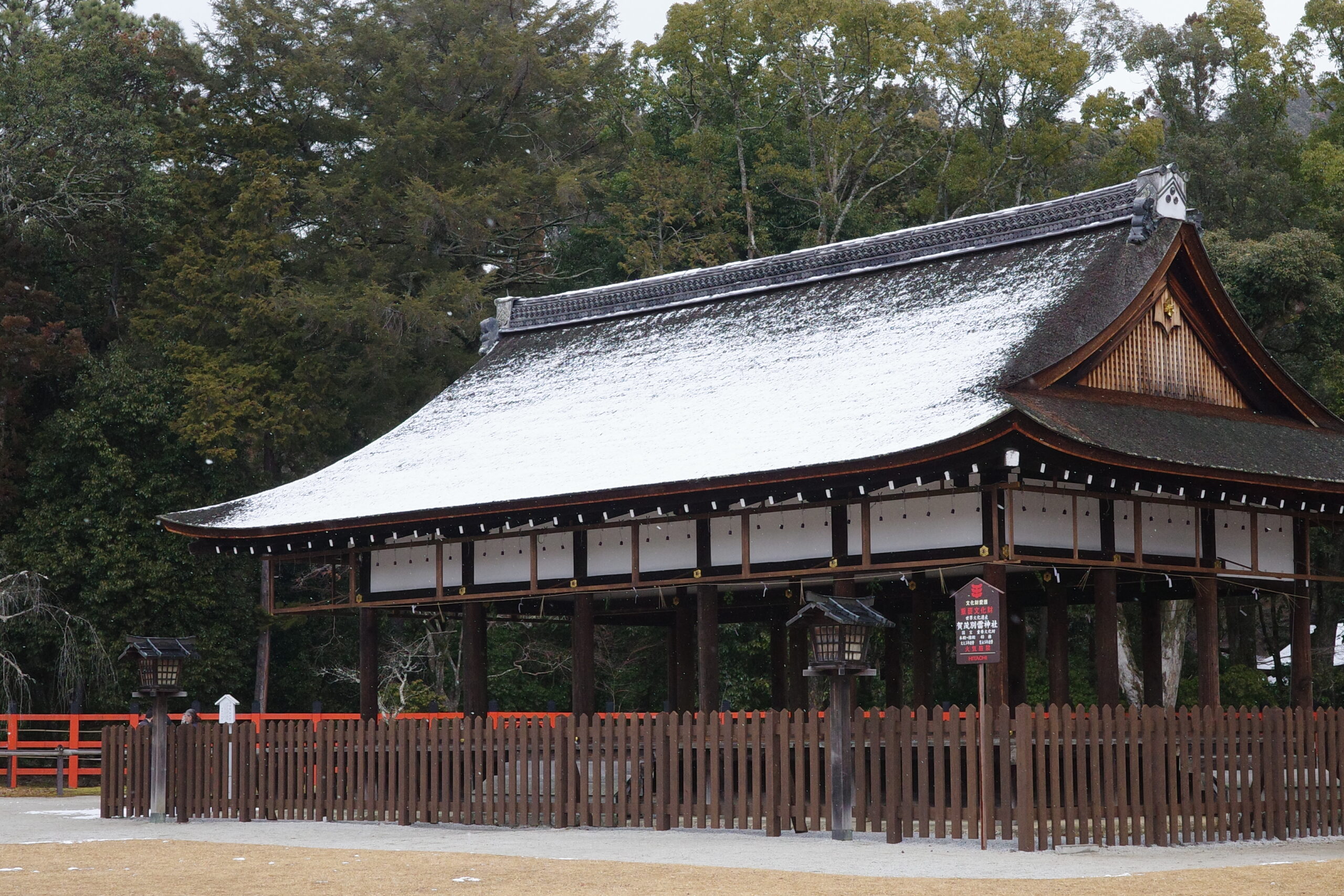
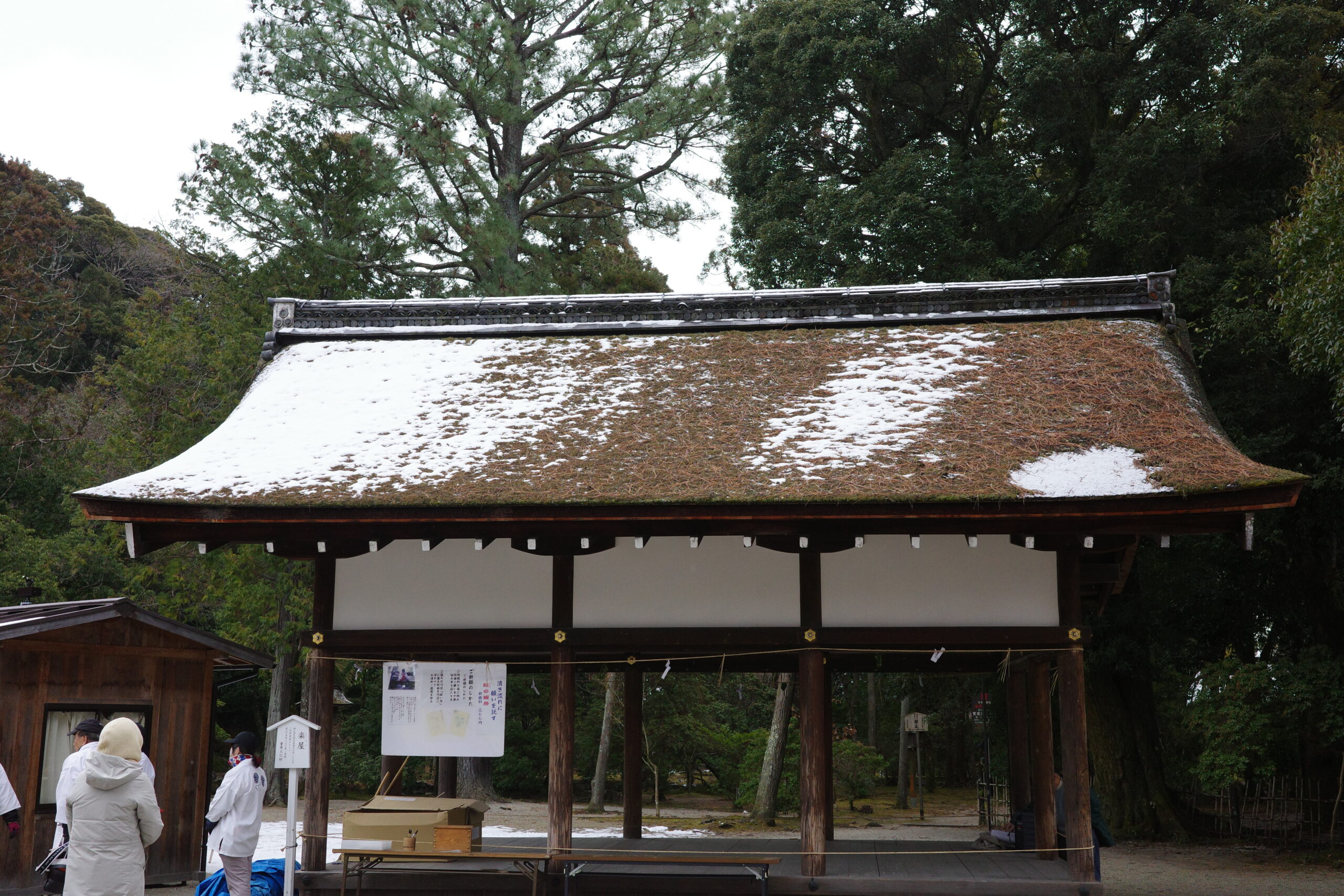
Babaden (3)
Hosodono (5) and Tate-zuna
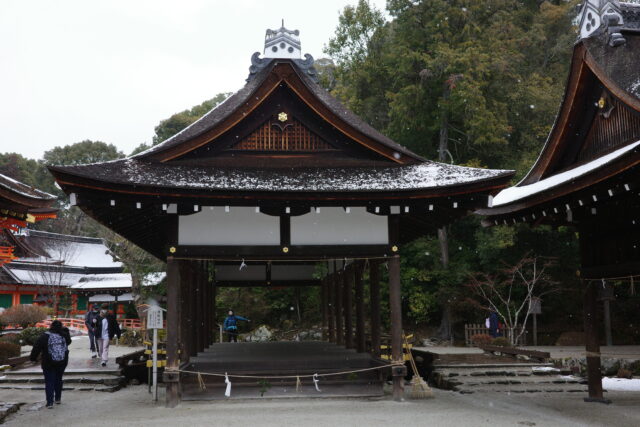
Gakuya (4)
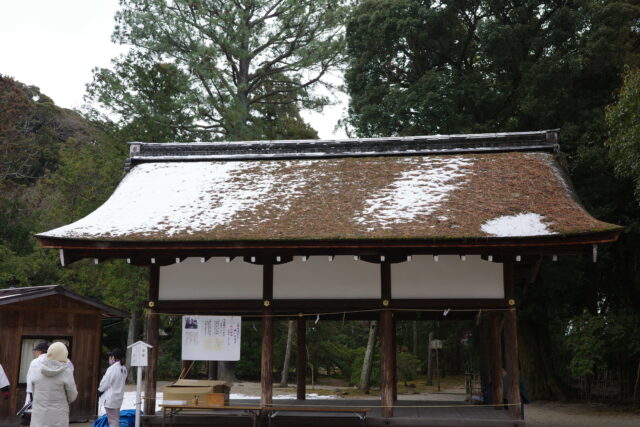
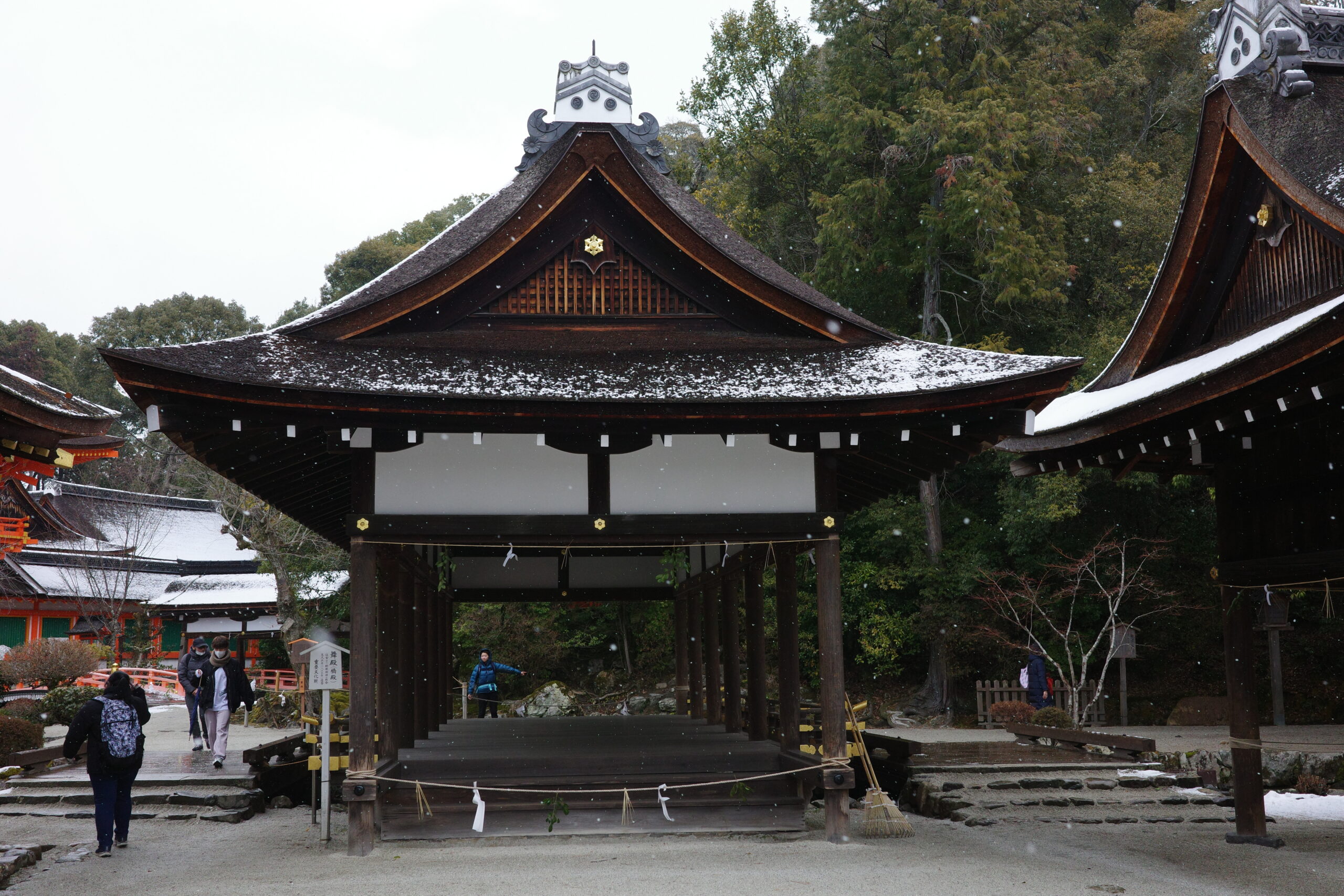
Buden (6)
Romon Gate (8) and Tama-bashi (arched bridge)
Katayamamiko Shrine (10)
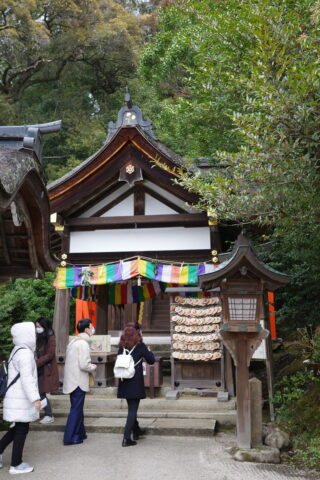
Shingu Shrine (13)
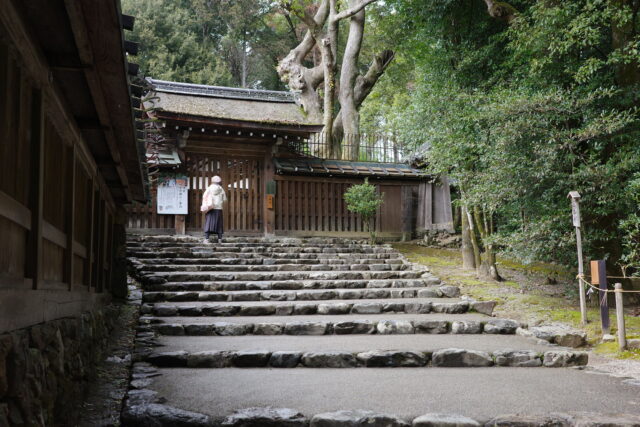
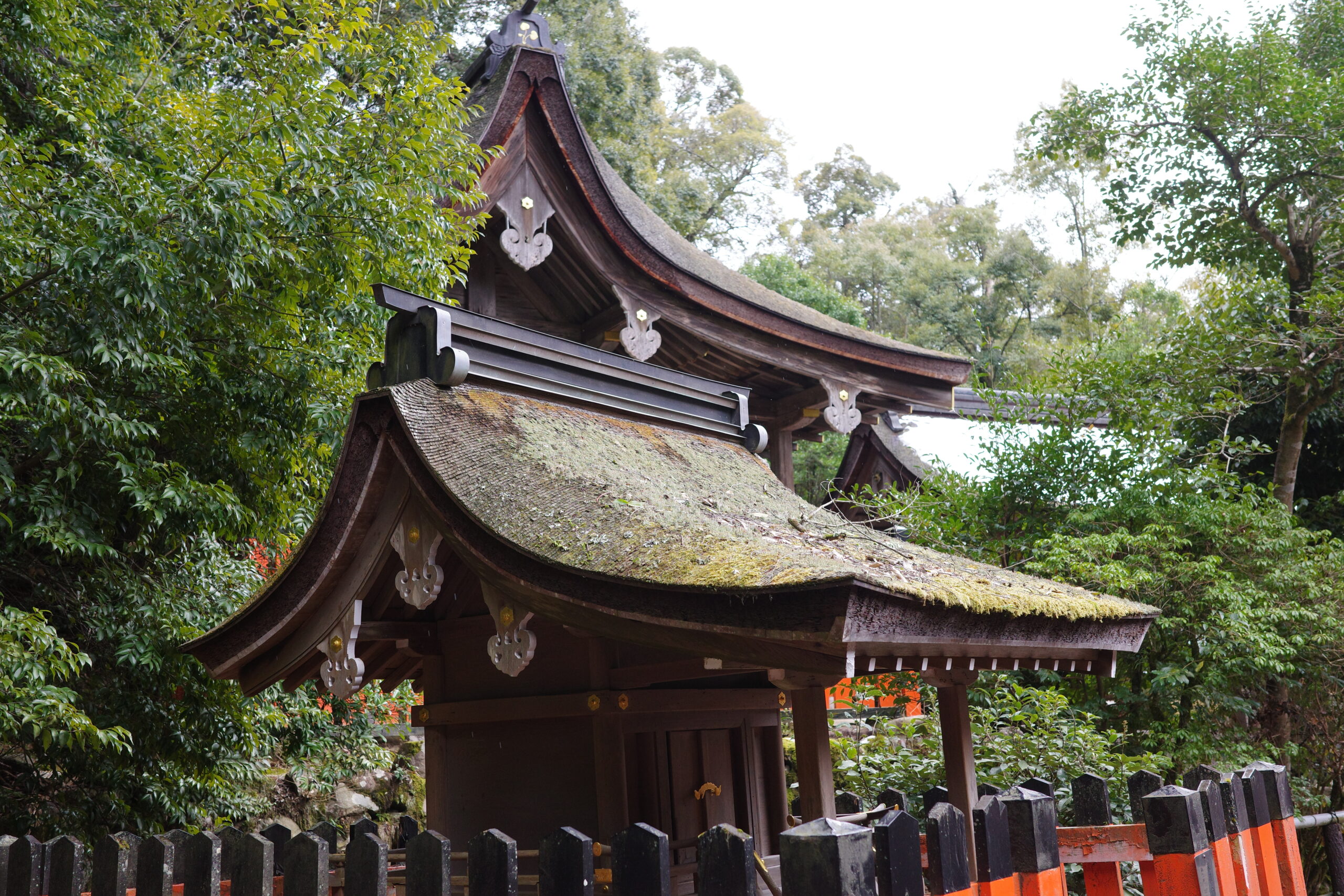
Kawao Shrine
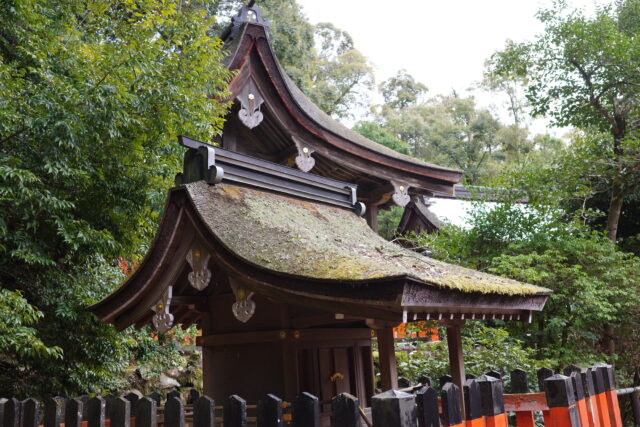
San-no-Torii Gate (14), Nara Shrine, (15) and Azekura (16)
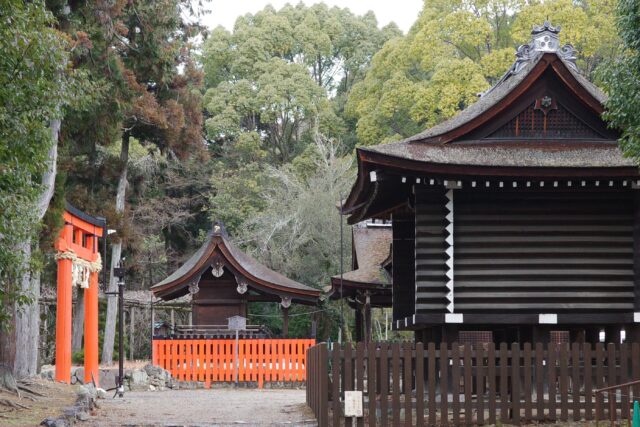
Choya (16)
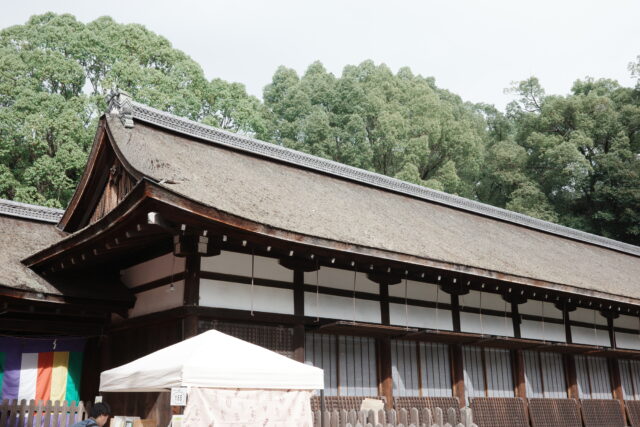
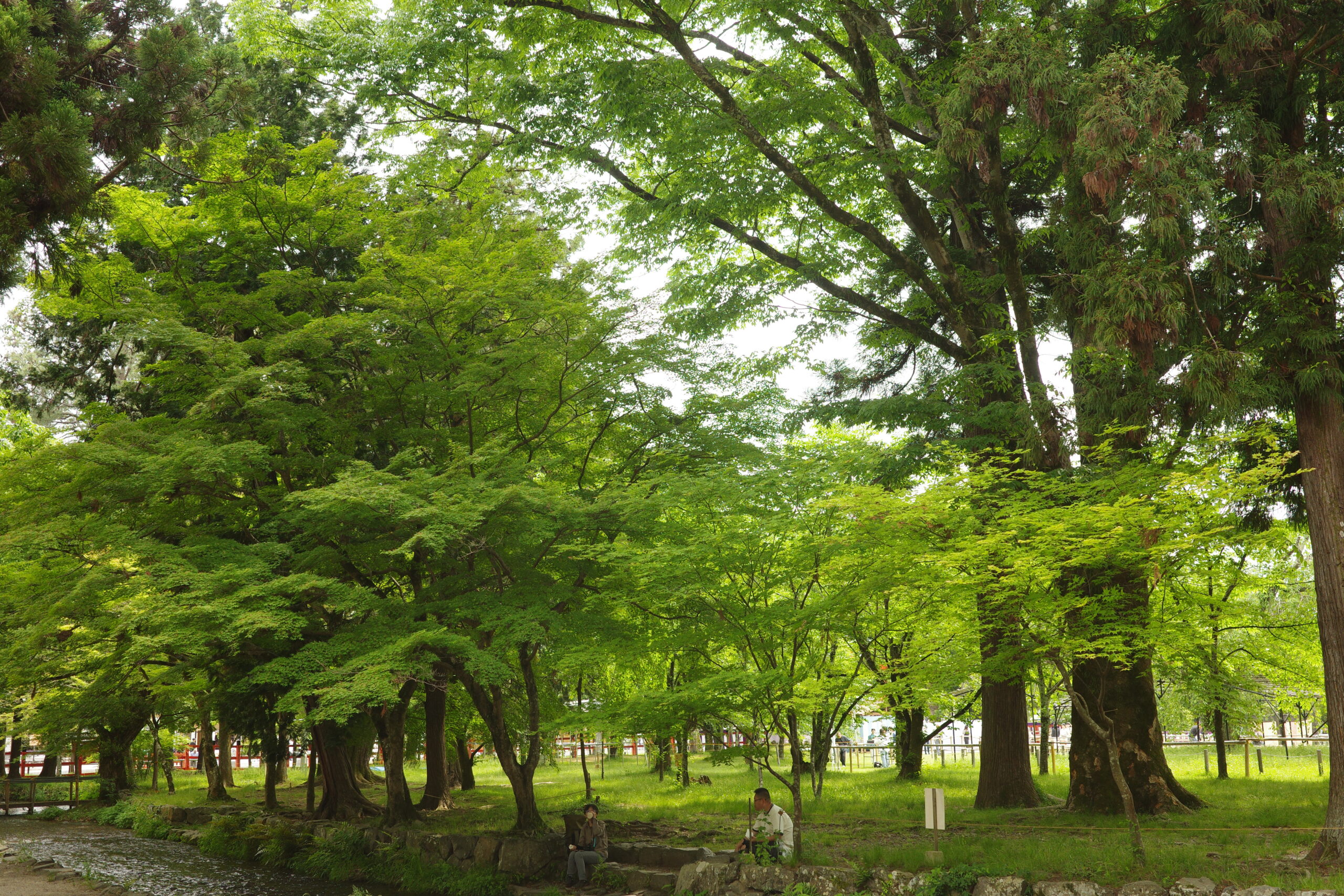
Shokeien Garden
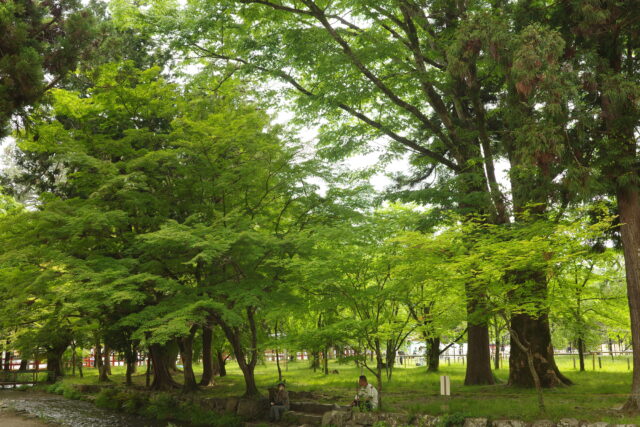
-
Ichi-no-Torii Gate (1) and Ni-no-Torii Gate (1′) behind
Shinme-sha (2) (horse barn)
Tate-zuna (small sand mound)
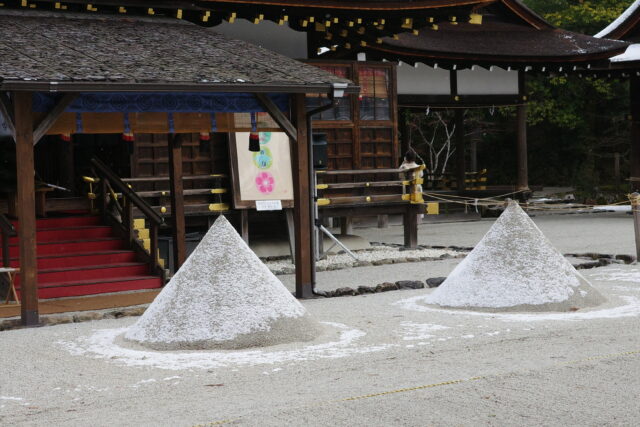
Buden (6) and Tsuchiya (7) behind
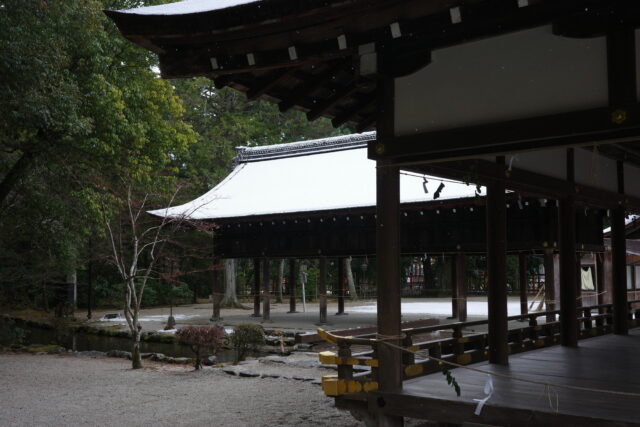
Buden (6) and Ganjyo on the left side
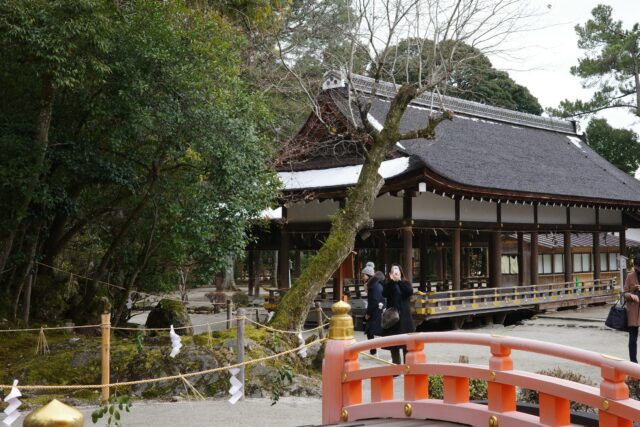
Chumon Gate (9)
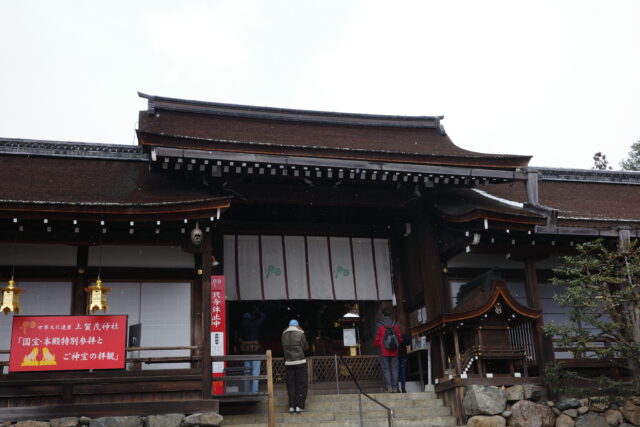
Katayamamiko Shrine (10)
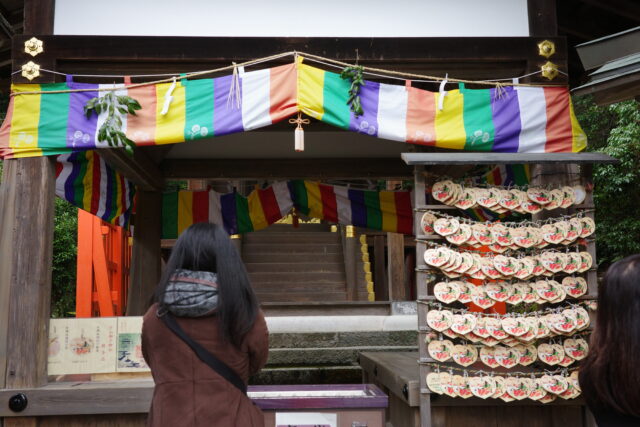
Kataoka-bashi Bridge (11)
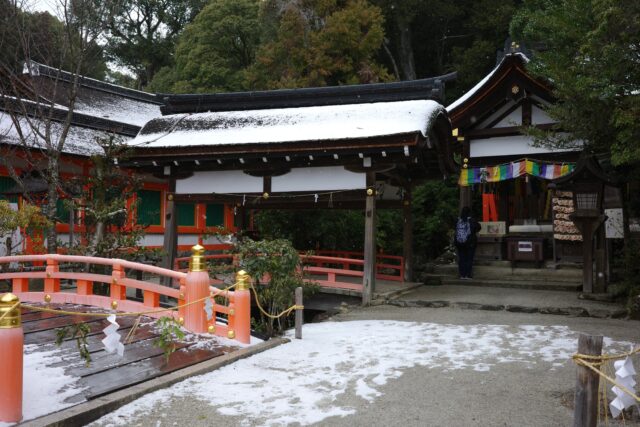
Suwa Shrine (12)
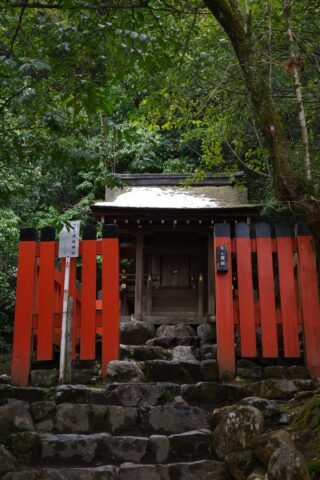
Nara Shrine (15) and
Choya (16)

Chokushi-den (19)
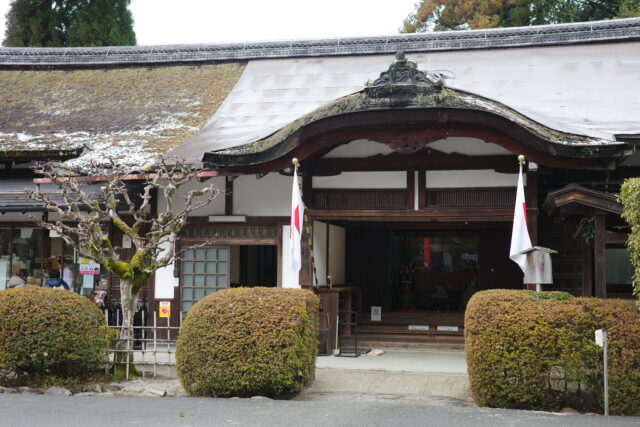
Nara-no-Ogawa River (18)






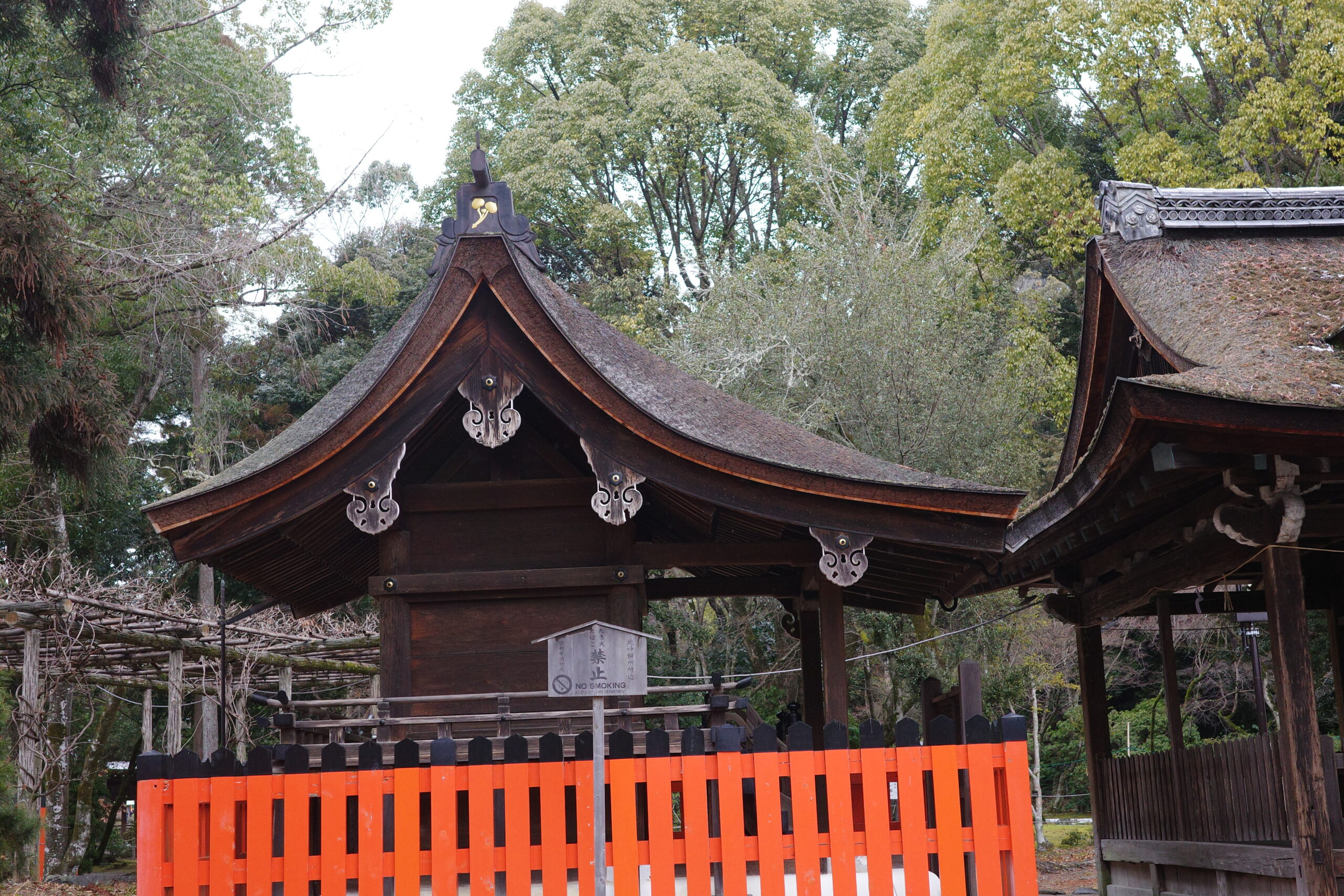

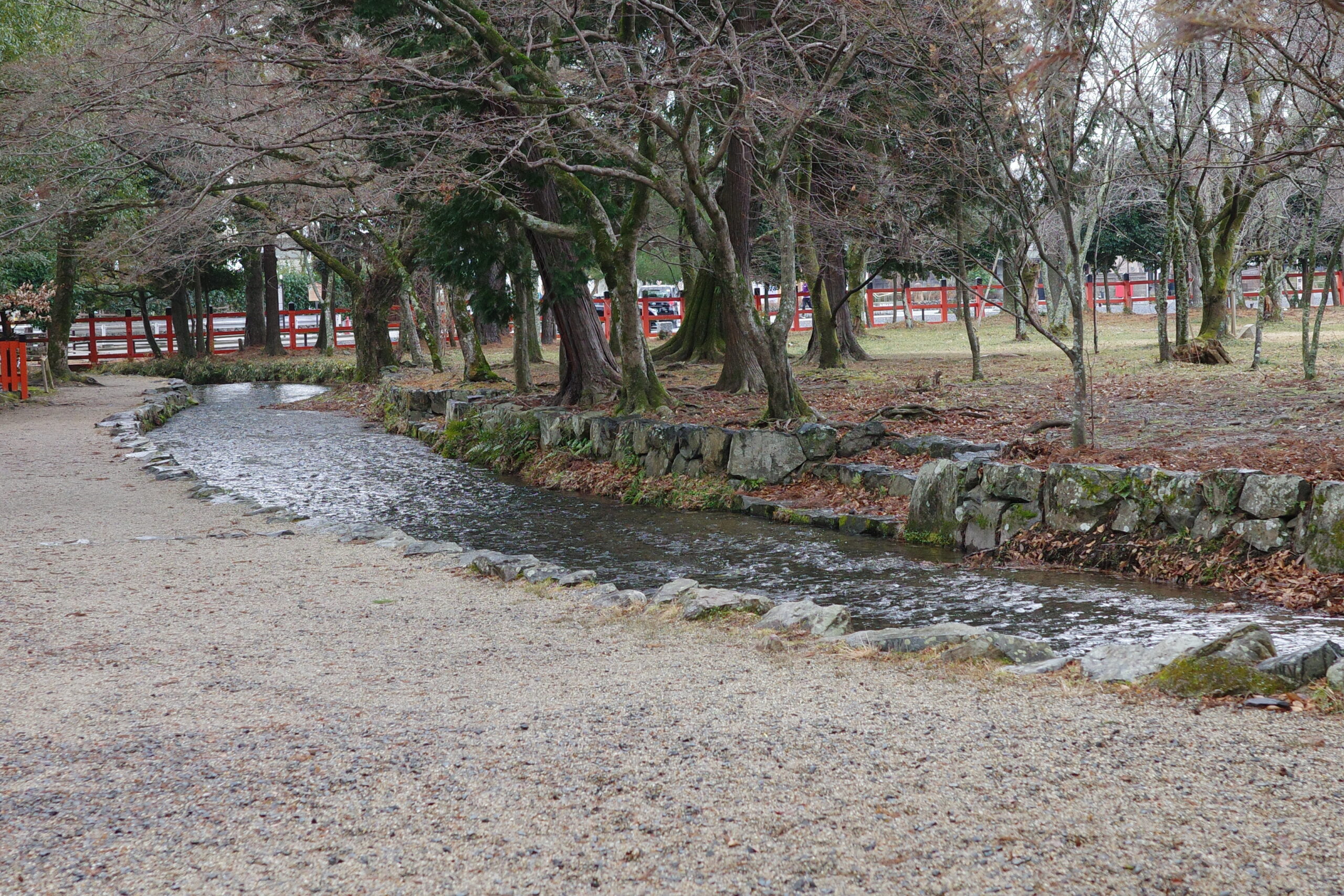
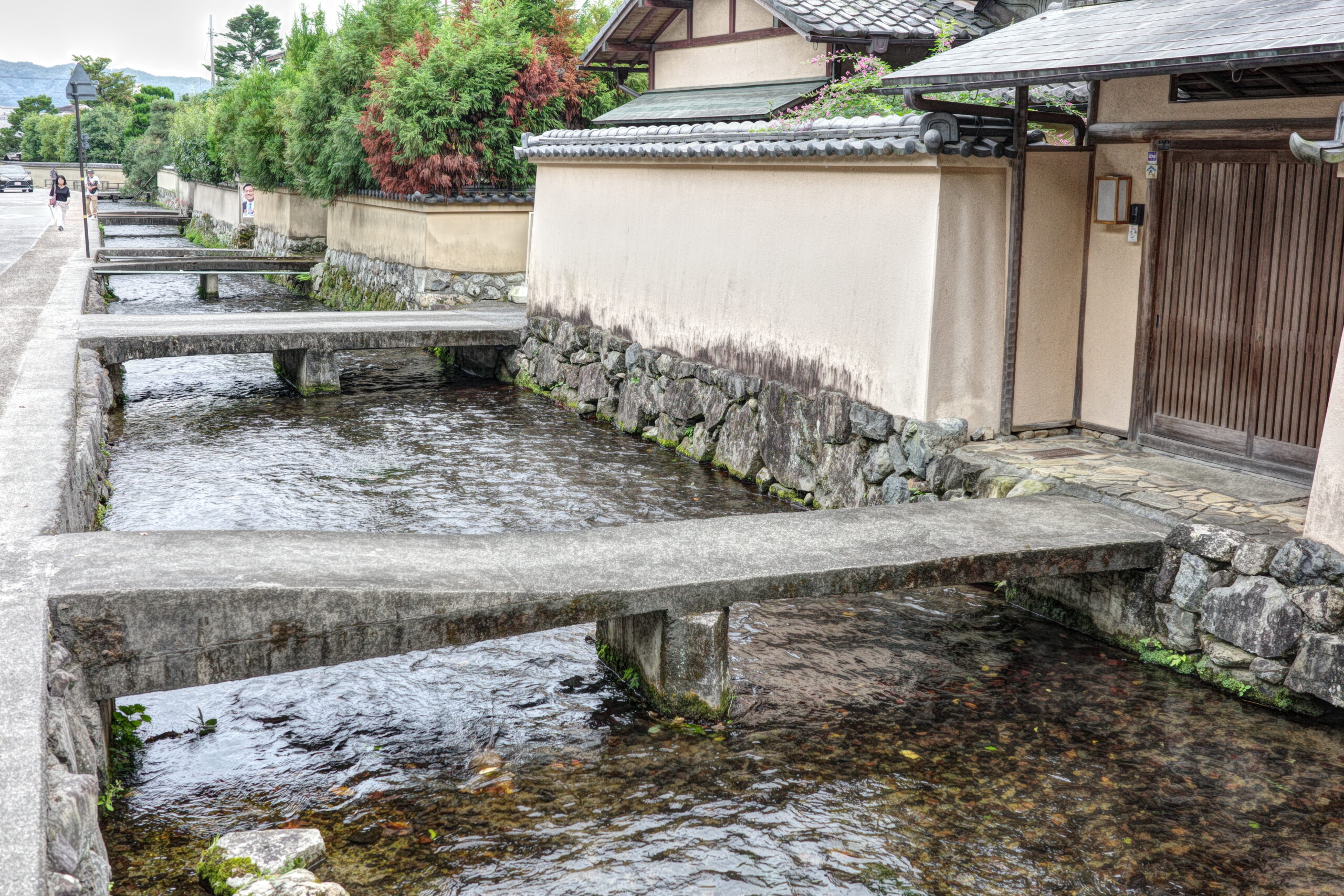
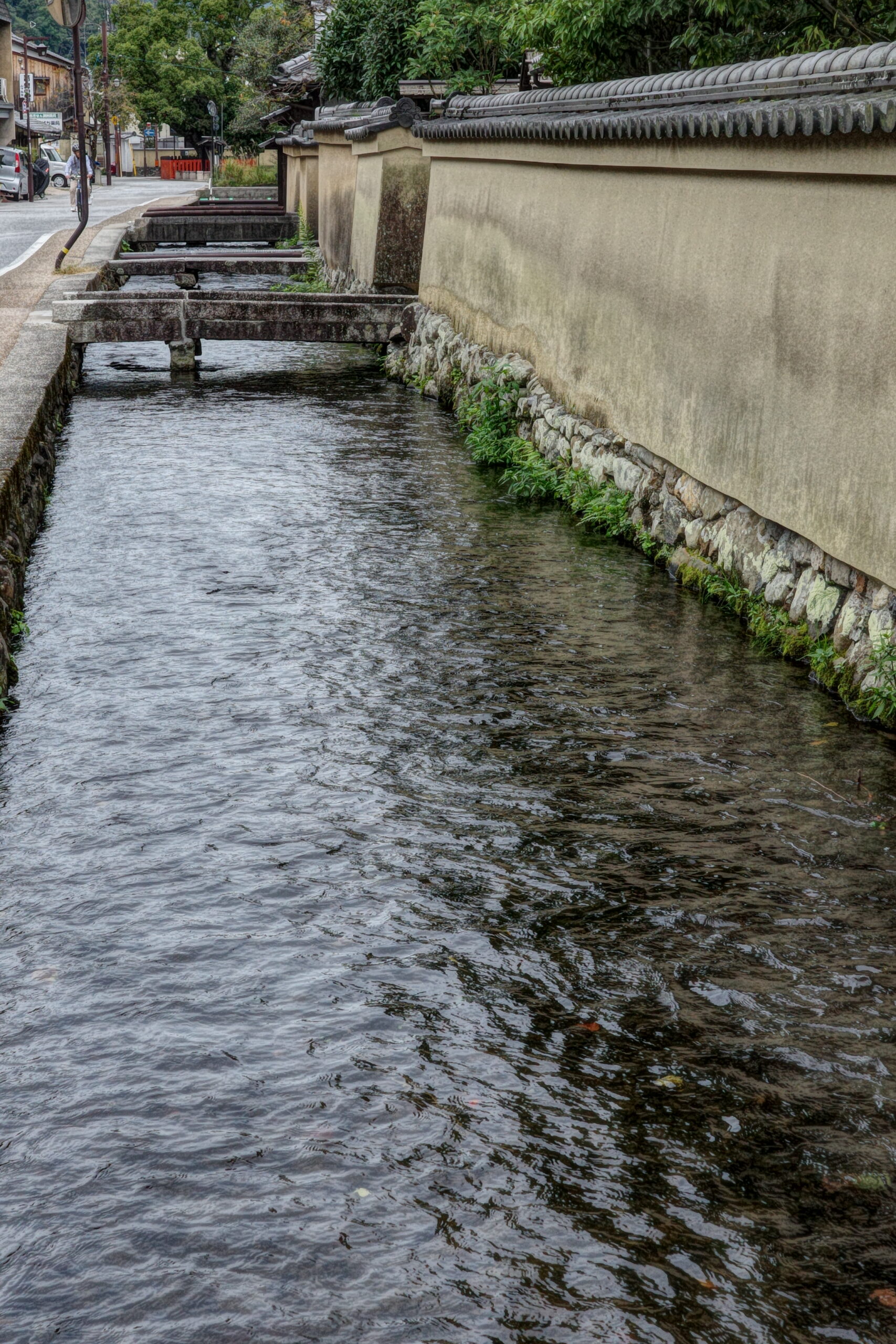
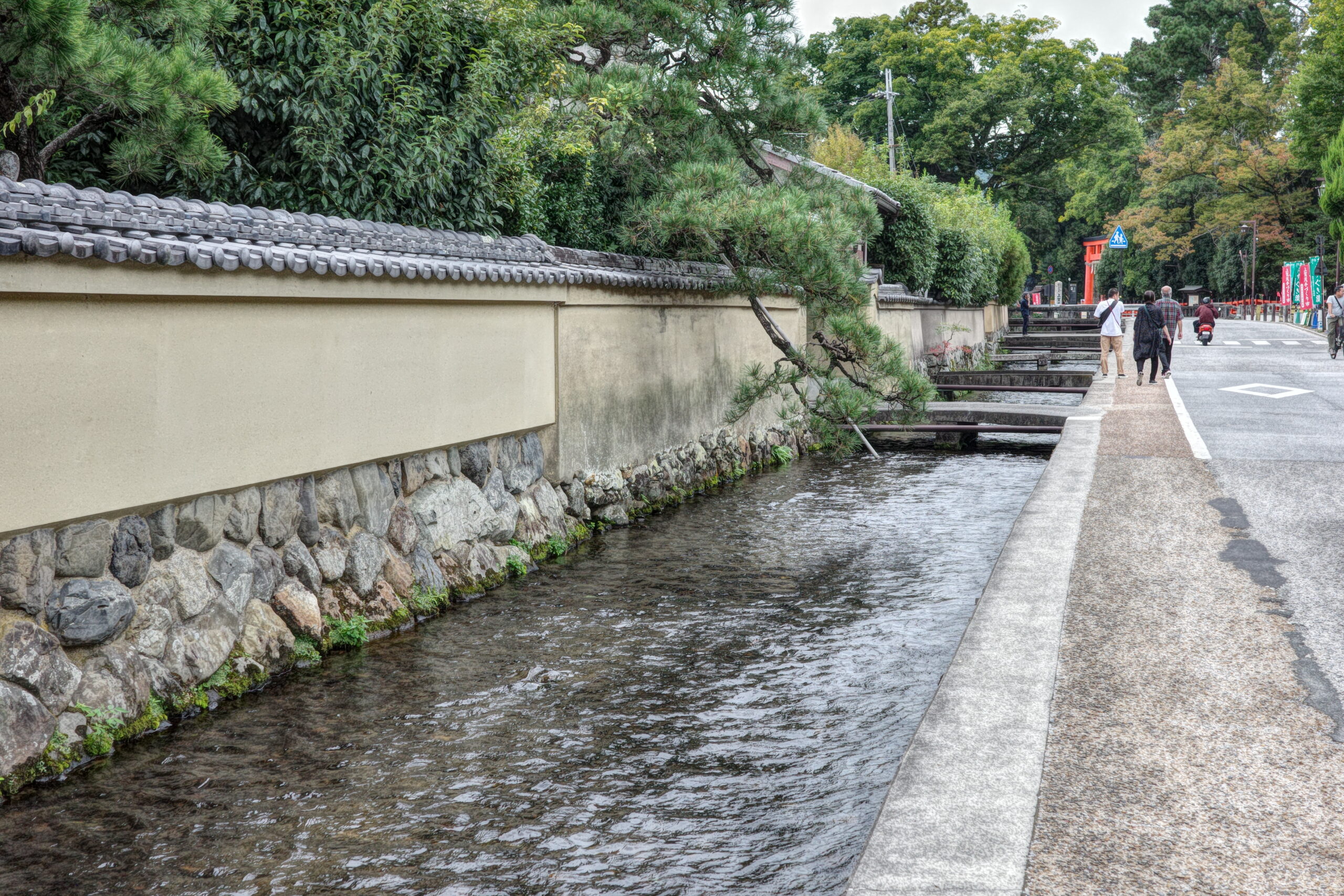
The Nara-no-ogawa River, flowing out from the precincts of Kamigamo-jinja Shrine is divided into two rivers, and the river flowing toward the east is called Myojin-gawa River. There is a town area where ocher mud walls continue along Myojin-gawa River, which is called “Shake Machi.” The Japanese word “shake” means a lineage of Shinto priests serving shrines for generations. The Shakemachi was formed in the Muromachi Period (1336 – 1573), and the original townscape has been kept up to now. The old-fashioned mud walls and small mud bridges, provided in each house, create distinctive character together with Myojin-gawa River having a comparatively large amount of water.

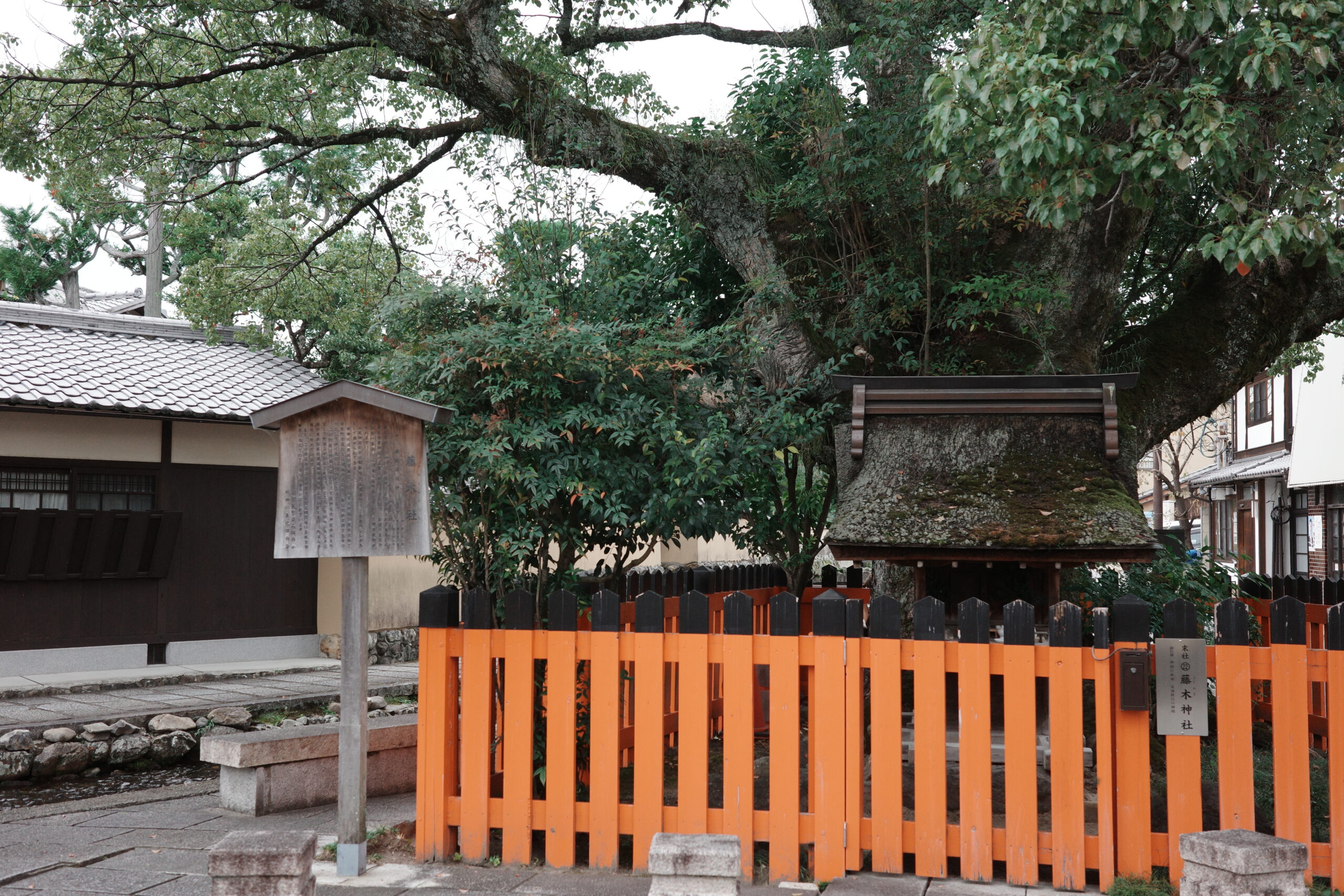
I’ll show you the Goshu-in (red seal) of Kamigamo-jinja Shrine.
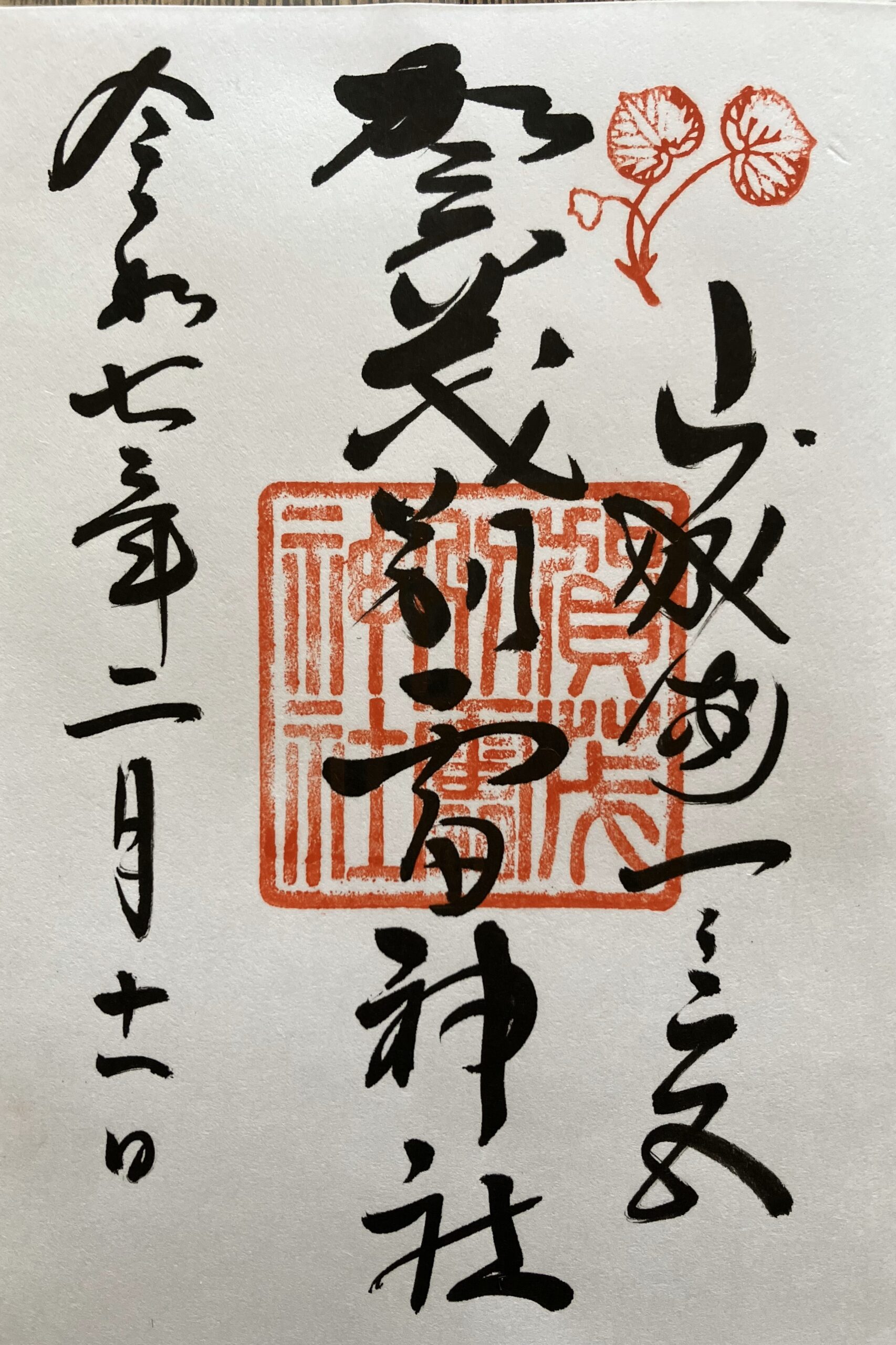
From the next post, I’ll report the events performed in Kamigamo-jinja Shrine.
Leave a Reply